
TensorWave Raises $350M Series B at $1.55B to Challenge NVIDIA with AMD Cloud
TensorWave secured $350M in Series B funding at a $1.55B valuation to expand its AMD Instinct GPU-powered AI cloud infrastructure and challenge NVIDIA's dominance.
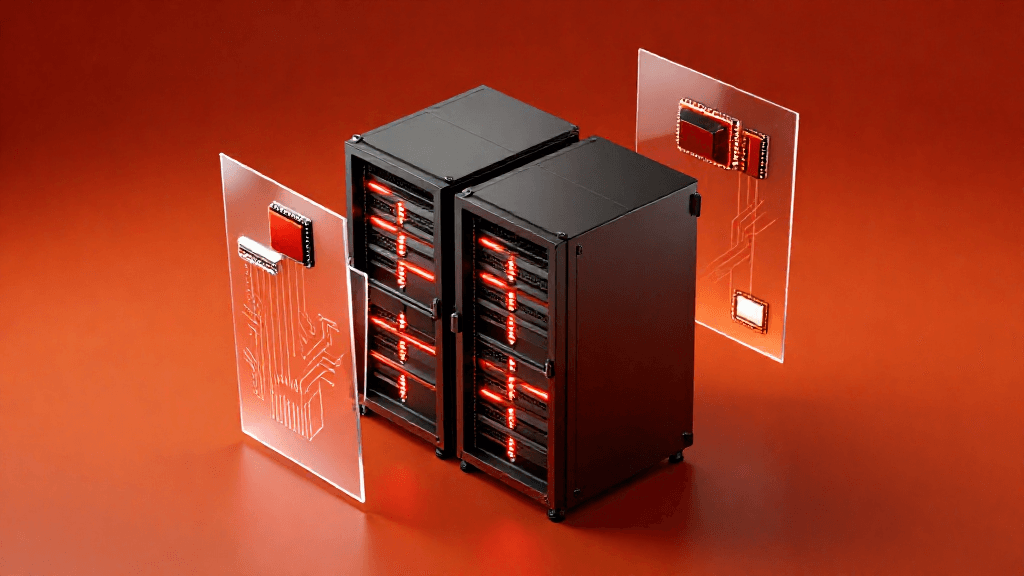
TensorWave secured $350M in Series B funding at a $1.55B valuation to expand its AMD Instinct GPU-powered AI cloud infrastructure and challenge NVIDIA's dominance.
Key Takeaways
TensorWave, a Las Vegas-based AI cloud infrastructure company, announced on June 10, 2026 that it had raised $350 million in Series B funding. The round values the company at $1.55 billion post-money and was co-led by Magnetar Capital and AMD Ventures. The funding signals growing investor confidence in AMD-based alternatives to the NVIDIA-dominated AI compute market.
Founded by former Lockheed Martin Skunk Works engineers, TensorWave operates exclusively on AMD Instinct GPUs. This deliberate hardware choice sets the company apart from virtually every major cloud provider, which relies primarily on NVIDIA's H100 and H200 accelerators.
Company and Infrastructure Overview
AMD-Exclusive Architecture
TensorWave currently operates 8,192 AMD MI325X GPUs. The company has already contracted its next deployment around AMD MI355X clusters, the next-generation Instinct series. This exclusive commitment to AMD hardware is not a hedge — it is a strategic positioning statement.
The MI325X delivers competitive memory bandwidth and HBM3 capacity suited for large-scale model training and inference. The upcoming MI355X is expected to close the performance gap with NVIDIA's Blackwell architecture further. By committing to AMD's roadmap entirely, TensorWave aligns its growth trajectory directly with AMD's competitiveness in the accelerator market.
Data Center Scale
TensorWave has secured over 2 gigawatts of long-term contracted data center capacity. For context, a single gigawatt of data center power supports thousands of high-density GPU racks. This capacity footprint places TensorWave in a league well beyond typical Series B startups and signals that the company is building for hyperscale AI workloads.
The Las Vegas headquarters is geographically notable. Nevada offers favorable energy costs and regulatory environment for data center operations, which supports TensorWave's cost competitiveness in a market where power expenses directly affect GPU-hour pricing.
Founding Team Background
The founding team's roots in Lockheed Martin's Skunk Works division — historically known for developing advanced defense systems with constrained resources and tight engineering discipline — suggest a culture oriented toward technical problem-solving under competitive pressure. Building cloud infrastructure for AI at scale requires exactly this profile: systems engineering rigor, supply chain management, and the ability to operate at the edge of hardware capabilities.
Market Analysis
The NVIDIA Monopoly Problem
NVIDIA controls approximately 80% of the AI accelerator market as of mid-2026. This concentration creates several structural problems for AI infrastructure buyers:
| Issue | Impact |
|---|---|
| Supply constraints | Multi-quarter GPU allocation lead times since 2023 |
| Price leverage | Limited alternatives give NVIDIA strong pricing power |
| Single-vendor risk | Business continuity exposure for infrastructure buyers |
TensorWave's AMD-only model directly addresses each of these concerns. AMD has invested heavily in its Instinct line and ROCm software stack. While software ecosystem maturity has historically lagged CUDA, AMD has made substantial progress, and TensorWave's engineering team is presumably capable of optimizing workloads on this stack.
Investment Composition as Signal
The co-lead investors tell an important story. Magnetar Capital is a sophisticated hedge fund known for structured and alternative investments. Its participation suggests financial confidence in TensorWave's revenue model and capital efficiency. AMD Ventures co-leading the round is strategically significant: AMD has a direct incentive to fund infrastructure companies that prove out the Instinct GPU stack at scale. TensorWave's success is, in part, AMD's proof of concept.
This alignment of financial and strategic capital is a stronger funding structure than pure venture money alone.
Cost and Democratization Implications
If TensorWave can operate profitably while offering competitive GPU-hour pricing on AMD infrastructure, it introduces genuine price competition into a market that has had little of it. AI model training costs have been a significant barrier for mid-sized organizations and startups. A credible AMD-based alternative could:
- Reduce GPU-hour rates through competition
- Expand the pool of organizations that can afford large-scale training runs
- Encourage AMD to accelerate its hardware and software roadmap
- Reduce systemic risk for enterprises overexposed to NVIDIA supply chains
The democratization angle is real but conditional. It depends on TensorWave achieving software stack parity — meaning ROCm compatibility with popular frameworks like PyTorch and JAX must be seamless enough that customers do not pay a productivity tax to use AMD hardware.
Pros and Cons
Pros
- Credible scale: 8,192 AMD MI325X GPUs already deployed with 2+ GW of contracted capacity demonstrates operational readiness beyond pilot stage.
- Strategic investor alignment: AMD Ventures co-leading the round creates hardware-cloud symbiosis that benefits both parties' long-term roadmaps.
- Supply chain diversification: Customers gain GPU capacity access outside NVIDIA's constrained allocation queue, reducing procurement bottlenecks.
- Competitive pricing potential: AMD hardware cost structures may enable lower GPU-hour rates, introducing needed price pressure to the AI cloud market.
- Experienced founding team: Skunk Works engineering background provides systems discipline for operating complex, high-density GPU infrastructure.
Cons
- ROCm ecosystem maturity gap: CUDA remains the dominant AI software ecosystem, and certain frameworks and workflows still run more reliably on NVIDIA hardware, creating potential customer friction.
- Unproven at hyperscale: Current GPU fleet is substantially smaller than major cloud providers, which may limit appeal for the largest enterprise AI workloads.
- AMD roadmap dependency: TensorWave's entire competitive position depends on AMD continuing to deliver hardware that closes the gap with NVIDIA's accelerator lineup.
- Market education burden: Most AI engineering teams are trained on CUDA workflows. TensorWave carries a customer education cost that NVIDIA-based clouds do not.
Outlook
TensorWave's $1.55 billion valuation reflects investor belief that the AI infrastructure market is large enough — and NVIDIA's grip sufficiently problematic — that a well-capitalized AMD-focused challenger can capture meaningful market share.
The next 18 months will be decisive. The MI355X deployment will demonstrate whether next-generation AMD hardware can close the remaining performance gap with NVIDIA's Blackwell line. If TensorWave can publish credible benchmark comparisons and attract enterprise customers willing to port workloads to ROCm, the competitive narrative becomes self-reinforcing.
Broader market dynamics also favor TensorWave's timing. Regulatory scrutiny of NVIDIA's market position has increased across multiple jurisdictions. Enterprise procurement teams are actively seeking supply chain diversification. And AMD's recent software investments suggest the ROCm ecosystem is improving faster than it did in previous years.
TensorWave is not positioned to displace NVIDIA-based clouds in the near term. It is positioned to become the leading AMD-based alternative — a role that could represent tens of billions of dollars in revenue if the AI compute market continues its current growth trajectory.
Conclusion
TensorWave's $350M Series B represents one of the most consequential bets in AI infrastructure for 2026. The company is not a generalist cloud provider; it is a focused, technically credible challenger built on the conviction that AMD can compete with NVIDIA at scale. For organizations frustrated by NVIDIA GPU allocation constraints or seeking to diversify their AI compute supply chain, TensorWave warrants serious evaluation. The funding scale, investor composition, and founding team pedigree all suggest this company has the resources to make its thesis viable.
Editor's Verdict
TensorWave Raises $350M Series B at $1.55B to Challenge NVIDIA with AMD Cloud earns a solid recommendation within the it news space.
The strongest case for paying attention is credible scale: 8,192 AMD MI325X GPUs already deployed with 2+ GW contracted capacity demonstrates operational readiness beyond pilot stage, which raises the bar for what readers should now expect from peers in this space. Reinforcing that, strategic investor alignment: AMD Ventures co-leading the round creates hardware-cloud symbiosis that benefits both parties' long-term roadmaps adds practical value rather than just headline appeal. The broader signal worth registering is straightforward: tensorWave's AMD Ventures co-investment creates a symbiotic relationship where AMD has direct financial incentive to ensure ROCm software parity for TensorWave's customers. On the other side of the ledger, ROCm ecosystem maturity gap: CUDA remains the dominant AI software ecosystem, and certain frameworks and workflows still run more reliably on NVIDIA hardware, creating potential customer friction is a real constraint, not a marketing footnote, and it should factor into any serious decision. Layered on top of that, unproven at hyperscale: Current GPU fleet is substantially smaller than major cloud providers, which may limit appeal for the largest enterprise AI workloads narrows the set of teams for whom this is an obvious yes.
For AI industry watchers, strategy teams, and decision-makers tracking platform shifts, this is a serious evaluation candidate, not just a curiosity to bookmark. For everyone else, the safer posture is to monitor coverage and revisit once the use cases that matter to your team are demonstrated in the wild.
Pros
- Credible scale: 8,192 AMD MI325X GPUs already deployed with 2+ GW contracted capacity demonstrates operational readiness beyond pilot stage
- Strategic investor alignment: AMD Ventures co-leading the round creates hardware-cloud symbiosis that benefits both parties' long-term roadmaps
- Supply chain diversification: Customers gain GPU capacity access outside NVIDIA's constrained allocation queue, reducing procurement bottlenecks
- Competitive pricing potential: AMD hardware cost structures may enable lower GPU-hour rates, introducing needed price pressure to the AI cloud market
- Experienced founding team: Skunk Works engineering background provides systems discipline for operating complex, high-density GPU infrastructure
Cons
- ROCm ecosystem maturity gap: CUDA remains the dominant AI software ecosystem, and certain frameworks and workflows still run more reliably on NVIDIA hardware, creating potential customer friction
- Unproven at hyperscale: Current GPU fleet is substantially smaller than major cloud providers, which may limit appeal for the largest enterprise AI workloads
- AMD roadmap dependency: TensorWave's entire competitive position depends on AMD continuing to deliver hardware that closes the gap with NVIDIA's accelerator lineup
References
Comments0
Key Features
TensorWave operates 8,192 AMD MI325X GPUs exclusively, with next-generation MI355X clusters already planned for deployment. The company has contracted over 2 gigawatts of long-term data center capacity, enabling hyperscale AI training and inference workloads. Co-led by Magnetar Capital and AMD Ventures, the $350M Series B creates a strategic alignment between financial and hardware stakeholders. Founded by former Lockheed Martin Skunk Works engineers, the team brings systems engineering discipline to large-scale GPU infrastructure. The company explicitly targets NVIDIA's approximately 80% AI accelerator market share by offering a fully AMD-based cloud alternative.
Key Insights
- TensorWave's AMD Ventures co-investment creates a symbiotic relationship where AMD has direct financial incentive to ensure ROCm software parity for TensorWave's customers.
- The 2+ gigawatt contracted data center capacity positions TensorWave well beyond a typical Series B startup, indicating plans to compete at near-hyperscale within a few years.
- NVIDIA's approximately 80% AI accelerator market share creates structural risks — supply bottlenecks, pricing leverage, and single-vendor dependency — that TensorWave directly addresses.
- The founding team's Lockheed Martin Skunk Works background suggests an engineering culture suited to operating at the edge of hardware capabilities with rigorous systems discipline.
- If TensorWave achieves ROCm software stack parity with CUDA, it could introduce genuine price competition into a GPU-hour market that has had little of it since 2023.
- The $1.55B valuation at Series B reflects investor confidence that the AI compute market is large and structurally imbalanced enough to support a well-capitalized challenger.
- The planned MI355X cluster deployment will serve as a critical proof point for whether next-generation AMD hardware can close the performance gap with NVIDIA's Blackwell architecture.
- Enterprise AI organizations facing multi-quarter NVIDIA GPU allocation lead times represent TensorWave's most immediately addressable customer segment.
Was this review helpful?
Share
Related AI Reviews

Meta Pulls Commercial Terms Clause on Scraping, AI Training
Meta removed a Commercial Terms sentence experts read as letting it scrape publisher sites for AI training. Meta says crawlers are unchanged.
Microsoft Maia 300: 96-Accelerator Rack, 2027 Rollout
Microsoft's Maia 300 inference chip claims up to 7x Maia 200's rack throughput on TSMC N2P chiplets, with production rollout starting in 2027.

Nadella: Treat Frontier AI Models as Insider Risks
Nadella's X essay urges treating frontier models as insider risks: controls outside the model, audit evidence and an emergency brake.

Google Pauses OSS VRP Product-Bug Rewards Over AI Slop
Google stopped taking product-vulnerability reports in its OSS bug bounty on Oct 1 over invalid AI submissions; supply-chain rewards continue.