
Anduril and Archer Unveil Thunder Autonomous Attack VTOL
Anduril and Archer unveiled Thunder, a joint autonomous attack VTOL aircraft, at Farnborough, with first flight targeted for 2027.
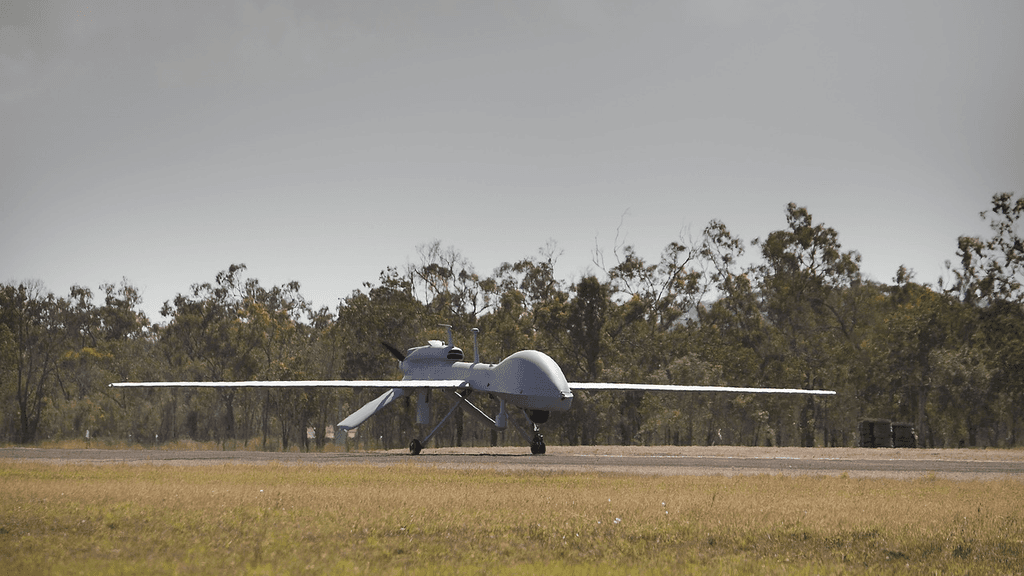
Anduril and Archer unveiled Thunder, a joint autonomous attack VTOL aircraft, at Farnborough, with first flight targeted for 2027.
Introduction
On July 20, 2026, at the Farnborough International Airshow in England, defense technology company Anduril Industries and electric aircraft maker Archer Aviation jointly unveiled a new autonomous vertical takeoff and landing (VTOL) aircraft platform. The dual-use design underpins two variants: a defense configuration named Thunder, presented by Anduril as a Group 5 autonomous attack rotorcraft, and a commercial configuration intended to serve as the basis for air taxi and cargo applications. The two companies describe the aircraft as a "clean sheet design," built from scratch rather than adapted from an existing airframe, and say it has already completed multiple full-scale surrogate test flights ahead of a first flight planned for 2027.
The announcement matters because it combines Anduril's autonomy and mission-systems software, developed for uncrewed defense platforms, with Archer's electric vertical lift hardware, developed for the emerging urban air mobility market. Archer is a publicly traded company (NYSE: ACHR), and its stock rose roughly 20% following the unveiling, according to CNBC, reflecting investor interest in the deal's dual commercial and defense potential.
Feature Overview
The aircraft uses a series hybrid-electric powertrain paired with dual tiltrotors capable of variable RPM operation. The tiltrotor configuration is intended to combine VTOL capability, allowing the aircraft to take off and land without a runway, with efficient wingborne cruise flight once airborne, a combination the companies say is central to the design's operating economics.
Anduril's defense variant, Thunder, is classified as a Group 5 autonomous attack rotorcraft, the U.S. military's category for the largest class of uncrewed aircraft systems. According to the official announcement, Thunder is designed to "multiply the combat power of current and next-generation crewed attack and assault aircraft," a framing that positions it as a companion platform operating alongside manned aircraft such as Apache helicopters rather than as a standalone replacement. The platform is built for runway-independent operation from austere or forward locations and supports a modular, heavy-payload configuration, though exact payload capacity, range, and speed figures were not disclosed in the announcement.
On the commercial side, Archer intends to use the same underlying airframe and propulsion architecture as the foundation for future air taxi and logistics variants, extending the company's existing electric aircraft work into a new class of vehicle. Archer said it plans to announce its first commercial customers for the platform in the days following the Farnborough reveal.
Anduril senior vice president of Maneuver Dominance, Shane Arnott, said: "From raw performance to producibility, harnessing the best technologies from the commercial eVTOL market for defense is central to how Thunder will deliver operational value." Archer founder and CEO Adam Goldstein added: "This mission required a clean sheet design, built from the ground up to meet the needs of modern commercial and defense applications."
Usability Analysis
Because Thunder and its commercial sibling are still pre-first-flight programs, there is no fielded aircraft to evaluate for day-to-day usability. What can be assessed is the credibility of the development pipeline: the companies state that multiple full-scale surrogate aircraft have already flown, which is a meaningful intermediate milestone that goes beyond a rendering or paper concept, though a surrogate test flight is not equivalent to flying the final production airframe with its intended autonomy stack.
For defense customers, the value proposition rests on autonomous operation reducing risk to aircrews on high-threat missions while still operating in close coordination with crewed attack helicopters. For commercial operators, the appeal lies in reusing a shared hardware and propulsion base across both defense and civilian variants, which could lower unit costs through shared manufacturing volume, an argument Archer and Anduril make explicitly by framing the program around "producibility." Whether that shared-platform economics claim holds up will depend on how much certification, avionics, and mission-system work can genuinely be reused between the military and civilian configurations, details the companies have not yet published.
Pros and Cons
Pros:
- Combines Anduril's autonomy and mission-systems software with Archer's electric VTOL hardware expertise, pairing two companies' core strengths rather than one company working outside its specialty
- Multiple full-scale surrogate test flights have already been completed, a concrete engineering milestone ahead of the 2027 first-flight target
- Dual-use design intended to share a common airframe and propulsion architecture across defense and commercial variants, potentially spreading development and manufacturing costs
- Runway-independent, austere-location operation extends where the aircraft can be deployed compared to conventional fixed-wing attack aircraft
- Public market validation, reflected in Archer's roughly 20% stock jump on the announcement, indicates investor confidence in the program's commercial logic
Cons:
- First flight is not planned until 2027, meaning the platform remains a pre-flight concept rather than a proven aircraft
- Key performance figures, including payload capacity, range, top speed, and unit cost, were not disclosed in the announcement
- No specific contractual or funding details between Anduril and Archer for the joint program have been made public
- Group 5 autonomous attack aircraft face a long path through military testing, evaluation, and procurement before reaching operational units
Outlook
The Thunder unveiling arrives amid growing Pentagon and allied-nation interest in lower-cost, autonomous aircraft that can operate alongside expensive crewed platforms rather than replace them outright, a concept often described as "loyal wingman" or force-multiplication doctrine. If Anduril and Archer can demonstrate that a shared civilian-military airframe genuinely reduces cost and development time, the partnership model could become a template other autonomy and aerospace companies look to replicate. Archer's plan to name commercial customers shortly after the defense reveal suggests the company is moving quickly to establish parallel civilian demand, which could help fund continued development of the shared platform.
The next milestones worth watching are the announced commercial customer names, any details on U.S. Department of Defense program interest or funding, and progress toward the 2027 first flight. Until surrogate testing gives way to flights of the actual production configuration, the program's real-world performance claims remain unverified.
Conclusion
Anduril and Archer's jointly developed autonomous VTOL platform, and its defense-focused Thunder variant, represent a notable attempt to bridge commercial electric aircraft technology with military autonomy systems under a single dual-use design. The companies have moved past the concept stage with completed surrogate test flights, but a 2027 first-flight target and undisclosed performance specifications mean the program's real capabilities are still to be proven. This news is most relevant to readers following defense technology, autonomous aircraft, and the commercial eVTOL industry. Rating: 4/5, reflecting a credible, well-resourced partnership with meaningful early engineering progress, tempered by the program's early developmental stage.
Editor's Verdict
Anduril and Archer Unveil Thunder Autonomous Attack VTOL earns a solid recommendation within the it news space.
The strongest case for paying attention is combines Anduril's autonomy and mission-systems software with Archer's electric VTOL hardware expertise, which raises the bar for what readers should now expect from peers in this space. Reinforcing that, multiple full-scale surrogate test flights completed ahead of the 2027 first-flight target adds practical value rather than just headline appeal. The broader signal worth registering is straightforward: anduril and Archer are combining autonomy software expertise with electric VTOL hardware expertise rather than either company building the full stack alone. On the other side of the ledger, first flight is not planned until 2027, leaving the platform unproven is a real constraint, not a marketing footnote, and it should factor into any serious decision. Layered on top of that, payload, range, speed, and cost figures were not disclosed narrows the set of teams for whom this is an obvious yes.
For AI industry watchers, strategy teams, and decision-makers tracking platform shifts, this is a serious evaluation candidate, not just a curiosity to bookmark. For everyone else, the safer posture is to monitor coverage and revisit once the use cases that matter to your team are demonstrated in the wild.
Pros
- Combines Anduril's autonomy and mission-systems software with Archer's electric VTOL hardware expertise
- Multiple full-scale surrogate test flights completed ahead of the 2027 first-flight target
- Dual-use design intended to share a common airframe and propulsion architecture across defense and commercial variants
- Runway-independent, austere-location operation extends deployment flexibility
- Strong public market reaction, with Archer stock rising roughly 20% on the announcement
Cons
- First flight is not planned until 2027, leaving the platform unproven
- Payload, range, speed, and cost figures were not disclosed
- No public details on contractual or funding terms between Anduril and Archer
References
Comments0
Key Features
1. Jointly developed dual-use series hybrid-electric VTOL platform with dual tiltrotors capable of variable RPM operation 2. Defense variant "Thunder" classified as a Group 5 autonomous attack rotorcraft designed to operate alongside crewed attack and assault aircraft 3. Runway-independent operation from austere locations with a modular, heavy-payload configuration 4. Multiple full-scale surrogate test flights already completed ahead of a planned 2027 first flight 5. Shared airframe architecture intended to serve both defense (Thunder) and commercial (air taxi/cargo) applications
Key Insights
- Anduril and Archer are combining autonomy software expertise with electric VTOL hardware expertise rather than either company building the full stack alone
- Thunder's Group 5 classification places it among the largest class of uncrewed aircraft systems tracked by the U.S. military
- The stated design goal is to multiply the combat power of existing crewed attack helicopters, positioning Thunder as a companion aircraft rather than a standalone replacement
- Archer's roughly 20% stock jump after the announcement signals investor confidence in the commercial upside of the partnership
- Completed full-scale surrogate test flights are a real engineering milestone, though they precede flights of the final production configuration
- A shared airframe across defense and commercial variants could lower unit costs through combined manufacturing volume, if certification and mission-system reuse proves feasible
- Key specifications such as payload, range, and cost were withheld at unveiling, leaving important performance questions open
- The 2027 first-flight target places Thunder several years away from potential operational deployment
Was this review helpful?
Share
Related AI Reviews

Meta Pulls Commercial Terms Clause on Scraping, AI Training
Meta removed a Commercial Terms sentence experts read as letting it scrape publisher sites for AI training. Meta says crawlers are unchanged.
Microsoft Maia 300: 96-Accelerator Rack, 2027 Rollout
Microsoft's Maia 300 inference chip claims up to 7x Maia 200's rack throughput on TSMC N2P chiplets, with production rollout starting in 2027.

Nadella: Treat Frontier AI Models as Insider Risks
Nadella's X essay urges treating frontier models as insider risks: controls outside the model, audit evidence and an emergency brake.
Google Pauses OSS VRP Product-Bug Rewards Over AI Slop
Google stopped taking product-vulnerability reports in its OSS bug bounty on Oct 1 over invalid AI submissions; supply-chain rewards continue.