
NAVER, NVIDIA, Brookfield: $10B Korea AI Factory Expansion
NAVER, NVIDIA, and Brookfield unveiled a plan to expand Korea's Sejong AI data center from 55MW to 200MW by 2028, backed by up to $10B in funding.
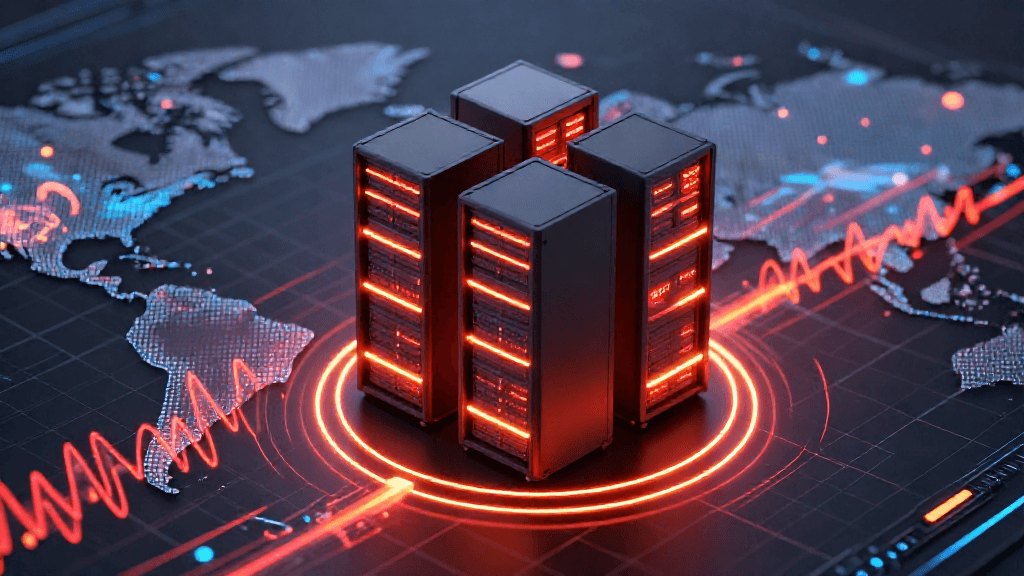
NAVER, NVIDIA, and Brookfield unveiled a plan to expand Korea's Sejong AI data center from 55MW to 200MW by 2028, backed by up to $10B in funding.
Key Takeaways
NAVER, South Korea's largest internet and search company, has partnered with NVIDIA and global infrastructure investor Brookfield to expand the country's national AI-factory infrastructure. The partnership was officially announced on July 25, 2026, through the NVIDIA Newsroom, with a corroborating press release distributed the same day via PR Newswire. The deal centers on NAVER's data center campus in Sejong, South Korea, which is planned to grow from 55 megawatts (MW) of capacity to 200 MW by 2028. Brookfield has signed a nonbinding term sheet to provide up to $9 billion toward the buildout, while NVIDIA is contributing $1 billion, bringing the combined potential investment to roughly $10 billion.
The announcement positions the project within South Korea's broader "national AI factory" strategy, an effort to build sovereign AI compute capacity domestically rather than relying solely on infrastructure hosted abroad. For a country with strong internet-services and semiconductor expertise but comparatively limited large-scale AI data center capacity, the deal signals a coordinated push among a domestic tech giant, a leading AI hardware supplier, and an international infrastructure investor to close that gap.
The Deal at a Glance
The core terms, as disclosed in the NVIDIA Newsroom announcement and the accompanying PR Newswire release, are summarized below.
| Detail | Figure |
|---|---|
| Announcement date | July 25, 2026 |
| Partners | NAVER, NVIDIA, Brookfield |
| Site | NAVER's Sejong data center campus, South Korea |
| Current capacity | 55 MW |
| Target capacity | 200 MW by 2028 |
| Brookfield funding | Up to $9B (nonbinding term sheet) |
| NVIDIA contribution | $1B |
| Combined potential investment | Up to roughly $10B |
| Framing | Part of South Korea's "national AI factory" strategy |
The structure pairs NAVER's existing data center site and operational expertise with Brookfield's capital and NVIDIA's direct financial and strategic backing. Brookfield, a global asset manager with an established track record of financing large infrastructure projects including power generation and data centers, is positioned as the primary funding source. Its commitment, however, is explicitly described as a nonbinding term sheet rather than a finalized, fully committed capital arrangement. That distinction matters: a term sheet outlines intended terms but typically still requires further negotiation, due diligence, and formal agreements before capital is actually deployed.
NVIDIA's $1 billion contribution is smaller in absolute terms but signals the company's direct financial interest in this specific buildout, beyond its usual role as a hardware vendor. Neither the NVIDIA Newsroom announcement nor the PR Newswire release disclosed specific GPU models, chip counts, or other technical architecture details for the expanded Sejong facility.
The planned expansion, from 55 MW to 200 MW, represents a capacity increase of roughly 3.6 times over the current site, to be reached by 2028. No intermediate capacity milestones were disclosed in either source.
Usability Analysis
If carried out as outlined, the expanded Sejong facility would meaningfully increase the amount of AI compute capacity available inside South Korea. For NAVER, this could support the buildout and operation of its own AI services, given the company already provides search, cloud, and AI products domestically. For other Korean enterprises and startups, added in-country data center capacity can reduce reliance on overseas cloud regions, which matters for latency-sensitive workloads and for hosting requirements tied to data residency or regulatory considerations.
For policymakers, sovereign AI infrastructure investment carries weight independent of any single company's use case. National AI factory initiatives are generally framed around reducing dependence on foreign-hosted compute for functions considered economically or strategically important. However, because the largest single piece of funding, Brookfield's up to $9 billion contribution, is described as nonbinding, the practical usability of this added capacity depends on that term sheet converting into a definitive, funded agreement. Until that happens, the 200 MW target should be read as a stated goal tied to a 2028 timeline, not capacity that is currently under construction or guaranteed to be delivered on schedule.
Pros and Cons
Pros
- Combines a domestic operator (NAVER), a leading AI hardware supplier (NVIDIA), and an experienced global infrastructure investor (Brookfield) in a single buildout.
- Targets a roughly 3.6x increase in data center capacity at an existing site, from 55 MW to 200 MW.
- NVIDIA's $1 billion contribution represents committed capital rather than a nonbinding pledge.
- Directly advances South Korea's stated goal of building sovereign, domestically hosted AI compute capacity.
Cons
- Brookfield's larger $9 billion contribution is a nonbinding term sheet, not a finalized funding commitment.
- No technical specifications, such as GPU models or chip architecture, were disclosed.
- The 2028 target date leaves roughly a year and a half for negotiation, financing, and construction, introducing execution risk.
- No intermediate milestones were disclosed, making it difficult to track progress before the 2028 target.
Outlook
The next concrete step for this partnership is converting Brookfield's nonbinding term sheet into a definitive, funded agreement. Until that happens, the up-to-$9 billion figure represents an intention rather than deployed capital. Assuming the term sheet is finalized, the practical work of expanding the Sejong campus, securing additional power, and installing infrastructure would still need to occur across the roughly year-and-a-half window before the 2028 target.
The deal also fits into a broader pattern of governments, domestic tech companies, and infrastructure investors coordinating on sovereign or national AI compute buildouts, rather than relying solely on infrastructure hosted by hyperscalers headquartered elsewhere. As that trend continues, further details on financing terms, construction timelines, and any additional partners are likely to shape how much of the currently nonbinding capital ultimately gets committed.
Conclusion
The NAVER-NVIDIA-Brookfield partnership outlines a substantial, well-sourced plan to expand South Korea's national AI-factory infrastructure, anchored by a nearly fourfold capacity increase at NAVER's Sejong data center by 2028. The involvement of NVIDIA as a direct financial partner, alongside Brookfield's infrastructure capital, gives the plan credible institutional backing. The most important caveat is that the majority of the funding, Brookfield's up to $9 billion, remains a nonbinding term sheet rather than committed capital. This makes the announcement most useful for policymakers, enterprise infrastructure planners, and AI infrastructure watchers tracking sovereign compute investment, who should monitor for a definitive agreement before treating the full $10 billion figure as secured.
Editor's Verdict
NAVER, NVIDIA, Brookfield: $10B Korea AI Factory Expansion is a workable proposition that fills a clear gap, even if it doesn't fundamentally change the landscape.
The strongest case for paying attention is brings together a domestic operator, a leading AI hardware supplier, and an experienced infrastructure investor in one coordinated buildout, which raises the bar for what readers should now expect from peers in this space. Reinforcing that, targets a roughly 3.6x capacity increase at an existing site, from 55MW to 200MW adds practical value rather than just headline appeal. The broader signal worth registering is straightforward: the deal pairs a domestic operator (NAVER), an AI hardware leader (NVIDIA), and a global infrastructure investor (Brookfield), reflecting a multi-party model for funding sovereign AI compute. On the other side of the ledger, brookfield's larger $9 billion contribution is a nonbinding term sheet, not a finalized funding commitment is a real constraint, not a marketing footnote, and it should factor into any serious decision. Layered on top of that, no technical specifications, such as GPU models or chip counts, were disclosed narrows the set of teams for whom this is an obvious yes.
For AI industry watchers, strategy teams, and decision-makers tracking platform shifts, the smart move is to track its trajectory and revisit once the rough edges are filed down. For everyone else, the safer posture is to monitor coverage and revisit once the use cases that matter to your team are demonstrated in the wild.
Pros
- Brings together a domestic operator, a leading AI hardware supplier, and an experienced infrastructure investor in one coordinated buildout
- Targets a roughly 3.6x capacity increase at an existing site, from 55MW to 200MW
- NVIDIA's $1 billion contribution is committed capital rather than a nonbinding pledge
- Directly supports South Korea's stated sovereign AI infrastructure goals
Cons
- Brookfield's larger $9 billion contribution is a nonbinding term sheet, not a finalized funding commitment
- No technical specifications, such as GPU models or chip counts, were disclosed
- The 2028 target date leaves substantial execution risk in financing and construction
- No intermediate milestones were disclosed, making progress difficult to track before 2028
References
Comments0
Key Features
1. Partnership announced July 25, 2026 between NAVER, NVIDIA, and Brookfield, covering South Korea's national AI-factory infrastructure buildout. 2. Expands NAVER's Sejong, South Korea data center from 55MW to 200MW of capacity by 2028, a roughly 3.6x increase. 3. Brookfield has signed a nonbinding term sheet to fund up to $9 billion of the buildout. 4. NVIDIA is contributing $1 billion as a direct financial partner in the project. 5. Combined potential investment of up to roughly $10 billion across both partners. 6. Framed by the companies as part of South Korea's sovereign "national AI factory" strategy. 7. No GPU models, chip counts, or technical architecture details were disclosed in the announcement.
Key Insights
- The deal pairs a domestic operator (NAVER), an AI hardware leader (NVIDIA), and a global infrastructure investor (Brookfield), reflecting a multi-party model for funding sovereign AI compute.
- Brookfield's up to $9 billion contribution is explicitly a nonbinding term sheet, meaning the largest share of the announced $10 billion is not yet committed capital.
- NVIDIA's $1 billion contribution signals direct financial interest in specific national AI infrastructure projects, beyond its traditional role as a hardware supplier.
- The targeted increase from 55MW to 200MW by 2028 would nearly quadruple capacity at NAVER's Sejong site, but no intermediate milestones were disclosed.
- The announcement is explicitly framed around South Korea's national AI factory strategy, tying a single company's data center expansion to broader sovereign compute goals.
- No technical details, such as GPU models or chip architecture, were disclosed, limiting assessment of the facility's eventual AI compute output.
- The roughly 18-month runway to the 2028 target leaves meaningful time for financing, construction, and potential renegotiation of terms.
- The deal illustrates a broader trend of domestic tech companies and international infrastructure investors coordinating on national AI compute buildouts.
Was this review helpful?
Share
Related AI Reviews

Meta Pulls Commercial Terms Clause on Scraping, AI Training
Meta removed a Commercial Terms sentence experts read as letting it scrape publisher sites for AI training. Meta says crawlers are unchanged.
Microsoft Maia 300: 96-Accelerator Rack, 2027 Rollout
Microsoft's Maia 300 inference chip claims up to 7x Maia 200's rack throughput on TSMC N2P chiplets, with production rollout starting in 2027.

Nadella: Treat Frontier AI Models as Insider Risks
Nadella's X essay urges treating frontier models as insider risks: controls outside the model, audit evidence and an emergency brake.

Google Pauses OSS VRP Product-Bug Rewards Over AI Slop
Google stopped taking product-vulnerability reports in its OSS bug bounty on Oct 1 over invalid AI submissions; supply-chain rewards continue.