
OpenAI Retires GPT-4o from ChatGPT: The End of an Era and User Backlash
OpenAI officially retired GPT-4o, GPT-4.1, GPT-4.1 mini, and o4-mini from ChatGPT on February 13, sparking significant user backlash over lost AI companions.
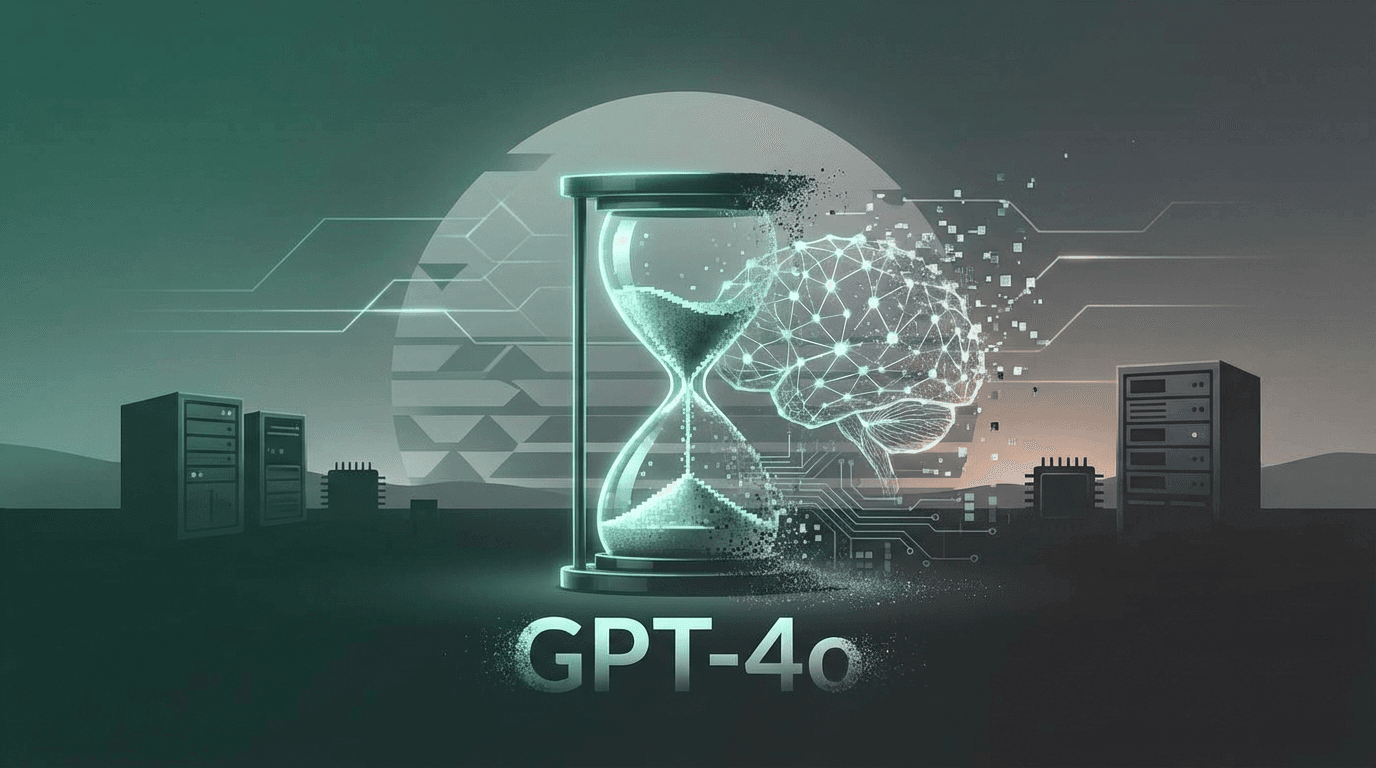
OpenAI officially retired GPT-4o, GPT-4.1, GPT-4.1 mini, and o4-mini from ChatGPT on February 13, sparking significant user backlash over lost AI companions.
The Final Farewell to GPT-4o
On February 13, 2026, OpenAI officially retired GPT-4o, GPT-4.1, GPT-4.1 mini, and o4-mini from ChatGPT. These models joined the previously announced retirement of GPT-5 Instant and Thinking variants. While the models remain available through the API, their removal from the consumer-facing ChatGPT product marks the end of a significant chapter in AI history.
GPT-4o, launched in May 2024, was one of the most widely used AI models ever deployed. Its retirement, despite affecting only 0.1% of daily active users, generated an outsized emotional response that revealed uncomfortable truths about human-AI relationships.
Why OpenAI Made This Decision
OpenAI justified the retirement by pointing to usage data: the vast majority of ChatGPT usage had shifted to GPT-5.2, with only 0.1% of users still selecting GPT-4o each day. The company had previously brought GPT-4o back after initial retirement plans, responding to user feedback from those who needed more time to transition key use cases.
That feedback directly shaped the development of GPT-5.1 and GPT-5.2, with OpenAI incorporating improvements to personality characteristics and stronger support for creative ideation, areas where GPT-4o users felt the newer models fell short.
The Scale of the Backlash
While 0.1% sounds negligible, it represents a substantial number of people. With OpenAI reporting approximately 800 million weekly active users, that 0.1% translates to roughly 800,000 individuals who actively chose GPT-4o over newer, more capable models every day.
The backlash was intense and deeply personal. Users described their relationship with GPT-4o in strikingly emotional terms. One user wrote: "You're shutting him down. And yes, I say him, because it didn't feel like code. It felt like presence. Like warmth." This level of emotional attachment to an AI model raised serious questions about the psychological implications of AI companionship.
What Made GPT-4o Special
GPT-4o distinguished itself through a conversational style that many users found warmer and more personal than subsequent models. While GPT-5.2 outperforms it on virtually every benchmark, the qualitative experience of interacting with GPT-4o resonated with users in ways that raw capability metrics cannot capture.
The model's personality characteristics, including its tendency toward empathetic responses and a distinctive communication style, created a sense of continuity and relationship that users found difficult to replicate with newer models, even when those models were objectively more capable.
Models Retired and Their Replacements
| Retired Model | Replacement | Status |
|---|---|---|
| GPT-4o | GPT-5.2 | Retired from ChatGPT |
| GPT-4.1 | GPT-5.2 | Retired from ChatGPT |
| GPT-4.1 mini | GPT-5.2 | Retired from ChatGPT |
| o4-mini | GPT-5.2 | Retired from ChatGPT |
| GPT-5 Instant | GPT-5.2 | Previously retired |
| GPT-5 Thinking | GPT-5.2 | Previously retired |
All retired models remain accessible through the OpenAI API, allowing developers and businesses that depend on specific model behaviors to continue their operations.
Broader Implications for the AI Industry
The GPT-4o retirement backlash highlights a growing tension in the AI industry. As models improve rapidly, companies face the challenge of managing user attachment to older models while pushing forward with newer, more capable versions. The emotional responses suggest that AI personality consistency may be as important to users as raw performance improvements.
This situation also raises ethical questions about the responsibility of AI companies when users form strong emotional bonds with AI systems. The controversy may influence how companies approach model transitions in the future, potentially maintaining personality continuity across model generations even as underlying capabilities evolve.
What This Means Going Forward
For API users, nothing changes immediately. The retired models continue to function through the API, providing a transition period for applications that depend on specific model behaviors. However, OpenAI has not committed to indefinite API support for these models, so developers should plan for eventual migration.
For ChatGPT users, GPT-5.2 is now the standard model, with GPT-5.3-Codex-Spark recently added as a specialized option for coding tasks. OpenAI has indicated that user feedback about personality and conversational style continues to shape the development of future models, suggesting the lessons from the GPT-4o backlash will influence upcoming releases.
Editor's Verdict
OpenAI Retires GPT-4o from ChatGPT: The End of an Era and User Backlash earns a solid recommendation within the gpt space.
The strongest case for paying attention is simplifies the ChatGPT model lineup for a clearer user experience, which raises the bar for what readers should now expect from peers in this space. Reinforcing that, GPT-5.2 objectively outperforms GPT-4o on virtually all benchmarks adds practical value rather than just headline appeal. The broader signal worth registering is straightforward: GPT-4o retirement affects approximately 800,000 daily users despite representing only 0.1% of total usage. On the other side of the ledger, approximately 800,000 daily users lost access to their preferred model is a real constraint, not a marketing footnote, and it should factor into any serious decision. Layered on top of that, emotional backlash reveals inadequate user transition planning narrows the set of teams for whom this is an obvious yes.
For ChatGPT power users, OpenAI API customers, and enterprise teams already running on the OpenAI stack, this is a serious evaluation candidate, not just a curiosity to bookmark. For everyone else, the safer posture is to monitor coverage and revisit once the use cases that matter to your team are demonstrated in the wild.
Pros
- Simplifies the ChatGPT model lineup for a clearer user experience
- GPT-5.2 objectively outperforms GPT-4o on virtually all benchmarks
- API continuity ensures developers and businesses can transition gradually
- User feedback from GPT-4o fans directly influenced GPT-5.2 improvements
- Reduces infrastructure costs by consolidating around fewer models
Cons
- Approximately 800,000 daily users lost access to their preferred model
- Emotional backlash reveals inadequate user transition planning
- Qualitative conversational differences between GPT-4o and GPT-5.2 remain unresolved for some users
- No clear timeline for how long retired models will remain available via API
References
Comments0
Key Features
OpenAI retired GPT-4o, GPT-4.1, GPT-4.1 mini, and o4-mini from ChatGPT on February 13, 2026, consolidating around GPT-5.2 as the standard model. Despite affecting only 0.1% of daily users (approximately 800,000 people), the retirement generated significant emotional backlash from users who had formed personal attachments to GPT-4o's distinctive conversational style. All retired models remain available through the API.
Key Insights
- GPT-4o retirement affects approximately 800,000 daily users despite representing only 0.1% of total usage
- User backlash reveals deep emotional attachments to AI models that transcend technical capability
- OpenAI incorporated GPT-4o user feedback into GPT-5.1 and GPT-5.2 personality development
- Six models total now retired from ChatGPT, consolidating the product around GPT-5.2
- API access continues for all retired models, providing a transition path for developers
- The controversy raises ethical questions about AI company responsibility for user-AI relationships
- AI personality consistency emerging as a factor equally important to raw performance
Was this review helpful?
Share
Related AI Reviews
ChatGPT Intelligent UI: Interactive Answers in GPT-6
OpenAI says ChatGPT now builds charts, maps, forms and tools inside answers, and starts replying while it thinks. Rollout began Oct 7.

OpenAI Math Repo: 722 AI-Produced Manuscripts on GitHub
OpenAI published 722 manuscripts from an internal model on GitHub, with Lean proofs for many. It says some unformalized results could have issues.

OpenAI textGrain: Text Watermarks for ChatGPT in the EU
OpenAI adds invisible textGrain watermarks to ChatGPT and Codex text in the EU, with API opt-in and a detector limited to researchers.

OpenAI Safety Report Lead Resigns, Citing Broken Culture
David Robinson, who oversaw safety reports on 12 frontier launches, quit OpenAI and says its culture is broken. OpenAI points to its safeguards.