
Google Launches Nano Banana 2: 4K Image Generation at Flash Speed
Google DeepMind unveils Nano Banana 2, combining Gemini Flash speed with 4K resolution, character consistency, and multilingual text rendering across 141 countries.
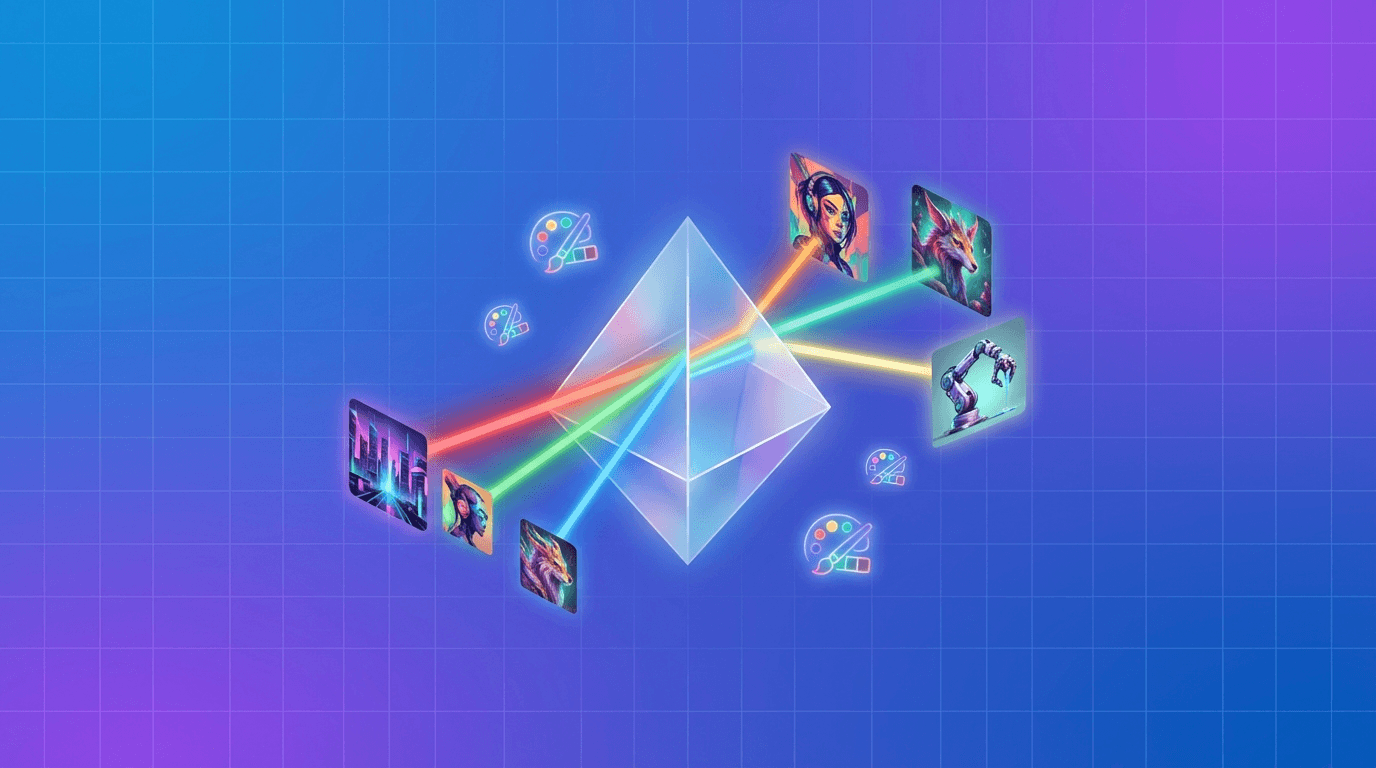
Google DeepMind unveils Nano Banana 2, combining Gemini Flash speed with 4K resolution, character consistency, and multilingual text rendering across 141 countries.
A New Standard for AI Image Generation
On February 26, 2026, Google DeepMind announced Nano Banana 2, its most capable image generation model to date. The model combines the advanced capabilities of Nano Banana Pro with the speed of Gemini Flash, delivering production-ready image generation that supports resolutions from 512 pixels to 4K across multiple aspect ratios.
Nano Banana 2 is now the default image generator across all Gemini modes, including Fast, Thinking, and Pro, on both mobile and desktop. It is also being deployed across Google Search via Lens and AI Mode in 141 countries.
Technical Capabilities
Nano Banana 2 represents a significant technical advancement over its predecessor in several dimensions:
Resolution and Visual Quality
The model generates images at resolutions ranging from 512 pixels to 4K, with support for multiple aspect ratios. Google describes the output as featuring "more vibrant lighting, richer textures, and sharper details" compared to the original Nano Banana model released in August 2025.
The jump to 4K native generation is notable. Most competing image models generate at lower resolutions and rely on upscaling algorithms to reach 4K. Native high-resolution generation preserves fine detail and coherence that upscaling often loses.
Character and Object Consistency
One of the most technically challenging aspects of AI image generation is maintaining visual consistency across multiple elements. Nano Banana 2 can maintain character consistency for up to five characters and fidelity for up to 14 objects within a single workflow.
This capability is essential for professional use cases. Creating marketing materials, storyboards, or product visualizations requires the same character or object to look identical across multiple generated images. Prior models frequently introduced subtle variations that broke visual continuity.
Multilingual Text Rendering
Nano Banana 2 can render text in any language directly within generated images with what Google describes as "real-world accuracy." Text rendering has been a persistent weakness across AI image generation models, with most producing garbled or misspelled text. If Nano Banana 2 delivers on this claim, it removes a significant barrier to using AI-generated images in production contexts.
Real-World Knowledge Integration
The model integrates with Gemini's knowledge base, pulling from real-time web information and images from Google Search. This enables contextually accurate generation for specific subjects, infographics, diagram creation from notes, and data visualizations. The integration with search data means the model can generate images that reflect current events, real products, and actual locations rather than relying solely on training data.
Speed: The Flash Advantage
Google positions Nano Banana 2 as operating at "Flash speed," referencing the Gemini Flash model family known for low-latency inference. While Google has not published exact generation time benchmarks, the Flash-speed designation suggests generation times measured in seconds rather than the minutes that some competing models require for high-resolution output.
The speed improvement matters for interactive use cases. In the Gemini app, users expect near-real-time responses. In Google Search, image generation must complete within the attention span of a user waiting for results. In developer applications, speed determines the feasibility of generating images on demand rather than pre-generating and caching them.
Availability and Integration
Nano Banana 2 is deployed across a broad range of Google products and developer tools:
| Platform | Integration |
|---|---|
| Gemini App | Default generator across Fast, Thinking, and Pro modes |
| Google Search | Available via Lens and AI Mode in 141 countries |
| Flow | Integrated into video editing workflows |
| Gemini API | Available in preview for developers |
| Gemini CLI | Command-line access for automation |
| Vertex API | Enterprise-grade access via Google Cloud |
| AI Studio | Interactive development and testing |
| Antigravity | Google's new AI development tool |
The breadth of integration is Google's key advantage. No other image generation model has built-in distribution across search, mobile, developer tools, and enterprise platforms simultaneously.
Content Attribution and Safety
All images generated by Nano Banana 2 carry a SynthID watermark, Google's proprietary system for identifying AI-generated content. The images also support C2PA Content Credentials, an industry standard developed by a coalition including Adobe, Microsoft, Google, OpenAI, and Meta.
The dual-layer attribution system addresses growing concerns about AI-generated images being used for misinformation. SynthID embeds an invisible watermark that persists through common image modifications, while C2PA provides human-readable provenance metadata.
Market Context and Competition
The AI image generation market has become increasingly competitive. OpenAI's DALL-E 4 and GPT-4o's native image generation, Midjourney's V7, and various open-source models like Stable Diffusion XL and Flux all compete for user attention.
Nano Banana 2's advantages lie in three areas:
- Distribution: Integration across Google's product ecosystem provides reach that standalone tools cannot match
- Speed: Flash-level inference times make real-time generation practical
- Knowledge grounding: Connection to Google Search data enables contextually accurate generation
The trade-off is creative control. Dedicated tools like Midjourney offer more granular style manipulation, while Nano Banana 2 is optimized for broad utility and integration.
The Original Nano Banana's Success
The original Nano Banana model, launched in August 2025, generated millions of images through the Gemini app, with particularly strong adoption in India. That user base provides Google with extensive feedback data that informed the development of the successor model.
The strong adoption in India suggests that free, integrated image generation tools have significant demand in markets where standalone paid tools face adoption barriers. Nano Banana 2's availability in 141 countries via Search extends this accessibility further.
Implications for Developers
For developers, Nano Banana 2 is accessible through the Gemini API, Gemini CLI, Vertex API, and AI Studio. The preview availability suggests that pricing and rate limits will be formalized as the model moves to general availability.
The key developer use case is embedding image generation into applications without managing separate model infrastructure. A developer building a marketing tool, for example, can call the Nano Banana 2 API to generate visuals on demand rather than integrating with a standalone image generation service.
Conclusion
Nano Banana 2 is Google's most comprehensive image generation release to date, combining 4K resolution, character consistency, multilingual text rendering, and Flash-speed inference into a single model deployed across Google's product ecosystem. Its competitive advantage is not any single technical feature but the breadth of integration, from consumer search to enterprise APIs. For users and developers within the Google ecosystem, it eliminates the need to reach for separate image generation tools. For competitors, it raises the bar on what integrated AI image generation should deliver.
Editor's Verdict
Google Launches Nano Banana 2: 4K Image Generation at Flash Speed earns a solid recommendation within the gemini space.
The strongest case for paying attention is 4K native resolution with multiple aspect ratio support sets a new quality standard for integrated image generators, which raises the bar for what readers should now expect from peers in this space. Reinforcing that, flash-speed inference enables real-time generation practical for interactive and search use cases adds practical value rather than just headline appeal. The broader signal worth registering is straightforward: nano Banana 2 supports native 4K resolution generation without relying on upscaling, a capability most competitors lack. On the other side of the ledger, less creative control compared to dedicated tools like Midjourney that offer granular style manipulation is a real constraint, not a marketing footnote, and it should factor into any serious decision. Layered on top of that, preview status for developer APIs means pricing and rate limits are not yet finalized narrows the set of teams for whom this is an obvious yes.
For Google Cloud and Workspace integrators, multimodal-first teams, and Gemini API adopters, this is a serious evaluation candidate, not just a curiosity to bookmark. For everyone else, the safer posture is to monitor coverage and revisit once the use cases that matter to your team are demonstrated in the wild.
Pros
- 4K native resolution with multiple aspect ratio support sets a new quality standard for integrated image generators
- Flash-speed inference enables real-time generation practical for interactive and search use cases
- Broadest distribution of any image model through Google Search, Gemini app, and developer APIs simultaneously
- Real-world knowledge integration via Google Search produces more contextually accurate outputs
- Free availability across Google products lowers barriers to adoption in price-sensitive markets
Cons
- Less creative control compared to dedicated tools like Midjourney that offer granular style manipulation
- Preview status for developer APIs means pricing and rate limits are not yet finalized
- Google ecosystem dependency limits utility for developers and users outside Google's platform
- Content safety filters may restrict generation of legitimate creative content in some edge cases
References
Comments0
Key Features
Google DeepMind launched Nano Banana 2 on February 26, 2026, combining Gemini Flash speed with resolutions from 512px to 4K. The model maintains character consistency for up to 5 characters and 14 objects per workflow, renders multilingual text with real-world accuracy, and integrates with Google Search for contextually grounded generation. It is the default image generator across Gemini app modes and available in 141 countries via Search.
Key Insights
- Nano Banana 2 supports native 4K resolution generation without relying on upscaling, a capability most competitors lack
- Character consistency for up to 5 characters and 14 objects addresses a major pain point in professional image generation workflows
- Multilingual text rendering with real-world accuracy could eliminate one of the most persistent weaknesses in AI image generation
- Integration with Google Search data enables contextually grounded image generation based on real-time information
- Deployment across 141 countries via Google Search provides distribution that standalone image generation tools cannot match
- The original Nano Banana model generated millions of images since August 2025, with strong adoption in India informing the successor
- All generated images carry SynthID watermarks and C2PA Content Credentials for AI-generated content attribution
Was this review helpful?
Share
Related AI Reviews
Google Play Adds Private Vibe-Coded Apps From AI Studio
Google Play now lets users 18+ in select markets run private personal apps built in Google AI Studio, using only a standard Google account.
Google Playground Launches: Build Games From Text Prompts
Google's experimental Playground lets U.S. adults (18+) build and share games from text prompts. WIRED found it fun but samey.
Gemini Agent: Google Cloud's Universal Work Agent
Google Cloud unveiled the Gemini agent at Gemini at Work 2026: one agent for knowledge work and code, in enterprise private preview per The Verge.
SynthID Detector Opens to Everyone with Partner Support
Google opened SynthID Detector on SynthID.com on Oct 7, checking images, video and audio, with partners including OpenAI, NVIDIA and Kakao.