
Gemini Can Now Generate Images of Your Life Using Google Photos and Personal Intelligence
Google expanded Gemini's Personal Intelligence feature on April 16, 2026, enabling AI-generated images drawn from users' Google Photos library with Nano Banana 2, available to paid subscribers in the US.
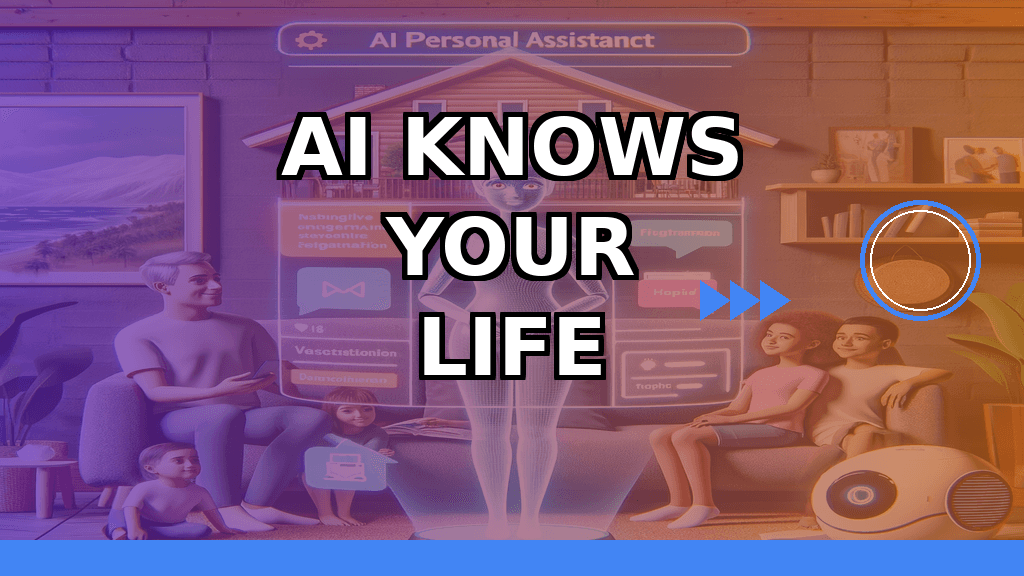
Google expanded Gemini's Personal Intelligence feature on April 16, 2026, enabling AI-generated images drawn from users' Google Photos library with Nano Banana 2, available to paid subscribers in the US.
Google Connects Gemini to Your Photo Library for Personalized Image Generation
On April 16, 2026, Google announced a significant expansion of Gemini's Personal Intelligence system: the AI assistant can now generate images that include real people, places, and contexts from the user's own Google Photos library. Powered by Nano Banana 2, the new capability allows subscribers to make simple requests like "create a claymation image of me and my family doing our favorite activity" and receive output that is grounded in their actual photos — no manual uploads required.
The update builds directly on Gemini's Personal Intelligence foundation, which launched earlier this year to connect Google's AI assistant to data across Gmail, Google Photos, YouTube, and Search. The April update is specifically about image generation: taking Personal Intelligence's contextual awareness and applying it to visual output rather than just text.
How the Feature Works
Automatic Context From Google Photos
When a user connects their Google Photos library to Gemini, the system reads labels attached to people and scenes in their photo collection. If a user has labeled family members, tagged favorite vacation spots, or organized events in Albums, Gemini can reference those contextual anchors when generating an image. A prompt as simple as "design my dream home" can incorporate architectural preferences inferred from photos the user has saved, without the user ever explaining their taste explicitly.
Nano Banana 2 Image Generation Engine
The image generation runs on Nano Banana 2, Google's latest image synthesis model integrated into the Gemini ecosystem. Nano Banana 2 supports the personalization layer by grounding visual output in reference photos from the library while maintaining stylistic coherence. The model handles the translation from photo context to generated image without requiring technical prompting from the user.
Sources Transparency and Privacy Controls
Each generated image includes a Sources button that shows which photos from the library informed the output. Users can verify the contextual basis, correct inaccuracies, and provide feedback. Additional reference photos can be added to any generation via the "+" icon. Google states that Gemini does not directly train its models on users' private Google Photos libraries. The photo connection is opt-in and can be adjusted or disabled in settings at any time. Only limited data — such as specific prompts and model responses — may be used for functionality improvement.
Iterative Refinement
If Gemini's first attempt does not match expectations, users can request adjustments conversationally. The system allows selection of alternate reference photos, modification of style, or correction of contextual inferences through natural language follow-ups.
Usability Analysis
The practical appeal of this feature is significant for casual users. Generating a personalized holiday card, creating a custom birthday image for a family member, or visualizing a dream vacation with actual family members present — these are tasks that previously required either photo editing skills or manual reference image uploads. Personal Intelligence eliminates the friction of the upload step and the need to craft detailed visual prompts.
The Sources button and opt-in privacy model represent thoughtful design. Users who are uncomfortable with AI accessing their photo library can decline the connection entirely, and those who do connect have clear visibility into how their data influenced each output. This transparency is more explicit than what most AI image generators offer.
The limitation is access: currently restricted to Google AI Plus, Pro, and Ultra subscribers in the United States. The rollout covers web, Android, and iOS but has not yet reached Gemini in Chrome desktop, which is coming "soon" according to Google.
Privacy Considerations
Personalized image generation from private photo libraries raises legitimate privacy questions. Google's mitigation approach relies on three pillars: opt-in only, no direct model training on private photos, and user-accessible transparency about what data informed each image. These are reasonable safeguards, but users should understand that prompt text and responses may still be used for model improvement under Google's standard terms.
The feature also raises questions about image consent: if a photo library contains images of people who have not consented to being used in AI-generated images, those individuals' likenesses could appear in outputs. Google has not yet addressed this scenario explicitly in its documentation.
How This Compares to Competitors
No major competitor currently offers a comparable end-to-end personal image generation system at this level of contextual depth. Apple Intelligence has personalized image generation in iOS 18 (Genmoji and Image Playground), but it relies on the user providing direct reference context rather than pulling from a connected photo library automatically. Anthropic's Claude Design, announced the same week, focuses on professional visual assets rather than personal life images.
The combination of a 750 million monthly active user base (as of March 2026) and deep Google ecosystem integration gives Gemini a distribution advantage for this feature that competitors would find difficult to replicate quickly.
Pros and Cons
Strengths: Eliminates manual upload friction for personalized image generation. Sources transparency is more explicit than industry standard. Opt-in privacy model is user-controlled. The feature is deeply integrated with the Google ecosystem, making it accessible within tools users already use daily.
Limitations: Limited to paid subscribers (Plus, Pro, Ultra) in the US only at launch. Not yet available in Chrome desktop. Privacy questions around photo library access and third-party consent remain only partially addressed. Initial generations may not match expectations, requiring iterative correction.
Outlook
Personal image generation grounded in actual photo libraries represents a meaningful step toward AI that genuinely knows its user rather than generating generically. As the feature graduates from US-only rollout and extends to Chrome desktop and eventually free-tier users, its reach will grow substantially. The precedent it sets — AI image generation that draws on a personal data layer rather than purely on text prompts — is likely to influence how competitors approach personalization in image generation over the next 12 months.
Conclusion
Gemini's Personal Intelligence expansion to image generation is a practical and well-designed feature for subscribers in the Google ecosystem. The Sources transparency and opt-in privacy controls reflect careful product thinking. The current restriction to paid US subscribers limits immediate reach, but the capability itself is a genuine step forward in making AI-generated images personally meaningful rather than generically produced. Recommended for Google AI Plus/Pro/Ultra subscribers who want fast, personalized visual content without manual photo uploads.
Editor's Verdict
Gemini Can Now Generate Images of Your Life Using Google Photos and Personal Intelligence earns a solid recommendation within the gemini space.
The strongest case for paying attention is eliminates manual upload friction — Gemini automatically draws from connected Google Photos without user effort, which raises the bar for what readers should now expect from peers in this space. Reinforcing that, sources button provides clear transparency about which photos influenced each generated image adds practical value rather than just headline appeal. The broader signal worth registering is straightforward: personal Intelligence grounded image generation eliminates the biggest friction in personalized AI image creation: the manual upload and description step. On the other side of the ledger, restricted to paid subscribers (Google AI Plus, Pro, Ultra) in the US only at initial rollout is a real constraint, not a marketing footnote, and it should factor into any serious decision. Layered on top of that, no explicit consent framework for generating images featuring third parties who appear in a user's photo library narrows the set of teams for whom this is an obvious yes.
For Google Cloud and Workspace integrators, multimodal-first teams, and Gemini API adopters, this is a serious evaluation candidate, not just a curiosity to bookmark. For everyone else, the safer posture is to monitor coverage and revisit once the use cases that matter to your team are demonstrated in the wild.
Pros
- Eliminates manual upload friction — Gemini automatically draws from connected Google Photos without user effort
- Sources button provides clear transparency about which photos influenced each generated image
- Opt-in privacy model gives users full control over photo library access with clear settings management
- Deep Google ecosystem integration makes personalized image generation accessible within tools users already use
Cons
- Restricted to paid subscribers (Google AI Plus, Pro, Ultra) in the US only at initial rollout
- No explicit consent framework for generating images featuring third parties who appear in a user's photo library
- Not yet available in Gemini for Chrome desktop, limiting access for desktop-primary users
- Initial generation results may not match expectations and require multiple conversational correction cycles
References
Comments0
Key Features
1. Automatic photo library context: Gemini reads labels and content from connected Google Photos to ground image generation in the user's actual life without manual uploads. 2. Nano Banana 2 engine: Powers personalized image synthesis by translating photo library context into cohesive visual output. 3. Sources transparency button: Shows users exactly which photos from their library informed each generated image for full visibility. 4. Privacy-first opt-in model: Google Photos connection is entirely optional, can be adjusted anytime, and Google does not directly train models on private photo libraries. 5. Iterative conversational refinement: Users can adjust outputs, add reference photos, and correct context inferences through natural follow-up conversation.
Key Insights
- Personal Intelligence grounded image generation eliminates the biggest friction in personalized AI image creation: the manual upload and description step
- Sources transparency is more explicit than what most AI image generators offer, setting a useful industry benchmark for user trust
- The opt-in, adjustable photo connection reflects Google's awareness of the privacy sensitivity around AI accessing personal photo libraries
- Gemini's 750M monthly active user base gives Google significant distribution advantage for rolling out personal image features
- The lack of clear consent framework for third-party individuals who appear in a user's photo library is an unresolved privacy consideration
- Restricting to paid tiers at launch allows Google to test the feature under high-sensitivity conditions before broader consumer rollout
- The feature positions Gemini as a daily-life AI companion rather than just a productivity assistant, deepening ecosystem lock-in for Google users
Was this review helpful?
Share
Related AI Reviews

Google Play Adds Private Vibe-Coded Apps From AI Studio
Google Play now lets users 18+ in select markets run private personal apps built in Google AI Studio, using only a standard Google account.

Google Playground Launches: Build Games From Text Prompts
Google's experimental Playground lets U.S. adults (18+) build and share games from text prompts. WIRED found it fun but samey.

Gemini Agent: Google Cloud's Universal Work Agent
Google Cloud unveiled the Gemini agent at Gemini at Work 2026: one agent for knowledge work and code, in enterprise private preview per The Verge.

SynthID Detector Opens to Everyone with Partner Support
Google opened SynthID Detector on SynthID.com on Oct 7, checking images, video and audio, with partners including OpenAI, NVIDIA and Kakao.