
Google Sunsets Gemini 3 Pro Today: What Developers Need to Know About the 3.1 Pro Migration
Google discontinues Gemini 3 Pro Preview on March 9, 2026. Developers must migrate to Gemini 3.1 Pro Preview, which scores 77.1% on ARC-AGI-2 vs. 3 Pro's sub-35%.
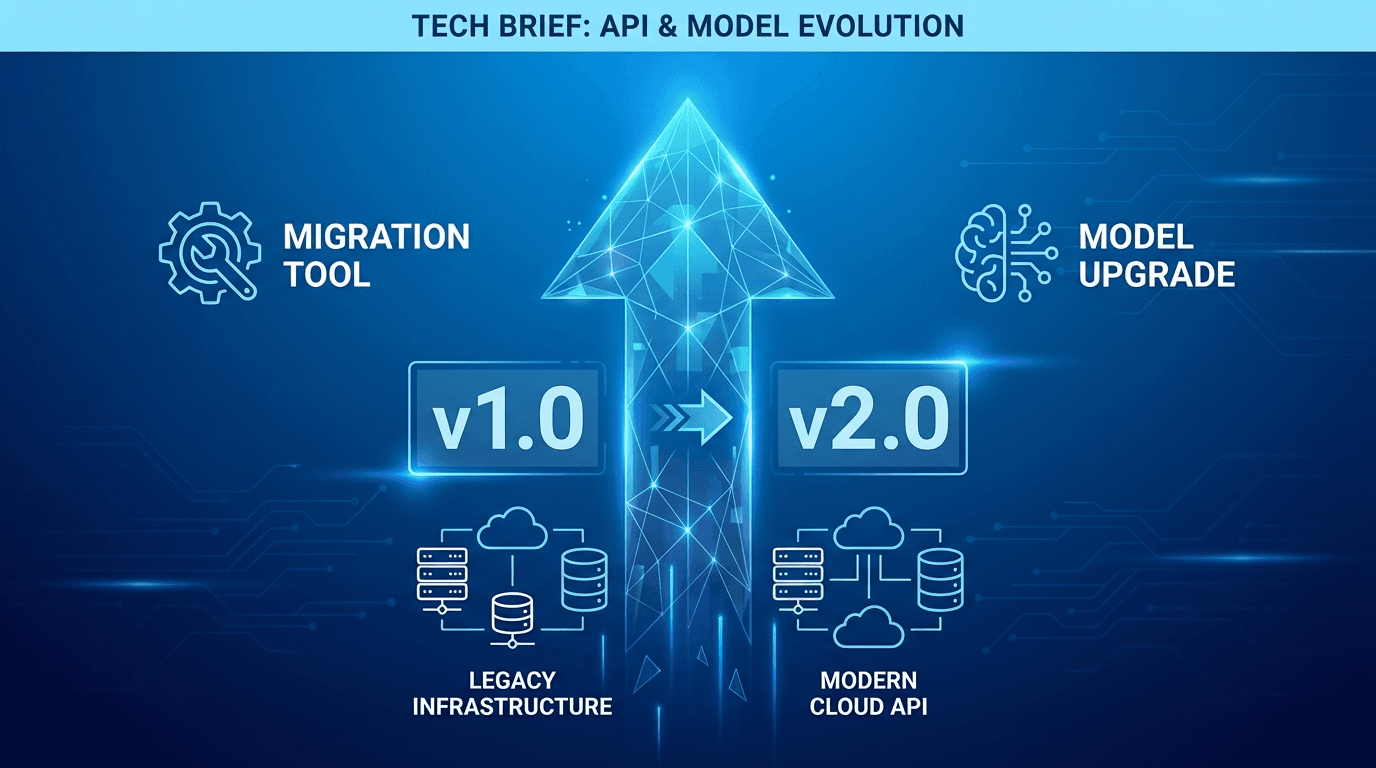
Google discontinues Gemini 3 Pro Preview on March 9, 2026. Developers must migrate to Gemini 3.1 Pro Preview, which scores 77.1% on ARC-AGI-2 vs. 3 Pro's sub-35%.
Gemini 3 Pro Preview Shuts Down Today
March 9, 2026 marks the official shutdown of Gemini 3 Pro Preview on the Gemini API and Google AI Studio. After today, API calls specifying the gemini-3-pro-preview model identifier will fail. Google has been directing developers to migrate to Gemini 3.1 Pro Preview since the initial deprecation notice on February 26, 2026, giving approximately 11 days for the transition.
The latest model alias was already redirected to Gemini 3.1 Pro Preview on March 6, meaning developers who relied on the alias rather than a specific model version have already been using the newer model for three days. However, any applications hardcoded to gemini-3-pro-preview will break today unless updated.
Migration: A One-Line Change with Big Implications
The technical migration itself is straightforward. In most implementations, developers need to change a single line of code:
Before: model = "gemini-3-pro-preview"
After: model = "gemini-3.1-pro-preview"
However, the simplicity of the code change belies several considerations that developers should evaluate before and after migration:
Output Differences: Gemini 3.1 Pro produces different outputs than 3 Pro for the same prompts. Applications that rely on consistent output formatting, specific response patterns, or fine-tuned prompt engineering for 3 Pro may need prompt adjustments after migration.
Rate Limits and Quotas: Gemini 3.1 Pro may have different rate limiting behavior, particularly during the transition period when traffic is consolidating from two models to one.
Pricing: Both preview models are currently free tier eligible, but developers should verify pricing terms as Google moves toward general availability.
Performance: Why Google Is Forcing the Upgrade
Google's rationale for sunsetting Gemini 3 Pro is straightforward: 3.1 Pro is dramatically better. The performance gap between the two models is not incremental but generational.
On the ARC-AGI-2 benchmark, which tests abstract reasoning and pattern recognition, Gemini 3.1 Pro scores 77.1%. This is more than double the score achieved by Gemini 3 Pro. The improvement translates to noticeably better performance on tasks requiring multi-step logic, data synthesis, and complex code generation.
| Benchmark | Gemini 3 Pro | Gemini 3.1 Pro | Improvement |
|---|---|---|---|
| ARC-AGI-2 | Sub-35% | 77.1% | 2x+ |
| Multi-step reasoning | Baseline | Significantly improved | Major |
| Complex code generation | Baseline | Significantly improved | Major |
| Data synthesis | Baseline | Significantly improved | Major |
Google framed the shutdown as a resource management decision: maintaining two models simultaneously consumes accelerator capacity that could be better allocated to the superior 3.1 Pro model. By consolidating, Google can improve reliability and reduce latency for the remaining model.
Current Stability Concerns
Despite the performance improvements, Gemini 3.1 Pro is not without issues. Developers have reported several stability concerns during the preview period:
503 Service Unavailable Errors: Frequent 503 errors during peak usage periods indicate that the infrastructure behind 3.1 Pro is still being scaled. Developers should implement retry logic with exponential backoff to handle these transient failures.
High Latency: First-token latency ranges from 21 to 31 seconds under normal conditions, with peaks reaching 104 seconds. For applications that require responsive user experiences, this latency may be a significant concern.
Extended Thinking Loops: The model occasionally enters extended "thinking" states lasting 60 to 90 seconds or more. Requests that exceed 120 seconds may time out entirely, resulting in failed completions.
These issues are expected to resolve as the model moves from preview to general availability, which is projected for April to May 2026. However, for production applications migrating today, these stability characteristics require engineering consideration.
Timeline of the Transition
| Date | Event |
|---|---|
| November 2025 | Gemini 3 Pro Preview released |
| February 19, 2026 | Gemini 3.1 Pro Preview launched |
| February 26, 2026 | Deprecation notice issued for Gemini 3 Pro |
| March 6, 2026 | latest alias redirected to 3.1 Pro |
| March 9, 2026 | Gemini 3 Pro Preview shuts down |
| April-May 2026 (projected) | Gemini 3.1 Pro general availability |
Recommended Migration Strategy
For developers migrating today, the following approach minimizes risk:
- Update the model identifier from
gemini-3-pro-previewtogemini-3.1-pro-previewin all configuration files and code. - Test prompt outputs against expected results. Gemini 3.1 Pro's improved reasoning may produce different response structures that downstream systems need to accommodate.
- Implement retry logic with exponential backoff to handle 503 errors during the current high-traffic period.
- Set appropriate timeouts (recommended: 180 seconds or higher) to accommodate the model's occasional extended thinking periods.
- Consider multi-model fallback by configuring automatic switching to Claude or GPT when Gemini is unavailable, reducing single-provider dependency.
Pros
- Gemini 3.1 Pro delivers more than double the reasoning performance of 3 Pro on ARC-AGI-2, a significant capability upgrade
- Migration requires only a one-line code change in most implementations, minimizing engineering effort
- Consolidating to a single model allows Google to allocate more infrastructure resources, potentially improving reliability
- The
latestalias redirect on March 6 provided a three-day soft transition for developers using dynamic model selection - Free-tier access remains available during the preview period, keeping experimentation costs low
Cons
- The 11-day deprecation window (February 26 to March 9) is short for enterprise applications requiring change management processes
- Gemini 3.1 Pro exhibits stability issues including 503 errors, high latency (up to 104 seconds), and extended thinking loops
- Output differences between 3 Pro and 3.1 Pro may break applications with prompt engineering tuned for the older model
- No SLA guarantees during the preview period leave production applications without reliability commitments
Outlook
The Gemini 3 Pro sunset is a standard lifecycle event for preview models, but it highlights a broader pattern in the AI industry: the pace of model iteration is accelerating, and developers must design systems that can adapt to frequent model changes. Gemini 3 Pro existed for approximately four months before being superseded, and 3.1 Pro itself will likely be replaced when Gemini 3.1 reaches general availability or a newer version launches.
For developers, the practical takeaway is to build provider-abstraction layers and avoid hardcoding model identifiers wherever possible. The one-line migration path for this particular transition is unusually clean; future model changes may involve API surface changes that require more substantial refactoring.
The general availability release of Gemini 3.1 Pro, projected for April to May 2026, should resolve the current stability issues and provide the SLA guarantees that production workloads require. Until then, developers should treat the preview as a capable but not fully production-ready model.
Conclusion
Google's shutdown of Gemini 3 Pro Preview today is a necessary step in the Gemini model lifecycle. The performance jump to 3.1 Pro is substantial enough to justify the forced migration, even if the 11-day notice period was tight. Developers who migrate today gain access to significantly improved reasoning capabilities, but should be prepared to handle stability issues that are characteristic of preview-stage models. The path forward is clear: update the model identifier, test your outputs, implement resilience patterns, and plan for general availability in the coming months.
Editor's Verdict
Google Sunsets Gemini 3 Pro Today: What Developers Need to Know About the 3.1 Pro Migration earns a solid recommendation within the gemini space.
The strongest case for paying attention is gemini 3.1 Pro delivers more than 2x reasoning performance improvement on ARC-AGI-2 over the deprecated model, which raises the bar for what readers should now expect from peers in this space. Reinforcing that, migration requires only a single-line code change in most implementations adds practical value rather than just headline appeal. The broader signal worth registering is straightforward: gemini 3.1 Pro scores 77.1% on ARC-AGI-2, more than doubling Gemini 3 Pro's performance, representing a generational leap in reasoning capability. On the other side of the ledger, 11-day deprecation notice is insufficient for enterprise change management and testing cycles is a real constraint, not a marketing footnote, and it should factor into any serious decision. Layered on top of that, gemini 3.1 Pro has stability issues including 503 errors and latency peaks of 104 seconds narrows the set of teams for whom this is an obvious yes.
For Google Cloud and Workspace integrators, multimodal-first teams, and Gemini API adopters, this is a serious evaluation candidate, not just a curiosity to bookmark. For everyone else, the safer posture is to monitor coverage and revisit once the use cases that matter to your team are demonstrated in the wild.
Pros
- Gemini 3.1 Pro delivers more than 2x reasoning performance improvement on ARC-AGI-2 over the deprecated model
- Migration requires only a single-line code change in most implementations
- Consolidating to one model allows Google to improve infrastructure allocation and potentially reduce latency
- Free-tier access continues during the preview period for cost-effective experimentation
- The three-day soft transition via alias redirect minimized sudden breakage for dynamic model users
Cons
- 11-day deprecation notice is insufficient for enterprise change management and testing cycles
- Gemini 3.1 Pro has stability issues including 503 errors and latency peaks of 104 seconds
- Output differences may break applications with prompt engineering tuned for Gemini 3 Pro
- No SLA guarantees during preview leave production workloads without reliability commitments
References
Comments0
Key Features
Google officially shuts down Gemini 3 Pro Preview on the Gemini API and Google AI Studio on March 9, 2026. Developers must migrate to Gemini 3.1 Pro Preview, which scores 77.1% on ARC-AGI-2 (more than double Gemini 3 Pro). The migration is a one-line code change. The `latest` model alias was redirected on March 6. Current 3.1 Pro stability concerns include 503 errors, 21-104 second latency, and extended thinking loops. General availability is projected for April-May 2026.
Key Insights
- Gemini 3.1 Pro scores 77.1% on ARC-AGI-2, more than doubling Gemini 3 Pro's performance, representing a generational leap in reasoning capability
- The migration is technically a one-line code change, but output differences between models may require prompt engineering adjustments
- Google framed the shutdown as a resource management decision to free accelerator capacity for the superior model
- The 11-day deprecation window from notice to shutdown is aggressive by enterprise standards, pressuring teams with formal change management processes
- Current stability issues including 503 errors and latency spikes up to 104 seconds indicate the infrastructure is still scaling for consolidated traffic
- The `latest` alias redirect on March 6 provided a soft transition but may have surprised developers who expected stable behavior from the alias
- Developers should implement multi-model fallback strategies to avoid single-provider dependency during preview-stage instability
- The four-month lifespan of Gemini 3 Pro Preview reflects the accelerating pace of model iteration in the AI industry
Was this review helpful?
Share
Related AI Reviews
Google Play Adds Private Vibe-Coded Apps From AI Studio
Google Play now lets users 18+ in select markets run private personal apps built in Google AI Studio, using only a standard Google account.

Google Playground Launches: Build Games From Text Prompts
Google's experimental Playground lets U.S. adults (18+) build and share games from text prompts. WIRED found it fun but samey.
Gemini Agent: Google Cloud's Universal Work Agent
Google Cloud unveiled the Gemini agent at Gemini at Work 2026: one agent for knowledge work and code, in enterprise private preview per The Verge.

SynthID Detector Opens to Everyone with Partner Support
Google opened SynthID Detector on SynthID.com on Oct 7, checking images, video and audio, with partners including OpenAI, NVIDIA and Kakao.