
Open Source
Explore the latest AI open-source projects from GitHub and HuggingFace.
Explore the latest AI open-source projects from GitHub and HuggingFace.
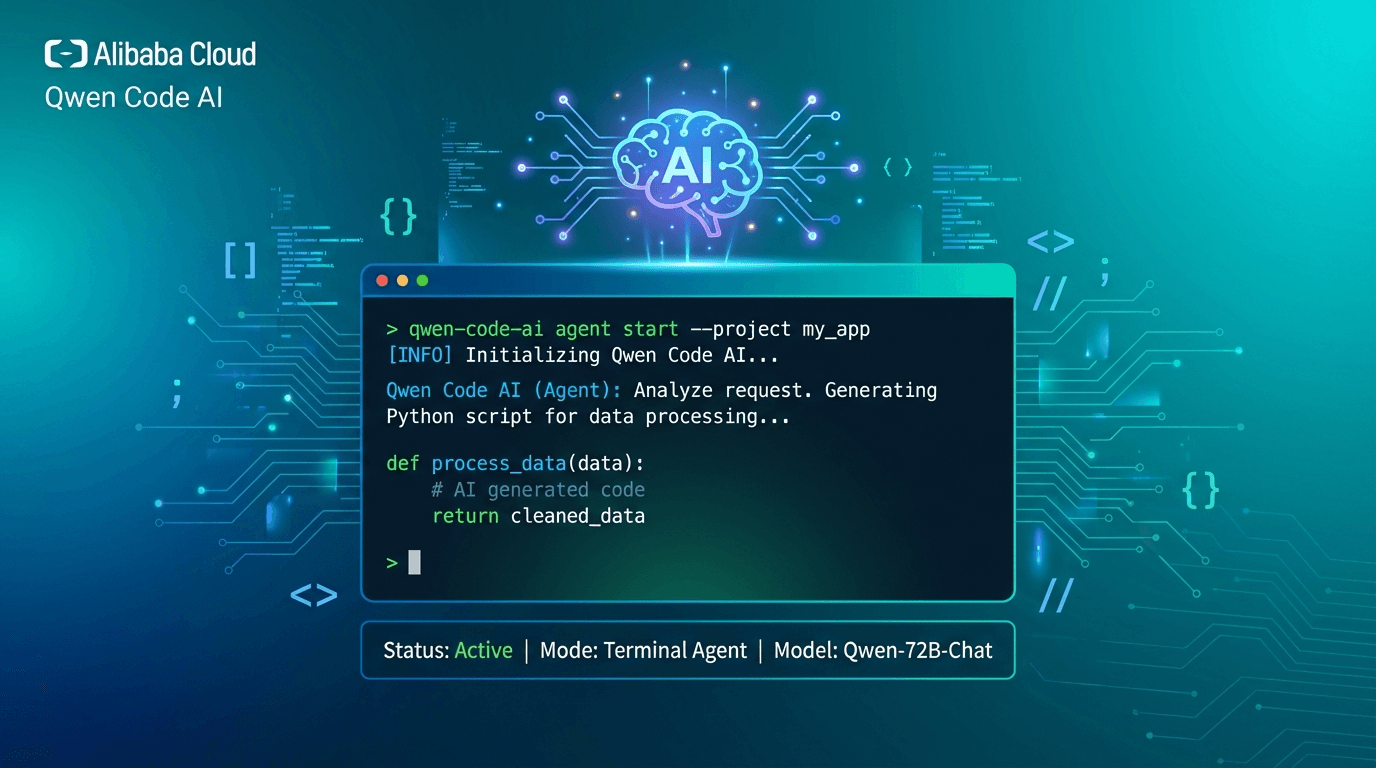
Qwen Code is an open-source AI coding agent that lives in your terminal, developed by the Qwen team at Alibaba Cloud. Optimized for the Qwen3-Coder model family, it provides a complete agentic workflow for developers who prefer the command line.
The terminal-based AI coding agent space has become fiercely competitive in early 2026, with Claude Code, Gemini CLI, and Cursor all vying for developer attention. Qwen Code enters this arena with a compelling proposition: a fully open-source agent (Apache 2.0) that co-evolves with its underlying model, Qwen3-Coder. This tight coupling between the agent framework and the LLM means optimizations flow in both directions.
With 18.7k GitHub stars and rapid community adoption, Qwen Code has established itself as a serious contender, particularly for developers seeking multi-provider flexibility.
One of Qwen Code's standout features is its provider-agnostic design. While optimized for Qwen3-Coder, it supports OpenAI, Anthropic, Google GenAI, and Alibaba Cloud Bailian APIs through a unified interface. Developers can switch between providers by changing a configuration setting rather than rewriting integration code.
The free tier is generous: signing in with Qwen OAuth grants 1,000 free requests per day, removing the cost barrier for experimentation and personal projects.
Qwen Code implements a full agentic workflow with built-in Skills and SubAgents. Rather than operating as a simple chat-then-execute loop, it can decompose complex tasks into subtasks, delegate to specialized agents, and maintain context across multi-step operations.
The framework supports file operations, code search, shell command execution, and Git integration natively. The @ symbol enables quick file and symbol referencing, making codebase navigation fluid within the conversation.
While designed for the terminal, Qwen Code also integrates with VS Code, Zed, and JetBrains IDEs. The terminal-first philosophy ensures that the core experience works without any GUI dependencies, which matters for remote development, CI/CD pipelines, and server-side automation.
The headless mode (-p flag) enables non-interactive operation, making it suitable for automated workflows and scripting scenarios.
On Terminal-Bench, Qwen3-Coder-480A35 achieves 37.5% accuracy, demonstrating strong performance on real-world terminal coding tasks. The model's Mixture-of-Experts architecture (480 billion total parameters, 35 billion active) provides efficiency gains that make it practical for sustained coding sessions.
Installation is straightforward across platforms. On Linux and macOS, a single curl command handles everything. NPM (npm install -g @qwen-code/qwen-code@latest) and Homebrew (brew install qwen-code) are also supported. Node.js 20 or later is the only requirement.
Configuration lives in ~/.qwen/settings.json, where users set up model providers and authentication. The onboarding flow guides new users through provider selection and API key setup.
As of February 16, 2026, Qwen3.5-Plus became available through the platform, and Qwen OAuth integration was added for direct model access. The repository has accumulated over 3,990 commits, indicating active and sustained development.
Qwen Code's TypeScript/Node.js foundation means it requires a JavaScript runtime, which may not be present on all development machines by default. The agent's optimization for Qwen3-Coder means that while other providers work, they may not deliver the same level of tool-calling precision. Documentation, while improving, is still catching up with the rapid feature development pace.
OpenClaw is an open-source, local-first AI gateway with 366K GitHub stars that routes AI responses through WhatsApp, Telegram, Slack, Discord, iMessage, Teams, and 15+ other platforms — zero cloud dependency.

OpenClaw
Open-source personal AI assistant connecting to 13+ messaging platforms with local gateway architecture, voice support, and multi-agent routing.