
Open Source
Explore the latest AI open-source projects from GitHub and HuggingFace.
Explore the latest AI open-source projects from GitHub and HuggingFace.
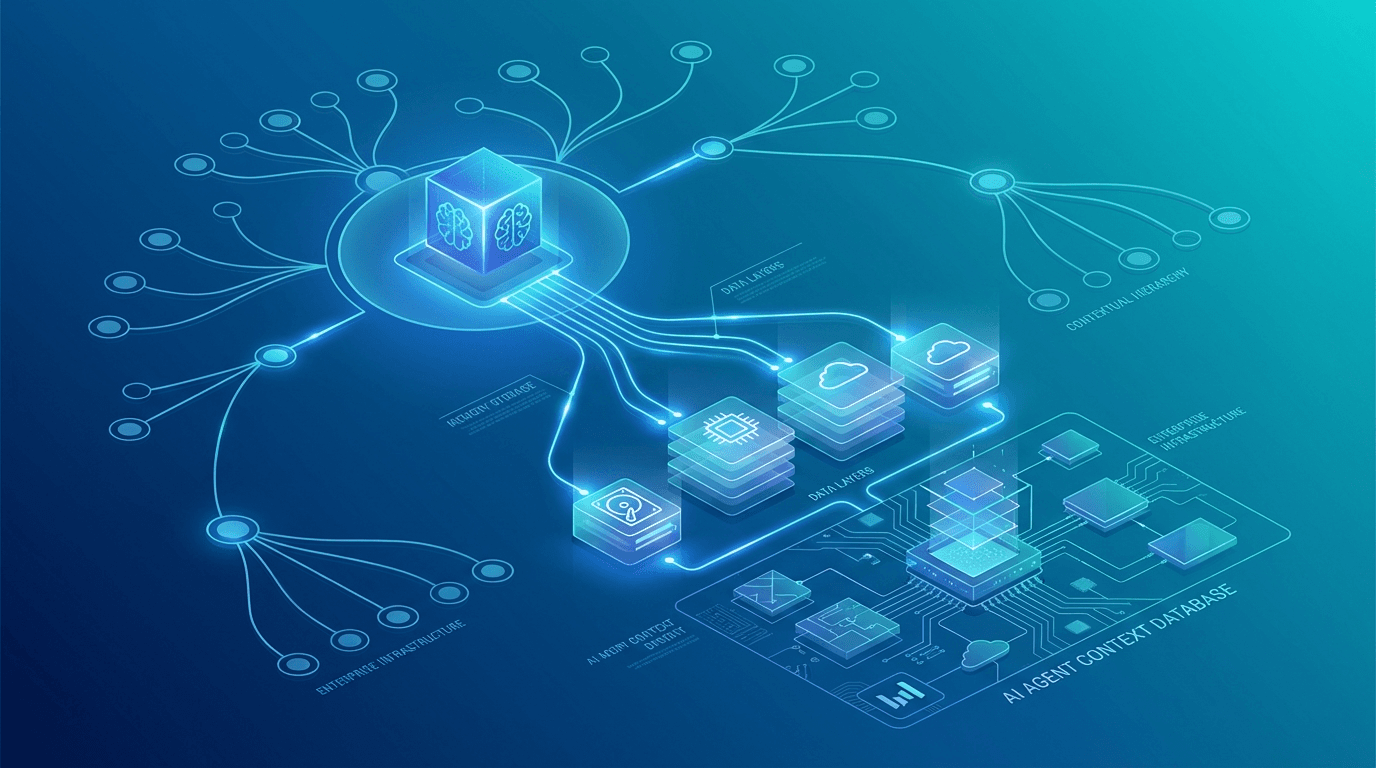
OpenViking is an open-source context database designed specifically for AI agents, developed by ByteDance's Volcano Engine Viking team. With 5,700 GitHub stars and Apache 2.0 licensing, it introduces a filesystem paradigm for managing the memories, resources, and skills that AI agents need, replacing the fragmented vector storage approach used by traditional RAG systems.
As AI agents grow more capable, their context requirements expand dramatically. An agent handling a complex task needs access to conversation history, domain knowledge, learned skills, and external resources simultaneously. Traditional approaches scatter this context across separate vector databases, key-value stores, and configuration files, creating integration complexity and retrieval inefficiency.
OpenViking addresses this fragmentation by unifying all agent context under a single filesystem-inspired paradigm. Instead of querying multiple disconnected stores, agents interact with a hierarchical context tree that organizes information naturally and retrieves it efficiently.
OpenViking's central innovation is treating agent context like a filesystem. Memories, resources, and skills are organized in directory hierarchies that mirror how humans naturally categorize information. This structure enables intuitive context organization without requiring developers to design custom schemas for each context type.
The filesystem metaphor extends beyond organization to retrieval. Just as a user navigates directories to find files, OpenViking's retrieval system traverses the context hierarchy to locate relevant information, combining structural navigation with semantic search for high-precision results.
OpenViking implements a three-tier loading system that dramatically reduces token consumption. L0 context loads at system initialization and contains always-available foundational information. L1 context loads on-demand based on task requirements. L2 context is retrieved only when specific queries require deep knowledge.
This tiered approach prevents the common problem of bloated context windows. Instead of loading everything an agent might need, OpenViking delivers precisely the information required for the current task, reducing both latency and cost.
The retrieval strategy combines intent analysis, vector search, and recursive directory traversal. When an agent needs information, the system analyzes the query intent to generate multiple retrieval conditions, uses vector search to quickly locate high-scoring directories, performs refined secondary retrieval within those directories, recursively drills down into subdirectories when relevant, and aggregates results into a coherent context package.
This multi-stage approach achieves higher precision than flat vector search while maintaining practical retrieval speeds.
OpenViking automatically compresses conversation content and extracts long-term memories from agent sessions. Developers do not need to manually design memory management logic. The system identifies important information worth retaining, compresses verbose exchanges into concise summaries, and promotes frequently accessed knowledge to higher-priority context tiers.
Debugging context retrieval in complex agent systems is notoriously difficult. OpenViking provides observable retrieval paths that show exactly how the system navigated the context hierarchy to assemble the final context package. This transparency helps developers understand why certain information was included or excluded, enabling systematic optimization of context quality.
OpenViking supports VLM and embedding models from multiple providers including Volcengine/Doubao, OpenAI, and LiteLLM, which enables access to Anthropic, DeepSeek, Gemini, and local models. This flexibility ensures teams can use their preferred model infrastructure without vendor lock-in.
OpenViking is built across multiple languages optimized for different system layers. Python handles the core logic and API surface. Rust provides high-performance data processing components. Go powers the AGFS (Agent File System) layer. C++ handles low-level performance-critical operations.
The system requires Python 3.10 or later, Go 1.22 or later for AGFS components, and a C++ compiler for native extensions. Network connectivity is needed for model service access, though the context storage itself operates locally.
OpenViking includes VikingBot, an AI agent framework built on top of the context database. However, the context database layer can be integrated independently into existing agent frameworks, providing context management capabilities without requiring a full framework migration.
OpenViking is particularly valuable for enterprise AI agents that need persistent, structured memory across long-running workflows. Customer service agents can maintain conversation context and customer history without token waste. Research assistants can organize and retrieve knowledge across multiple projects. Coding agents can maintain project context, coding patterns, and learned debugging strategies.
The multi-language tech stack (Python, Rust, Go, C++) creates deployment complexity that may challenge teams without diverse language expertise. The filesystem paradigm, while intuitive, requires careful directory structure design to achieve optimal retrieval performance. Documentation is still maturing, with some advanced configuration options lacking detailed guidance. The relatively young project (335 commits) means the API surface may evolve as the team incorporates community feedback.
OpenViking is best suited for teams building complex AI agents that need structured, efficient context management. It is particularly valuable for enterprises deploying agents with long-running sessions, developers frustrated with fragmented RAG architectures, and teams seeking observable and debuggable context retrieval systems.
OpenClaw is an open-source, local-first AI gateway with 366K GitHub stars that routes AI responses through WhatsApp, Telegram, Slack, Discord, iMessage, Teams, and 15+ other platforms — zero cloud dependency.
OpenClaw
Open-source personal AI assistant connecting to 13+ messaging platforms with local gateway architecture, voice support, and multi-agent routing.