
Open Source
Explore the latest AI open-source projects from GitHub and HuggingFace.
Explore the latest AI open-source projects from GitHub and HuggingFace.
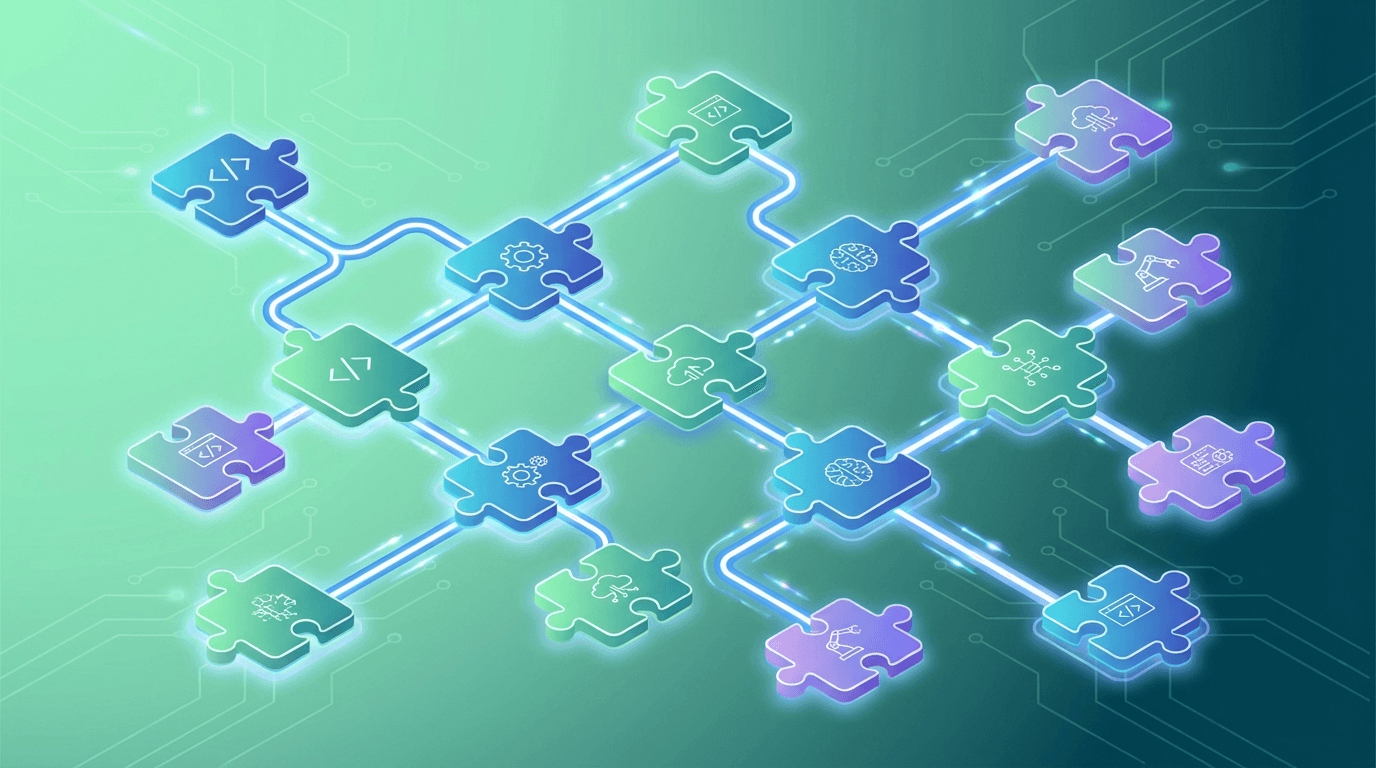
OpenAI Skills is an open-source repository providing a standardized catalog of reusable skill packages for the Codex coding agent. With over 12,000 GitHub stars and nearly 700 forks, it has quickly established itself as the official extensibility framework for Codex, letting developers share and install task-specific capabilities that make AI agents more reliable at specialized workflows.
At its core, the Skills repository defines a packaging format for agent instructions. Each skill is a folder containing markdown instructions, optional scripts, and supporting resources that an AI agent can discover and follow when performing a particular task. Rather than relying on ad-hoc prompting, skills encode a structured workflow that the agent executes consistently.
The repository serves three purposes: it ships the default system skills bundled with every Codex installation, it curates a vetted collection of community-contributed skills, and it provides an experimental section where anyone can publish and share custom skills.
Skills follow a three-tier organization that controls how they are installed:
| Tier | Installation | Review Level |
|---|---|---|
| .system | Automatically installed with Codex | OpenAI-maintained |
| .curated | Installable by name via $skill-installer | Community-reviewed |
| .experimental | Installable by folder path or GitHub URL | Unreviewed |
Each skill folder contains a SKILL.md file that describes the skill's purpose, a set of instructions the agent follows, and optionally a scripts directory for executable tooling. The agent reads the SKILL.md at task time and uses it as its workflow guide.
One of the most significant aspects of this project is the push toward an open standard for agent skills, documented at agentskills.io. The format is designed to be agent-agnostic: while OpenAI built it for Codex, the specification is deliberately portable so that other AI coding agents can adopt the same skill packaging format. This mirrors how package managers standardized dependency management across programming languages.
The standard defines:
The built-in system skills handle foundational agent behaviors that every Codex user needs. These include the skill-creator skill (a meta-skill that helps users author new skills), code review workflows, testing automation, and documentation generation patterns. System skills are maintained directly by OpenAI and updated with each Codex release.
In early March 2026, Codex added a plugin system that loads skills, MCP (Model Context Protocol) entries, and app connectors from configuration or a local marketplace. This update introduced an install endpoint that lets the Codex application server enable plugins programmatically, bridging the gap between the skills catalog and the runtime agent.
The plugin architecture means skills are no longer static instruction files. They can register MCP tools, expose API endpoints, and integrate with external services, making the skill format a full extensibility layer for AI coding agents.
With 92 open pull requests and 22 open issues at the time of writing, the repository shows active community participation. Contributors have submitted skills covering domains from database migration automation to Kubernetes deployment workflows to specialized testing frameworks. The pull request volume indicates strong developer interest in creating reusable agent capabilities.
OpenAI provides a skill creation guide at developers.openai.com/codex/skills/create-skill. The process involves:
Alternatively, the built-in skill-creator system skill can scaffold a new skill interactively within a Codex session.
The Skills repository represents a shift in how AI coding agents are extended. Instead of each developer writing custom system prompts or one-off configurations, skills create a shareable, versioned, and discoverable ecosystem of agent capabilities. This is analogous to how npm transformed JavaScript development by making code reuse systematic rather than ad-hoc.
For the broader AI agent ecosystem, the open standard ambition is particularly notable. If multiple AI coding tools adopt the same skill format, developers could write a skill once and use it across Codex, Claude Code, Cursor, and other agents, reducing the fragmentation that currently exists in the agent tooling space.
Skills require a Codex restart to activate after installation, which adds friction to the workflow. The experimental tier has no review process, meaning skill quality varies widely. And while the open standard aspiration is compelling, adoption by competing AI coding tools remains to be seen.
That said, the combination of OpenAI's distribution advantage through Codex and the genuinely useful packaging format gives this project strong momentum as the de facto standard for agent extensibility.
OpenClaw is an open-source, local-first AI gateway with 366K GitHub stars that routes AI responses through WhatsApp, Telegram, Slack, Discord, iMessage, Teams, and 15+ other platforms — zero cloud dependency.
OpenClaw
Open-source personal AI assistant connecting to 13+ messaging platforms with local gateway architecture, voice support, and multi-agent routing.