
Open Source
Explore the latest AI open-source projects from GitHub and HuggingFace.
Explore the latest AI open-source projects from GitHub and HuggingFace.
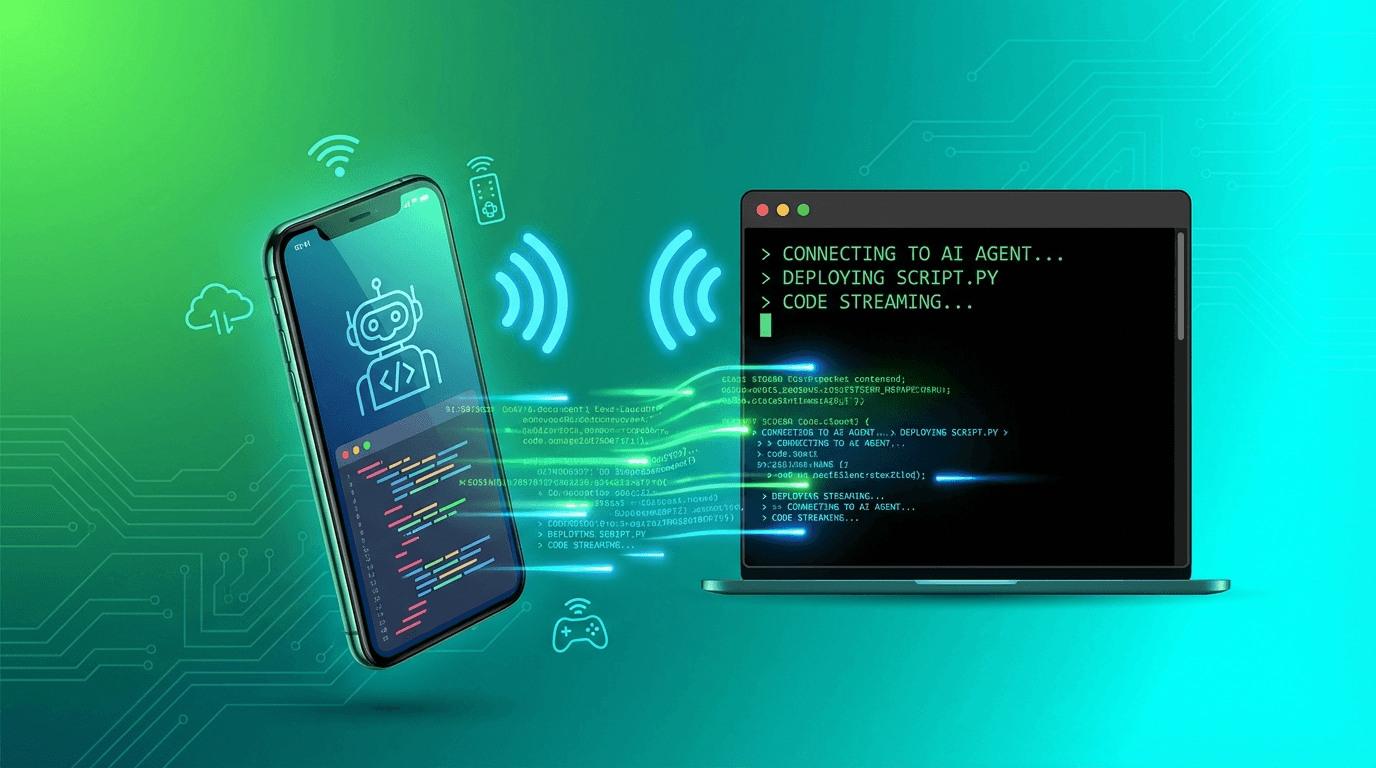
HAPI is an open-source application that enables remote control of AI coding agents including Claude Code, Codex, Gemini, and OpenCode from any device. With 2,500 GitHub stars and AGPL-3.0 licensing, it bridges the gap between powerful terminal-based AI coding agents and the mobile-first workflows that modern developers increasingly demand.
Terminal-based AI coding agents like Claude Code and Codex have become essential development tools, but they are tethered to the developer's workstation. Stepping away from the desk means losing the ability to monitor agent progress, approve critical actions, or redirect work. For developers who juggle multiple responsibilities, commute, or simply want to supervise agents during off-hours, this limitation creates a real productivity bottleneck.
HAPI solves this by wrapping existing AI coding agents rather than replacing them. It preserves the full terminal experience and developer muscle memory while adding a remote access layer accessible from phones, tablets, or any web browser.
HAPI consists of three interconnected components that work together to enable seamless remote agent control.
The CLI wrapper sits around the AI coding agent on the developer's machine, intercepting agent output and approval requests without modifying the underlying agent behavior. Developers continue using their preferred agent exactly as before, with HAPI operating transparently in the background.
The Hub service provides central coordination between the local agent and remote interfaces. It manages session state, message routing, and authentication, ensuring remote commands reach the correct agent instance.
The Web interface delivers a React-based UI accessible from any browser or as a Progressive Web App. It presents agent output, approval requests, and terminal access in a mobile-optimized format designed for one-handed operation.
HAPI takes security seriously given the sensitive nature of agent access. The relay uses WireGuard combined with TLS for end-to-end encryption, ensuring that code, commands, and agent output remain encrypted from device to machine. For teams with strict security policies, HAPI supports self-hosted deployment via Cloudflare Tunnel or Tailscale, keeping all traffic within the organization's infrastructure.
When an AI coding agent requests permission to execute a potentially destructive action, HAPI surfaces the approval request on the developer's phone. A single tap approves or rejects the request, eliminating the need to rush back to the workstation. This is particularly valuable for agents running long tasks where occasional human approval is required.
HAPI supports Claude Code, Codex, Cursor Agent, Gemini, and OpenCode through a unified interface. Developers working across multiple AI agents can monitor and control all of them from a single HAPI dashboard, switching between agents without changing tools or workflows.
Beyond agent control, HAPI provides full terminal access from the remote interface. Developers can run arbitrary commands on their workstation, check build status, review logs, or perform quick fixes, all from their phone or browser.
HAPI includes a built-in voice assistant for hands-free agent interaction. Developers can dictate instructions to their coding agent while walking, commuting, or performing other tasks. The voice interface supports natural language commands that map to agent actions.
Switching between local and remote work maintains full context. Agent state, conversation history, and terminal output persist across transitions, enabling developers to start work at their desk, continue on their phone during a commute, and resume at the desk without losing any context.
HAPI is built on Bun and installs via npx. Two commands establish the connection: the first starts the hub with relay, and the second starts the local agent wrapper. The application then displays a URL and QR code that the developer scans to access the remote interface.
For production use, the self-hosted option via Cloudflare Tunnel provides persistent access without relying on the default relay infrastructure.
With 497 commits and version 0.16.1 released on March 8, 2026, HAPI is in active development with a rapid release cadence. The TypeScript codebase (99.2% TypeScript) ensures type safety and maintainability, while the Bun runtime provides fast startup and execution.
HAPI transforms how developers interact with AI coding agents throughout their day. Morning commuters can review and approve overnight agent work from their phones. Conference attendees can monitor agent progress during sessions. Remote workers can supervise agents running on office machines. On-call engineers can respond to agent queries without opening laptops.
HAPI requires network connectivity between the remote device and the host machine, which may not always be reliable in mobile scenarios. The AGPL-3.0 license imposes copyleft obligations that may conflict with some enterprise deployment policies. Voice control accuracy depends on ambient noise conditions and speech recognition quality. The project is still early-stage, so API stability and feature completeness are evolving.
HAPI is ideal for developers who use terminal-based AI coding agents daily and want the flexibility to monitor, approve, and control those agents from anywhere. It is particularly valuable for mobile developers, remote workers, and teams running long-duration agent tasks that benefit from periodic human oversight.
OpenClaw is an open-source, local-first AI gateway with 366K GitHub stars that routes AI responses through WhatsApp, Telegram, Slack, Discord, iMessage, Teams, and 15+ other platforms — zero cloud dependency.
OpenClaw
Open-source personal AI assistant connecting to 13+ messaging platforms with local gateway architecture, voice support, and multi-agent routing.