
Wrinkles Review: AI Audio Tour Guide for Any Location
Wrinkles is a free AI app that narrates local history and lore, letting users ask follow-up questions across 1.3M points of interest.
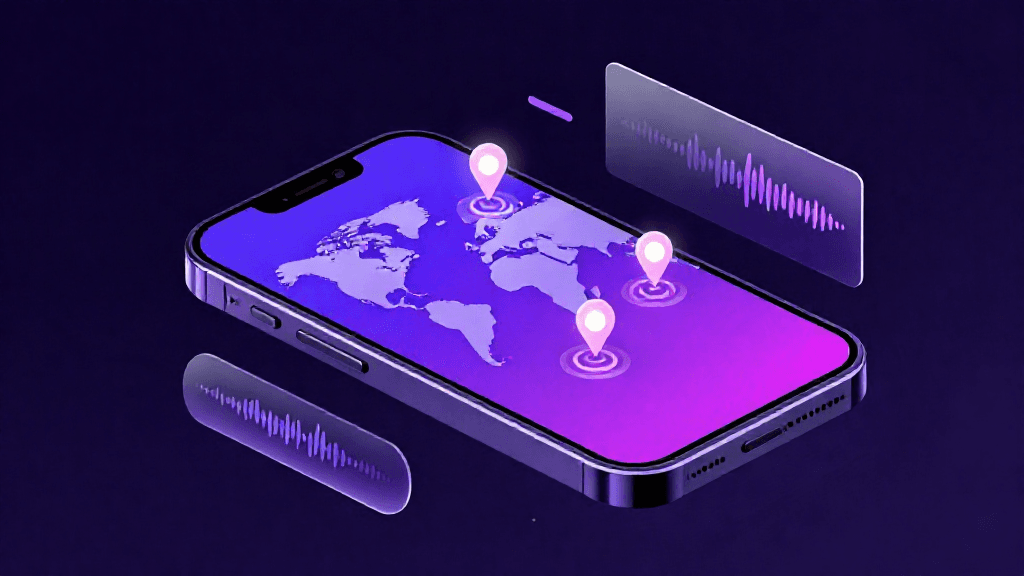
Wrinkles is a free AI app that narrates local history and lore, letting users ask follow-up questions across 1.3M points of interest.
Introduction
Wrinkles, an AI-powered audio tour guide app, was covered by TechCrunch on August 4, 2026. The app is live on both the Apple App Store and Google Play under the name "Wrinkles: Audio Tour Guide."
The pitch is simple. A smartphone already knows a user's exact location. Wrinkles uses that location data to surface stories, history, and local lore about the places around them, then lets users ask an AI follow-up questions in a live conversation. Founder David Stemler summed up the idea directly: "If the phone in my pocket knows exactly where I am, shouldn't the places in front of me be able to speak?"
This matters because most travel information today is static. Guidebooks, plaques, and museum placards deliver a fixed block of text and stop there. Wrinkles positions itself as a conversational layer on top of the physical world, turning a one-way description into a back-and-forth exchange.
Feature Overview
At the core of Wrinkles is a conversational AI guide. As a user moves through a location, or browses remotely, the app narrates historical and cultural context about nearby points of interest. TechCrunch's example illustrates the interaction model well: while learning about the construction of the Trevi Fountain, a user could ask "Where does this water actually come from?" and receive an answer in the moment, rather than having to search for it separately.
The content foundation behind this feature is substantial in scope. Wrinkles has built a base of 1.3 million "Wrinkles" — the app's term for individual points of interest — spread across 177 countries. That figure represents the starting inventory of places the app can already narrate before any third party adds material.
Beyond that foundational layer, Wrinkles opens the map to outside contributors. Historians, museums, creators, and brands can add their own stories and experiences to specific locations. This turns the app into a two-sided platform: a baseline of AI-narrated content everywhere, supplemented by deeper, curated material wherever an institution or creator chooses to contribute.
The business model also shapes what the feature set looks like going forward. The app itself is free for end users, with revenue coming from the supply side. Museums, tourism boards, universities, and hotels can pay to create location-based experiences. Creators and media partners can build sponsored place-based guides. Businesses can promote listings tied to their locations and share in transaction revenue from bookings, reservations, and ticket purchases made through the app. This means the feature set is likely to expand primarily where paying institutions have an incentive to add content, rather than growing evenly everywhere.
Usability Analysis
Based on the interaction model TechCrunch described, Wrinkles appears designed for two overlapping use cases: on-the-ground exploration and remote, armchair browsing. A traveler walking past a landmark can get automatic narration without searching for information first, then dig deeper by asking a question, similar to having a knowledgeable local guide on call. A user planning a trip, or simply curious about a place they aren't visiting, can browse the same content remotely.
The conversational follow-up is the feature most likely to differentiate the everyday experience from a standard audio guide or guidebook app. Static audio tours deliver a fixed script regardless of what a listener actually wants to know. A user who wants to ask a tangential question, like the Trevi Fountain's water source, either has to already know the answer or look it up separately. Wrinkles folds that lookup into the same conversation.
How well this holds up in practice will depend heavily on location. Because the founding content base of 1.3 million points of interest is a fixed starting point, and deeper enrichment comes from third-party contributors such as museums and historians, the depth of information at any given spot is not uniform. A landmark with an engaged museum partner or tourism board could offer a richer experience than a lesser-known site relying only on the app's baseline coverage. TechCrunch's reporting does not specify how content depth varies by location, so this remains a reasonable expectation based on the stated content model rather than a confirmed pattern.
Pros & Cons
Pros
- Broad starting coverage, with 1.3 million points of interest already mapped across 177 countries
- Conversational follow-up questions go beyond fixed-script audio tours
- Free to use for end users, since the app monetizes through institutional and business partners instead
- Open contribution model lets historians, museums, creators, and brands add deeper content over time
- Works both for in-person exploration and remote browsing of a location
Cons
- The underlying AI model powering narration and conversational Q&A has not been publicly disclosed
- Funding amount, investors, and exact founding date are not disclosed in available reporting
- No confirmed user-base numbers have been published yet
- Content depth at any given location depends on third-party contributors, so quality may vary by place
Outlook
Wrinkles' growth path is tied directly to its two-sided model. The founding base of 1.3 million points of interest gives it broad, if likely uneven, coverage from day one. Whether the app becomes noticeably richer over time will depend on how many museums, tourism boards, universities, hotels, and independent creators choose to pay for location-based experiences on the platform.
The revenue-sharing structure around bookings, reservations, and ticket purchases also positions Wrinkles to expand past pure storytelling into transactions, if businesses adopt the promoted-listing and booking features. That would move the app closer to a commerce layer for physical locations, not just an information layer.
Founders David Stemler and Ryan Hansan bring relevant but distinct backgrounds — advertising and hospitality-adjacent ventures, respectively — which may explain the emphasis on a supply-side monetization model rather than subscriptions or ads aimed at end users.
Conclusion
Wrinkles offers a straightforward value proposition: free, location-aware, conversational storytelling about the places around a user, backed by a sizable starting catalog of 1.3 million points of interest. The app is best suited to travelers and curious explorers who want more than a static plaque or guidebook entry, and are comfortable with an experience whose depth varies by location and whose underlying AI technology remains undisclosed. Broader questions about scale, funding, and long-term contributor participation remain open as of this report.
Editor's Verdict
Wrinkles Review: AI Audio Tour Guide for Any Location brings real, demonstrable value, though with caveats that deserve weighing.
The strongest case for paying attention is large starting content base covering 1.3 million points of interest in 177 countries, which raises the bar for what readers should now expect from peers in this space. Reinforcing that, conversational follow-up questions differentiate it from static audio guides adds practical value rather than just headline appeal. The broader signal worth registering is straightforward: wrinkles narrates historical and cultural context automatically based on a user's location, then supports live follow-up questions rather than a fixed script. On the other side of the ledger, underlying AI model and technology stack are undisclosed is a real constraint, not a marketing footnote, and it should factor into any serious decision. Layered on top of that, no public information on funding, investors, or exact founding date narrows the set of teams for whom this is an obvious yes.
For product teams, content creators, and knowledge workers looking to upgrade a specific workflow, a measured trial makes sense, with clear criteria for when to expand or pull back. For everyone else, the safer posture is to monitor coverage and revisit once the use cases that matter to your team are demonstrated in the wild.
Pros
- Large starting content base covering 1.3 million points of interest in 177 countries
- Conversational follow-up questions differentiate it from static audio guides
- Free for end users, with monetization shifted to institutional and business partners
- Open contribution model allows museums, historians, and creators to deepen local content
- Usable both for on-location exploration and remote browsing
Cons
- Underlying AI model and technology stack are undisclosed
- No public information on funding, investors, or exact founding date
- User base size has not been confirmed or published
- Content depth likely varies by location depending on third-party contributor participation
References
Comments0
Key Features
Wrinkles is a free AI audio tour guide app for iOS and Google Play that narrates location-based history and lore, with a conversational AI that answers follow-up questions in real time. Its content foundation spans 1.3 million points of interest across 177 countries, and historians, museums, creators, and brands can add their own stories to any location.
Key Insights
- Wrinkles narrates historical and cultural context automatically based on a user's location, then supports live follow-up questions rather than a fixed script
- The app launches with 1.3 million pre-built points of interest across 177 countries
- Historians, museums, creators, and brands can contribute their own location-based stories on top of the foundational content
- The app is free for end users; revenue comes from museums, tourism boards, universities, and hotels paying to create experiences
- Businesses can also promote location-tied listings and share in transaction revenue from bookings, reservations, and ticket purchases made in-app
- Founders David Stemler and Ryan Hansan previously worked in advertising and food-service ventures (ScratchDC, TasteLab), respectively
- The underlying AI model powering narration and Q&A has not been publicly disclosed
- No funding figures, founding date, or user counts have been disclosed in available reporting
Was this review helpful?
Share
Related AI Reviews

Daydream Adds iOS 27 Photo Shopping and Siri Search
Fashion app Daydream uses Apple's iOS 27 tools to turn saved outfit photos into shoppable matches, plus Siri natural-language search.
Roland Melody Flip: Free AI Melody Plug-In With Sony CSL
Roland's free Melody Flip plug-in uses Sony CSL music analysis and 250+ Palettes to help musicians generate MIDI melody, chord, bass, and drum ideas.

Microsoft's MAI-Transcribe-2: Cheap, Fast Speech-to-Text
Microsoft's MAI-Transcribe-2 tops the FLEURS benchmark across 60 languages and costs $0.10 per audio hour, undercutting OpenAI, Google and ElevenLabs.
Testers Praise Instinct AI Agent but Flag Privacy Risks
TechCrunch: testers praise Instinct AI agent for autonomous task skill but flag its data-license terms, unapproved actions, and phishing exposure.