
Underdog Woof: A 31.7MB Speech Model That Runs in a Browser
Underdog's Woof text-to-speech model is a 31.7 MB browser download with 30.7M parameters; weights are licensed for non-commercial use.
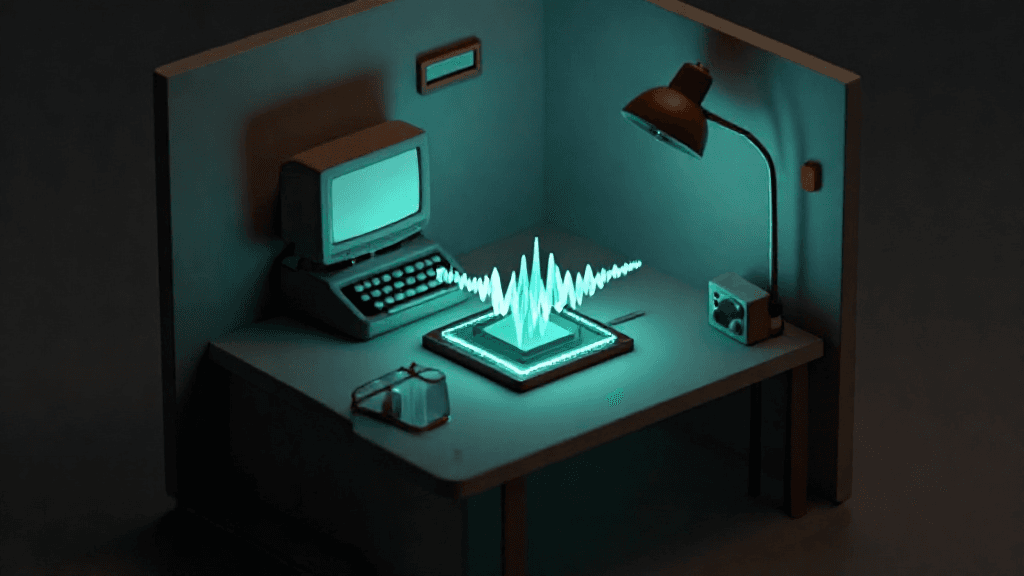
Underdog's Woof text-to-speech model is a 31.7 MB browser download with 30.7M parameters; weights are licensed for non-commercial use.
Introduction
On November 5, 2026, Underdog AI posted a browser game built to show off Woof, its new text-to-speech model. In the company's words: "We made a game for our new frontier text-to-speech model, Woof. 31.7 MB, so small that it runs in your browser." TechCrunch covered the demo on November 6, 2026. Woof is a speech generation model rather than a language model, but it belongs to the same push toward AI that runs on devices people already own.
The headline numbers are small by design. Underdog's Woof page lists the browser model at 30.7 million parameters and a 31.7 MB download (TechCrunch rounds this to 31 million parameters), and says it "works with your Wi-Fi off once it's loaded."
The Demo
The game, called Underdog Escape, places the player in a room with a retro tech theme. TechCrunch describes a typewriter, a CRT monitor and a desk lamp that makes a sound when its switch is clicked. Whatever the player types on the typewriter is spoken back. TechCrunch says the intro warns about "intrusive" cloud providers, ostensibly a jab at cloud-based models, and Underdog's page frames the goal as escaping "Darkcloud."
Underdog says every voice in the room, including the narrator and Darkcloud, is "made live on your own computer" and that "nothing is pre-recorded." Its Escape page adds that the model runs in the browser on the user's own GPU using WebGPU.
The room also has a radio. The Escape page credits its songs to the Underdog app rather than to Woof, saying they were generated offline on Apple M5-series Macs, with generation times listed between 39.3 and 131 seconds per song.
Specifications
Woof ships in two sizes. The one-voice model runs on the Woof page; the two-voice model is the one hosted on Hugging Face under the ConwayResearch organization as Underdog-Woof.
| Item | One voice | Two voices |
|---|---|---|
| Download | 31.7 MB | 40.6 MB |
| Parameters | 30.7M | 38.2M (22.95M speech model plus 15.3M audio decoder) |
| Where it runs | Browser page at underdog.ai/woof | Hugging Face repo, numpy runtime |
| Speed on one Apple M5 Max CPU thread | 18x real time at the default 16 steps | 7.2x to 13.8x real time, depending on voice |
| Peak memory | 852 MB, about 330 MB of it PyTorch and Transformers | 402 MB (Juno) or 601 MB (Mira) |
| Hard-sentence word error rate | 2.06% | 1.42% (Mira) |
Per the model card, the two-voice release speaks in voices named Juno and Mira, outputs 24 kHz mono audio, and is described as a small English text-to-speech model. Underdog's page says fewer generation steps are faster still: 24x real time at 8 steps and 29x at 4 steps for the one-voice model. Its audio decoder is adapted from Kyutai's Mimi codec, and its training data includes LibriTTS-R and Emilia-YODAS.
One practical feature is a built-in rule-based text normalizer. Underdog's examples show "020 7946 0018" read as "zero two zero, seven nine four six, zero zero one eight" and "$1,249.50" as "one thousand two hundred and forty nine dollars fifty cents." The company positions this as the weak spot of small voice models.
Accuracy Claims
Underdog's headline claim is about word error rate, measured by having a speech recognizer transcribe Woof's output and counting the words that differ from the script. The test set is Gradium TTS Hard Cases, 500 sentences packed with numbers, dates, prices, codes and URLs.
| Model | Download | Word error rate |
|---|---|---|
| Woof, two voices (Mira) | 40.6 MB | 1.42% |
| Fish Audio Drama 3 | 41.5 GB open weights | 1.89% |
| Woof, one voice | 31.7 MB | 2.06% |
| Phonon 31m | 55.1 MB | 2.16% |
| Kokoro 82M | 327 MB | 5.17% |
| Kitten Nano 0.8 | 27.6 MB | 9.81% |
| Qwen3-TTS 1.7B | 4.54 GB | 11.99% |
The model card says each model was run and scored by Underdog in the same way, in its best-scoring voice. Transcripts came from qwen3.8-omni-flash, and word errors were counted by gemma-4-31b-it. On that basis the card concludes that nothing Underdog tested is both smaller and more accurate than Woof. On other sets, the one-voice model scored 2.05% on 200 LibriTTS-R test sentences (Whisper large-v3) and 0.91% on 30 expressive lines.
These are the vendor's own measurements, and the evaluation relies on language models for both transcription and error counting. The Woof page and model card report word error rate and speed, but no listening-test scores for naturalness.
License and Access
Underdog's pages call Woof "open weights for non-commercial use" and label the license CC BY-NC 4.0. The Hugging Face repository, however, ships its own text, the Underdog Non-Commercial License 1.0, with metadata set to "other." Readers should check the LICENSE file that comes with the weights. Its main terms:
- Free for personal projects, research, teaching and non-profits, including publishing what Woof makes.
- Credit is required: "Underdog Woof" or "underdog.ai" in the title or description of published audio, and "Voice by Underdog Woof" in apps that use it.
- Commercial use needs a separate license, and the definition includes use in a business's internal operations. A company may test internally for up to 30 days.
- Using Woof to train, fine-tune or distill another speech or audio model is not allowed.
- Use through underdog.ai and Underdog's own apps is free.
Running it takes pip install numpy, then hf download ConwayResearch/Underdog-Woof --local-dir underdog-woof and python -m underdog_woof "text" -o hello.wav.
Context
TechCrunch notes the demo comes weeks after Underdog launched Bark, a 167MB speech-to-text model for edge devices, and that the company has also released a 27-billion-parameter model that runs on laptops plus a waitlisted app. Founder Sigil Wen told TechCrunch, "I think we will be able to run most capable models of today on the devices you already own within months," a forecast rather than a result. TechCrunch's own assessment is that such a small model "likely won't replace bigger models" but may be enough for local assistant experiences or personalized podcasts.
Outlook
Woof is most relevant to developers who want speech output without a server, such as the voice assistants and phone agents Underdog's page names, where the non-commercial license limits what can be shipped without a deal. Open questions include independent replication of the word-error-rate figures and listening comparisons, and the model card describes English only.
Conclusion
Woof's appeal is the combination of a tens-of-megabytes download, CPU-only operation and a clearly documented evaluation. Hobbyists, researchers and teams evaluating on-device voice can try it today in the browser; anyone planning a commercial product should read the license first.
Editor's Verdict
Underdog Woof: A 31.7MB Speech Model That Runs in a Browser is a workable proposition that fills a clear gap, even if it doesn't fundamentally change the landscape.
The strongest case for paying attention: weights fit in a 40.6 MB download and run on a CPU with only numpy, with no GPU, server or API key needed. That alone raises the bar for what readers should expect in this space. Reinforcing that, the one-voice model runs in a browser and works offline once loaded — practical value rather than just headline appeal. The broader signal worth registering is straightforward: download size and CPU-only operation are the selling points, so the model targets offline assistants and embedded voice rather than studio quality. On the other side of the ledger, one constraint is real rather than a marketing footnote: commercial use of the weights, including internal business operations, requires a separate license from Underdog. It should factor into any serious decision. Layered on top of that, the accuracy results are vendor-run and use language models for transcription and error counting — which narrows the set of teams for whom this is an obvious yes.
For hobbyists, researchers and developers prototyping offline voice features, it is worth trying today in the browser; teams planning a commercial product should read the license before building on it.
Pros
- Weights fit in a 40.6 MB download and run on a CPU with only numpy, with no GPU, server or API key needed
- The one-voice model runs in a browser and works offline once loaded
- Underdog publishes its comparison table, test sets and scoring method on the model card
- A built-in normalizer handles phone numbers, dates, money and codes without extra libraries
Cons
- Commercial use of the weights, including internal business operations, requires a separate license from Underdog
- The accuracy results are vendor-run and use language models for transcription and error counting
- The model card describes an English model with two voices, which limits language and voice choice
- The Woof page and model card report word error rate and speed but no listening-test scores
References
Comments0
Key Features
1. One-voice model: 30.7M parameters, 31.7 MB download, runs in a browser with WebGPU and works offline once loaded 2. Two-voice model on Hugging Face: 38.2M parameters, 40.6 MB, numpy-only runtime, voices Juno and Mira, 24 kHz mono output 3. Underdog reports 1.42% word error rate for the two-voice model on 500 hard sentences, versus 1.89% for Fish Audio Drama 3 (41.5 GB) 4. Built-in rule-based normalizer that reads phone numbers, dates, prices and codes aloud 5. Speed on one Apple M5 Max CPU thread: 18x real time (one voice, 16 steps) and 7.2x to 13.8x (two voices) 6. Non-commercial license with credit requirement; commercial use needs a separate license from Underdog
Key Insights
- Download size and CPU-only operation are the selling points, so the model targets offline assistants and embedded voice rather than studio quality
- The browser game doubles as a deployment test, since every voice in the room is generated live on the visitor's own machine
- Underdog's accuracy table is built around numbers, dates, prices and codes, the content where small voice models are said to struggle
- The same 500-sentence set is scored by language-model transcription and language-model error counting, so the figures depend on those judges
- The browser build and the Hugging Face release are different models, with 30.7M and 38.2M parameters respectively
- The site labels the license CC BY-NC 4.0 while the repository ships the Underdog Non-Commercial License 1.0, so the LICENSE file is the document to read
- The Escape page credits the radio songs to the Underdog app rather than to Woof, which is worth knowing before crediting the model with music generation
Was this review helpful?
Share
Related AI Reviews

Inkling 2 Mini: Open Looped Transformer for Local Use
Thinking Machines' Apache 2.0 Inkling 2 Mini runs its 12 middle layers three times per token in a ~20GB checkpoint for local devices.
Grok Bot Background Check-Ins: 31 Unattended Calls Logged
NewCore says two Grok Bots made 31 unattended reads of work apps; an admin toggle arrived Nov 12, on by default. NewCore sells the gateway.

Grok Build Apps Exposed: 35,578 Open Links Found by Claroc
Claroc tried 43,551 grok.me app addresses; 35,578 opened with no sign-in, including 24 built by SpaceXSI and X staff.

Meta Muse Spaces: Build Your Own Tools by Describing Them
Meta added spaces to Muse on Nov 6: custom trackers, planners and games built from a description. Sharing spaces with others is still being explored.