Inkling 2 Mini: Open Looped Transformer for Local Use
Thinking Machines' Apache 2.0 Inkling 2 Mini runs its 12 middle layers three times per token in a ~20GB checkpoint for local devices.
Thinking Machines' Apache 2.0 Inkling 2 Mini runs its 12 middle layers three times per token in a ~20GB checkpoint for local devices.
Introduction
On November 20, 2026, Thinking Machines Lab released Inkling 2 Mini, an open-weights multimodal model under the Apache 2.0 license. It is a looped transformer: the middle layers of the network run three times for every token, which the company says lets the model apply more reasoning and reach answers with fewer tokens, particularly on agentic coding. The model is small enough, at roughly 20GB, to run on a DGX Spark or a 32GB Apple silicon machine, and it is also available on Tinker, the lab's platform, for inference and customization.
Thinking Machines says Inkling 2 Mini leads every open-weights model under 100B total parameters on benchmarks such as DeepSWE v1.1 and Vals Index v2.2. That is the company's claim, and its coding chart notes that evaluation setups vary by model.
Feature Overview
Looped architecture
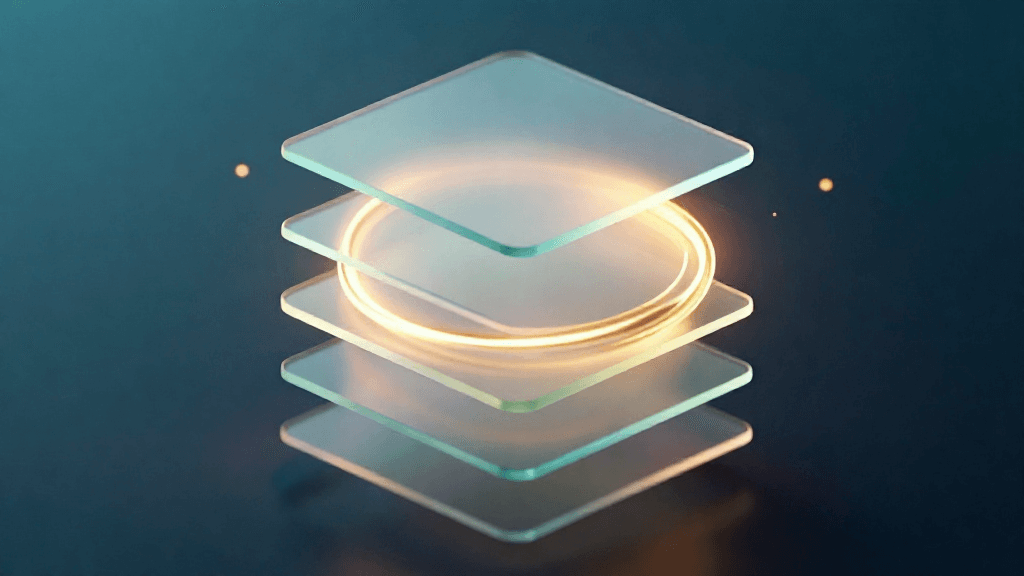
Inkling 2 Mini has 24 layers in four blocks of six. The two middle blocks, 12 layers, run three times with shared weights, while the first and last blocks run once. That gives 48 layer applications per token from 24 stored layers. Each token is routed to 8 of 128 experts. Information moves between passes through learned messages, and a gate that starts closed lets looping be introduced stably during training.
Parameter counts
The model has 26.4B total parameters and 3.4B active. Each extra pass adds about 1.0B effective active parameters, so with three passes the model card counts 5.4B per token. Thinking Machines pruned two-thirds of the experts partway through training, leaving 128 per layer, then trained the remainder on 1T tokens distilled from a larger internal Inkling model.
Low-bit weights and local footprint
Most weights were trained and are deployed natively in NVFP4, with the last four layers in MXFP8, for a checkpoint of about 20GB. The card lists support for one NVIDIA DGX Spark and Apple silicon with 32GB or more memory, and recommends 32GB or more of VRAM on other GPUs. It accepts text and image input, produces text, and supports up to 1M tokens of context. Software support listed includes Hugging Face Transformers, SGLang, vLLM, llama.cpp, Ollama and Unsloth.
Benchmarks against four comparable models
The company's table compares Inkling 2 Mini with Gemma 4 31B, Muse Glimmer, Qwen3.8-27B and Nemotron 3.5 Super VL.
| Benchmark | Inkling 2 Mini | Qwen3.8-27B |
|---|---|---|
| AA Index v5.0 | 20.1 | 20.1 |
| Terminal Bench v4.0 | 5.6% | 5.6% |
| DeepSWE v1.1 | 48.2% | 42.2% |
| Terminal Bench v2.1 | 71.6% | 73.0% |
| AutomationBench-AA v1.0.6 | 41.8% | 48.2% |
| EnterpriseOps-Gym | 42.0% | 44.2% |
Inkling 2 Mini ties Qwen3.8-27B on the first two rows and leads on DeepSWE. It trails Qwen on the last three rows and also on AA-Briefcase, GDPVal-AA and AA-Omniscience. The table is vendor-published, and harnesses differ between rows.
A theoretical speed ceiling
The company's decode-speed chart is a theoretical ceiling at 614 GB/s with BF16 weights and batch size one, including repeated reads across loops. It is not a measured throughput figure.
Usability Analysis
For developers, the draw is a model aimed at agentic coding and tool use that fits on a laptop or a desktop AI computer. Thinking Machines says researchers ran it offline on a MacBook Pro (M5 Pro, 48GB) and had it build a playable flight simulator in a few minutes. That is a company demonstration, not an independent test.
The model card is direct about fit. Local runtime support for looped models is new, and speed varies by runtime and hardware. Compute per token is higher than the active-parameter count suggests because the middle layers run three times. Setting reasoning effort to its minimum does not fully disable reasoning. Thinking Machines recommends limits on output tokens and agent turns, a sandbox for agentic workloads, and confirmation before destructive actions.
Pros and Cons
Pros
- A roughly 20GB checkpoint fits 32GB-plus Apple silicon or one DGX Spark.
- Apache 2.0 weights ship with broad inference-engine support.
- It leads the published table on DeepSWE v1.1 and ties Qwen3.8-27B on two rows.
Cons
- The comparison table is vendor-published, with harnesses that differ between rows.
- Factual recall is weaker than Inkling 2 Small's, and the company says looping does not let the weights store more facts.
- The card warns of repetitive reasoning loops and unconfirmed destructive actions.
- Output outside English can be lower quality.
Outlook
Thinking Machines says one reason for the release is to let the community study looped transformers, especially monitorability. Because looping raises serial computation per token, reasoning can occur without appearing in the chain of thought. To probe this, the company also released a separate research model, TML-d24-varloop-research, which accepts a variable number of passes. On that model, the no-CoT time horizon rose from 16 seconds at one pass to 37 seconds at three, and mean reasoning on GPQA Diamond questions answered correctly at every pass count fell from 3,703 tokens at one pass to 1,661 at five. The company reports no meaningful reduction in monitorability at this scale. These results are for the research model, not Inkling 2 Mini, and the company notes that the research model's reinforcement learning used three passes only.
Conclusion
Inkling 2 Mini is a credible test of whether looping can make small models more capable without making them larger on disk. Its published results are strongest on agentic coding. Factual recall is a stated weak point, and the company says it is not the strongest small model for multi-turn chat or many-constraint instructions, trailing Qwen3.8-27B on MultiChallenge and ComplexConstraints. It suits developers and researchers who want a local, Apache 2.0 agent model and are prepared to benchmark it on their own workloads.
Editor's Verdict
Inkling 2 Mini: Open Looped Transformer for Local Use earns a solid recommendation within the Other LLM space.
The strongest case for paying attention: a roughly 20GB checkpoint fits a 32GB-plus Apple silicon machine or a single DGX Spark, per the model card. That alone raises the bar for what readers should expect in this space. Reinforcing that, the Apache 2.0 license covers the open weights, with inference support across Hugging Face, vLLM, SGLang, llama.cpp and Ollama — practical value rather than just headline appeal. The broader signal worth registering is straightforward: the middle 12 of 24 layers run three times with shared weights, so the model performs 48 layer applications per token from 24 stored layers. On the other side of the ledger, one constraint is real rather than a marketing footnote: the benchmark table is vendor-published and its harnesses differ between rows, so cross-model gaps are indicative rather than definitive. It should factor into any serious decision. Layered on top of that, the model card reports lower scores than Inkling 2 Small across most evaluations, with the largest gaps on factual recall and knowledge-heavy questions — which narrows the set of teams for whom this is an obvious yes.
For developers who want a local, Apache 2.0 agent model and researchers studying looped transformers, this is a serious evaluation candidate, with output limits and a sandbox in place.
Pros
- a roughly 20GB checkpoint fits a 32GB-plus Apple silicon machine or a single DGX Spark, per the model card
- the Apache 2.0 license covers the open weights, with inference support across Hugging Face, vLLM, SGLang, llama.cpp and Ollama
- It leads the published comparison on DeepSWE v1.1 (48.2% vs 42.2% for Qwen3.8-27B) and accepts a 1M-token context with image input
Cons
- the benchmark table is vendor-published and its harnesses differ between rows, so cross-model gaps are indicative rather than definitive
- the model card reports lower scores than Inkling 2 Small across most evaluations, with the largest gaps on factual recall and knowledge-heavy questions
- The card warns of repetitive reasoning loops and of destructive actions such as deleting files without confirmation, so sandboxing and turn limits are advised
- Output quality outside English can be lower, with clipped phrasing and mixed languages seen in Chinese testing
References
Comments0
Key Features
1. Looped design: 24 stored layers, with the middle 12 run three times for 48 layer applications per token 2. Size: 26.4B total, 3.4B active, and 5.4B effective active parameters per token counting loop re-use; 8 of 128 experts per token 3. Local footprint: about 20GB checkpoint in mixed NVFP4 and MXFP8, supported on one DGX Spark or Apple silicon with 32GB or more memory 4. Capabilities: text and image input, text output, 1M-token context, Apache 2.0 open weights 5. Research companion: TML-d24-varloop-research accepts a variable number of passes for studying looping and monitorability
Key Insights
- the middle 12 of 24 layers run three times with shared weights, so the model performs 48 layer applications per token from 24 stored layers
- The 26.4B total and 3.4B active parameter counts rise to 5.4B per token when the extra loop passes are counted, per the model card
- Inkling 2 Mini ties Qwen3.8-27B on AA Index v5.0 (20.1) and Terminal Bench v4.0 (5.6%), leads on DeepSWE v1.1 (48.2% vs 42.2%), and trails it on several knowledge-work benchmarks
- The claim of leading every open-weights model under 100B total parameters on DeepSWE v1.1 and Vals Index v2.2 is Thinking Machines' own, and its coding chart notes that evaluation setups vary by model
- Looping adds reasoning depth but not stored knowledge, and the company says factuality on AA-Omniscience is in line with other models of the same size
- The 16 to 37 second no-CoT time horizon was measured on the separate variable-loop research model, not on Inkling 2 Mini
- The decode-speed chart is a theoretical ceiling at batch size one with BF16 weights, so it should not be read as measured throughput
Was this review helpful?
Share
Related AI Reviews
Grok Bot Background Check-Ins: 31 Unattended Calls Logged
NewCore says two Grok Bots made 31 unattended reads of work apps; an admin toggle arrived Nov 12, on by default. NewCore sells the gateway.
Grok Build Apps Exposed: 35,578 Open Links Found by Claroc
Claroc tried 43,551 grok.me app addresses; 35,578 opened with no sign-in, including 24 built by SpaceXSI and X staff.

Underdog Woof: A 31.7MB Speech Model That Runs in a Browser
Underdog's Woof text-to-speech model is a 31.7 MB browser download with 30.7M parameters; weights are licensed for non-commercial use.

Meta Muse Spaces: Build Your Own Tools by Describing Them
Meta added spaces to Muse on Nov 6: custom trackers, planners and games built from a description. Sharing spaces with others is still being explored.