
Tesla Terafab: Elon Musk Announces $25 Billion AI Chip Factory With 2nm Process Technology
Elon Musk confirms Tesla's Terafab AI chip manufacturing project will launch within days, targeting 2nm process technology and 1 million chips per month across 10 production modules.
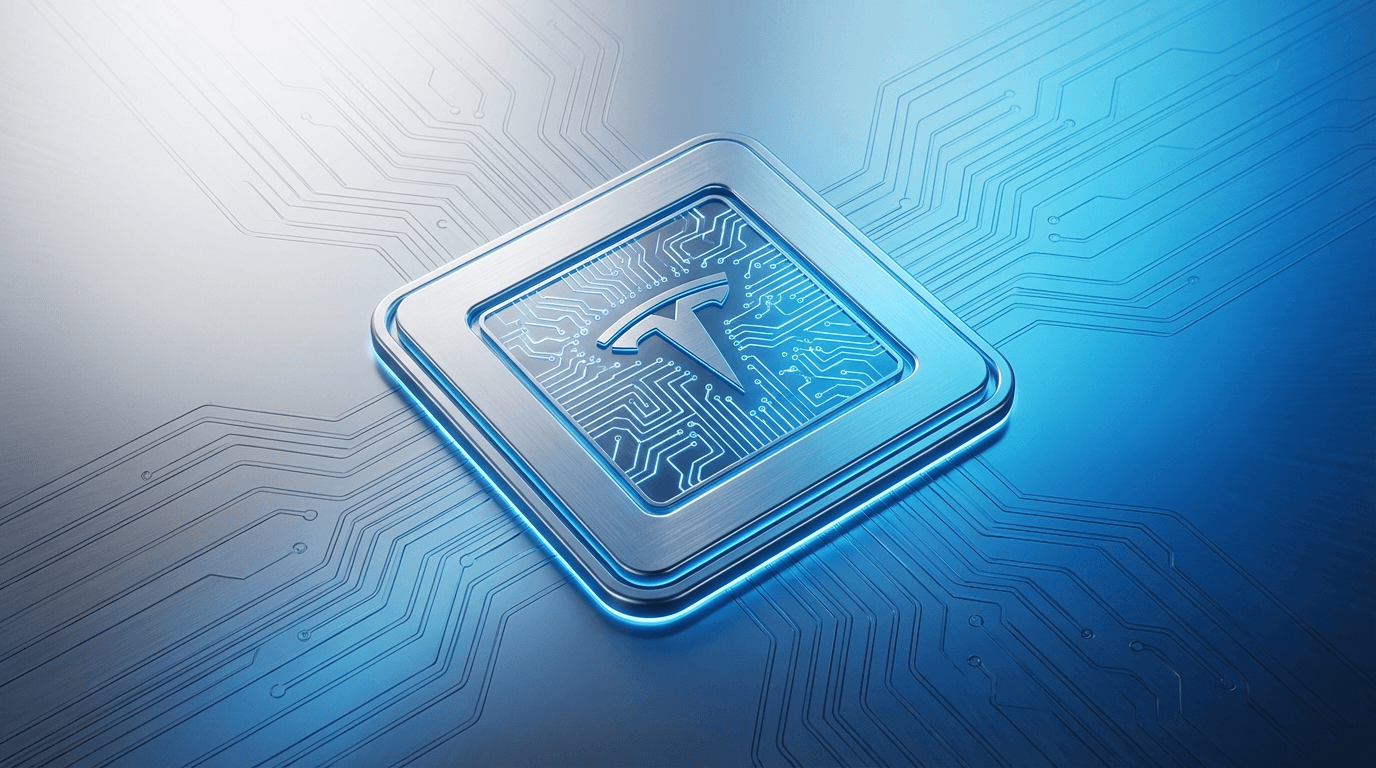
Elon Musk confirms Tesla's Terafab AI chip manufacturing project will launch within days, targeting 2nm process technology and 1 million chips per month across 10 production modules.
Key Takeaways
On March 15, 2026, Tesla CEO Elon Musk announced that the company's Terafab AI chip manufacturing project will launch within seven days. The announcement marks Tesla's transformation from a fabless chip designer to an Integrated Device Manufacturer (IDM), bringing AI chip production in-house with an estimated investment of approximately $25 billion.
The Terafab project represents the largest single investment in AI chip manufacturing by a non-semiconductor company, signaling that the demand for custom AI silicon has outstripped the capacity of existing foundry partners.
Feature Overview
1. Production Scale and Architecture
The Terafab facility is designed around 10 separate production modules, each capable of producing 100,000 chips per month, for a total capacity of 1 million AI chips per month. This modular approach allows Tesla to scale production incrementally rather than requiring the entire facility to be operational at once.
The facility integrates logic fabrication, memory production, and advanced packaging under one roof, an approach that reduces supply chain dependencies and enables tighter integration between chip components. This vertical integration mirrors the strategy used by Intel and Samsung in their IDM operations.
2. Target Technology: 2nm Process Node
Tesla is targeting 2-nanometer process technology for the Terafab, placing it at the absolute cutting edge of semiconductor manufacturing. Currently, only TSMC and Samsung have announced production-ready 2nm capabilities. If Tesla achieves this, it would join an exclusive group of companies capable of manufacturing at the most advanced process nodes.
The 2nm node is critical for AI chips because it enables significantly higher transistor density, lower power consumption, and faster switching speeds, all essential for the compute-intensive workloads of autonomous driving and AI inference.
3. AI Chip Roadmap
Tesla's chip roadmap extends across multiple generations. The current AI4 chip powers mainstream Tesla vehicles and Full Self-Driving (FSD) systems. The AI5 chip, expected to enter mass production in mid-2027, promises 10x more compute and 9x more memory than AI4. Beyond that, the AI6 chip is part of a $16.5 billion production agreement with Samsung.
Looking further ahead, Tesla has outlined theoretical plans for AI7 and AI8 chips, potentially destined for applications in xAI and SpaceX, expanding the chip program beyond automotive into Musk's broader technology ecosystem.
4. Strategic Rationale: Supply Cannot Meet Demand
Musk's justification for the Terafab was blunt: "Even when we extrapolate the best-case scenario for chip production from our suppliers, it's still not enough." Tesla's growing demand for AI compute, driven by FSD training, robotaxi fleet management, and the Optimus humanoid robot program, has outpaced what external foundries can deliver.
Current suppliers include Samsung for AI4 production and TSMC for initial AI5 production. Intel has been mentioned as a potential bridging partner. However, none of these partnerships provide the guaranteed capacity Tesla believes it needs for its autonomous vehicle and robotics ambitions.
Usability Analysis
The Terafab announcement has immediate implications for Tesla's competitive position in autonomous driving. Custom AI chips optimized specifically for Tesla's neural network architectures could deliver significant performance advantages over general-purpose AI accelerators from NVIDIA or AMD.
For the automotive industry broadly, Tesla's move raises the bar for vertical integration. Competitors relying on off-the-shelf AI chips from third-party suppliers may find themselves at a performance and cost disadvantage as Tesla's in-house silicon matures.
However, semiconductor manufacturing is extraordinarily complex, and the history of non-semiconductor companies entering chip fabrication is limited. Success is far from guaranteed, and the $25 billion investment carries substantial execution risk.
Competitive Context
Tesla's Terafab competes for talent and equipment with established foundries including TSMC, Samsung, and Intel. The global semiconductor equipment supply chain is already strained, and adding another large-scale fab increases competition for critical tools from ASML, Applied Materials, and Tokyo Electron.
In the AI chip space, NVIDIA's Vera Rubin architecture (announced at GTC 2026 on the same day), AMD's MI400 series, and custom silicon from Google (TPU), Amazon (Trainium), and Microsoft (Maia) all represent competing approaches to AI compute. Tesla's differentiation is its tight integration between chip design and end-application in autonomous vehicles and robotics.
Pros
- 1 million chips per month capacity across 10 modular production lines provides massive scale for Tesla's AI compute needs
- 2nm process technology places Tesla at the cutting edge of semiconductor manufacturing
- Vertical integration reduces supply chain dependencies and enables tighter hardware-software optimization
- Multi-generation chip roadmap from AI5 through AI8 demonstrates long-term strategic commitment
- Cross-platform potential for chips across Tesla, xAI, and SpaceX ecosystems
Limitations
- $25 billion investment carries enormous financial risk with uncertain return timelines
- Semiconductor manufacturing expertise is not Tesla's core competency, raising execution risk concerns
- Facility location undisclosed, creating uncertainty about regulatory and infrastructure requirements
- 2nm process technology has not been independently demonstrated by Tesla, and achieving production yields is notoriously difficult
Outlook
The Terafab announcement positions Tesla as the most vertically integrated AI company in the automotive sector. If successful, in-house chip manufacturing would give Tesla a structural cost advantage and performance edge that competitors cannot easily replicate.
However, the semiconductor industry's history is littered with ambitious fab projects that failed to reach economical production yields. The gap between announcing a 2nm target and consistently producing chips at that node is measured in years and billions of dollars of additional investment.
The broader industry implication is clear: the demand for custom AI silicon has become so intense that even non-semiconductor companies are willing to invest tens of billions to secure their own supply. This trend could reshape the semiconductor landscape over the next decade.
Conclusion
Tesla's Terafab project is one of the most ambitious semiconductor ventures ever undertaken by a company outside the traditional chip industry. With $25 billion in investment, 2nm process targets, and 1 million chips per month capacity, the project reflects the scale of AI compute demand driving the autonomous vehicle and robotics industries. Success would fundamentally alter Tesla's competitive position, but the technical and financial risks are proportionally enormous.
Editor's Verdict
Tesla Terafab: Elon Musk Announces $25 Billion AI Chip Factory With 2nm Process Technology earns a solid recommendation within the it news space.
The strongest case for paying attention is 1 million chips per month capacity provides massive scale for autonomous driving and robotics compute, which raises the bar for what readers should now expect from peers in this space. Reinforcing that, 2nm process technology targets the absolute cutting edge of semiconductor manufacturing adds practical value rather than just headline appeal. The broader signal worth registering is straightforward: tesla's shift from fabless to IDM signals that AI chip demand has outstripped existing foundry capacity. On the other side of the ledger, $25 billion investment carries enormous financial risk with no guaranteed timeline for returns is a real constraint, not a marketing footnote, and it should factor into any serious decision. Layered on top of that, semiconductor fabrication is not Tesla's core competency, raising execution risk narrows the set of teams for whom this is an obvious yes.
For AI industry watchers, strategy teams, and decision-makers tracking platform shifts, this is a serious evaluation candidate, not just a curiosity to bookmark. For everyone else, the safer posture is to monitor coverage and revisit once the use cases that matter to your team are demonstrated in the wild.
Pros
- 1 million chips per month capacity provides massive scale for autonomous driving and robotics compute
- 2nm process technology targets the absolute cutting edge of semiconductor manufacturing
- Vertical integration eliminates supply chain bottlenecks and enables hardware-software co-optimization
- Multi-generation roadmap from AI5 through AI8 shows long-term strategic commitment
- Cross-ecosystem potential across Tesla, xAI, and SpaceX amplifies investment returns
Cons
- $25 billion investment carries enormous financial risk with no guaranteed timeline for returns
- Semiconductor fabrication is not Tesla's core competency, raising execution risk
- Facility location and regulatory approvals remain undisclosed
- Achieving production-ready 2nm yields is notoriously difficult even for established fabs
References
Comments0
Key Features
1. Ten modular production lines with total capacity of 1 million AI chips per month 2. Target 2nm process technology at the cutting edge of semiconductor manufacturing 3. Integrated logic, memory, and advanced packaging under one facility 4. Multi-generation chip roadmap from AI5 (10x compute over AI4) through AI8 5. Estimated $25 billion investment making it the largest AI chip fab by a non-semiconductor company
Key Insights
- Tesla's shift from fabless to IDM signals that AI chip demand has outstripped existing foundry capacity
- The $25 billion investment is the largest semiconductor commitment by a non-chip company in history
- Targeting 2nm places Tesla in competition with TSMC and Samsung for cutting-edge process technology
- Modular 10-line architecture allows incremental scaling rather than all-or-nothing deployment
- Cross-platform chip potential across Tesla, xAI, and SpaceX creates economies of scale across Musk's companies
- Vertical integration from chip design to end application mirrors Apple's successful silicon strategy
- The announcement raises the competitive bar for autonomous vehicle companies relying on third-party AI chips
- Semiconductor manufacturing complexity introduces significant execution risk for a non-traditional player
Was this review helpful?
Share
Related AI Reviews

Apple Reference Image: How iPhone 18 Pro Proves Photos Real
Apple's new iPhone 18 Pro camera signs sensor data at capture, letting users compare an unalterable reference image to verify a photo wasn't edited.
Authors Dispute Publisher Claims on Anthropic Payouts
Authors report publishers and literary agencies claiming shares of their $3,000-per-book payouts as Anthropic's $1.5B settlement enters allocation.

DOJ Backs OpenAI's Fair-Use Case in NYT Copyright Suit
DOJ filed a Statement of Interest backing OpenAI's fair-use defense in the NYT copyright suit, days before summary judgment briefing begins.
OpenAI to Cut Off Cursor's Model Access Nov. 12
OpenAI plans to cut off Cursor's model access Nov. 12 after SpaceX's acquisition, citing distrust of Musk's companies on contract terms.