
Taalas Raises $169M to Build Model-Specific AI Chips That Are 73x Faster Than Nvidia's H200
Toronto-based startup Taalas raises $169 million to develop AI inference chips custom-built for specific models, achieving 17,000 tokens/second on Llama 3.1 8B at one-tenth the power of Nvidia's H200.
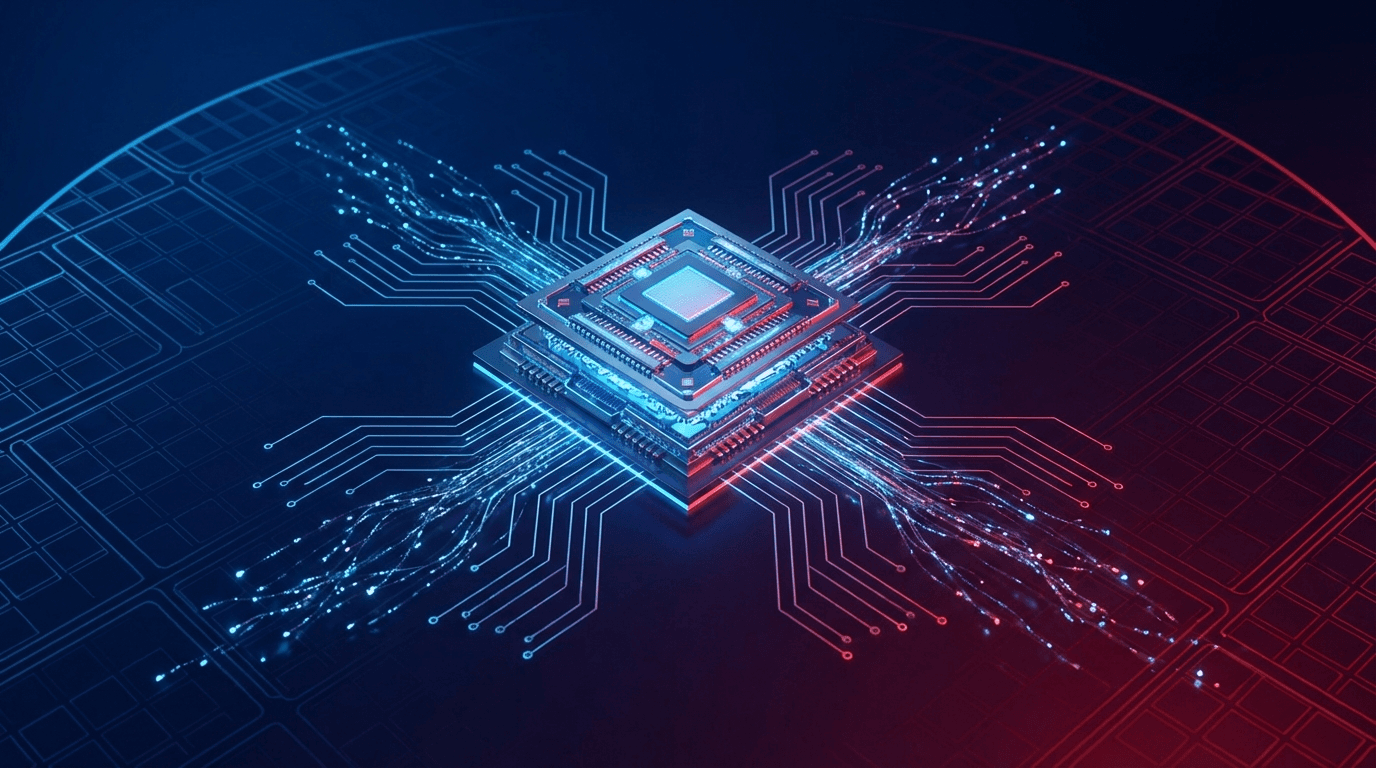
Toronto-based startup Taalas raises $169 million to develop AI inference chips custom-built for specific models, achieving 17,000 tokens/second on Llama 3.1 8B at one-tenth the power of Nvidia's H200.
A Different Approach to AI Chips: Build for One Model, Not All of Them
On February 19, 2026, Toronto-based startup Taalas announced a $169 million funding round, bringing its total outside funding to over $200 million. The company's thesis is radical in its simplicity: instead of building general-purpose chips that can run any AI model, build chips optimized for a specific model. The result, Taalas claims, is a 73x performance improvement over Nvidia's H200 GPU on inference workloads, at one-tenth the power consumption.
The round was backed by Quiet Capital, Fidelity, and semiconductor investor Pierre Lamond. The funding arrives at a time when the AI industry is spending billions on Nvidia GPUs for both training and inference, and any credible alternative that reduces cost and power consumption attracts immediate attention.
The Model-Specific Chip Architecture
Taalas's approach is architecturally distinct from Nvidia's general-purpose GPU strategy. Rather than building a chip that handles every possible AI workload, Taalas customizes only two of the more than 100 layers that make up its chips for each target model. These custom layers feature what the company calls "mask ROM recall fabric," where each module stores four bits using a single transistor for matrix multiplications.
This design eliminates a critical bottleneck in traditional AI inference hardware: high-bandwidth memory (HBM). Standard GPUs must constantly move large amounts of data between the processing cores and external HBM modules, introducing latency and consuming substantial power. By embedding the model weights directly into the chip architecture, Taalas removes the need for HBM entirely, avoiding the data movement delays that limit conventional hardware.
The tradeoff is obvious: a Taalas chip built for Llama 3.1 8B cannot run GPT-5 or Claude Opus 4.6. Each model requires its own custom chip. For organizations that deploy a specific model at scale for inference, this is a feature, not a limitation. For research labs that need to experiment with different models, it would be impractical.
Performance Claims: 17,000 Tokens Per Second
Taalas's first product is a chip optimized for Meta's open-source Llama 3.1 8B language model. The company claims this chip generates 17,000 output tokens per second, compared to approximately 233 tokens per second on Nvidia's H200. That 73x speed advantage comes with a 90% reduction in power consumption.
These numbers, if validated at production scale, represent a paradigm shift in inference economics. The majority of AI compute cost today goes to inference rather than training, and inference demand is growing exponentially as AI applications scale. A chip that delivers the same model output at 73 times the speed and one-tenth the power fundamentally changes the cost-per-token calculation that determines the economics of AI deployment.
However, these claims require important context. The comparison is against Nvidia's H200, not the newer Blackwell B200 or the upcoming Vera Rubin architecture. Nvidia's latest hardware delivers significant inference improvements over the H200. Additionally, Taalas has not published independent third-party benchmarks, and real-world performance can differ from controlled test conditions.
Founding Team and Tenstorrent Connection
Taalas was founded by Ljubisa Bajic, who previously founded Tenstorrent, another AI chip startup that has attracted significant attention in the semiconductor industry. Co-founders Drago Ignjatovic and Lejla Bajic were both early engineers at Tenstorrent. This pedigree gives Taalas credibility in a field where chip design expertise is scarce and hard to recruit.
The Tenstorrent connection is notable because Tenstorrent itself is backed by Hyundai Motor Group and led by Jim Keller, one of the most respected chip architects in the industry. That two separate companies with overlapping founding DNA are pursuing different approaches to AI silicon suggests that the market sees genuine opportunity beyond Nvidia's dominance.
Product Roadmap: From 8B to Frontier Models
Taalas is not stopping at Llama 3.1 8B. The company plans to release a chip optimized for a Llama 20B model by summer 2026, and a more advanced HC2 processor designed for frontier-scale models is in development. This roadmap indicates that the model-specific approach can scale to larger and more complex architectures.
The manufacturing timeline is also notable. Working with foundry partners, Taalas has developed what it describes as a workflow that moves from model weights to deployable PCI-Express cards running actual inference in approximately two months. If this timeline holds, it means that when a new open-source model is released, Taalas could have a custom inference chip ready for deployment within weeks, not the years typically required for chip development.
Market Implications: The Inference Cost Question
The AI industry faces a structural challenge: inference costs are the largest ongoing expense for companies deploying AI at scale. Every API call, every chatbot response, every AI-generated image requires inference compute. Nvidia's dominance means that the price floor for inference is effectively set by GPU economics.
Taalas's approach, if it delivers on its performance claims, creates a new category of inference hardware that could dramatically reduce this cost floor for specific, high-volume model deployments. Cloud providers running specific open-source models for millions of users, enterprises deploying a single fine-tuned model across their organization, and edge computing scenarios where power consumption matters could all benefit.
The limitation is clear: model-specific chips lack flexibility. If an organization needs to switch models, it needs new hardware. In a market where model capabilities evolve rapidly, this lock-in is a real consideration. The economic calculation becomes: does the 73x inference speed advantage and 90% power reduction justify the loss of flexibility?
Conclusion
Taalas represents a genuinely novel approach to AI silicon design. Rather than competing with Nvidia on general-purpose GPU architecture, the company has chosen to specialize, trading flexibility for extreme performance and efficiency on specific models. The $169 million funding round and the founding team's track record from Tenstorrent signal that serious investors believe this approach is viable. For organizations running specific AI models at massive scale, Taalas offers a potentially transformative reduction in inference cost and power consumption. The key questions remain: will the performance claims hold up to independent validation, and can the two-month chip development cycle keep pace with the rapid evolution of AI models?
Editor's Verdict
Taalas Raises $169M to Build Model-Specific AI Chips That Are 73x Faster Than Nvidia's H200 earns a solid recommendation within the it news space.
The strongest case for paying attention is 73x inference speed improvement over Nvidia H200 on Llama 3.1 8B represents a potential paradigm shift, which raises the bar for what readers should now expect from peers in this space. Reinforcing that, 90% power reduction makes the chips viable for edge and cost-sensitive deployment scenarios adds practical value rather than just headline appeal. The broader signal worth registering is straightforward: taalas achieves 17,000 output tokens/second on Llama 3.1 8B, 73 times faster than Nvidia's H200 at one-tenth the power. On the other side of the ledger, model-specific design means each new model requires entirely new hardware, reducing flexibility is a real constraint, not a marketing footnote, and it should factor into any serious decision. Layered on top of that, performance benchmarks are self-reported without independent third-party validation narrows the set of teams for whom this is an obvious yes.
For AI industry watchers, strategy teams, and decision-makers tracking platform shifts, this is a serious evaluation candidate, not just a curiosity to bookmark. For everyone else, the safer posture is to monitor coverage and revisit once the use cases that matter to your team are demonstrated in the wild.
Pros
- 73x inference speed improvement over Nvidia H200 on Llama 3.1 8B represents a potential paradigm shift
- 90% power reduction makes the chips viable for edge and cost-sensitive deployment scenarios
- Eliminating HBM removes a major bottleneck and cost component in AI inference hardware
- Two-month development cycle from model weights to production chips enables rapid deployment
- Founding team's Tenstorrent pedigree provides deep semiconductor design expertise
Cons
- Model-specific design means each new model requires entirely new hardware, reducing flexibility
- Performance benchmarks are self-reported without independent third-party validation
- Comparison is against Nvidia H200, not the newer Blackwell or upcoming Vera Rubin architectures
- Unsuitable for research environments that require running multiple different models
References
Comments0
Key Features
Taalas develops model-specific AI inference chips that customize only 2 of 100+ layers per model, using mask ROM recall fabric storing 4 bits per transistor. Their first chip for Llama 3.1 8B achieves 17,000 tokens/second (73x faster than Nvidia H200) at 1/10th the power. The design eliminates the need for HBM modules entirely. Roadmap includes Llama 20B chip by summer 2026 and HC2 processor for frontier models. Two-month turnaround from model weights to deployable PCI-Express cards.
Key Insights
- Taalas achieves 17,000 output tokens/second on Llama 3.1 8B, 73 times faster than Nvidia's H200 at one-tenth the power
- The model-specific chip design eliminates high-bandwidth memory entirely by embedding weights into the chip architecture
- Only 2 of 100+ chip layers are customized per model, using mask ROM recall fabric with 4 bits per single transistor
- Founded by Ljubisa Bajic, who previously founded Tenstorrent, with co-founders from the same company
- Two-month turnaround from model weights to deployable PCI-Express cards, dramatically faster than traditional chip development
- Total funding exceeds $200 million, backed by Quiet Capital, Fidelity, and semiconductor investor Pierre Lamond
- Roadmap targets Llama 20B chip by summer 2026 and HC2 processor for frontier-scale models
Was this review helpful?
Share
Related AI Reviews
Microsoft Maia 300: 96-Accelerator Rack, 2027 Rollout
Microsoft's Maia 300 inference chip claims up to 7x Maia 200's rack throughput on TSMC N2P chiplets, with production rollout starting in 2027.

Nadella: Treat Frontier AI Models as Insider Risks
Nadella's X essay urges treating frontier models as insider risks: controls outside the model, audit evidence and an emergency brake.

Google Pauses OSS VRP Product-Bug Rewards Over AI Slop
Google stopped taking product-vulnerability reports in its OSS bug bounty on Oct 1 over invalid AI submissions; supply-chain rewards continue.

Apple Rethinks macOS Full Disk Access as AI Agents Grow
Apple says it will add controls so granting macOS Full Disk Access takes very explicit user action, citing risks from capable AI agents.