
Cerebras IPO Soars 68% on Debut: AI Chip Challenger Makes Wall Street History
Cerebras Systems raised $5.55 billion in the largest US tech IPO since Uber, with shares surging 68% on May 14 on the back of its Wafer-Scale Engine 3 chip and landmark deals with OpenAI and Amazon.
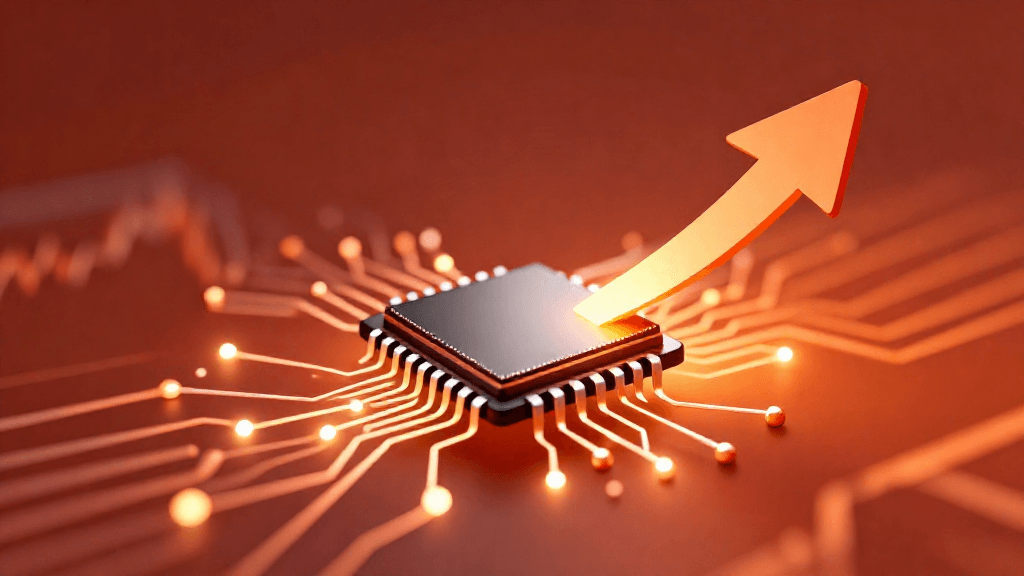
Cerebras Systems raised $5.55 billion in the largest US tech IPO since Uber, with shares surging 68% on May 14 on the back of its Wafer-Scale Engine 3 chip and landmark deals with OpenAI and Amazon.
Cerebras Systems Storms Wall Street With a Record AI Chip IPO
On May 14, 2026, Cerebras Systems made its Nasdaq debut under the ticker CBRS and promptly delivered one of the most dramatic opening sessions in recent memory. Priced at $185 per share the night before, the stock opened at $350 — nearly double its offering price — and closed the day at $311.07, a gain of 68%. The offering raised $5.55 billion, making it the largest US tech IPO since Uber went public in 2019 and the biggest pure-play AI hardware listing Wall Street has ever seen.
The debut capped a decade-long bet that the transformer era would eventually demand a fundamentally different kind of silicon — and gave the market its first major opportunity to own a piece of that thesis outside of Nvidia.
The Wafer-Scale Engine: A Different Kind of AI Chip
Cerebras' flagship product, the Wafer-Scale Engine 3 (WSE-3), is built around a provocative engineering choice: instead of cutting a silicon wafer into dozens of individual chips, the company uses the entire wafer as a single processor. The result is a die that is 58 times larger than a conventional leading GPU, integrating 900,000 AI-optimized cores and 44 gigabytes of on-chip SRAM on a single substrate.
The practical upshot is raw speed. On inference workloads with leading open-source models, Cerebras claims the WSE-3 delivers throughput up to 15 times faster than equivalent GPU-based deployments, while consuming significantly less power per unit of compute. For latency-sensitive applications such as real-time voice agents, financial modeling, or streaming medical analysis, that gap translates directly into product differentiation.
Unlike Nvidia's general-purpose GPU architecture, the WSE-3 is purpose-built for the matrix operations that dominate deep learning. This specialization is both a strength and a constraint: the chip excels at the inference and training workloads it was designed for, but it is not a drop-in replacement for GPU-based data center infrastructure.
Revenue Anchors: OpenAI and Amazon
Two landmark commercial agreements gave investors confidence that Cerebras' technology has passed the proof-of-concept stage.
A compute supply deal with OpenAI, reportedly valued at more than $10 billion over the agreement's lifetime, establishes Cerebras as a credentialed inference partner for the world's most scrutinized AI lab. The partnership covers WSE-3-based inference capacity deployed on Cerebras Cloud, with OpenAI drawing on the platform for latency-critical workloads that benefit from the chip's throughput advantages.
A separate agreement with Amazon Web Services brings WSE-3 capacity into AWS data centers, giving enterprise customers a managed path to Cerebras compute without building out dedicated on-premises infrastructure. That distribution deal is strategically important: it routes Cerebras into the same procurement channel that most enterprise AI buyers already use, reducing the sales friction that historically hampers hardware challengers.
The company disclosed that it serves customers on four continents across corporate, research, and government segments, and that its customer concentration — a standard risk factor for hardware startups — has been declining as the pipeline diversifies.
IPO Mechanics and Market Reception
Morgan Stanley, Citigroup, Barclays, and UBS Investment Bank led the underwriting syndicate. Underwriters were granted a 4.5-million-share over-allotment option; if fully exercised, total proceeds would reach $6.38 billion. The all-in market capitalization at the close of trading on debut day stood at approximately $95 billion.
Intraday volatility was notable: shares touched $385 before a brief trading halt due to demand imbalance, then pulled back to the $311 closing level. The following session saw the stock give up some ground, as is common after high-momentum IPO openings, but the sustained interest from institutional buyers kept the stock well above its offering price.
Analysts pointed to the OpenAI partnership, the AWS distribution deal, and the structural shortage of AI inference capacity as the primary demand drivers. The IPO also benefited from broader market receptivity to AI hardware themes after years of Nvidia dominating the available equity exposure in the sector.
Competitive Landscape and Risks
Cerebras enters the public market with a meaningful but narrow competitive advantage. The core challenge is that Nvidia's CUDA software ecosystem represents roughly two decades of developer investment, and enterprise buyers are structurally reluctant to retool existing ML pipelines for an alternative hardware platform. Cerebras must continue demonstrating that the performance premium of the WSE-3 justifies the integration cost, and it must do so across a widening set of workload types as the AI application landscape evolves.
Additional risks include the capital intensity of wafer-scale manufacturing, exposure to semiconductor supply chain disruptions, and the possibility that competing architectures — whether from established players like AMD or from custom silicon efforts at hyperscalers — narrow the performance gap before Cerebras can lock in a sufficiently large customer base.
The company filed its S-1 in April 2026 disclosing a path toward profitability anchored on scaling the OpenAI and AWS contract revenues, but it did not commit to a specific timeline for positive operating cash flow.
Outlook
The 68% first-day surge signals that institutional investors are willing to pay a significant premium for differentiated AI infrastructure exposure. For Cerebras, the IPO proceeds provide the capital to accelerate WSE-3 production, fund the development of a next-generation wafer-scale architecture, and expand the software tooling that makes its hardware accessible to a broader developer base.
The company's trajectory over the next four to six quarters will depend primarily on how quickly it can convert its pipeline of prospective enterprise customers into contracted recurring revenue. If the OpenAI and AWS anchors hold and new logos are added at a reasonable rate, the $95 billion market cap implied by the debut could prove conservative. If integration friction or workload limitations slow customer adoption, the stock's volatility will reflect that gap.
Conclusion
Cerebras' IPO debut is a landmark moment for the AI chip sector: the first major public vehicle for investors who want hardware exposure to the AI inference buildout without routing exclusively through Nvidia. The WSE-3's genuine performance advantages in throughput-intensive workloads, combined with the commercial credibility of the OpenAI and AWS agreements, justify sustained attention. For enterprise buyers evaluating AI infrastructure decisions, Cerebras now has the balance sheet and public profile to be taken seriously as a long-term platform partner.
Editor's Verdict
Cerebras IPO Soars 68% on Debut: AI Chip Challenger Makes Wall Street History earns a solid recommendation within the it news space.
The strongest case for paying attention is WSE-3 delivers up to 15x faster AI inference throughput than leading GPU-based alternatives on compatible workloads, which raises the bar for what readers should now expect from peers in this space. Reinforcing that, landmark OpenAI and AWS deals provide revenue anchors and commercial credibility for enterprise sales conversations adds practical value rather than just headline appeal. The broader signal worth registering is straightforward: cerebras' 68% first-day pop reflects institutional demand for AI hardware equity exposure beyond Nvidia's dominant position in the sector. On the other side of the ledger, nvidia's entrenched CUDA ecosystem creates substantial integration friction and developer switching costs that slow enterprise adoption is a real constraint, not a marketing footnote, and it should factor into any serious decision. Layered on top of that, revenue concentration in a small number of large contracts creates near-term earnings volatility if any anchor deal is delayed or restructured narrows the set of teams for whom this is an obvious yes.
For AI industry watchers, strategy teams, and decision-makers tracking platform shifts, this is a serious evaluation candidate, not just a curiosity to bookmark. For everyone else, the safer posture is to monitor coverage and revisit once the use cases that matter to your team are demonstrated in the wild.
Pros
- WSE-3 delivers up to 15x faster AI inference throughput than leading GPU-based alternatives on compatible workloads
- Landmark OpenAI and AWS deals provide revenue anchors and commercial credibility for enterprise sales conversations
- Largest US tech IPO since 2019 provides substantial capital to fund R&D and scale manufacturing capacity
- First publicly traded pure-play AI chip alternative to Nvidia gives investors differentiated hardware sector exposure
Cons
- Nvidia's entrenched CUDA ecosystem creates substantial integration friction and developer switching costs that slow enterprise adoption
- Revenue concentration in a small number of large contracts creates near-term earnings volatility if any anchor deal is delayed or restructured
- Wafer-scale manufacturing is capital-intensive and more sensitive to yield issues than conventional chip production
- Specialized architecture limits applicability to transformer-style neural network workloads; not a general-purpose compute replacement
References
Comments0
Key Features
1. Wafer-Scale Engine 3: A single-wafer AI processor 58x larger than a leading GPU with 900,000 cores and 44GB on-chip SRAM, delivering up to 15x faster inference than GPU-based systems. 2. Record IPO: $5.55B raised at $185/share, closing up 68% on debut to $311.07, valuing the company at ~$95B — the largest US tech IPO since Uber in 2019. 3. OpenAI Partnership: A landmark compute supply agreement reportedly worth over $10B, establishing Cerebras as a credentialed inference provider for OpenAI's latency-critical workloads. 4. AWS Distribution: A deal bringing WSE-3 capacity into Amazon Web Services data centers, giving enterprise customers managed access through familiar procurement channels. 5. Pure-play AI hardware: First major listed pure-play AI chip alternative to Nvidia, offering investors differentiated sector exposure in the growing AI inference infrastructure market.
Key Insights
- Cerebras' 68% first-day pop reflects institutional demand for AI hardware equity exposure beyond Nvidia's dominant position in the sector.
- The Wafer-Scale Engine 3's 58x larger die size than standard GPUs is a deliberate architectural bet: sacrifice versatility for peak throughput in neural network workloads.
- On-chip memory of 44GB eliminates the memory bandwidth bottleneck that slows multi-GPU inference clusters, a structural advantage for very large model deployments.
- The OpenAI compute deal provides both revenue certainty and a reputational endorsement that reduces enterprise buyer skepticism toward unproven hardware vendors.
- AWS distribution reduces the sales cycle friction that has historically grounded earlier AI chip challengers, routing Cerebras into existing enterprise procurement workflows.
- At a $95B post-IPO valuation, the market is pricing in substantial future revenue growth that depends on customer diversification beyond the anchor OpenAI agreement.
- The CUDA software ecosystem lock-in remains Cerebras' most significant competitive moat to overcome: developer tooling parity, not chip speed alone, determines adoption rates.
- The IPO proceeds provide capital to fund next-generation WSE architecture development and the software investment needed to make the platform accessible to non-specialist ML teams.
Was this review helpful?
Share
Related AI Reviews
Microsoft Maia 300: 96-Accelerator Rack, 2027 Rollout
Microsoft's Maia 300 inference chip claims up to 7x Maia 200's rack throughput on TSMC N2P chiplets, with production rollout starting in 2027.

Nadella: Treat Frontier AI Models as Insider Risks
Nadella's X essay urges treating frontier models as insider risks: controls outside the model, audit evidence and an emergency brake.

Google Pauses OSS VRP Product-Bug Rewards Over AI Slop
Google stopped taking product-vulnerability reports in its OSS bug bounty on Oct 1 over invalid AI submissions; supply-chain rewards continue.

Apple Rethinks macOS Full Disk Access as AI Agents Grow
Apple says it will add controls so granting macOS Full Disk Access takes very explicit user action, citing risks from capable AI agents.