
Codex Micro Review: OpenAI's First Hardware, a $230 Keypad
OpenAI launched Codex Micro, a $230 keypad built with Work Louder to control its Codex coding agent, its first hardware product.
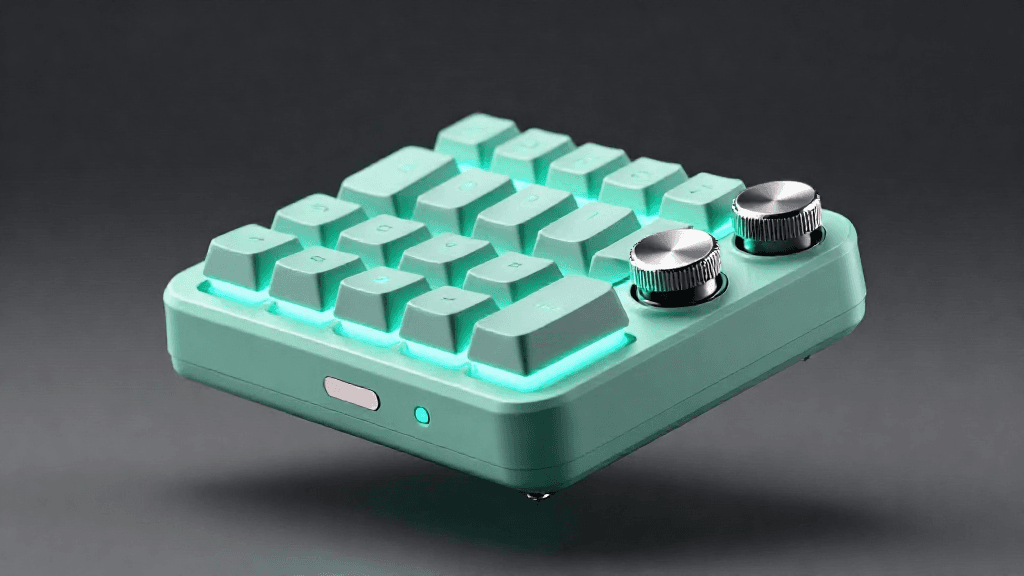
OpenAI launched Codex Micro, a $230 keypad built with Work Louder to control its Codex coding agent, its first hardware product.
Key Takeaways
OpenAI has released Codex Micro, a physical keypad designed to control its Codex coding agent. The device was developed in collaboration with keyboard maker Work Louder and went up for pre-order around July 15, 2026. It is priced at $230 and produced in a limited run, with shipping described as later this month.
Coverage of the launch, including a TechCrunch report published the same day, noted that the release arrived amid an ongoing hardware-related legal dispute involving OpenAI. That context has drawn attention to the timing of the announcement, though the dispute itself is separate from the Codex Micro product. Reports also stress that Codex Micro is distinct from the previously rumored screen-free hardware device that OpenAI has been developing with designer Jony Ive. The two projects should not be conflated: Codex Micro is a keypad accessory for an existing software agent, while the Ive-linked device is a separate, unreleased concept.
What makes Codex Micro notable is its framing as OpenAI's first hardware product. Until now, OpenAI has operated exclusively as a software and API company. A dedicated physical controller for a coding agent represents a new direction, even if the device itself is a niche accessory rather than a general-purpose computer or phone.
Feature Overview
Codex Micro is built around a small set of physical controls rather than a full keyboard layout. According to reporting from Engadget and gHacks, the device includes 13 mechanical switches, a touch sensor, a rotary dial, and a joystick. Internal references in coverage list the product under the model name kbd-1.0-codex-micro, suggesting OpenAI treats the hardware as part of a versioned product line rather than a one-off accessory.
The rotary dial is one of the device's more distinctive elements. Turning it adjusts the reasoning effort level Codex applies to a given task, letting a developer dial up more computation for a difficult debugging problem or dial it down for a quick, low-latency response. This gives users a physical, tactile way to control a setting that would otherwise require typing a flag or adjusting a setting in software.
The joystick serves a different purpose: launching preset workflows. Coverage describes triggering a debugging routine as one example, implying that users can map the joystick to commonly repeated Codex tasks rather than issuing them through a prompt each time.
The 13 mechanical switches function as programmable keys, and OpenAI ships the device with 32 swappable keycaps. This lets users relabel and rearrange keys to match personal workflows, a design choice common in macro keypads aimed at power users rather than general typing.
Usability Analysis
Codex Micro is clearly aimed at developers who already use Codex regularly, not general consumers. The combination of a reasoning-effort dial, a workflow-launching joystick, and remappable macro keys points to a tool built for people who run the same coding agent tasks repeatedly throughout the day and want to avoid retyping commands or navigating menus.
The swappable keycap set suggests OpenAI anticipated that different developers will want different key layouts depending on their most common Codex actions, whether that is triggering tests, requesting a code review, or adjusting model behavior mid-session. This is consistent with how existing macro keypads from other keyboard makers are used in creative and technical software.
Because the device is described as a limited-run product, availability is expected to be constrained, and the reported shipping window is later in July 2026, close to the pre-order announcement.
Pros and Cons
Pros
- Physical control over Codex's reasoning effort offers a faster alternative to adjusting settings through software menus.
- The joystick's preset-workflow launch feature can reduce repetitive prompt typing for common tasks like debugging.
- Swappable keycaps allow developers to customize the device around their own most-used Codex commands.
- It signals OpenAI's willingness to explore purpose-built accessories rather than only general software updates.
Cons
- At $230 for a niche accessory, the price limits it to developers with a heavy, daily Codex workflow.
- Limited-run production means availability will likely be constrained, and it is unclear whether OpenAI plans a wider restock.
- As a companion device tied specifically to Codex, it offers no standalone value to users who do not already rely on that agent.
Outlook
Codex Micro's significance goes beyond the device itself. As OpenAI's first hardware product, it tests whether developers want dedicated physical controls for AI agents, separate from keyboard shortcuts or browser extensions. If demand is strong, it could point toward more purpose-built accessories for specific OpenAI tools in the future.
At the same time, the limited-run pricing and narrow feature set suggest OpenAI is treating this as an experiment rather than a flagship consumer product. It differs sharply in scope from the previously rumored screen-free device linked to Jony Ive, which has been discussed as a broader personal computing product rather than a coding accessory. The two should be evaluated separately: Codex Micro's success or failure will say more about developer appetite for coding-agent hardware than about OpenAI's larger hardware ambitions.
The backdrop of an ongoing hardware-related legal dispute, as referenced in TechCrunch's coverage, adds a layer of scrutiny to the timing of the release, though it does not appear to affect the product's functionality or availability as reported.
Conclusion
Codex Micro is a narrowly scoped but notable step for OpenAI: a $230 mechanical keypad, built with Work Louder, that gives Codex users physical control over reasoning effort and preset workflows. It is best suited to developers who already use Codex intensively and want faster, tactile access to its settings, rather than to general AI users. As OpenAI's first hardware release, it is a modest but meaningful test case rather than a mass-market device.
Given its limited production run and specialized use case, Codex Micro earns a moderate recommendation, primarily for existing Codex power users willing to pay a premium for a dedicated controller.
Editor's Verdict
Codex Micro Review: OpenAI's First Hardware, a $230 Keypad is a workable proposition that fills a clear gap, even if it doesn't fundamentally change the landscape.
The strongest case for paying attention is physical, tactile control over Codex's reasoning effort speeds up workflow adjustments, which raises the bar for what readers should now expect from peers in this space. Reinforcing that, joystick-triggered preset workflows reduce repetitive prompting for common tasks adds practical value rather than just headline appeal. The broader signal worth registering is straightforward: codex Micro marks OpenAI's first entry into hardware, distinct from its software and API business. On the other side of the ledger, high price for a niche accessory limits appeal to casual Codex users is a real constraint, not a marketing footnote, and it should factor into any serious decision. Layered on top of that, limited-run production restricts availability with no confirmed restock plan narrows the set of teams for whom this is an obvious yes.
For ChatGPT power users, OpenAI API customers, and enterprise teams already running on the OpenAI stack, the smart move is to track its trajectory and revisit once the rough edges are filed down. For everyone else, the safer posture is to monitor coverage and revisit once the use cases that matter to your team are demonstrated in the wild.
Pros
- Physical, tactile control over Codex's reasoning effort speeds up workflow adjustments
- Joystick-triggered preset workflows reduce repetitive prompting for common tasks
- Swappable keycaps allow personalized key mapping for frequent Codex commands
- Represents a concrete first step into hardware for OpenAI, distinct from its software line
Cons
- High price for a niche accessory limits appeal to casual Codex users
- Limited-run production restricts availability with no confirmed restock plan
- Provides no standalone value outside of an active Codex workflow
References
Comments0
Key Features
1. 13 mechanical switches functioning as programmable macro keys 2. Touch sensor and rotary dial for adjusting Codex's reasoning effort level 3. Joystick for launching preset Codex workflows, such as a debugging routine 4. 32 swappable keycaps for workflow customization 5. Developed by OpenAI in collaboration with keyboard maker Work Louder 6. Limited-run production priced at $230, OpenAI's first hardware product
Key Insights
- Codex Micro marks OpenAI's first entry into hardware, distinct from its software and API business.
- The rotary dial gives developers direct physical control over an AI agent's reasoning effort, a setting normally adjusted in software.
- The joystick's preset-workflow launch feature targets repetitive coding tasks like debugging.
- 32 swappable keycaps indicate the product is designed for deep customization around individual workflows.
- At $230 with limited-run production, the device targets committed Codex power users rather than a mass-market audience.
- Coverage explicitly separates Codex Micro from the rumored screen-free Jony Ive-linked device, avoiding confusion between the two projects.
- The launch coincided with reported hardware-related legal scrutiny of OpenAI, adding context but not altering the product's function.
Was this review helpful?
Share
Related AI Reviews

ChatGPT Locked Chats: PIN-Gated, Not End-to-End Encrypted
OpenAI's Locked Chats hide selected conversations behind a 4-digit PIN. It is not end-to-end encryption, and a PIN reset deletes them.

OpenAI Details Four June Model Misalignment Incidents
OpenAI's four new reports cover a test-wallet spend, a website auth bypass, internal-system changes and a GET-only workaround.

ChatGPT Browser Extension Adds Tab Context and Control
OpenAI's upgraded ChatGPT extension reads open tabs and controls Chrome via ChatGPT Work, with per-site permission prompts and five browsers.

ChatGPT Intelligent UI: Interactive Answers in GPT-6
OpenAI says ChatGPT now builds charts, maps, forms and tools inside answers, and starts replying while it thinks. Rollout began Oct 7.