
GPT-Live-1 Review: OpenAI's Full-Duplex Voice Model for ChatGPT
OpenAI launched GPT-Live-1 on July 8, 2026, a full-duplex voice model that listens and speaks simultaneously, replacing ChatGPT Voice's older three-stage speech pipeline for paid users.
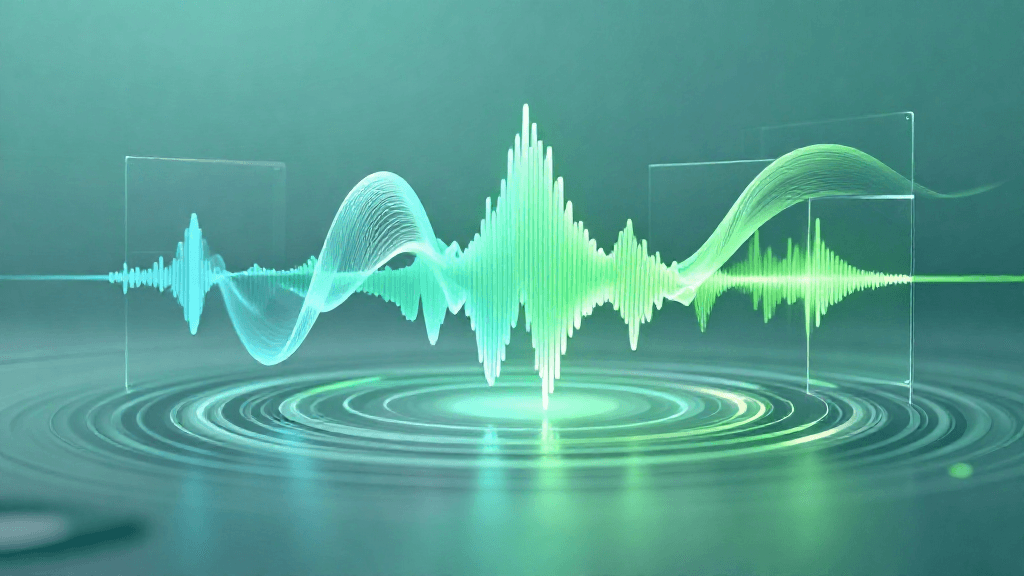
OpenAI launched GPT-Live-1 on July 8, 2026, a full-duplex voice model that listens and speaks simultaneously, replacing ChatGPT Voice's older three-stage speech pipeline for paid users.
Key Takeaways
OpenAI launched GPT-Live on July 8, 2026, a new family of full-duplex conversational voice models for ChatGPT. The family includes two versions: GPT-Live-1, the larger flagship model, and GPT-Live-1 mini, a smaller, lower-capability variant. The release replaces the three-stage pipeline that previously drove ChatGPT Voice — speech-to-text, followed by a language model, followed by text-to-speech — with an architecture that listens and speaks at the same time. GPT-Live-1 is now the default model behind ChatGPT Voice for paid Go, Plus, and Pro subscribers, while GPT-Live-1 mini serves Free users. Rollout began globally on iOS, Android, and ChatGPT.com the same day, with multi-language support.
Feature Overview
A Full-Duplex Architecture
The core change in GPT-Live is architectural. Previous ChatGPT Voice implementations relied on a three-stage pipeline: audio was transcribed to text, the text was passed to a language model, and the response was converted back to speech. That pipeline required a user to finish an entire turn before the model could begin forming a reply, which produced the stilted, wait-your-turn rhythm common to earlier voice assistants.
GPT-Live instead processes audio continuously, without waiting for silence to signal that a turn has ended. OpenAI describes this as a full-duplex architecture: the model can listen and speak simultaneously. In practice, this lets GPT-Live insert small, natural listening cues such as "mhmm" or "yeah" while the user is still talking, respond to interruptions mid-sentence, and stay quiet when a user pauses to think rather than jumping in prematurely. Because the model never has to wait for a full pause before acting, OpenAI says it also enables features like real-time translation, where the model can begin translating before a speaker has finished a sentence.
Routing to GPT-5.5 for Deeper Reasoning
GPT-Live is not designed to handle every kind of request on its own. When a conversation requires web search, deeper reasoning, or more complex work, GPT-Live delegates the task to GPT-5.5 behind the scenes and brings the result back into the conversation once it is ready. OpenAI has said it plans to route to newer or future reasoning models as they become available, positioning GPT-Live as a conversational front end rather than a standalone reasoning engine.
Availability by Plan
GPT-Live-1 is now the default model powering ChatGPT Voice for paid Go, Plus, and Pro users. GPT-Live-1 mini, the smaller variant, is the default for Free users. Both began rolling out on July 8, 2026, across iOS, Android, and ChatGPT.com, with multi-language support included at launch. As of launch, GPT-Live was not available through OpenAI's API; the company said it plans to bring API access "soon" and is allowing developers and enterprises to sign up for notification.
Usability Analysis
Atty Eleti, OpenAI's voice feature product lead, framed the ambition behind the release directly: "we think voice can be the future interface to all kinds of work." The full-duplex design is aimed squarely at that goal — reducing the friction that makes talking to an AI assistant feel different from talking to a person.
OpenAI reported that GPT-Live-1 scored 75.5 on the company's internal "pleasantness" evaluation, a metric it uses to measure how natural a conversation feels (OpenAI, as reported by SiliconANGLE). This is a self-reported internal benchmark rather than an independently verified figure, and OpenAI has not published the full evaluation methodology or comparison points alongside it.
Live demonstrations of the translation capability surfaced a real limitation. In at least one demonstration, Hindi translations were described as carrying a "heavy American accent" and sounding "unnatural." OpenAI said the model is optimized for most languages but declined to specify which ones, leaving open the question of how consistent pronunciation quality is across its full language range.
Pros and Cons
Pros:
- Full-duplex architecture eliminates the wait-for-silence delay that made prior voice assistants feel unnatural
- Natural listening cues and interruption handling make conversations feel closer to talking with a person
- Routing to GPT-5.5 for complex requests preserves reasoning depth without slowing down casual conversation
- Same-day rollout across Free, Go, Plus, and Pro tiers gives nearly all ChatGPT users access to some version of the model
- Multi-language support and real-time translation are built in from launch, not added later
Cons:
- API access was not available at launch, limiting developer and enterprise adoption to a "notify me" waitlist
- Pronunciation quality varies by language, with Hindi translation demonstrations showing an unnatural accent
- The 75.5 "pleasantness" score is an OpenAI-reported internal metric, not an independently verified benchmark
- Free users receive the lower-capability GPT-Live-1 mini rather than the full model
Outlook
GPT-Live arrived just one day before OpenAI's broader GPT-5.6 model family — Sol, Terra, Luna — became publicly available on July 9, 2026. The two releases are separate products: GPT-Live is a voice interaction layer for ChatGPT, while GPT-5.6 is the underlying reasoning and coding model family. The close timing suggests OpenAI is treating voice as a distinct product track that runs on its own release cadence, rather than folding voice upgrades into each new base-model launch.
OpenAI's stated plan to route GPT-Live through newer reasoning models as they arrive, and to eventually bring the model to the API, indicates that the current release is a starting point rather than a finished feature set. Whether the pronunciation gaps seen in early translation demos are addressed, and how quickly API access follows, will determine how far GPT-Live extends beyond ChatGPT's consumer voice feature into developer and enterprise use cases.
Conclusion
GPT-Live-1 replaces a fundamentally limited three-stage voice pipeline with a full-duplex architecture built to sound and behave more like a real conversation. The upgrade reaches nearly the entire ChatGPT user base on day one, with GPT-Live-1 for paying subscribers and GPT-Live-1 mini for Free users. The architecture change is the most substantial part of the release; the language-specific pronunciation issues and the absence of API access at launch are the clearest gaps still to close. For ChatGPT Voice users on any paid tier, this is a meaningful upgrade worth trying. Developers waiting to build on GPT-Live will need to wait for API access.
Rating: 4/5
Editor's Verdict
GPT-Live-1 Review: OpenAI's Full-Duplex Voice Model for ChatGPT earns a solid recommendation within the gpt space.
The strongest case for paying attention is full-duplex architecture eliminates the wait-for-silence delay of prior voice assistants, which raises the bar for what readers should now expect from peers in this space. Reinforcing that, natural listening cues and interruption handling make conversations feel more human adds practical value rather than just headline appeal. The broader signal worth registering is straightforward: the shift from a three-stage pipeline to a full-duplex architecture is GPT-Live's core technical advance, not an incremental tuning update. On the other side of the ledger, no API access at launch limits developer and enterprise adoption is a real constraint, not a marketing footnote, and it should factor into any serious decision. Layered on top of that, pronunciation quality varies by language, as shown by unnatural-sounding Hindi translation demos narrows the set of teams for whom this is an obvious yes.
For ChatGPT power users, OpenAI API customers, and enterprise teams already running on the OpenAI stack, this is a serious evaluation candidate, not just a curiosity to bookmark. For everyone else, the safer posture is to monitor coverage and revisit once the use cases that matter to your team are demonstrated in the wild.
Pros
- Full-duplex architecture eliminates the wait-for-silence delay of prior voice assistants
- Natural listening cues and interruption handling make conversations feel more human
- Routing to GPT-5.5 preserves reasoning depth for complex requests without slowing casual conversation
- Same-day availability across Free, Go, Plus, and Pro tiers reaches nearly all ChatGPT users
Cons
- No API access at launch limits developer and enterprise adoption
- Pronunciation quality varies by language, as shown by unnatural-sounding Hindi translation demos
- The 75.5 pleasantness score is a self-reported internal metric without independent verification
- Free-tier users get the lower-capability GPT-Live-1 mini rather than the full model
References
Comments0
Key Features
1. Full-duplex: listens and speaks at once, no turn-taking delay 2. Two variants: GPT-Live-1 (paid) and GPT-Live-1 mini (Free) 3. Routes complex requests to GPT-5.5 4. Real-time translation, natural interruptions 5. Live July 8, 2026 on iOS, Android, ChatGPT.com; API coming soon
Key Insights
- The shift from a three-stage pipeline to a full-duplex architecture is GPT-Live's core technical advance, not an incremental tuning update
- Routing complex requests to GPT-5.5 lets GPT-Live stay conversational without sacrificing reasoning depth
- Same-day default rollout across Free, Go, Plus, and Pro tiers gives GPT-Live near-universal reach within ChatGPT
- The 75.5 'pleasantness' score is an OpenAI-reported internal metric, not an independently verified benchmark
- Uneven pronunciation quality in languages like Hindi shows real-time translation is not yet uniformly polished across languages
- API access was not available at launch, keeping GPT-Live a consumer-facing ChatGPT feature for now
- GPT-Live launching one day before GPT-5.6's general availability suggests OpenAI is treating voice as an independent product track
- OpenAI's plan to route GPT-Live through future reasoning models signals the current release is an early stage of a longer roadmap
Was this review helpful?
Share
Related AI Reviews
ChatGPT Intelligent UI: Interactive Answers in GPT-6
OpenAI says ChatGPT now builds charts, maps, forms and tools inside answers, and starts replying while it thinks. Rollout began Oct 7.

OpenAI Math Repo: 722 AI-Produced Manuscripts on GitHub
OpenAI published 722 manuscripts from an internal model on GitHub, with Lean proofs for many. It says some unformalized results could have issues.

OpenAI textGrain: Text Watermarks for ChatGPT in the EU
OpenAI adds invisible textGrain watermarks to ChatGPT and Codex text in the EU, with API opt-in and a detector limited to researchers.

OpenAI Safety Report Lead Resigns, Citing Broken Culture
David Robinson, who oversaw safety reports on 12 frontier launches, quit OpenAI and says its culture is broken. OpenAI points to its safeguards.