
The AI Cold War Goes Viral: Altman and Amodei's Handshake Snub at India Summit
OpenAI's Sam Altman and Anthropic's Dario Amodei refused to hold hands at India's AI Impact Summit on February 19, capping weeks of escalating rivalry from Super Bowl ads to India expansion.
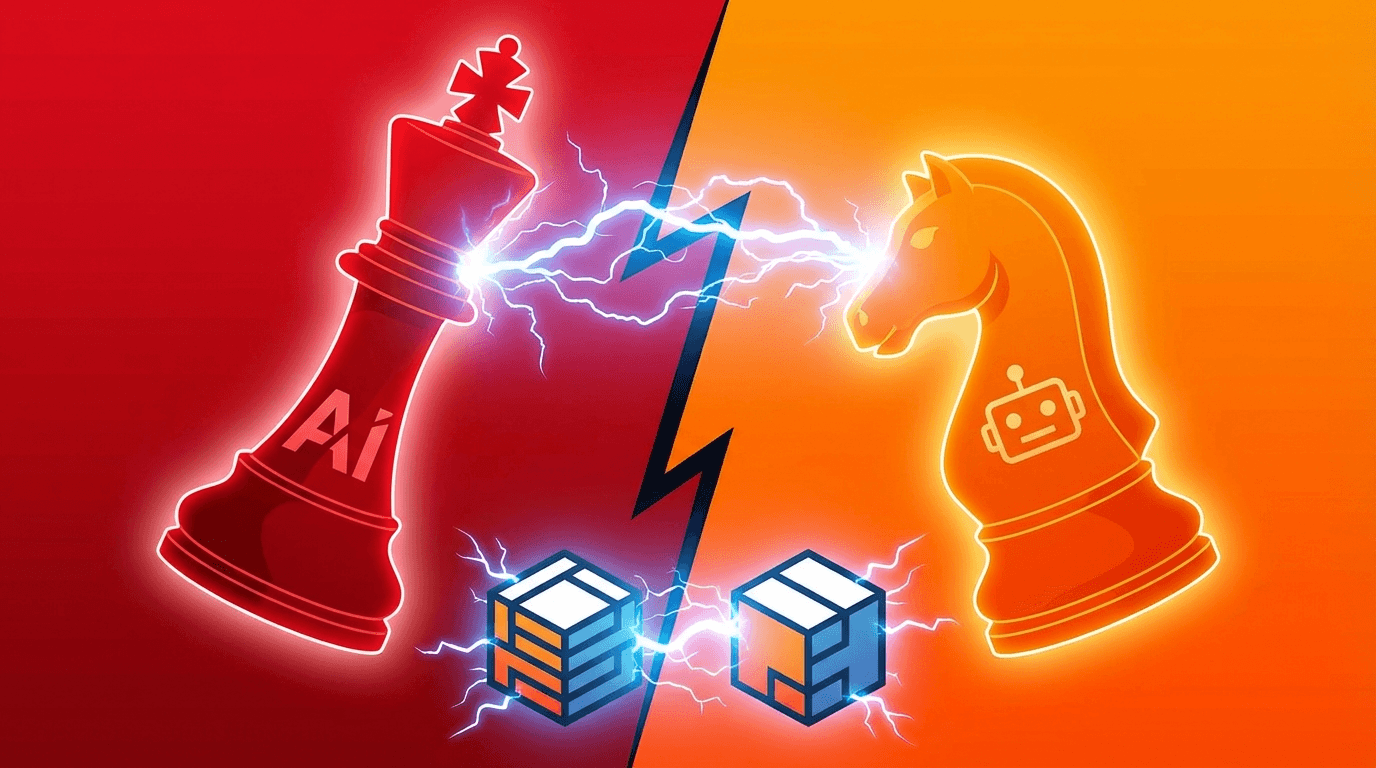
OpenAI's Sam Altman and Anthropic's Dario Amodei refused to hold hands at India's AI Impact Summit on February 19, capping weeks of escalating rivalry from Super Bowl ads to India expansion.
A Photo-Op That Said More Than Any Press Release
On February 19, 2026, at the India AI Impact Summit in New Delhi, Indian Prime Minister Narendra Modi gathered the world's top AI executives for a group photo. Modi lifted the hands of those standing next to him, and the assembled leaders followed suit, raising joined hands as a display of unity. Google and Alphabet CEO Sundar Pichai participated. Scale AI CEO Alexandr Wang joined in. But when the gesture reached Sam Altman and Dario Amodei, who were standing next to each other, both men raised their fists in the air instead, conspicuously avoiding each other's hands.
The moment was captured on camera and went viral within hours. Social media commentary ranged from amusement to analysis, with many observers calling it a symbolic representation of what some have dubbed "the AI cold war" between OpenAI and Anthropic. Altman later offered a deflection, telling reporters: "Modi grabbed my hand and put it up and I just wasn't sure what we were supposed to be doing."
From Colleagues to Competitors
The tension between Altman and Amodei is not new, but it has escalated dramatically in early 2026. Dario Amodei worked at OpenAI from 2016 to 2020 as Vice President of Research, where he contributed to the development of GPT-2 and GPT-3. In 2021, Amodei co-founded Anthropic with his sister Daniela and several other former OpenAI researchers, citing concerns about safety practices and the company's strategic direction.
The split became more personal in November 2023, when OpenAI's board briefly fired Altman as CEO. During that chaotic period, the board reportedly approached Amodei about becoming OpenAI's CEO and discussed a potential merger of the two companies. Amodei declined both offers. Altman was reinstated days later with a reconstituted board, but the episode deepened the personal and professional rift between the two leaders.
Since then, the companies have competed on virtually every front: model capabilities, enterprise deals, government contracts, and now consumer marketing.
The Super Bowl Ad War
The India summit incident follows an unprecedented advertising battle during Super Bowl LX on February 9, 2026. Anthropic ran a four-ad campaign titled "A Time and a Place" that took direct aim at OpenAI's decision to introduce advertisements into ChatGPT. The commercials featured words like "betrayal," "deception," "treachery," and "violation," depicting AI assistants interrupted mid-response by unrelated ads. The tagline was blunt: "Ads are coming to AI. But not to Claude."
The campaign was Anthropic's first major consumer advertising push, and it achieved its goal: according to CNBC, Anthropic saw an 11% boost in user traffic following the Super Bowl ads.
Altman responded publicly on X (formerly Twitter), calling Anthropic's ads "clearly dishonest" and accusing the company of "doublespeak." He argued that OpenAI's mission to bring AI to billions globally required sustainable revenue models, including advertising, and that Anthropic's criticism was hypocritical given its own pursuit of premium pricing and enterprise contracts.
The exchange marked the first time the CEOs of two frontier AI labs had publicly attacked each other's business strategies in the open.
India as a Battleground
The India AI Impact Summit was not just a backdrop for rivalry theater. Both companies used the event to announce significant India expansions, reflecting the country's importance as both a market and a talent pool.
OpenAI announced the opening of two new offices in India, a partnership with Tata Consultancy Services (TCS), and the deployment of AI tools for higher education. These moves deepen OpenAI's presence in one of the world's largest technology workforces and position ChatGPT as the default AI assistant for Indian enterprises.
Anthropic announced its own India office and a partnership with Infosys for both internal and external deployment of Claude. The Infosys deal targets Indian enterprise clients who need AI solutions integrated with their existing IT service infrastructure, a segment where Infosys commands significant market share.
The parallel announcements underscore that India has become a key competitive battleground. With over 1.4 billion people and a rapidly growing technology sector, India represents one of the largest untapped markets for AI tools and services. Both companies are betting that early partnerships with major Indian IT firms will create lasting distribution advantages.
The Broader Competitive Context
The Altman-Amodei dynamic exists within a rapidly intensifying competitive landscape. In the weeks surrounding the India summit, several major events reshaped the frontier AI market:
OpenAI's $100 billion funding round, reported on the same day as the summit, would value the company at over $850 billion and provide resources that no competitor, including Google, can easily match in the private market.
Claude Opus 4.6, released on February 18, 2026, achieved strong benchmark results on coding and reasoning tasks, keeping Anthropic competitive despite its smaller scale and lower valuation.
Gemini 3.1 Pro, released on February 19, 2026, demonstrated that Google remains a formidable competitor with industry-leading reasoning benchmark scores.
The Pentagon-Anthropic dispute, which escalated throughout February, revealed fundamental differences in how AI companies approach military contracts. Anthropic's refusal to fully lift restrictions on mass surveillance and autonomous weapons use puts it at odds with the Pentagon, while OpenAI, Google, and xAI have agreed to broader terms.
These developments collectively paint a picture of an industry where technical competition is inseparable from commercial strategy, government relations, and personal rivalries.
What the Rivalry Means for Users
For consumers and enterprises evaluating AI tools, the OpenAI-Anthropic rivalry has concrete benefits. Competition drives both companies to improve their models, lower prices, expand access, and invest in the markets where they deploy. The India expansions announced at the summit will bring frontier AI capabilities to millions of new users.
However, the rivalry also creates uncertainty. Enterprise customers who commit to one platform risk being locked into an ecosystem that may or may not win the long-term race. The advertising dispute raises questions about how AI assistants will be monetized and whether ad-supported AI will compromise response quality. The Pentagon dispute raises questions about how AI companies balance ethical principles with government revenue.
Conclusion
The handshake snub at the India AI Impact Summit was a moment of personal theater, but it reflected genuine strategic conflict. OpenAI and Anthropic are competing for the same customers, the same talent, the same government contracts, and the same claim to leadership in the most transformative technology of this decade. Both companies announced meaningful India expansions at the summit. Both are pursuing aggressive growth strategies. And both are led by executives who share a history that makes their competition intensely personal. The viral photo was not the story. It was a symbol of a rivalry that is reshaping the AI industry in real time.
Editor's Verdict
The AI Cold War Goes Viral: Altman and Amodei's Handshake Snub at India Summit earns a solid recommendation within the it news space.
The strongest case for paying attention is intensifying competition drives faster model improvements, lower prices, and broader access for consumers and enterprises, which raises the bar for what readers should now expect from peers in this space. Reinforcing that, india expansion announcements from both companies will bring frontier AI capabilities to over 1.4 billion potential users adds practical value rather than just headline appeal. The broader signal worth registering is straightforward: the handshake snub at India's AI Impact Summit went viral as a symbol of the intensifying OpenAI-Anthropic rivalry. On the other side of the ledger, personal animosity between leaders risks distracting from product development and responsible AI deployment is a real constraint, not a marketing footnote, and it should factor into any serious decision. Layered on top of that, enterprise customers face lock-in risk when committing to platforms in an unsettled competitive landscape narrows the set of teams for whom this is an obvious yes.
For AI industry watchers, strategy teams, and decision-makers tracking platform shifts, this is a serious evaluation candidate, not just a curiosity to bookmark. For everyone else, the safer posture is to monitor coverage and revisit once the use cases that matter to your team are demonstrated in the wild.
Pros
- Intensifying competition drives faster model improvements, lower prices, and broader access for consumers and enterprises
- India expansion announcements from both companies will bring frontier AI capabilities to over 1.4 billion potential users
- Anthropic's principled stance on military AI restrictions demonstrates that ethical positioning can coexist with commercial competition
- The rivalry creates diverse options for enterprise customers who can evaluate competing platforms on merit
Cons
- Personal animosity between leaders risks distracting from product development and responsible AI deployment
- Enterprise customers face lock-in risk when committing to platforms in an unsettled competitive landscape
- The ad-supported AI debate raises concerns about response quality degradation in monetized AI assistants
- Escalating rivalry could lead to a race-to-the-bottom on safety standards as companies prioritize speed over caution
References
Comments0
Key Features
At the India AI Impact Summit on February 19, 2026, OpenAI CEO Sam Altman and Anthropic CEO Dario Amodei refused to hold hands during a group photo with PM Modi, going viral as a symbol of their escalating rivalry. This followed Anthropic's four-ad Super Bowl campaign criticizing OpenAI's ChatGPT ads, which boosted Anthropic traffic by 11%. Both companies announced India expansions: OpenAI partnered with TCS and opened two offices, while Anthropic partnered with Infosys and opened one office. The rivalry spans model competition, military contracts, consumer marketing, and global market expansion.
Key Insights
- The handshake snub at India's AI Impact Summit went viral as a symbol of the intensifying OpenAI-Anthropic rivalry
- Anthropic's Super Bowl campaign, its first major consumer ad push, delivered an 11% traffic boost by targeting OpenAI's decision to introduce ads in ChatGPT
- Both companies announced India expansions on the same day: OpenAI with TCS and Anthropic with Infosys, signaling India as a key competitive battleground
- The rivalry traces back to Amodei's departure from OpenAI in 2021 and was deepened by the 2023 board crisis when Amodei declined offers to become OpenAI CEO
- OpenAI's $100B funding round and $850B valuation create a resource asymmetry that Anthropic cannot match in the private market
- The Pentagon-Anthropic dispute over military AI use adds a government relations dimension to the competitive landscape
Was this review helpful?
Share
Related AI Reviews
Microsoft Maia 300: 96-Accelerator Rack, 2027 Rollout
Microsoft's Maia 300 inference chip claims up to 7x Maia 200's rack throughput on TSMC N2P chiplets, with production rollout starting in 2027.

Nadella: Treat Frontier AI Models as Insider Risks
Nadella's X essay urges treating frontier models as insider risks: controls outside the model, audit evidence and an emergency brake.

Google Pauses OSS VRP Product-Bug Rewards Over AI Slop
Google stopped taking product-vulnerability reports in its OSS bug bounty on Oct 1 over invalid AI submissions; supply-chain rewards continue.

Apple Rethinks macOS Full Disk Access as AI Agents Grow
Apple says it will add controls so granting macOS Full Disk Access takes very explicit user action, citing risks from capable AI agents.