
NVIDIA RTX Spark: The Blackwell Superchip That Runs 120B-Parameter LLMs on a Laptop
NVIDIA unveiled the RTX Spark at Computex 2026, combining a 20-core Grace CPU and Blackwell GPU in 128GB unified memory to deliver 1 petaflop of AI compute — enabling local 120B-parameter LLMs and agentic Windows workflows.
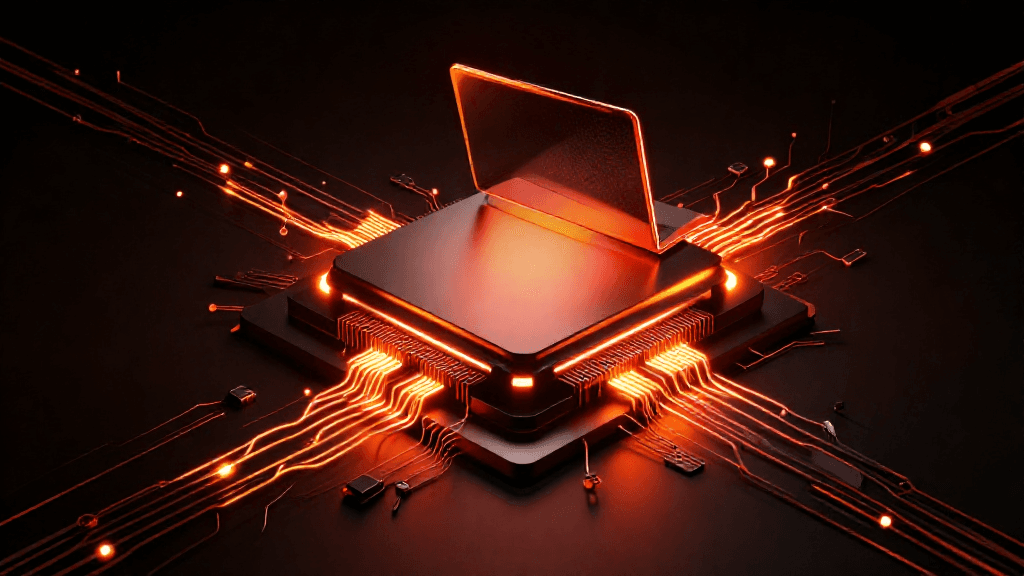
NVIDIA unveiled the RTX Spark at Computex 2026, combining a 20-core Grace CPU and Blackwell GPU in 128GB unified memory to deliver 1 petaflop of AI compute — enabling local 120B-parameter LLMs and agentic Windows workflows.
NVIDIA Enters the Personal AI Era With RTX Spark
On June 1, 2026, NVIDIA CEO Jensen Huang took the Computex 2026 stage in Taipei and unveiled a product that represents a fundamental shift in the company's strategy: the RTX Spark Superchip, a consumer-market integrated circuit that combines a 20-core NVIDIA Grace CPU with a full Blackwell RTX GPU and 128GB of unified LPDDR5X memory on a single package. The announcement was made jointly with Microsoft and supported by over 30 laptop and 10 desktop system commitments from ASUS, Dell, HP, Lenovo, and MSI.
Huang's stage framing captured the scope of the shift: "The PC is being reinvented. For forty years, you launched apps. Click. Type. With RTX Spark and Microsoft Windows, you ask—and the PC does the work."
The practical implication is that 120-billion-parameter large language models — the scale associated with frontier reasoning capabilities — can now run entirely on-device, locally, without cloud compute, on a laptop slim enough to be 14mm thick.
Feature Overview
1. Core Architecture: Grace CPU + Blackwell GPU on NVLink-C2C
The RTX Spark's defining characteristic is its monolithic integration. The 20-core NVIDIA Grace CPU and a Blackwell RTX GPU with 6,144 CUDA cores and fifth-generation Tensor Cores (with FP4 precision support) are connected via NVIDIA's NVLink-C2C chip-to-chip interconnect — the same technology that connects CPU and GPU dies in NVIDIA's data center products.
NVLink-C2C provides substantially higher bandwidth between CPU and GPU than PCIe in a traditional discrete GPU design. Combined with the unified 128GB memory pool shared across both processing units, this eliminates the memory transfer bottleneck that limits AI performance in conventional laptop architectures. The system reaches up to 300 GB/s of memory bandwidth.
The total AI compute capacity is rated at 1 petaflop of FP4 AI performance — a figure that places the RTX Spark above many AI accelerator cards available commercially just two years ago.
2. Local LLM Capability: 120B Parameters, 1M-Token Context
The headline AI workload claim is the ability to run 120-billion-parameter LLMs with a 1-million-token context window entirely on-device. This is significant for several reasons:
- 120B parameters corresponds roughly to frontier-class reasoning models. Running such a model locally means inference latency depends only on silicon speed, not network latency or cloud availability.
- A 1 million-token context window on a 128GB unified memory system means long documents, codebases, and extended agent sessions can be processed without chunking or losing context.
- Private agent execution without cloud dependency addresses a growing enterprise concern around data sovereignty and sensitive workload exposure.
3. Creative and Compute Workloads
Beyond AI inference, RTX Spark is designed as a full professional workstation in laptop form. Supported workloads per NVIDIA's official specs include:
- Rendering 90GB+ 3D scenes
- Editing 12K 4:2:2 video
- Generating 4K AI videos on-device
- AAA gaming at 1440p at over 100 frames per second with full ray tracing
Adobe is rearchitecting both Photoshop and Premiere Pro from the ground up for the RTX Spark platform, promising 2x faster AI and graphics performance versus current-generation systems.
4. Agentic Windows Integration
The launch is a joint announcement with Microsoft, and the AI agent capabilities go beyond hardware specs. NVIDIA and Microsoft co-developed new Windows security primitives alongside the NVIDIA OpenShell runtime, which provides identity, containment, policy, and end-to-end encryption for on-device agent execution. This framework ensures that Windows AI agents run under full user control rather than with unconstrained system access — a necessary precondition for enterprise adoption of local agentic workflows.
Microsoft announced the Surface Laptop Ultra as one of the first RTX Spark-based devices. The partnership makes Windows the first major desktop operating system with a defined security model for autonomous AI agents operating locally.
5. Ecosystem and Software Support
More than 100 software providers have committed support for RTX Spark at launch. NVIDIA's CUDA and RTX ecosystem — covering over 1,000 games and professional applications — is fully compatible. DLSS 4.5 with Ray Reconstruction (transformer-based upscaling) and RTX Video with 4x Frame Generation are supported across the platform.
Usability Analysis
RTX Spark is targeted primarily at three audiences: AI developers and researchers who need on-device model inference without cloud cost; creative professionals who require high-end GPU performance in a portable form factor; and enterprise users in regulated industries where data cannot leave the device.
The 14mm form factor at up to 3 pounds places RTX Spark laptops competitively with premium consumer ultrabooks. The unified memory architecture solves the perennial "not enough VRAM" problem that limits discrete GPU laptops when running large models. Running a 120B-parameter model locally at competitive speeds was not possible in a laptop package before this generation.
The fall 2026 availability window means production pricing has not been disclosed. Given the premium positioning, laptops are expected to start in the $2,000–$3,000 range, with compact desktops priced comparably. This positions RTX Spark systems above consumer gaming laptops but below workstation-class hardware.
Pros and Cons
Pros:
- First consumer laptop platform capable of running 120B-parameter LLMs locally
- 1 petaflop of FP4 AI compute in a 14mm, sub-3-pound chassis
- 128GB unified memory eliminates GPU memory bottleneck for large models
- Native agentic security framework co-developed with Microsoft
- Full CUDA and RTX ecosystem compatibility across 1,000+ applications
Cons:
- No official pricing announced; premium cost expected ($2,000–$3,000+)
- Fall 2026 availability means no product in consumers' hands until Q4
- ARM CPU architecture requires software vendors to optimize or translate x86 applications
- No independent benchmark validation of AI performance claims at time of announcement
Outlook
RTX Spark represents NVIDIA's most direct challenge to Apple Silicon in the consumer laptop market. Where Apple's M-series chips dominate on efficiency and the macOS ecosystem, NVIDIA's counterargument is CUDA compatibility, Blackwell GPU architecture, and the ability to run open-weight frontier LLMs locally without hitting Apple's closed ecosystem constraints.
For the AI developer community, the ability to run 120B-parameter models on a laptop without a cloud subscription changes the cost structure of local experimentation significantly. It also accelerates a broader trend toward edge AI inference as the primary deployment model for privacy-sensitive enterprise workloads.
NVIDIA's three-generation RTX Spark roadmap — Blackwell (RTX Spark), followed by Rubin, then Rosa Feynman — suggests this is a sustained platform commitment, not a one-generation experiment.
Conclusion
NVIDIA RTX Spark is the most significant new personal computing platform in years. The combination of Blackwell GPU performance, Grace CPU architecture, and 128GB unified memory in a thin-and-light laptop chassis addresses the central limitation of on-device AI: context and parameter scale. For AI developers, enterprise users with sensitive data, and creative professionals who currently rely on cloud GPU rental, RTX Spark arriving in fall 2026 offers a compelling alternative — provided the final pricing and thermal performance hold up to the Computex announcement's ambitious claims.
Editor's Verdict
NVIDIA RTX Spark: The Blackwell Superchip That Runs 120B-Parameter LLMs on a Laptop stands out as one of the more compelling it news developments we've covered recently.
The strongest case for paying attention is first laptop platform capable of running 120B-parameter frontier LLMs entirely on-device, which raises the bar for what readers should now expect from peers in this space. Reinforcing that, 1 petaflop FP4 AI compute in a 14mm chassis — unprecedented for consumer hardware adds practical value rather than just headline appeal. The broader signal worth registering is straightforward: running 120B-parameter LLMs locally on a laptop removes the cloud cost and latency barrier for frontier-class on-device AI inference. On the other side of the ledger, no official pricing disclosed; premium tier expected in the $2,000–$3,000+ range is a real constraint, not a marketing footnote, and it should factor into any serious decision. Layered on top of that, fall 2026 availability leaves a significant gap between announcement and consumer access narrows the set of teams for whom this is an obvious yes.
For AI industry watchers, strategy teams, and decision-makers tracking platform shifts, the answer here is to pilot now and plan for production use. For everyone else, the safer posture is to monitor coverage and revisit once the use cases that matter to your team are demonstrated in the wild.
Pros
- First laptop platform capable of running 120B-parameter frontier LLMs entirely on-device
- 1 petaflop FP4 AI compute in a 14mm chassis — unprecedented for consumer hardware
- Full CUDA and RTX compatibility with over 1,000 existing games and professional applications
- Native agentic security framework enables enterprise deployment of local AI agents
- Adobe Photoshop and Premiere are being rearchitected specifically for the platform
Cons
- No official pricing disclosed; premium tier expected in the $2,000–$3,000+ range
- Fall 2026 availability leaves a significant gap between announcement and consumer access
- ARM CPU architecture creates x86 application compatibility overhead requiring software optimization
- Performance claims at announcement lacked independent third-party benchmark verification
References
Comments0
Key Features
1. 20-core Grace CPU + Blackwell RTX GPU (6,144 CUDA cores) connected via NVLink-C2C on a single package 2. 128GB unified LPDDR5X memory with 300 GB/s bandwidth — eliminates VRAM bottleneck for LLMs 3. 1 petaflop FP4 AI compute; runs 120B-parameter LLMs with 1M-token context window locally 4. NVIDIA OpenShell runtime + Microsoft Windows security primitives for agentic AI on-device 5. 14mm form factor, sub-3-pound chassis; fall 2026 availability across ASUS, Dell, HP, Lenovo, MSI, and Microsoft Surface
Key Insights
- Running 120B-parameter LLMs locally on a laptop removes the cloud cost and latency barrier for frontier-class on-device AI inference
- NVLink-C2C integration of CPU and GPU on a unified memory pool is NVIDIA bringing data center interconnect architecture to consumer hardware for the first time
- The co-developed NVIDIA OpenShell + Windows security framework is the first formal agentic AI security model for a consumer desktop OS
- NVIDIA's ARM CPU pivot mirrors Apple Silicon's M-series architecture, but leads with CUDA ecosystem compatibility as its differentiator
- Adobe rearchitecting Photoshop and Premiere for RTX Spark signals that professional creative workflows will shift to on-device AI acceleration
- The 1M-token context window at 128GB unified memory means full codebase analysis or long document sessions require no chunking
- Three-generation RTX Spark roadmap (Blackwell, Rubin, Rosa Feynman) signals a sustained platform commitment rather than a one-off product experiment
Was this review helpful?
Share
Related AI Reviews

Meta Pulls Commercial Terms Clause on Scraping, AI Training
Meta removed a Commercial Terms sentence experts read as letting it scrape publisher sites for AI training. Meta says crawlers are unchanged.
Microsoft Maia 300: 96-Accelerator Rack, 2027 Rollout
Microsoft's Maia 300 inference chip claims up to 7x Maia 200's rack throughput on TSMC N2P chiplets, with production rollout starting in 2027.

Nadella: Treat Frontier AI Models as Insider Risks
Nadella's X essay urges treating frontier models as insider risks: controls outside the model, audit evidence and an emergency brake.

Google Pauses OSS VRP Product-Bug Rewards Over AI Slop
Google stopped taking product-vulnerability reports in its OSS bug bounty on Oct 1 over invalid AI submissions; supply-chain rewards continue.