
Nvidia Invests $2 Billion in Nebius: The Rise of the Neocloud in AI Infrastructure
Nvidia acquires an 8.3% stake in Nebius for $2 billion, deepening its push into AI cloud infrastructure. Nebius plans to deploy over 5 gigawatts of data center capacity by 2030.
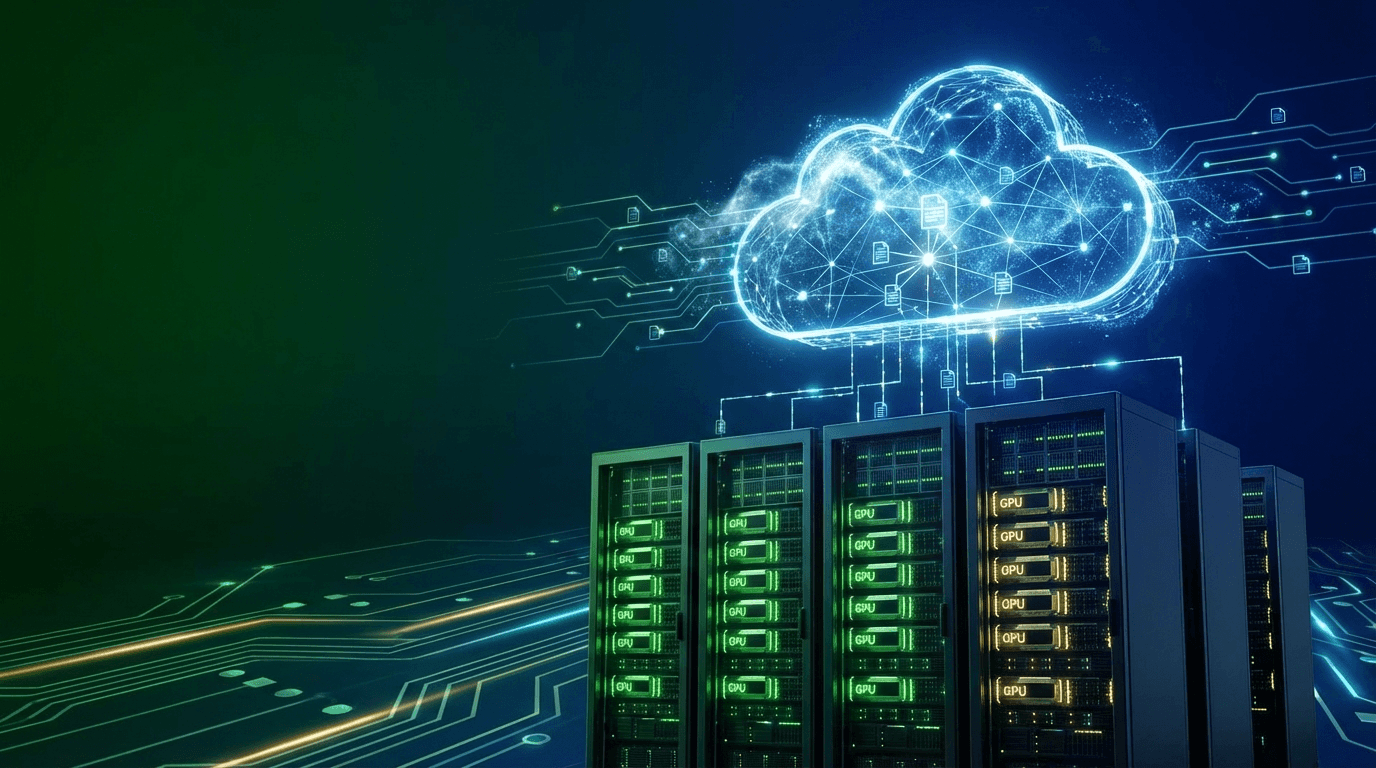
Nvidia acquires an 8.3% stake in Nebius for $2 billion, deepening its push into AI cloud infrastructure. Nebius plans to deploy over 5 gigawatts of data center capacity by 2030.
Key Takeaways
On March 11, 2026, Nvidia announced a $2 billion investment in Nebius, an Amsterdam-based AI cloud company. The deal gives Nvidia approximately 8.3% ownership at $94.94 per share. Nebius is part of the emerging "neocloud" category, companies that build cloud infrastructure specifically optimized for AI workloads rather than general-purpose computing.
This investment represents Nvidia's largest single investment in a cloud infrastructure company and signals a strategic shift beyond selling chips to actively shaping the infrastructure layer where those chips are deployed.
Feature Overview
1. The Neocloud Concept
Neoclouds are a new category of cloud providers that focus exclusively on AI compute infrastructure. Unlike traditional hyperscalers such as AWS, Azure, and Google Cloud, which serve a broad range of industries and workload types, neoclouds concentrate on tech customers and offer capacity tailored specifically for AI training and inference.
Nebius, alongside CoreWeave, represents the vanguard of this category. These companies have gained prominence through high-profile deals to supply AI infrastructure to the same hyperscalers they notionally compete with. Nebius has secured a $17 billion deal with Microsoft and a $3 billion deal with Meta Platforms for AI compute capacity.
The neocloud model works because AI workloads have fundamentally different requirements than traditional cloud computing. AI training requires dense GPU clusters with high-bandwidth interconnects, specialized cooling, and software stacks optimized for distributed training. Building this from the ground up is often more efficient than retrofitting general-purpose data centers.
2. Strategic Partnership Details
The Nvidia-Nebius collaboration extends well beyond a financial investment. The two companies will work together on:
- AI infrastructure deployment: Joint engineering on optimal GPU cluster configurations
- Fleet management: Software and processes for managing large-scale GPU deployments
- Inference optimization: Techniques for maximizing throughput on inference workloads
- AI factory design: End-to-end design of purpose-built AI compute facilities
This partnership model mirrors Nvidia's approach with other infrastructure partners. By investing in and collaborating with neoclouds, Nvidia ensures that its hardware is deployed in environments specifically designed to maximize its performance. This creates a reinforcing cycle: better infrastructure leads to better benchmark results, which drives more GPU demand.
3. Data Center Scale
Nebius plans to deploy more than 5 gigawatts of data center capacity by the end of 2030. To put this in perspective, a single gigawatt can power approximately 750,000 homes. Five gigawatts of AI-dedicated data center capacity represents an enormous build-out that underscores the insatiable demand for AI compute.
This scale of construction requires not just capital but also access to power, land, cooling infrastructure, and regulatory approvals. Nebius's Amsterdam base and European operations give it access to relatively stable energy markets and a regulatory environment that, while complex, offers advantages for companies that navigate it effectively.
4. Nebius Background and Origins
Nebius has an unusual corporate history. The company emerged from the restructuring of Yandex N.V., the parent company of Russia's largest search engine. After Russia's invasion of Ukraine in 2022, Yandex N.V. divested its Russian operations and reconstituted itself as Nebius Group, retaining the AI infrastructure and cloud computing assets while shedding the search engine business.
This heritage gives Nebius deep technical expertise in large-scale distributed systems. Yandex operated some of the largest AI and search infrastructure in Europe. Nebius inherited that engineering talent and infrastructure knowledge, which it now applies to building purpose-built AI cloud services.
The company is headquartered in Amsterdam and listed on Nasdaq, positioning it as a European AI infrastructure company with access to US capital markets.
5. Market Response
The market reacted strongly to the announcement. Nebius shares jumped 13.8% to $109.72 on March 11, adding approximately $3.8 billion to the company's market capitalization. CNBC reported a 16% pop in Nebius stock following the announcement.
The market enthusiasm reflects investor confidence in the neocloud model. The combination of Nvidia's strategic endorsement and the scale of the planned data center build-out positions Nebius as a major player in AI infrastructure.
Usability Analysis
For enterprises evaluating AI compute providers, Nvidia's investment in Nebius serves as a strong signal of technical credibility. Organizations that need large-scale AI training or inference capacity can view Nebius as a provider with deep Nvidia integration, potentially offering performance advantages over hyperscalers that must optimize for many workload types simultaneously.
For AI startups and research organizations, Nebius represents an alternative to the dominant hyperscalers. The AI-specialized focus means that GPU availability, networking performance, and software stack optimization may be superior for AI-specific workloads.
However, Nebius's neocloud positioning also means it lacks the breadth of services that hyperscalers offer. Organizations needing databases, serverless functions, CDN, and other general cloud services alongside AI compute will still need a relationship with a traditional cloud provider.
Pros
- AI-specialized infrastructure delivers better performance-per-dollar for training and inference workloads compared to general-purpose cloud
- Deep Nvidia partnership ensures early access to new GPU platforms and optimized deployment configurations
- Massive scale commitment of 5+ gigawatts signals long-term viability and capacity planning
- European base provides data sovereignty advantages for organizations with EU compliance requirements
- Proven heritage from Yandex's large-scale distributed systems engineering
Limitations
- Narrow focus on AI compute means enterprises still need additional cloud providers for general-purpose services
- Execution risk is substantial: building 5 gigawatts of data center capacity requires navigating power, land, and regulatory challenges
- Yandex heritage may create reputational concerns for some customers despite the complete corporate separation
- Competitive pressure from CoreWeave, Lambda, and hyperscalers building their own AI-optimized infrastructure
Outlook
Nvidia's $2 billion investment in Nebius is part of a broader strategy to shape the AI infrastructure layer. Nvidia has made similar investments in CoreWeave and other infrastructure companies, building a portfolio of partners that deploy its hardware at scale.
The neocloud category is likely to consolidate over the next 2-3 years. Companies with strong Nvidia relationships, access to capital, and execution capability will survive. Those that cannot secure GPU supply or build data centers fast enough will be absorbed or sidelined.
For the broader AI industry, the Nebius investment signals that AI compute demand shows no sign of plateauing. The 5-gigawatt build-out target for 2030 implies that Nebius and Nvidia expect AI training and inference workloads to continue growing at exponential rates.
The geopolitical dimension is also worth watching. European AI infrastructure companies like Nebius and Nscale are positioning themselves as alternatives to US hyperscalers for organizations that require data sovereignty within European jurisdictions.
Conclusion
Nvidia's $2 billion investment in Nebius validates the neocloud model and signals the growing importance of AI-specialized infrastructure. For organizations planning large-scale AI deployments, Nebius offers a compelling combination of Nvidia integration, European data sovereignty, and purpose-built AI infrastructure. The 5-gigawatt build-out ambition is impressive but carries significant execution risk. This investment is best understood as a strategic bet by Nvidia on the future of AI infrastructure, one that reinforces its position at the center of the AI compute ecosystem.
Editor's Verdict
Nvidia Invests $2 Billion in Nebius: The Rise of the Neocloud in AI Infrastructure earns a solid recommendation within the it news space.
The strongest case for paying attention is AI-specialized infrastructure delivers superior performance-per-dollar for training and inference compared to general-purpose cloud, which raises the bar for what readers should now expect from peers in this space. Reinforcing that, deep Nvidia partnership ensures early access to new GPU platforms and optimized deployment adds practical value rather than just headline appeal. The broader signal worth registering is straightforward: nvidia's $2 billion investment in Nebius is its largest single investment in a cloud infrastructure company, signaling deepening commitment to the AI infrastructure layer. On the other side of the ledger, narrow AI compute focus means enterprises still need additional cloud providers for general-purpose services is a real constraint, not a marketing footnote, and it should factor into any serious decision. Layered on top of that, building 5 gigawatts of data center capacity carries substantial execution and regulatory risk narrows the set of teams for whom this is an obvious yes.
For AI industry watchers, strategy teams, and decision-makers tracking platform shifts, this is a serious evaluation candidate, not just a curiosity to bookmark. For everyone else, the safer posture is to monitor coverage and revisit once the use cases that matter to your team are demonstrated in the wild.
Pros
- AI-specialized infrastructure delivers superior performance-per-dollar for training and inference compared to general-purpose cloud
- Deep Nvidia partnership ensures early access to new GPU platforms and optimized deployment
- 5+ gigawatt capacity commitment signals long-term viability and serious scale
- European base provides data sovereignty advantages for EU compliance requirements
- Proven engineering heritage from Yandex's large-scale distributed systems
Cons
- Narrow AI compute focus means enterprises still need additional cloud providers for general-purpose services
- Building 5 gigawatts of data center capacity carries substantial execution and regulatory risk
- Yandex corporate heritage may raise reputational concerns despite full corporate separation
- Intense competition from CoreWeave, Lambda, and hyperscalers building AI-optimized infrastructure
References
Comments0
Key Features
1. Nvidia acquires 8.3% stake in Nebius for $2 billion at $94.94 per share, its largest single cloud infrastructure investment 2. Strategic partnership covering AI infrastructure deployment, fleet management, inference optimization, and AI factory design 3. Nebius plans to deploy over 5 gigawatts of data center capacity by 2030, equivalent to powering 3.75 million homes 4. Neocloud model focuses exclusively on AI-optimized compute, unlike general-purpose hyperscalers 5. Nebius has existing deals with Microsoft ($17B) and Meta ($3B) for AI compute capacity
Key Insights
- Nvidia's $2 billion investment in Nebius is its largest single investment in a cloud infrastructure company, signaling deepening commitment to the AI infrastructure layer
- The neocloud category is emerging as a distinct segment between chip makers and hyperscalers, focused exclusively on AI-optimized compute
- Nebius's 5-gigawatt data center build-out plan for 2030 reflects expectations of continued exponential growth in AI compute demand
- The Nebius-Nvidia partnership extends beyond capital to joint engineering on deployment, fleet management, and AI factory design
- Nebius's origin from Yandex gives it deep distributed systems expertise but may create reputational complexity for some customers
- European-based AI infrastructure providers like Nebius and Nscale are positioning as data sovereignty alternatives to US hyperscalers
- Nebius stock surged 13.8% on the announcement, reflecting strong market confidence in the neocloud model
- The AI infrastructure market is likely to consolidate within 2-3 years, with Nvidia partnerships being a key survival factor
Was this review helpful?
Share
Related AI Reviews

Meta Pulls Commercial Terms Clause on Scraping, AI Training
Meta removed a Commercial Terms sentence experts read as letting it scrape publisher sites for AI training. Meta says crawlers are unchanged.
Microsoft Maia 300: 96-Accelerator Rack, 2027 Rollout
Microsoft's Maia 300 inference chip claims up to 7x Maia 200's rack throughput on TSMC N2P chiplets, with production rollout starting in 2027.

Nadella: Treat Frontier AI Models as Insider Risks
Nadella's X essay urges treating frontier models as insider risks: controls outside the model, audit evidence and an emergency brake.

Google Pauses OSS VRP Product-Bug Rewards Over AI Slop
Google stopped taking product-vulnerability reports in its OSS bug bounty on Oct 1 over invalid AI submissions; supply-chain rewards continue.