
Nemotron 3 Diarization: NVIDIA's Open 100M Speaker Model
NVIDIA's open-weight 100M-param diarization model tracks up to 8 speakers live or offline, ranking #1 on VoiceArena's initial benchmark at 14.72% DER.
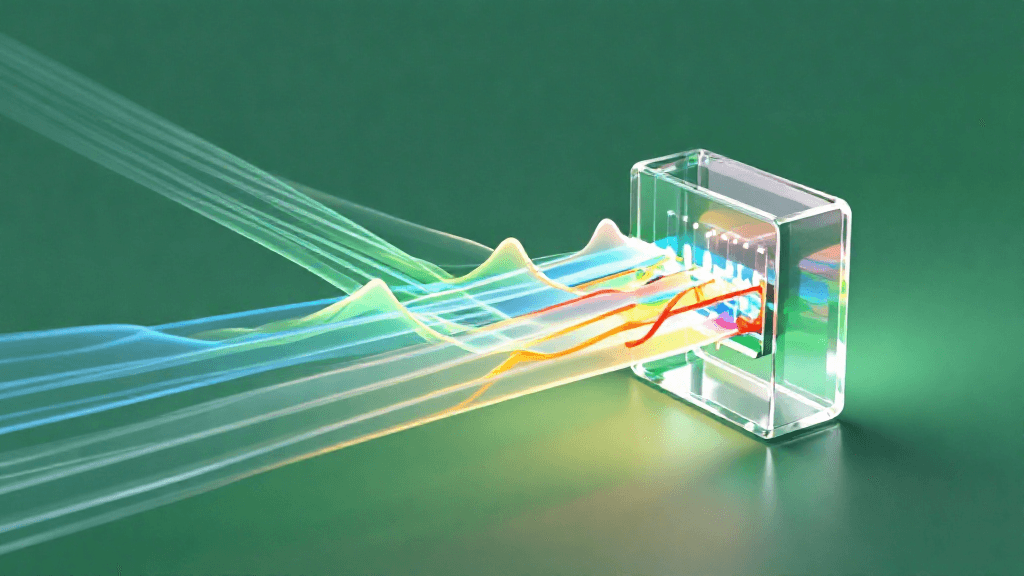
NVIDIA's open-weight 100M-param diarization model tracks up to 8 speakers live or offline, ranking #1 on VoiceArena's initial benchmark at 14.72% DER.
Introduction
On September 23, 2026, NVIDIA published Nemotron 3 Diarization on Hugging Face, an open-weight speaker diarization model with approximately 100 million parameters (the Hugging Face model listing shows 99.2M). The model determines who spoke when in a recording or a live audio stream, distinguishing up to eight simultaneous speakers without identifying who they actually are. According to NVIDIA's announcement, the model ranked #1 on VoiceArena's initial Diarization-Bench leaderboard, posting a 14.72% Diarization Error Rate (DER) against 19.3% for the next-ranked system, across 12 evaluated systems and 17 total configurations. The weights are released under the OpenMDW License Agreement version 1.1, and NVIDIA's model card states the model is "ready for commercial or non-commercial use," with no gating on download access.
Feature Overview
Speaker diarization is a distinct task from transcription: it assigns time intervals to speakers without producing any words, and it is typically paired with automatic speech recognition (ASR) to build a full speaker-attributed transcript. Nemotron 3 Diarization is built specifically for that pairing role; NVIDIA's own examples combine it with Parakeet TDT 0.6B v3 or Nemotron ASR 3.5.
Architecturally, the model converts 16 kHz mono audio into mel-spectrogram features at a 10 ms frame step, stacks those features by a factor of eight into 80 ms frames, and passes them through a 31-layer Transformer encoder with rotary positional embeddings (RoPE). A Conv1D layer then upsamples the encoder output back to a [T, 8] tensor of per-frame activation probabilities across up to eight speaker channels, which handles overlapping speech naturally since two channels can be active in the same frame.
The model follows the Sortformer approach of ordering output channels by arrival time: the first new voice becomes speaker_0, the next becomes speaker_1, and so on. These are anonymous channel labels, not real identities — mapping them to actual people is left to the downstream application. For streaming use, the model relies on two memory mechanisms: an Arrival-Order Speaker Cache that retains information about speakers seen in earlier chunks, and a FIFO queue that supplies recent frame context. NVIDIA publishes four recommended input-buffer latency configurations — 30.4, 1.04, 0.64, and 0.32 seconds — so teams can trade responsiveness for accuracy; the model can technically run at an 80 ms buffer, but 0.32 seconds is the lowest configuration NVIDIA actually recommends. These figures cover audio buffering only, not model compute, network transport, or downstream ASR time.
On NVIDIA's benchmark suite of 901 condition-specific recordings spanning DIHARD III, AliMeeting, AMI, NOTSOFAR1, and CALLHOME-Part2, Nemotron 3 Diarization lowered DER against the previous four-speaker streaming baseline (diar_streaming_sortformer_4spk-v2.1) on all eight listed evaluation conditions at 1.04-second latency. Per-dataset relative reductions ranged from 9.0% on CALLHOME-Part2 to 65.2% on NOTSOFAR1 MHM, for an unweighted mean of 41.0% — a figure NVIDIA is explicit is an average of relative improvements across datasets, not a single pooled DER. One nuance worth flagging: on the two-speaker CALLHOME subset specifically, the new model scored slightly worse than the baseline (5.98% versus 5.68% DER), even as its result on the full CALLHOME-Part2 set improved.
Throughput, measured on an NVIDIA RTX PRO 5000 in BF16 with torch.compile() at batch size 32, reached 15,113x real-time factor (RTFx) at the 30.4-second configuration versus 2,619x for the previous baseline, and 865x versus 136x at the 1.04-second configuration. NVIDIA flags these explicitly as batched throughput numbers on disclosed hardware, not single-stream end-to-end latency.
Usability Analysis
Getting started means installing nemo-toolkit[asr] and loading the checkpoint through NeMo's SortformerEncLabelModel class; NVIDIA's quick-start code shows the offline 30.4-second configuration returning speaker-labeled segments as plain start/end/speaker_id strings. Switching to a lower-latency streaming setup means adjusting five parameters together — speaker cache length, FIFO length, chunk length, right context, and cache update period — and calling _check_streaming_parameters() before running.
The model accepts 16 kHz mono .wav, .flac, .opus, and .mp3 audio and runs on Linux with NVIDIA Ampere, Ada Lovelace, Hopper, or Blackwell GPUs per the model card's hardware table. Because diarization output alone carries no words, real applications need a second ASR model running alongside it; NVIDIA's own example pairs segments with Parakeet TDT 0.6B v3 output using a midpoint-alignment heuristic that NVIDIA itself describes as marking "simultaneous speaker activity as ambiguous" rather than resolving it. Deployment support already exists through Argmax Pro SDK 3 for on-device use, plus hosted paths from Baseten and DigitalOcean.
Pros and Cons
Pros:
- Ships under a license NVIDIA describes as ready for commercial or non-commercial use, with fully open, ungated weights
- Single checkpoint covers both offline processing and three additional streaming latency points, rather than requiring separate models per use case
- Handles overlapping speech natively through independent per-speaker activity channels instead of a single forced-choice speaker label
- Documents its benchmark methodology in detail, including the exact evaluation script, collar settings, and per-dataset DER breakdowns
- Already integrated into third-party deployment paths (Argmax Pro SDK 3, Baseten, DigitalOcean) at launch rather than left for the community to wire up
Cons:
- Caps out at eight speakers, and NVIDIA's own data shows recordings with more speakers produce missed or misassigned speech
- Produces no transcript on its own, so production use requires pairing it with a separate ASR model and building the speaker-to-word alignment logic
- Results on VoiceArena's Diarization-Bench are explicitly labeled initial by NVIDIA and may shift once the leaderboard's full version 1 evaluation and statistical analysis complete
- Accuracy on the two-speaker CALLHOME subset regressed slightly against the older four-speaker baseline, even as most other conditions improved
Outlook
Speaker diarization has historically lagged behind ASR in open-tooling maturity, with most production-grade systems either closed or built on research-grade forks. An open model backed by a large compute vendor, already wired into an on-device SDK (Argmax) and hosted inference providers (Baseten, DigitalOcean), could accelerate speaker-aware features in meeting tools, call-center analytics, and voice-agent memory. NVIDIA trained the model on licensed David AI conversation data plus simulated mixtures spanning 21 languages, which suggests room for future multilingual diarization releases, though today's published evaluation numbers are largely English. The eight-speaker ceiling and the still-provisional VoiceArena ranking mean this remains a fast-moving space rather than a settled one — a community comment on the announcement itself already asks for support beyond eight speakers for use cases like press conferences and earnings calls, which signals where the next iteration is likely to be judged.
Conclusion
Nemotron 3 Diarization is a focused, well-documented release: an open-weight model that does one job — determine who spoke when — across offline and streaming use cases, with a transparent benchmark methodology and day-one third-party integrations. It is not a transcription model and does not identify real speaker identities, so teams evaluating it should plan for a companion ASR pipeline and additional identity-mapping logic. For teams building meeting transcription, call analytics, or voice-agent products who want an audio pipeline they can inspect and self-host, it is a credible open building block; teams needing more than eight simultaneous speakers, or production-validated single-stream latency numbers, should test carefully against their own hardware and data before committing.
Editor's Verdict
Nemotron 3 Diarization: NVIDIA's Open 100M Speaker Model earns a solid recommendation within the open source space.
The strongest case for paying attention: ships under a license NVIDIA describes as ready for commercial or non-commercial use, with fully open, ungated weights. That alone raises the bar for what readers should expect in this space. Reinforcing that, single checkpoint covers both offline processing and three additional streaming latency points, rather than requiring separate models per use case — practical value rather than just headline appeal. The broader signal worth registering is straightforward: pairing diarization with a separate ASR model remains necessary, since Nemotron 3 Diarization intentionally outputs only speaker timing, not words. On the other side of the ledger, one constraint is real rather than a marketing footnote: caps out at eight speakers, and NVIDIA's own data shows recordings with more speakers produce missed or misassigned speech. It should factor into any serious decision. Layered on top of that, produces no transcript on its own, so production use requires pairing it with a separate ASR model and building the speaker-to-word alignment logic — which narrows the set of teams for whom this is an obvious yes.
For developers building locally, infrastructure engineers, and anyone preferring transparent, modifiable software, this is a serious evaluation candidate, not just a curiosity to bookmark. For everyone else, the safer posture is to monitor coverage and revisit once the use cases that matter to your team are demonstrated in the wild.
Pros
- Ships under a license NVIDIA describes as ready for commercial or non-commercial use, with fully open, ungated weights
- Single checkpoint covers both offline processing and three additional streaming latency points, rather than requiring separate models per use case
- Handles overlapping speech natively through independent per-speaker activity channels instead of a single forced-choice speaker label
- Documents its benchmark methodology in detail, including the exact evaluation script, collar settings, and per-dataset DER breakdowns
- Already integrated into third-party deployment paths (Argmax Pro SDK 3, Baseten, DigitalOcean) at launch rather than left for the community to wire up
Cons
- caps out at eight speakers, and NVIDIA's own data shows recordings with more speakers produce missed or misassigned speech
- produces no transcript on its own, so production use requires pairing it with a separate ASR model and building the speaker-to-word alignment logic
- results on VoiceArena's Diarization-Bench are explicitly labeled initial by NVIDIA and may shift once the leaderboard's full version 1 evaluation and statistical analysis complete
- accuracy on the two-speaker CALLHOME subset regressed slightly against the older four-speaker baseline, even as most other conditions improved
References
Comments0
Key Features
1. Roughly 100M-parameter (99.2M per the Hugging Face listing) open-weight Transformer encoder with RoPE, trained solely for speaker diarization (no transcription). 2. Tracks up to 8 simultaneous speakers via a [T, 8] per-speaker activity tensor, scoring overlapping speech natively. 3. One checkpoint covers offline processing (30.4s buffer) plus three streaming latency points (1.04s, 0.64s, 0.32s) via an Arrival-Order Speaker Cache and FIFO queue. 4. Ranked #1 on VoiceArena's initial Diarization-Bench (14.72% DER vs. 19.3% for the next system, across 139 English conversations, per NVIDIA). 5. Released under the OpenMDW License Agreement v1.1, which NVIDIA describes as ready for commercial or non-commercial use.
Key Insights
- pairing diarization with a separate ASR model remains necessary, since Nemotron 3 Diarization intentionally outputs only speaker timing, not words
- labeling speakers by arrival order removes the need to solve speaker permutation on every streaming chunk, which is what made earlier chunk-based diarizers unstable
- buffer latency and accuracy trade off directly, so teams should pick one of the four published operating points based on product requirements rather than defaulting to the fastest
- eight-speaker support is the main capability gain over the previous four-speaker streaming baseline, and the benchmark gap widens specifically in higher-speaker-count conditions
- throughput claims above 15,000x real-time factor apply to batched offline processing on a single specified GPU, not to interactive single-stream deployments
- open licensing under OpenMDW v1.1 and unrestricted weight access lower the barrier for startups building call-center analytics, meeting summarization, or voice-agent memory features
- combining diarization timestamps with word-level ASR timestamps via a midpoint rule is, in NVIDIA's own description, a simple heuristic that leaves overlapping words ambiguous
Was this review helpful?
Share
Related AI Reviews
Nvidia PAIR Routes Local AI Across Your Idle Home PCs
Nvidia's free open-source PAIR sends local AI requests to idle home PCs, but it does not pool GPU memory or shard a model across machines.
MCP's New Roadmap Sets Five Priorities for Late 2026
MCP maintainers published a new roadmap on August 22, prioritizing agentic messaging, HTTP-native transport, and enterprise identity.

Qwen3.8-27B Review: Alibaba's Dense Vision-LLM
Alibaba released Qwen3.8-27B, a 27B open-weight dense vision-language model with 262K context under Apache 2.0.
AMD Instella-MoE-16B-A3B Review: Fully Open MoE on ROCm
AMD released Instella-MoE-16B-A3B, a fully open MoE trained end-to-end on Instinct GPUs — competitive benchmarks, research-only weight license.