
Microsoft Maia 300: 96-Accelerator Rack, 2027 Rollout
Microsoft's Maia 300 inference chip claims up to 7x Maia 200's rack throughput on TSMC N2P chiplets, with production rollout starting in 2027.
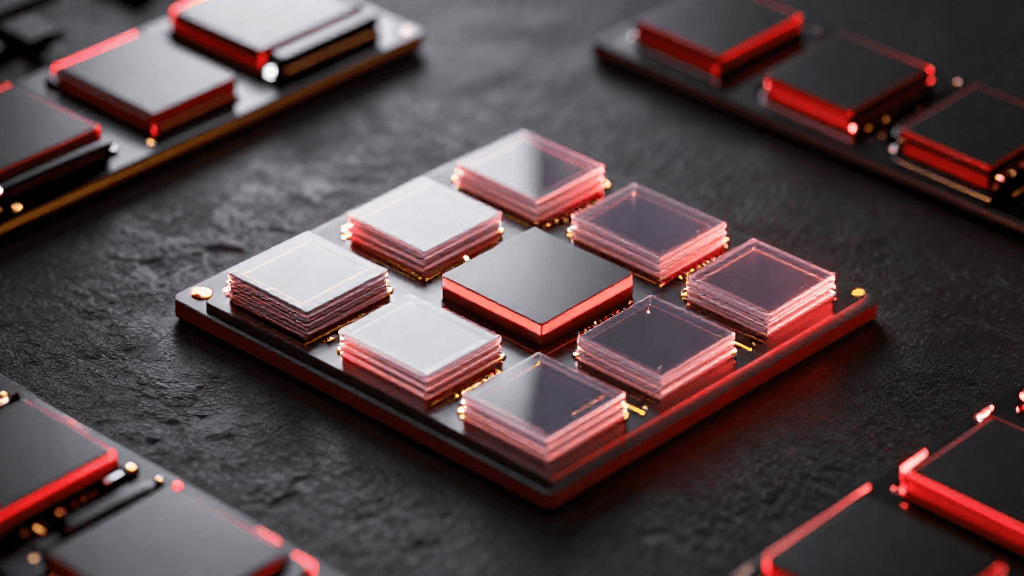
Microsoft's Maia 300 inference chip claims up to 7x Maia 200's rack throughput on TSMC N2P chiplets, with production rollout starting in 2027.
Introduction
On October 12, 2026, Microsoft announced Maia 300, the third generation of its in-house Azure Maia AI accelerator, together with a plan to expand the Maia system to multi-gigawatt deployments. Microsoft's Azure blog deep dive describes Maia 300 as a complete system in which software, silicon, rack infrastructure, networking and datacenters are co-designed for cloud-scale agentic inference. According to The Verge, which quotes Scott Guthrie, production rollout starts in 2027 and Maia is intended to become the primary AI inference system for Microsoft products and services.
This review covers Maia 300 only. All performance numbers below are Microsoft's own, expressed mostly relative to Maia 200, which Microsoft announced in January 2026 and which already runs Copilot, GitHub Copilot, Microsoft Foundry and MAI models, per The Verge.
Feature Overview
1. Chiplet design on TSMC N2P. Maia 300 places compute on TSMC's N2P process, where Microsoft says the advanced node gives the largest performance-per-watt benefit, and moves memory-controller and I/O functions onto separate dies optimized for bandwidth, connectivity and cost. Microsoft says this strategy increases system compute FLOPs by 36%, adds 2.5 times the HBM bandwidth and provides 14% more scale-up bandwidth.
2. Memory built for decode. Each accelerator pairs software-managed on-die SRAM with eight HBM4 stacks, giving 288 GB of capacity and 18 TB/s of bandwidth. Against Maia 200, Microsoft cites 2.5 times the memory bandwidth, 33% more capacity and approximately 2 times the HBM bandwidth per watt. Memory also changes from a uniform (UMA) to a non-uniform (NUMA) organization across chiplets so that software can place data near the compute that uses it.
3. Low-precision formats and kernels. Maia 300 adds enhanced MXFP4 and sub-3-bit storage formats with hardware-accelerated data type conversion, and its vector engine gets instruction-set additions for inference kernels such as softmax and low-precision casting. Microsoft says narrower formats reduce memory footprint and data movement, allowing larger models, longer contexts and more concurrent sessions in the same power envelope.
4. One scale-up fabric. A two-tier Ethernet-based network built on a custom AI transport connects up to 12,288 accelerators in a superpod. The first tier is electrical and connects the 96 accelerators in a rack; the second tier uses optics to join up to 128 racks. An accelerator can drive up to 750 GB/s to any peer in the superpod when only some accelerators communicate across racks. Microsoft describes three latency domains: a directly connected pair, accelerators within a pod one switch hop away, and accelerators across pods three switch hops away.
5. Rack-scale engineering. The rack holds 96 accelerators in 24 four-accelerator trays within 167 kW, which Microsoft says doubles Maia 200's accelerator density. Six switch ASICs sit in three liquid-cooled switch trays, power arrives through dual feeds and a 50 V busbar, and liquid cooling removes more than 80% of the rack's thermal load. A heat-exchanger option lets the rack operate in air-cooled datacenters.
| Metric versus Maia 200 | Microsoft figure |
|---|---|
| Rack-scale token throughput, full 96-accelerator configuration | Up to 7 times |
| Performance per watt | More than 2.5 times |
| Memory bandwidth per accelerator | 2.5 times |
| Memory capacity per accelerator | 33% more |
| System compute FLOPs | 36% more |
| Scale-up bandwidth | 14% more |
| Accelerators per rack | 2 times (96) |
Usability Analysis
Maia 300 is not a product customers buy; it is infrastructure that Microsoft will use to serve its own services. The practical effect for developers would be indirect, through the cost and capacity behind Copilot, GitHub Copilot and Microsoft Foundry. Microsoft's claim is that the chip is designed to maximize useful tokens per watt and per dollar.
Several design choices target real inference bottlenecks. Letting tensor parallelism stay inside a 96-accelerator rack while expert and pipeline parallelism span racks reduces stranded capacity when job sizes do not match the rack. Prefill and decode workers can be placed independently, with key-value state moving over the same scale-up fabric. Hot-spare capacity in another rack can cover a failed tray, at the cost of added path latency. The Verge also reports Microsoft's expectation of 40 percent more tokens per megawatt than leading GPU-based systems, and Mustafa Suleyman spoke about co-designing the hardware with Microsoft's MAI models. Note that the 40 percent figure is an expectation, not a measured result.
Pros and Cons
Pros: large stated gains over Maia 200 in throughput, efficiency and memory bandwidth; a single programming model from kernel to datacenter scale; liquid and air-cooling options that widen where racks can be deployed; telemetry that links rack power to datacenter operations.
Cons: production rollout starts only in 2027; the headline numbers come from Microsoft and are measured against its own previous chip; the 40 percent tokens-per-megawatt advantage over GPU systems is an expectation; the 7 times figure applies to the full 96-accelerator configuration.
Outlook
Microsoft says it will share more about its AI strategy and technology adoption at Microsoft Ignite, held November 17 to 20, 2026. Between now and the 2027 rollout, independent measurements, software tooling maturity and the pace of multi-gigawatt site buildouts will determine whether the stated gains survive production. If Maia becomes the primary inference system for Microsoft products and services, as Guthrie said according to The Verge, it will shape how much of Microsoft's inference depends on GPU supply.
Conclusion
Maia 300 is a thorough system-level design aimed at inference economics, and Microsoft's technical disclosure is detailed enough to evaluate its architecture. Its claims remain vendor figures for hardware that enters production in 2027. Infrastructure planners, AI platform engineers and anyone tracking custom silicon should follow it closely. Rating: 4 out of 5.
Editor's Verdict
Microsoft Maia 300: 96-Accelerator Rack, 2027 Rollout earns a solid recommendation within the IT news space.
The strongest case for paying attention: large stated gains over Maia 200 in throughput, efficiency and memory bandwidth. That alone raises the bar for what readers should expect in this space. Reinforcing that, detailed architecture disclosure covering memory, network, rack power and cooling — practical value rather than just headline appeal. The broader signal worth registering is straightforward: a system-level design that co-optimizes silicon, racks, networking and datacenters shows Microsoft treating inference cost as a full-stack problem. On the other side of the ledger, one constraint is real rather than a marketing footnote: production rollout does not start until 2027, so the headline numbers remain vendor claims for hardware not yet in volume service. It should factor into any serious decision. Layered on top of that, reported gains are measured against Maia 200 rather than independent third-party benchmarks — which narrows the set of teams for whom this is an obvious yes.
For AI industry watchers, infrastructure planners, and teams that depend on Azure, Copilot or Foundry capacity, this is a development to track closely, not just a curiosity to bookmark. For everyone else, the sensible posture is to revisit once independent measurements arrive after the 2027 production rollout.
Pros
- Large stated gains over Maia 200 in throughput, efficiency and memory bandwidth
- Detailed architecture disclosure covering memory, network, rack power and cooling
- Single programming model across kernel to datacenter scale
- Air-cooled and liquid-cooled deployment paths widen datacenter options
Cons
- Production rollout does not start until 2027, so the headline numbers remain vendor claims for hardware not yet in volume service
- Reported gains are measured against Maia 200 rather than independent third-party benchmarks
- The 40 percent tokens-per-megawatt advantage over GPU systems is an expectation, not a measured result
- The 7x throughput figure holds only for the full 96-accelerator configuration
References
Comments0
Key Features
1. Third-generation Azure Maia inference accelerator, announced October 12, 2026 2. Chiplet design with compute on TSMC N2P and separate memory-controller and I/O dies 3. Eight HBM4 stacks per accelerator: 288 GB capacity and 18 TB/s bandwidth 4. 96 accelerators per 167 kW rack and a two-tier scale-up network reaching 12,288 accelerators 5. Up to 7x rack-scale token throughput and more than 2.5x performance per watt versus Maia 200 (Microsoft figures) 6. Production rollout starting in 2027 toward multi-gigawatt deployments
Key Insights
- A system-level design that co-optimizes silicon, racks, networking and datacenters shows Microsoft treating inference cost as a full-stack problem
- Separating compute from memory-controller and I/O dies lets each function use the process best suited to it
- Moving from uniform to non-uniform memory places data near compute, which targets energy spent on data movement
- A single fabric inside the pod and across the superpod lets software use the same communication model at every scale
- Doubling accelerators per rack to 96 within 167 kW pushes cooling design toward liquid with an air-cooled fallback
- The 7x throughput figure applies to the full 96-accelerator configuration and is measured against Maia 200, not against GPU systems
- The 40 percent tokens-per-megawatt advantage over leading GPU-based systems is an expectation reported by The Verge, not a measured result
Was this review helpful?
Share
Related AI Reviews

Nadella: Treat Frontier AI Models as Insider Risks
Nadella's X essay urges treating frontier models as insider risks: controls outside the model, audit evidence and an emergency brake.

Google Pauses OSS VRP Product-Bug Rewards Over AI Slop
Google stopped taking product-vulnerability reports in its OSS bug bounty on Oct 1 over invalid AI submissions; supply-chain rewards continue.
Apple Rethinks macOS Full Disk Access as AI Agents Grow
Apple says it will add controls so granting macOS Full Disk Access takes very explicit user action, citing risks from capable AI agents.

Judge Dismisses Chegg, Penske Suits Over Google AI Overviews
Judge Mehta granted Google's motions to dismiss both suits over AI Overviews on Sept 30; the court declined to rule on the state-law claim.