
Mistral AI Acquires Koyeb: Europe's AI Champion Makes Its First Infrastructure Play
Mistral AI acquires French serverless startup Koyeb to control the full AI stack from model training to deployment, signaling Europe's push for AI infrastructure independence from US hyperscalers.
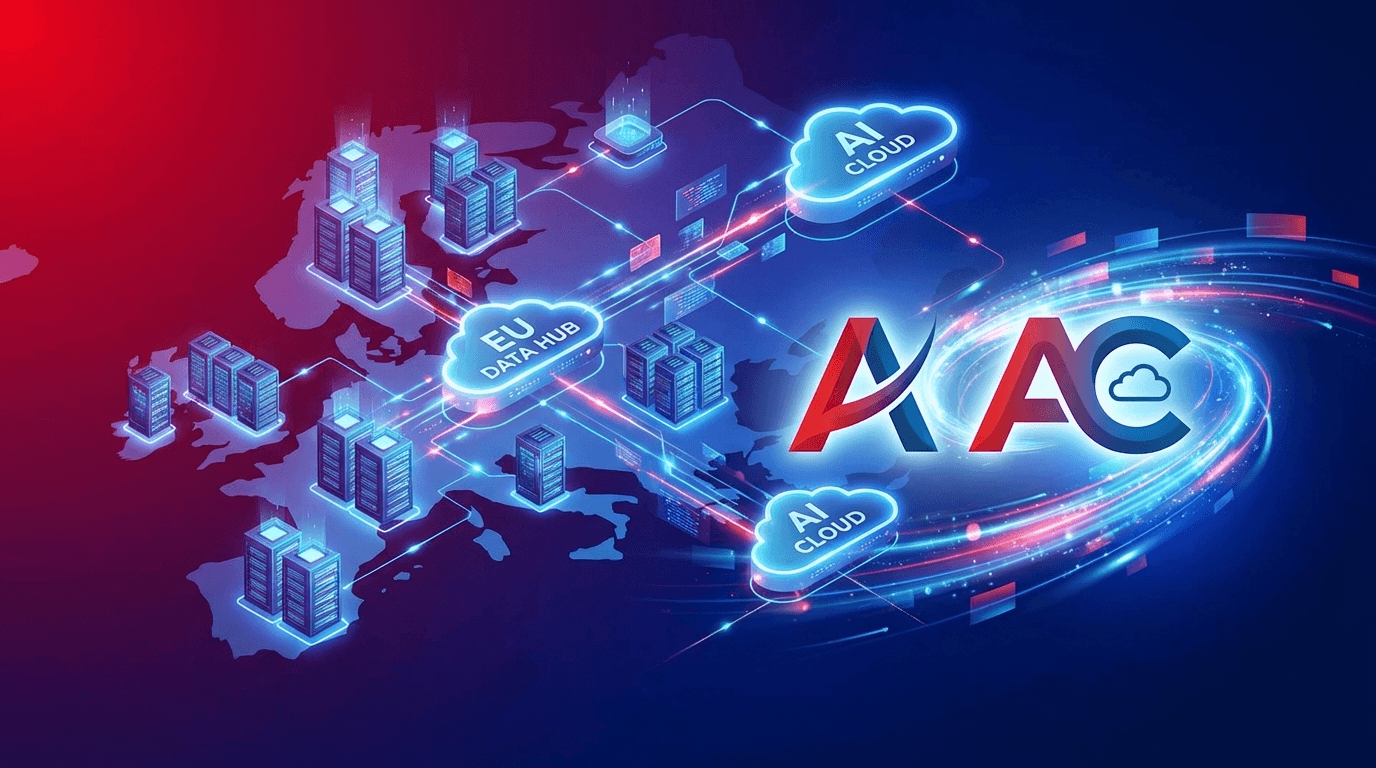
Mistral AI acquires French serverless startup Koyeb to control the full AI stack from model training to deployment, signaling Europe's push for AI infrastructure independence from US hyperscalers.
Mistral Buys the Transmission, Not Just the Engine
On February 17, 2026, Mistral AI announced the acquisition of Koyeb, a French serverless cloud infrastructure startup. The deal, whose financial terms were not disclosed, marks Mistral's first acquisition and signals a strategic shift from being purely a model developer to controlling the full AI value chain from training through deployment and inference.
The timing is deliberate. Mistral, valued at 11.7 billion euros following its September 2025 funding round led by ASML, is executing a multi-pronged infrastructure expansion. The Koyeb acquisition follows the company's announcement of a 1.2 billion euro investment in a Swedish data center. Together, these moves position Mistral as the only major European AI company building both models and infrastructure at scale.
What Koyeb Brings to Mistral
Koyeb operates a serverless platform that enables developers to deploy AI applications without managing underlying hardware. The platform supports CPU, GPU, and specialized accelerators with autoscaling capabilities that adjust resource allocation based on demand and can deactivate idle applications.
The startup's technical differentiation lies in cold start performance. Koyeb can relaunch dormant workloads in under 200 milliseconds, addressing one of the key pain points for developers deploying AI inference endpoints. For applications that experience variable traffic, fast cold starts mean users do not experience noticeable delays even when the underlying compute has been scaled to zero.
Koyeb operates customer instances with up to eight GPUs across 10 global data centers with failover capabilities. The company also recently introduced Koyeb Sandboxes, isolated environments that allow AI agents to operate safely, supporting the launch of thousands of agents daily for tasks such as code generation.
Strategic Rationale: Controlling the Full Stack
Mistral's acquisition thesis is straightforward: to compete with OpenAI, Anthropic, and Google, a European AI company needs to control not just the models but the infrastructure that delivers them. As one analysis put it, the acquisition gives Mistral "not only the engine but also the transmission, the parts that take raw computational power and make it usable on demand."
Specifically, Mistral plans to leverage Koyeb's technology in three ways:
-
Enhancing sandboxing for code generation models: Koyeb's isolated environment technology will improve the safety and reliability of Mistral's code generation capabilities, a critical feature as AI coding agents become more autonomous.
-
Improving Mistral Compute: Mistral's cloud platform, powered by water-cooled NVIDIA GPU servers, will integrate Koyeb's autoscaling and deployment technology to offer more efficient inference services.
-
Enabling on-premises deployment: Koyeb's technology will help Mistral's large language models run more effectively on customer infrastructure, which is a key requirement for enterprise clients with data sovereignty concerns.
The European Infrastructure Independence Argument
The acquisition carries significance beyond Mistral's individual business strategy. European AI companies currently depend heavily on American hyperscalers, including AWS, Microsoft Azure, and Google Cloud, for their compute infrastructure. This creates strategic vulnerability: if geopolitical tensions or regulatory changes restrict access to US cloud services, European AI development could be disrupted.
Mistral's infrastructure investments, the Koyeb acquisition combined with the Swedish data center, represent the most concrete steps any European AI company has taken toward infrastructure independence. While Mistral will continue to use hyperscaler infrastructure where it makes sense, owning its own deployment and inference technology reduces a critical dependency.
This aligns with broader European policy goals. The EU's AI Act and digital sovereignty initiatives have emphasized the importance of European companies maintaining control over their AI technology stack. Mistral's moves provide a commercial proof point for these policy ambitions.
Deal Structure and Integration
All 13 members of Koyeb's team, including founders, will join Mistral's engineering division in March 2026. The relatively small team size suggests this is primarily a technology and talent acquisition rather than a deal driven by revenue or customer base.
Koyeb had previously raised $7 million in 2023 from investors including Samsung Next. The acquisition represents a successful exit for a modestly funded French startup, and the team's integration into Mistral ensures continuity of the technology development.
Existing Koyeb customers will experience a gradual platform integration with smooth transition support. Mistral has indicated that the Koyeb technology will be absorbed into the broader Mistral Compute platform over time.
Mistral's Expanding Ambitions
The Koyeb acquisition is best understood as one piece of a larger puzzle. In the past six months, Mistral has:
- Released Mistral 3, its most capable model to date
- Announced the 1.2 billion euro Swedish data center investment
- Extended a three-year partnership with BNP Paribas for enterprise AI
- Launched new audio capabilities including precision diarization and real-time transcription
- Reached over $400 million in annual recurring revenue, a 20-fold increase
- Projected exceeding 1 billion euros in revenue by end of 2026
This trajectory suggests Mistral is transitioning from a research-focused model developer into a full-stack AI platform company. The company is attempting to build the European equivalent of what OpenAI and Anthropic represent in the US: not just models, but complete commercial AI platforms that enterprises can build on.
Competitive Implications
For OpenAI and Anthropic, the Koyeb acquisition is a reminder that competition is emerging on the infrastructure layer, not just the model layer. Both companies have invested heavily in their own inference infrastructure, but they have not made acquisitions specifically to control the deployment stack.
For European enterprises evaluating AI vendors, Mistral now offers a differentiated proposition: a European AI company with its own models, its own deployment technology, and data center investments on European soil. For organizations subject to GDPR, the EU AI Act, or internal data sovereignty policies, this combination is uniquely attractive.
Risks and Challenges
The integration carries typical acquisition risks. Absorbing a small team into a fast-growing organization can disrupt both the acquired team's velocity and the acquirer's focus. Mistral's infrastructure ambitions also require sustained capital investment at a time when the company is still unprofitable despite its revenue growth.
There is also the question of whether vertical integration is the right strategy. The hyperscalers have decades of experience running global cloud infrastructure. Building a competitive alternative requires not just technology but operational excellence at scale, including reliability engineering, global networking, and 24/7 operations that a 13-person team's technology alone cannot deliver.
Conclusion
Mistral AI's acquisition of Koyeb is a strategically significant move that extends beyond a typical startup acquisition. By acquiring deployment and inference technology, Mistral is positioning itself to control the full AI value chain in a way that no other European AI company can currently match. Whether this bet on vertical integration pays off depends on execution, but the ambition is clear: Mistral wants to be Europe's complete AI platform, not just Europe's model developer.
Editor's Verdict
Mistral AI Acquires Koyeb: Europe's AI Champion Makes Its First Infrastructure Play earns a solid recommendation within the it news space.
The strongest case for paying attention is gives Mistral control over the full AI value chain from model training to deployment and inference, which raises the bar for what readers should now expect from peers in this space. Reinforcing that, koyeb's sub-200ms cold start and autoscaling technology directly improves Mistral Compute's enterprise offering adds practical value rather than just headline appeal. The broader signal worth registering is straightforward: koyeb's sub-200ms cold start technology solves a critical pain point for AI inference endpoints with variable traffic patterns. On the other side of the ledger, financial terms not disclosed, making it difficult to assess value creation for Mistral shareholders is a real constraint, not a marketing footnote, and it should factor into any serious decision. Layered on top of that, 13-person team's technology must be scaled to enterprise grade, requiring significant additional investment narrows the set of teams for whom this is an obvious yes.
For AI industry watchers, strategy teams, and decision-makers tracking platform shifts, this is a serious evaluation candidate, not just a curiosity to bookmark. For everyone else, the safer posture is to monitor coverage and revisit once the use cases that matter to your team are demonstrated in the wild.
Pros
- Gives Mistral control over the full AI value chain from model training to deployment and inference
- Koyeb's sub-200ms cold start and autoscaling technology directly improves Mistral Compute's enterprise offering
- Strengthens Mistral's European data sovereignty positioning for GDPR-sensitive enterprise customers
- Small team size (13 people) makes integration manageable while bringing specialized serverless expertise
- Strategic alignment with 1.2 billion euro data center investment creates a coherent European AI infrastructure story
Cons
- Financial terms not disclosed, making it difficult to assess value creation for Mistral shareholders
- 13-person team's technology must be scaled to enterprise grade, requiring significant additional investment
- Competing with AWS, Azure, and Google Cloud on infrastructure reliability requires operational expertise Mistral has not yet demonstrated
- Vertical integration adds complexity and capital requirements to an already capital-intensive AI model business
References
Comments0
Key Features
Mistral AI acquired Koyeb, a French serverless cloud startup with sub-200ms cold starts and AI sandbox capabilities, marking its first acquisition. The deal integrates Koyeb's 13-person team into Mistral's engineering division to enhance Mistral Compute, improve code generation sandboxing, and enable on-premises enterprise deployment. Combined with a 1.2 billion euro Swedish data center investment, this positions Mistral as Europe's only full-stack AI company controlling both models and infrastructure.
Key Insights
- Koyeb's sub-200ms cold start technology solves a critical pain point for AI inference endpoints with variable traffic patterns
- Mistral becomes the first European AI company to control both model development and deployment infrastructure at scale
- All 13 Koyeb team members join Mistral in March 2026, indicating a talent and technology acquisition rather than revenue-driven deal
- The acquisition complements Mistral's 1.2 billion euro Swedish data center investment for European AI infrastructure independence
- Koyeb Sandboxes enable isolated environments for AI coding agents, supporting thousands of agent launches daily
- Mistral's revenue has grown 20-fold to over $400 million ARR, with projections exceeding 1 billion euros by end of 2026
- European data sovereignty requirements under GDPR and the EU AI Act create a natural market advantage for European-owned AI infrastructure
- The deal positions Mistral as a full-stack AI platform company competing with OpenAI and Anthropic on infrastructure, not just models
Was this review helpful?
Share
Related AI Reviews
Microsoft Maia 300: 96-Accelerator Rack, 2027 Rollout
Microsoft's Maia 300 inference chip claims up to 7x Maia 200's rack throughput on TSMC N2P chiplets, with production rollout starting in 2027.

Nadella: Treat Frontier AI Models as Insider Risks
Nadella's X essay urges treating frontier models as insider risks: controls outside the model, audit evidence and an emergency brake.

Google Pauses OSS VRP Product-Bug Rewards Over AI Slop
Google stopped taking product-vulnerability reports in its OSS bug bounty on Oct 1 over invalid AI submissions; supply-chain rewards continue.

Apple Rethinks macOS Full Disk Access as AI Agents Grow
Apple says it will add controls so granting macOS Full Disk Access takes very explicit user action, citing risks from capable AI agents.