
Mistral AI and Accenture Partner to Bring Sovereign AI to Global Enterprises
Mistral AI and Accenture announce a multi-year deal to co-develop enterprise AI solutions emphasizing data sovereignty, with Accenture also becoming a Mistral customer.
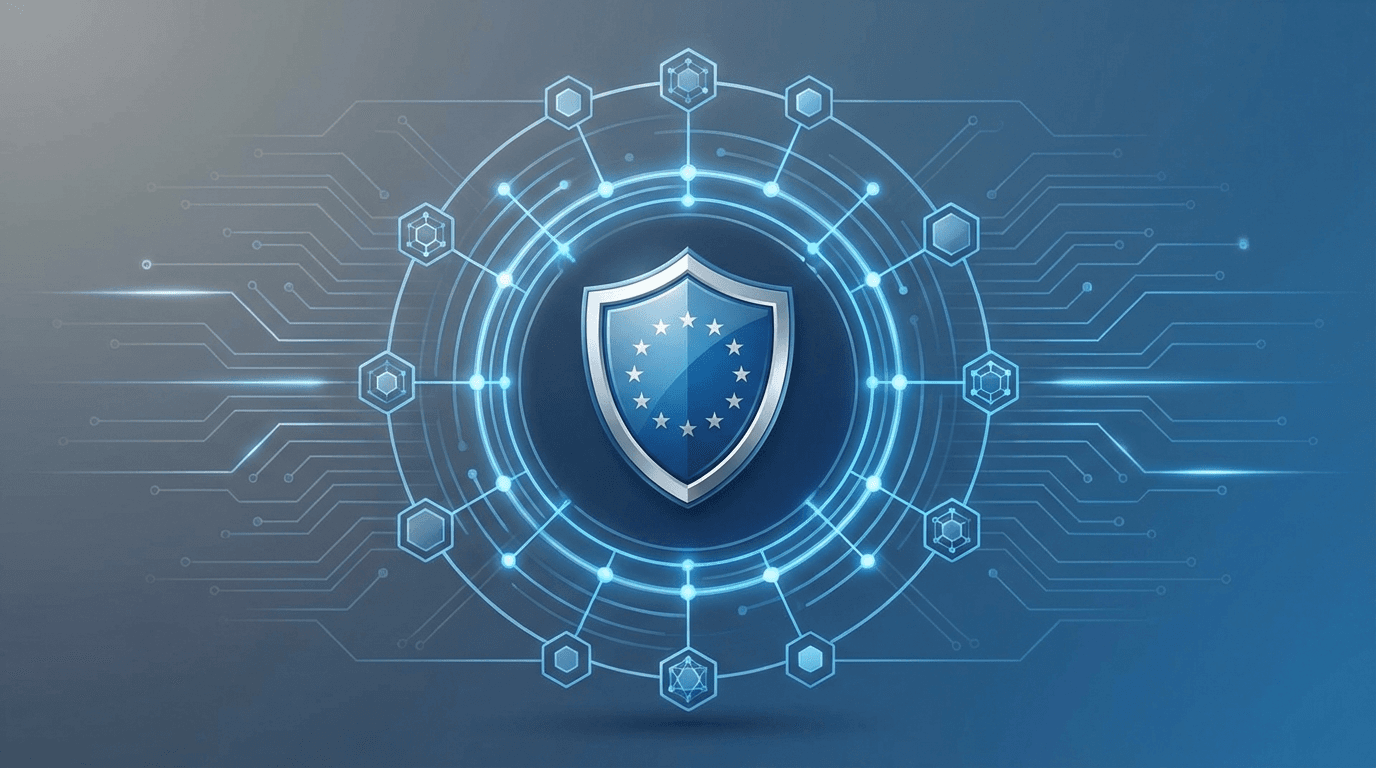
Mistral AI and Accenture announce a multi-year deal to co-develop enterprise AI solutions emphasizing data sovereignty, with Accenture also becoming a Mistral customer.
A Strategic Alliance for Enterprise AI Sovereignty
On February 26, 2026, Accenture and Mistral AI announced a multi-year strategic collaboration designed to help enterprises deploy AI with full control over their data, models, and infrastructure. The partnership combines Mistral AI's sovereign AI technology with Accenture's global consulting and deployment capabilities, targeting organizations that require AI solutions aligned with regional data governance requirements.
The deal is particularly significant because Accenture has already announced similar partnerships with OpenAI and Anthropic, making the consulting giant a distribution channel for all three major independent AI model providers. For Mistral AI, this partnership represents a major step in scaling enterprise adoption beyond its European home market.
What Sovereign AI Means in Practice
Sovereign AI refers to AI systems that can be deployed within an organization's or nation's own infrastructure, ensuring that data never leaves controlled environments and that the models themselves can be customized, fine-tuned, and operated independently of any external vendor.
For European enterprises operating under GDPR and the EU AI Act, sovereignty is not a nice-to-have feature. It is a regulatory requirement. Organizations in healthcare, finance, defense, and government cannot send sensitive data to U.S.-hosted cloud services for processing. They need models that run on-premise or in European data centers under European legal jurisdiction.
Mistral AI, headquartered in Paris and founded by former Google DeepMind and Meta researchers, has built its entire business around this proposition. Its models are available for self-hosting, and its enterprise platform, Mistral AI Studio, provides tools for fine-tuning, deployment, and management without requiring data to leave the customer's environment.
Partnership Structure and Scope
The collaboration has several concrete components:
Co-Development: Accenture and Mistral AI will jointly build enterprise-grade AI solutions targeting specific industry challenges. Rather than offering generic AI capabilities, the partnership will develop vertical solutions with measurable business impact.
Go-to-Market: Accenture's global sales force and client relationships will serve as a distribution channel for Mistral AI's technology. With 750,000+ employees serving clients in virtually every industry and geography, Accenture provides a scale of market access that Mistral AI could not achieve independently.
Training and Certification: The partners will launch dedicated programs to train enterprise teams on deploying, fine-tuning, and operating Mistral AI-powered solutions. This includes change management support, recognizing that technology adoption requires organizational transformation beyond technical implementation.
Accenture as Customer: Accenture itself will deploy Mistral AI's models and Mistral AI Studio across its operations, equipping its professionals with the tools to build client solutions. This is both a revenue commitment and a proof-of-concept: if Accenture's own teams use Mistral AI internally, client confidence in the technology increases.
Executive Commentary
Mauro Macchi, CEO of Accenture EMEA, stated: "Our clients are looking for AI solutions that combine world-class performance with the complete ownership that Mistral AI's technology offers." This framing positions data ownership as a core buying criterion, not just a compliance checkbox.
Arthur Mensch, CEO and co-founder of Mistral AI, said: "Together, we will help organizations deploy AI that meets their needs for performance, control, and customization." The emphasis on control and customization differentiates Mistral from competitors whose enterprise offerings are primarily API-based.
Competitive Context: The Enterprise AI Arms Race
Accenture's multi-provider strategy reflects a broader trend in enterprise AI: organizations do not want to be locked into a single model provider. By partnering with OpenAI, Anthropic, and now Mistral AI, Accenture can offer clients a choice based on their specific requirements:
| Provider | Primary Strength | Deployment Model |
|---|---|---|
| OpenAI | Frontier performance, broad API ecosystem | Cloud-hosted, Azure integration |
| Anthropic | Safety focus, long-context processing | Cloud-hosted, AWS integration |
| Mistral AI | Sovereignty, self-hosting, customization | On-premise, European infrastructure |
This three-provider approach allows Accenture to serve different client segments without favoring any single vendor. Enterprises with strict data residency requirements can choose Mistral. Those prioritizing raw capability can select OpenAI. Organizations focused on safety and reliability can opt for Anthropic.
Why This Matters for Mistral AI
Mistral AI has raised over $1.1 billion in funding and achieved a valuation exceeding $6 billion, but its revenue and market penetration remain small relative to OpenAI and Anthropic. The Accenture partnership addresses Mistral's primary growth constraint: enterprise sales.
Building a global enterprise sales organization from scratch takes years and costs hundreds of millions of dollars. By partnering with Accenture, Mistral gains immediate access to enterprise decision-makers across every major industry. The training and certification programs ensure that Accenture consultants can competently deploy Mistral's technology, turning them into an extended sales and implementation force.
Additionally, the partnership validates Mistral's technology at enterprise scale. When a company like Accenture commits to deploying a vendor's products internally, it serves as a powerful signal to the market that the technology meets enterprise-grade requirements for reliability, security, and performance.
The European AI Sovereignty Movement
The Mistral-Accenture partnership is part of a broader movement toward AI sovereignty in Europe. The EU AI Act, which entered enforcement in stages beginning in 2025, creates compliance requirements that favor locally hosted, transparent AI systems. European governments and enterprises are increasingly wary of dependence on U.S.-based AI providers, particularly for sensitive applications in defense, healthcare, and critical infrastructure.
France, where Mistral AI is headquartered, has been particularly active in promoting domestic AI capabilities. The French government has supported Mistral through various programs, viewing the company as a strategic asset in ensuring European technological independence in AI.
Limitations and Questions
The partnership announcement did not disclose financial terms, making it difficult to assess the scale of Accenture's commitment. Multi-year strategic collaborations can range from modest co-marketing agreements to deep, well-funded joint ventures.
Additionally, while Mistral AI's models have shown strong performance on benchmarks, they have not yet achieved the same level of market adoption as GPT or Claude in most enterprise use cases. The partnership's success will depend on whether Accenture's consultants actively recommend Mistral over competitors when the use case fits, rather than defaulting to more established providers.
Conclusion
The Mistral AI-Accenture partnership marks a significant milestone for the European sovereign AI movement. By combining Mistral's self-hostable, customizable models with Accenture's global enterprise reach, the collaboration creates a credible path for organizations to deploy advanced AI without sacrificing control over their data or infrastructure. For enterprises navigating the EU AI Act and growing data sovereignty requirements, this partnership offers a practical solution that was previously difficult to achieve at scale.
Editor's Verdict
Mistral AI and Accenture Partner to Bring Sovereign AI to Global Enterprises earns a solid recommendation within the other llm space.
The strongest case for paying attention is gives Mistral AI immediate access to Accenture's global enterprise client base across all major industries, which raises the bar for what readers should now expect from peers in this space. Reinforcing that, sovereign deployment model meets strict European data residency and AI Act compliance requirements adds practical value rather than just headline appeal. The broader signal worth registering is straightforward: accenture now partners with all three major independent AI providers: OpenAI, Anthropic, and Mistral AI. On the other side of the ledger, financial terms were not disclosed, making it difficult to assess the depth of commitment is a real constraint, not a marketing footnote, and it should factor into any serious decision. Layered on top of that, mistral AI's models have lower market adoption than GPT or Claude, potentially limiting consultant familiarity narrows the set of teams for whom this is an obvious yes.
For multi-model deployment teams, cost-conscious operators, and developers willing to evaluate beyond the major labs, this is a serious evaluation candidate, not just a curiosity to bookmark. For everyone else, the safer posture is to monitor coverage and revisit once the use cases that matter to your team are demonstrated in the wild.
Pros
- Gives Mistral AI immediate access to Accenture's global enterprise client base across all major industries
- Sovereign deployment model meets strict European data residency and AI Act compliance requirements
- Multi-provider strategy benefits enterprises by avoiding vendor lock-in
- Training programs ensure practical deployment capability beyond just technology licensing
- Internal Accenture adoption provides real-world validation of Mistral's enterprise capabilities
Cons
- Financial terms were not disclosed, making it difficult to assess the depth of commitment
- Mistral AI's models have lower market adoption than GPT or Claude, potentially limiting consultant familiarity
- Success depends on Accenture consultants actively recommending Mistral when appropriate rather than defaulting to established providers
- Multi-year collaborations can be restructured or deprioritized without public disclosure
References
Comments0
Key Features
Mistral AI and Accenture announced a multi-year strategic collaboration on February 26, 2026, combining Mistral's sovereign AI technology with Accenture's global enterprise deployment capabilities. The partnership includes co-development of industry-specific AI solutions, joint go-to-market strategy, training and certification programs, and Accenture becoming a Mistral AI customer. This positions Mistral alongside OpenAI and Anthropic in Accenture's multi-provider enterprise AI strategy, with sovereign data control as the key differentiator.
Key Insights
- Accenture now partners with all three major independent AI providers: OpenAI, Anthropic, and Mistral AI
- The partnership addresses European enterprises' regulatory requirements under GDPR and the EU AI Act for on-premise AI deployment
- Accenture's 750,000+ employee workforce becomes an extended sales and implementation channel for Mistral AI
- Accenture will deploy Mistral AI Studio internally, serving as both customer and proof-of-concept
- Training and certification programs will ensure Accenture consultants can competently deploy Mistral technology
- Sovereign AI allows organizations to fine-tune and operate models without data leaving controlled environments
- The deal validates Mistral AI's enterprise-grade readiness at a critical growth stage for the company
Was this review helpful?
Share
Related AI Reviews

Meta Muse Wonder: 1M-Token Agent Model Arrives via API
Meta released Muse Wonder and Wonder Full on Oct 12: a 1M-context multimodal agent model, with Wonder on the Meta API and Full for Muse Code users.

Mistral Large 4 Preview: 1T MoE, Weights Due in October
Mistral Large 4 enters public preview as a ~1T-parameter multimodal MoE with 1M context. Weights are promised for October; scores are vendor-run.

Reflection Beam: 501B Open-Weight MoE, Weights Due Soon
Reflection previews Beam, a 501B MoE with 23B active parameters. Apache 2.0 weights are promised later this month; benchmarks are unverified.
Meta Muse Gadget SDK: Build Your Own ESP32 and Pi Devices
Meta open-sourced Apache 2.0 ESP32 and Linux SDKs for DIY Muse gadgets, with candid security caveats and a Home Link giveaway of 5,000 units.