
Microsoft Launches MAI-Transcribe-1, MAI-Voice-1, and MAI-Image-2: Its First In-House AI Models
Microsoft releases three proprietary foundation models for speech recognition, voice generation, and image creation, marking its first major in-house AI model family independent of OpenAI.
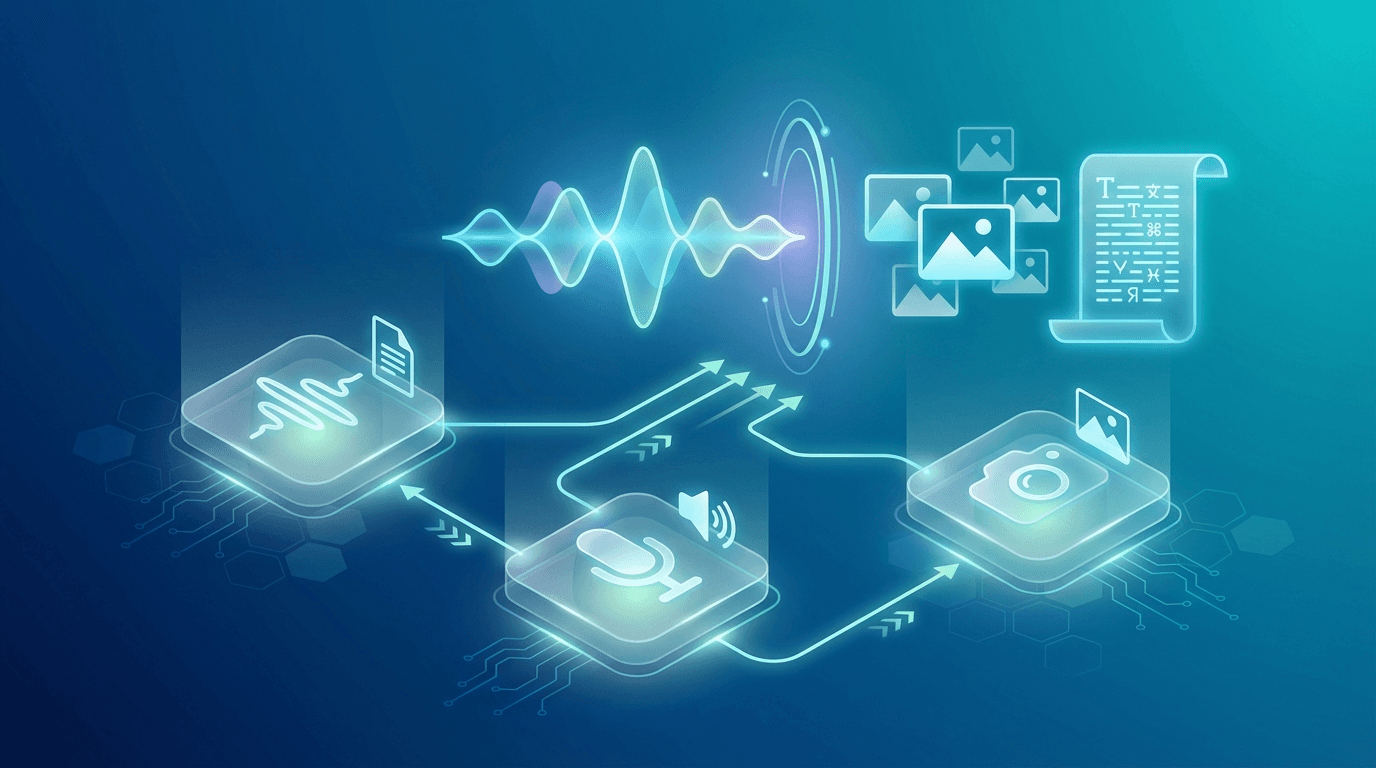
Microsoft releases three proprietary foundation models for speech recognition, voice generation, and image creation, marking its first major in-house AI model family independent of OpenAI.
Microsoft Builds Its Own AI Models
On April 2, 2026, Microsoft released three new foundation models under the MAI brand: MAI-Transcribe-1 for speech recognition, MAI-Voice-1 for speech generation, and MAI-Image-2 for text-to-image creation. These are the first production AI models that Microsoft has built entirely in-house, separate from its partnership with OpenAI.
The release marks a strategic inflection point. Microsoft has invested over $13 billion in OpenAI and built its Copilot ecosystem around GPT models, but the MAI models signal that the company is building independent AI capabilities in areas where it sees opportunity to control its own technology stack. The models are available through Microsoft Foundry and the MAI Playground, and they already power several Microsoft products including Copilot, Bing Image Creator, PowerPoint, and Azure Speech services.
MAI-Transcribe-1: Enterprise Speech Recognition at Half the Cost
MAI-Transcribe-1 is Microsoft's first-generation speech recognition model, designed to provide enterprise-grade transcription across 25 languages. Its headline claim is straightforward: it ranks first overall on Word Error Rate (WER) on the industry-standard FLEURS benchmark, the most widely used evaluation for multilingual speech recognition.
The model ranks first in 11 of the top 25 global languages on FLEURS. In the remaining 14 languages, it outperforms OpenAI's Whisper-large-v3, and on 11 of those 14, it also beats Google's Gemini 3.1 Flash. This performance comes at approximately 50% lower GPU cost than leading alternatives, according to Microsoft.
For enterprise customers, the pricing is set at $0.36 per hour of transcribed audio. The model is designed for batch transcription at 2.5 times the speed of Microsoft's existing Azure Fast offering, targeting use cases like meeting transcription, call center analytics, and compliance monitoring where cost and throughput matter as much as accuracy.
MAI-Voice-1: 60 Seconds of Audio in Under One Second
MAI-Voice-1 is a speech generation model that produces high-fidelity audio with expressive characteristics. Its most notable specification is latency: the model can generate 60 seconds of expressive audio in under one second on a single GPU, making it one of the fastest speech synthesis systems publicly available.
The model includes a Personal Voice feature that creates a custom voice clone from just a 10-second audio sample. This capability targets accessibility applications, content creation workflows, and enterprise communication systems where brand-consistent voice output is needed at scale.
Pricing is set at $22 per million characters. Access to custom voice creation requires passing Microsoft's responsible AI approval process, a gate designed to prevent deepfake misuse and unauthorized voice cloning.
The competitive landscape for speech generation has become crowded in 2026, with ElevenLabs, OpenAI, and Google all offering production-grade text-to-speech. MAI-Voice-1's speed advantage and integration with the Microsoft ecosystem (Azure, Copilot, Teams) give it a distribution channel that standalone providers cannot match.
MAI-Image-2: A Top-3 Image Generation Model
MAI-Image-2 is Microsoft's highest-capability text-to-image model, focused on photorealistic generation, accurate in-image text rendering, and complex multi-element layouts. The model debuted at rank 3 on the Arena.ai leaderboard for image model families, placing it alongside offerings from Google and OpenAI.
Accurate text rendering in generated images has been one of the most persistent challenges in image generation. Models that can reliably produce legible text within images open up commercial applications in advertising, social media content creation, and design workflows that were previously impractical without manual post-editing.
Pricing is set at $5 per million tokens for text input and $33 per million tokens for image output. The model is accessible through API deployment and the MAI Playground.
Strategic Significance: Independence From OpenAI
The MAI models represent more than a product launch. They signal Microsoft's strategy to reduce its dependence on OpenAI for core AI capabilities. While Microsoft's relationship with OpenAI remains central to its enterprise AI strategy, particularly for large language models, the MAI brand creates a parallel track where Microsoft controls the full technology stack from training to deployment.
This diversification serves multiple business objectives. First, it gives Microsoft leverage in its partnership negotiations with OpenAI. Second, it reduces supply chain risk: if OpenAI's roadmap diverges from Microsoft's product needs, Microsoft has in-house alternatives. Third, it positions Microsoft to compete in specialized domains (speech, voice, image) where Microsoft's own research teams have deep expertise.
The MAI group was formally established approximately six months before the launch, according to TechCrunch, suggesting that Microsoft moved rapidly from organizational formation to production model deployment. This speed indicates that the models build on years of prior research at Microsoft Research, now consolidated under a dedicated product-facing team.
Product Integration and Distribution
All three MAI models are already integrated into Microsoft's commercial products. MAI-Transcribe-1 powers Azure Speech's transcription services. MAI-Voice-1 is available through Azure Speech for text-to-speech applications. MAI-Image-2 drives Bing Image Creator and PowerPoint's AI image generation capabilities.
This pre-integration means enterprise customers already using Microsoft's cloud services can access MAI models without migration or new API integrations. For developers, the models are available through Microsoft Foundry, a platform that provides model hosting, fine-tuning, and deployment infrastructure.
The MAI Playground offers a free testing environment where developers can evaluate model capabilities before committing to production deployment. This mirrors the approach taken by OpenAI with its Playground and Google with AI Studio.
Competitive Position
MAI-Transcribe-1 competes directly with OpenAI's Whisper, Google's speech recognition APIs, and AssemblyAI's Universal-2. Its FLEURS benchmark leadership and 50% lower GPU cost give it clear technical and economic advantages, though real-world accuracy across domain-specific vocabularies (medical, legal, financial) will determine enterprise adoption.
MAI-Voice-1 faces ElevenLabs, OpenAI's voice models, and Google's WaveNet/Chirp. Its sub-second latency for 60-second audio clips is a significant speed advantage, but voice quality and naturalness will be evaluated by the market over time.
MAI-Image-2's rank-3 position on Arena.ai places it competitively, but the image generation market is evolving rapidly with new entrants and rapid improvement cycles.
Conclusion
Microsoft's MAI models represent the company's first serious bid to build proprietary AI capabilities outside the OpenAI partnership. The models address speech recognition, speech generation, and image creation with competitive performance and aggressive pricing, all pre-integrated into Microsoft's enterprise ecosystem. For organizations already invested in Azure and Microsoft 365, the MAI models offer a seamless path to AI-powered speech and image capabilities without additional vendor relationships. The broader significance is strategic: Microsoft is ensuring it has options beyond OpenAI as the AI landscape continues to fragment and specialize.
Editor's Verdict
Microsoft Launches MAI-Transcribe-1, MAI-Voice-1, and MAI-Image-2: Its First In-House AI Models earns a solid recommendation within the ai tools space.
The strongest case for paying attention is best-in-class speech recognition accuracy on FLEURS benchmark across 25 languages at 50% lower cost, which raises the bar for what readers should now expect from peers in this space. Reinforcing that, industry-leading speech generation speed with 60 seconds of audio in under 1 second adds practical value rather than just headline appeal. The broader signal worth registering is straightforward: microsoft is building independent AI model capabilities to reduce strategic dependence on OpenAI while maintaining the partnership. On the other side of the ledger, only 25 languages supported for transcription, compared to broader coverage from some competitors is a real constraint, not a marketing footnote, and it should factor into any serious decision. Layered on top of that, personal Voice cloning requires responsible AI approval, adding friction to adoption narrows the set of teams for whom this is an obvious yes.
For product teams, content creators, and knowledge workers looking to upgrade a specific workflow, this is a serious evaluation candidate, not just a curiosity to bookmark. For everyone else, the safer posture is to monitor coverage and revisit once the use cases that matter to your team are demonstrated in the wild.
Pros
- Best-in-class speech recognition accuracy on FLEURS benchmark across 25 languages at 50% lower cost
- Industry-leading speech generation speed with 60 seconds of audio in under 1 second
- Pre-integrated into Microsoft's enterprise ecosystem (Azure, Copilot, Microsoft 365)
- Competitive pricing across all three models targets enterprise cost optimization
- MAI Playground provides free testing before production commitment
Cons
- Only 25 languages supported for transcription, compared to broader coverage from some competitors
- Personal Voice cloning requires responsible AI approval, adding friction to adoption
- MAI-Image-2 at rank 3 trails the top image generation models on overall quality
- Enterprise-focused positioning may limit availability and flexibility for individual developers and startups
References
Comments0
Key Features
1. MAI-Transcribe-1: Ranks 1st on FLEURS benchmark for multilingual speech recognition across 25 languages at 50% lower GPU cost than alternatives 2. MAI-Voice-1: Generates 60 seconds of expressive audio in under 1 second on a single GPU with Personal Voice cloning from 10-second samples 3. MAI-Image-2: Debuted at rank 3 on Arena.ai leaderboard for image model families with focus on photorealistic generation and text rendering 4. All three models are already integrated into Copilot, Bing, PowerPoint, and Azure Speech services 5. First proprietary foundation models built in-house by Microsoft's MAI group, independent of the OpenAI partnership
Key Insights
- Microsoft is building independent AI model capabilities to reduce strategic dependence on OpenAI while maintaining the partnership
- The MAI group went from formation to production model deployment in approximately six months, indicating strong prior research foundations
- MAI-Transcribe-1 beating both Whisper-large-v3 and Gemini 3.1 Flash on most languages demonstrates Microsoft's speech recognition expertise
- Sub-second generation of 60-second audio in MAI-Voice-1 sets a new speed benchmark for production speech synthesis
- Pre-integration across Microsoft's product suite gives MAI models immediate distribution that standalone AI companies cannot match
- Enterprise pricing ($0.36/hour for transcription, $22/1M characters for voice) is positioned to undercut existing solutions
- The responsible AI gate on Personal Voice cloning reflects Microsoft's approach to managing deepfake risks in speech generation
Was this review helpful?
Share
Related AI Reviews

Daydream Adds iOS 27 Photo Shopping and Siri Search
Fashion app Daydream uses Apple's iOS 27 tools to turn saved outfit photos into shoppable matches, plus Siri natural-language search.

Roland Melody Flip: Free AI Melody Plug-In With Sony CSL
Roland's free Melody Flip plug-in uses Sony CSL music analysis and 250+ Palettes to help musicians generate MIDI melody, chord, bass, and drum ideas.
Microsoft's MAI-Transcribe-2: Cheap, Fast Speech-to-Text
Microsoft's MAI-Transcribe-2 tops the FLEURS benchmark across 60 languages and costs $0.10 per audio hour, undercutting OpenAI, Google and ElevenLabs.
Testers Praise Instinct AI Agent but Flag Privacy Risks
TechCrunch: testers praise Instinct AI agent for autonomous task skill but flag its data-license terms, unapproved actions, and phishing exposure.