
Japan Launches National AI Alliance: SoftBank, Sony, Honda, NEC Form $6.7B Foundation Model JV
Japan's biggest corporations formed a joint venture on April 12 to build domestic AI foundation models, backed by $6.7B in government funding targeting trillion-parameter physical AI.
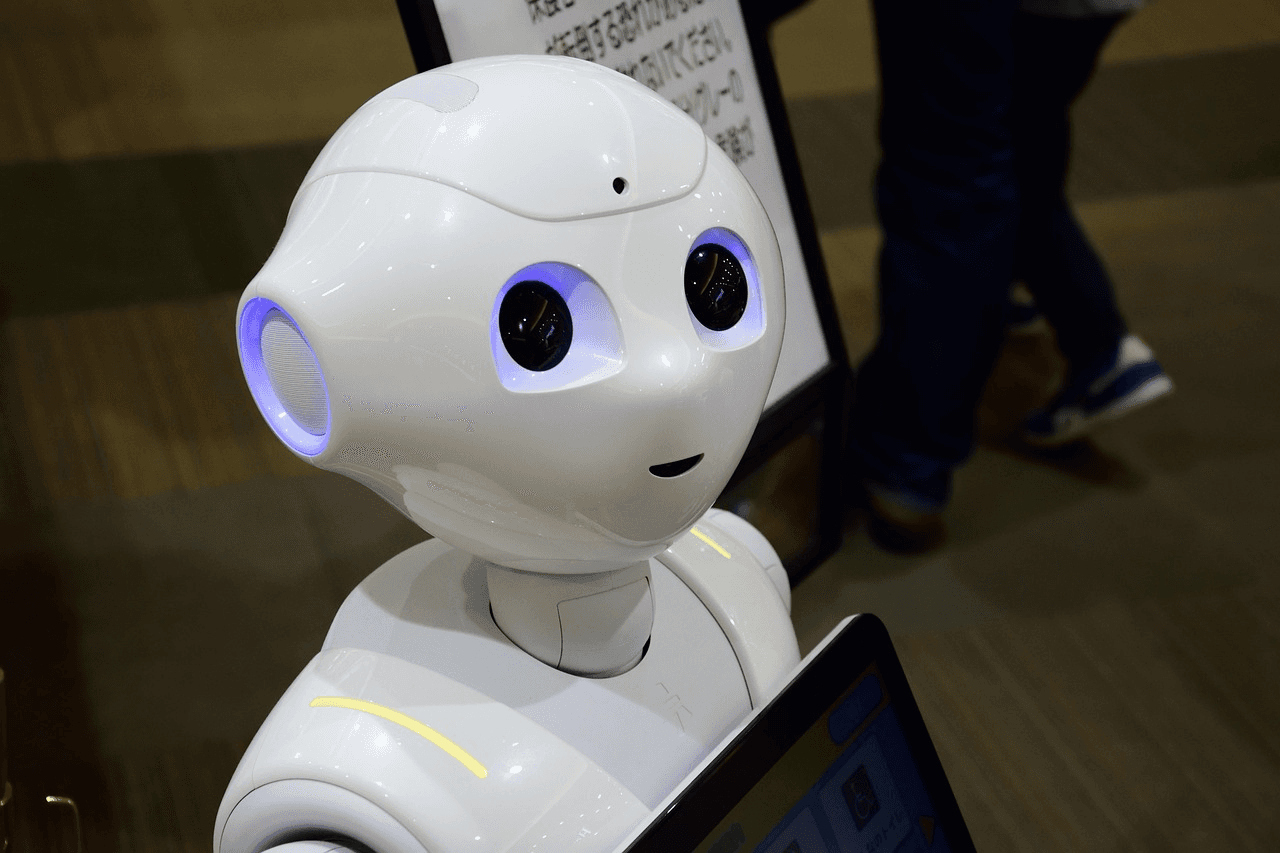
Japan's biggest corporations formed a joint venture on April 12 to build domestic AI foundation models, backed by $6.7B in government funding targeting trillion-parameter physical AI.
Japan Stops Waiting for Silicon Valley
On April 12, 2026, four of Japan's most powerful corporations — SoftBank, Sony, Honda, and NEC — officially launched Japan AI Foundation Model Development, a joint venture with a single mission: to build large-scale AI foundation models entirely on Japanese soil, trained on Japanese data, and deployed in Japanese industries. The announcement arrived alongside an immediate pledge of 1 trillion yen (approximately $6.7 billion) from the Japanese government over five years, signaling a national-level commitment to AI sovereignty that few governments have matched in dollar terms.
The timing is deliberately urgent. Japan has watched the United States and China race ahead in foundation model development for the past three years, and the rapid ascent of Chinese AI labs like DeepSeek has added a geopolitical dimension to what was previously seen as a commercial technology gap. For Japanese policymakers, the question is no longer whether Japan can compete globally — it is whether Japan can avoid becoming entirely dependent on foreign AI infrastructure for its most critical industries.
Structure of the Joint Venture
Role Distribution Among Partners
The four founding corporations are contributing different types of expertise to the joint venture:
SoftBank leads AI infrastructure, contributing its relationships with global GPU suppliers and its Vision Fund network of AI companies. SoftBank's Masayoshi Son has publicly described AI as the most important technology in human history, and this venture represents the most concrete operational expression of that conviction.
NEC contributes deep technical AI research capability. NEC's internal AI research division has published work on large-scale language models and brings institutional knowledge in enterprise AI systems — particularly in government and defense applications, where data sovereignty concerns are most acute.
Sony brings world-class hardware design, semiconductor expertise through Sony Semiconductor Solutions, and one of the world's largest entertainment content libraries. Sony's role is critical for training data quality; the company's archive of films, music, games, and professional media represents an enormous proprietary dataset for Japanese-language and multimodal AI training.
Honda contributes automotive and robotics expertise. Honda's ASIMO robotics heritage and its current investment in autonomous vehicles make it the venture's primary focus for physical AI — AI systems that must operate in the real world through mechanical bodies rather than purely digital interfaces.
Additional Investors
Beyond the four major shareholders, a consortium of Japan's largest financial institutions has joined as minority investors: Nippon Steel, Kobe Steel, Mitsubishi UFJ Bank, Sumitomo Mitsui Banking Corporation, and Mizuho Bank. The banking sector's involvement is notable, as it suggests the venture is structured for long-term national infrastructure development rather than short-term commercial returns.
Technical Goals
Trillion-Parameter Foundation Model
The joint venture has publicly targeted a foundation model with one trillion parameters — a benchmark that places it in the same scale range as GPT-5 and Gemini 3.1 Pro. The model will be trained primarily on Japanese-language data, addressing a persistent weakness of Western models in Japanese-language tasks where cultural nuance, formal register differences, and specialized vocabulary have historically caused quality degradation.
Physical AI: The Long-Term Bet
The venture's most ambitious stated goal is the development of "physical AI" — AI systems capable of directly operating robotic hardware. This framing positions Japan AI Foundation Model Development not as a language model company competing with OpenAI, but as an industrial AI platform competing with NVIDIA's robotics ecosystem and Boston Dynamics. Honda's involvement makes this goal credible; the company has decades of investment in bipedal robotics and automotive AI that few technology companies can match.
Government Funding Mechanism
The 1 trillion yen commitment flows primarily through NEDO — the New Energy and Industrial Technology Development Organization — a government-backed body that funds industrial technology development. NEDO funding is milestone-based, meaning the joint venture must demonstrate technical progress to unlock successive tranches. This structure creates accountability while insulating the venture from short-term commercial pressure.
Strategic Significance
AI Sovereignty as National Policy
Japan's formation of a national AI consortium mirrors earlier industrial policy successes in semiconductors (through Rapidus) and automotive electrification. The model is well-established: identify a strategic technology, pool corporate resources, secure government backing, and build domestic capability rather than perpetual foreign dependency.
The comparison to China's approach is instructive. DeepSeek's V4, expected to launch on Huawei chips in late April 2026, represents China's parallel effort to build AI capability on Chinese semiconductor infrastructure. Japan is making a different bet — on data quality, robotic integration, and alliance with established industrial champions rather than sheer parameter scale.
Implications for Global AI Competition
If successful, Japan AI Foundation Model Development adds a third non-American node to the global foundation model map alongside China. For enterprises in Asia-Pacific markets with Japanese operations, it offers a future alternative to routing sensitive data through US or Chinese cloud infrastructure. For the AI supply chain, it represents significant demand for Japanese-language training data, robotics datasets, and GPU capacity.
Pros and Cons
Strengths:
- $6.7 billion in government funding provides exceptional financial runway
- Consortium combines world-class hardware, content, robotics, and infrastructure expertise
- Physical AI focus differentiates the venture from crowded language model competition
- Japanese-language data quality addresses a genuine market gap in enterprise AI
Limitations:
- Physical AI and trillion-parameter model development are 3-5 year timelines, not immediate
- Consortium governance with four major corporations can slow decision-making
- Competition from NVIDIA's robotics ecosystem and existing Western models will be formidable
- Japan's past record in large-scale technology consortia has been mixed (TRON, Fifth Generation Computing)
Outlook
The launch of Japan AI Foundation Model Development is one of the most significant government-backed AI investments announced outside the United States and China. The $6.7 billion commitment, combined with the industrial credibility of its founding members, gives this venture a serious chance of delivering meaningful results — particularly in the physical AI and Japanese-language domains where its competitive position is strongest.
The venture's 3-5 year horizon means it is unlikely to produce models that compete directly with GPT-6 or Gemini 4 in 2026. The real test comes in 2028-2030, when industrial AI for robotics and manufacturing becomes the central competitive battleground.
Conclusion
Japan's national AI alliance is a significant geopolitical and industrial signal: the world's third-largest economy is no longer content to import AI infrastructure. With $6.7 billion in government backing, four of Japan's most powerful corporations, and a credible technical focus on physical AI and Japanese-language models, this venture has the ingredients to matter — though the timeline is measured in years, not months.
Best suited for: Enterprise technology strategists, investors tracking Asia-Pacific AI developments, and robotics and industrial AI researchers monitoring where physical AI investment is concentrating.
Editor's Verdict
Japan Launches National AI Alliance: SoftBank, Sony, Honda, NEC Form $6.7B Foundation Model JV earns a solid recommendation within the it news space.
The strongest case for paying attention is exceptional financial backing with $6.7 billion in government funding over five years, which raises the bar for what readers should now expect from peers in this space. Reinforcing that, unique physical AI focus differentiates from saturated language model market adds practical value rather than just headline appeal. The broader signal worth registering is straightforward: japan's $6.7 billion government commitment to domestic AI foundation models is one of the largest single national AI investments announced outside the US and China. On the other side of the ledger, 3-5 year development timeline means no near-term competitive products is a real constraint, not a marketing footnote, and it should factor into any serious decision. Layered on top of that, multi-corporate consortium governance historically slows decision-making in Japanese joint ventures narrows the set of teams for whom this is an obvious yes.
For AI industry watchers, strategy teams, and decision-makers tracking platform shifts, this is a serious evaluation candidate, not just a curiosity to bookmark. For everyone else, the safer posture is to monitor coverage and revisit once the use cases that matter to your team are demonstrated in the wild.
Pros
- Exceptional financial backing with $6.7 billion in government funding over five years
- Unique physical AI focus differentiates from saturated language model market
- Consortium combines complementary world-class industrial expertise across hardware, content, robotics, and infrastructure
- Japanese-language training data advantage addresses a real quality gap in existing models
Cons
- 3-5 year development timeline means no near-term competitive products
- Multi-corporate consortium governance historically slows decision-making in Japanese joint ventures
- Physical AI faces formidable competition from NVIDIA's established robotics ecosystem
- Japan's record in large government-backed technology consortia has historically been mixed
References
Comments0
Key Features
1. National JV Formation: SoftBank, NEC, Sony, and Honda launched Japan AI Foundation Model Development on April 12, 2026, with $6.7 billion in committed government funding. 2. Role Specialization: SoftBank leads infrastructure, NEC leads research, Sony contributes content data and semiconductors, Honda contributes robotics and automotive AI. 3. Trillion-Parameter Target: The venture aims to develop a foundation model with 1 trillion parameters, trained primarily on Japanese-language and industrial data. 4. Physical AI Focus: The long-term goal is AI systems capable of operating robotic hardware — positioning the JV as an industrial AI platform rather than a consumer language model company. 5. NEDO Milestone Funding: Government funding flows through milestone-based grants from NEDO, creating accountability for technical progress.
Key Insights
- Japan's $6.7 billion government commitment to domestic AI foundation models is one of the largest single national AI investments announced outside the US and China
- The physical AI focus — AI for robotics and real-world mechanical operation — is a strategic differentiation that leverages Honda's robotics heritage and Sony's hardware expertise
- SoftBank, NEC, Sony, and Honda together represent Japan's largest consumer electronics, telecom, automotive, and enterprise IT sectors, making this genuinely a cross-industry national bet
- Japanese-language model quality has historically lagged Western models due to data scarcity; proprietary Japanese training data from Sony's media archive could represent a significant quality advantage
- The banking consortium's participation (Mitsubishi UFJ, SMBC, Mizuho) signals that Japanese finance sees AI infrastructure as a strategic investment, not just a technology purchase
- The timing mirrors China's parallel push to build AI on domestic Huawei chips with DeepSeek V4, suggesting a broader global pattern of AI infrastructure nationalism
- Milestone-based NEDO funding structure reduces the risk of capital misallocation common in large government technology programs
Was this review helpful?
Share
Related AI Reviews
Microsoft Maia 300: 96-Accelerator Rack, 2027 Rollout
Microsoft's Maia 300 inference chip claims up to 7x Maia 200's rack throughput on TSMC N2P chiplets, with production rollout starting in 2027.

Nadella: Treat Frontier AI Models as Insider Risks
Nadella's X essay urges treating frontier models as insider risks: controls outside the model, audit evidence and an emergency brake.

Google Pauses OSS VRP Product-Bug Rewards Over AI Slop
Google stopped taking product-vulnerability reports in its OSS bug bounty on Oct 1 over invalid AI submissions; supply-chain rewards continue.

Apple Rethinks macOS Full Disk Access as AI Agents Grow
Apple says it will add controls so granting macOS Full Disk Access takes very explicit user action, citing risks from capable AI agents.