
iOS 26.4 RC Ships Without Gemini-Powered Siri: Apple's AI Flagship Feature Pushed to iOS 26.5
Apple releases iOS 26.4 release candidate on March 18 without the promised Gemini-powered Siri overhaul, pushing the AI assistant upgrade to iOS 26.5 or later.
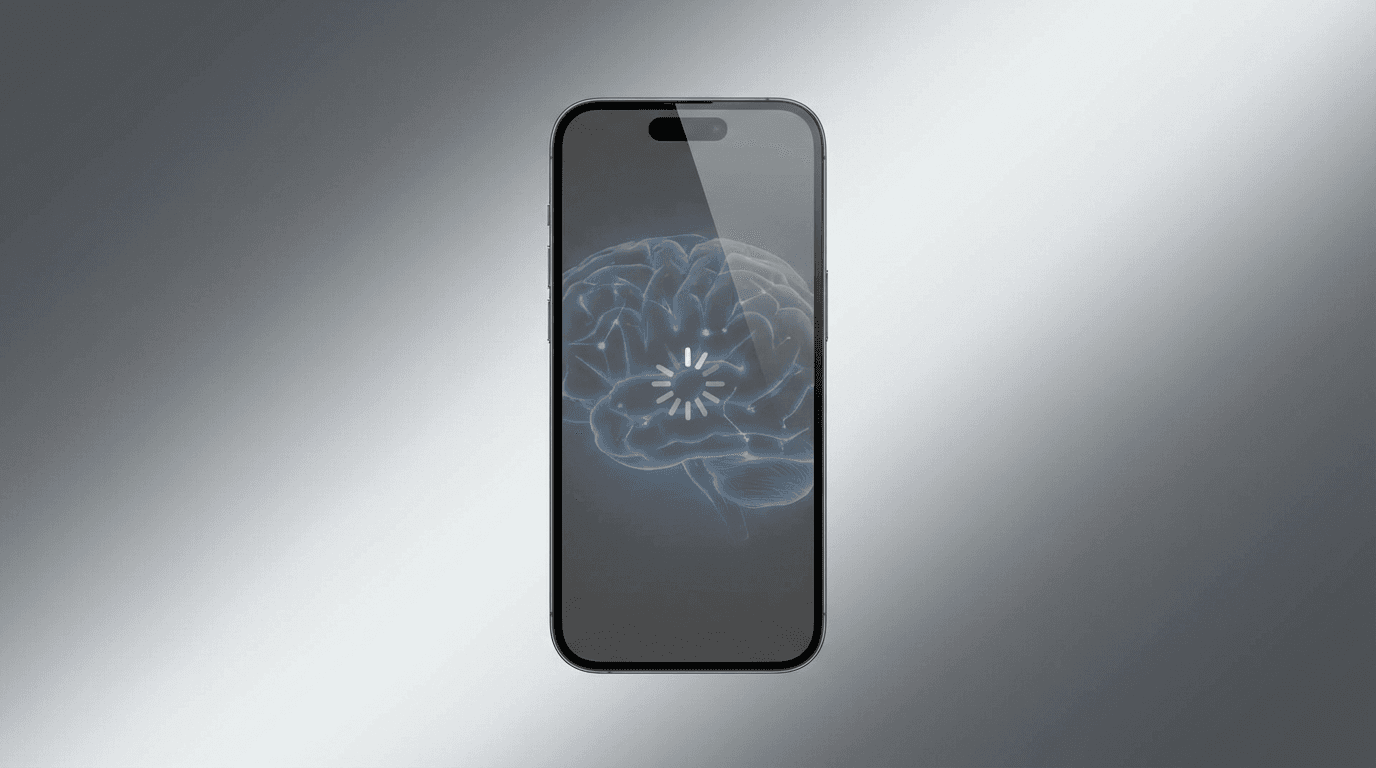
Apple releases iOS 26.4 release candidate on March 18 without the promised Gemini-powered Siri overhaul, pushing the AI assistant upgrade to iOS 26.5 or later.
Key Takeaways
Apple released the iOS 26.4 release candidate on March 18, 2026, confirming what many had feared: the highly anticipated Gemini-powered Siri overhaul is not included. Despite Apple's January announcement of a $1 billion annual partnership with Google to rebuild Siri using Gemini AI, and repeated assurances that the new Siri would arrive in iOS 26.4, the release candidate ships with music features, accessibility improvements, and new emoji instead of the AI assistant upgrade that was supposed to define this release.
The Gemini-powered Siri features are now expected to arrive in iOS 26.5 (targeted for May 2026) at the earliest, with more advanced conversational capabilities potentially delayed until iOS 27 in September.
Feature Overview
1. What iOS 26.4 Actually Includes
The iOS 26.4 release candidate, expected to reach all compatible devices by approximately March 25-26, delivers a substantial update focused on music, accessibility, and productivity:
| Feature | Description |
|---|---|
| Playlist Playground | AI-generated playlists from text descriptions (beta) |
| Concert Discovery | Nearby concert recommendations in Apple Music |
| Offline Music Recognition | Control Center music identification without internet |
| Ambient Music Widget | Mood-based background music player |
| Bright Flash Reduction | New accessibility setting for light sensitivity |
| 8 New Emoji | Additional emoji characters |
| Freeform Image Tools | Enhanced drawing and content library |
| Purchase Sharing | Family account purchase sharing |
| Keyboard Accuracy | Improved typing precision |
These are meaningful improvements, but none address the transformative AI capabilities that Apple had positioned as the centerpiece of iOS 26.4.
2. The Missing Siri: What Was Promised vs. What Shipped
Apple's January 12, 2026 announcement with Google described a fundamentally rebuilt Siri that would transform from a command-and-response utility into a context-aware AI assistant. The promised capabilities included:
- On-screen context awareness: Siri would understand content displayed on the user's screen. If a restaurant appeared in Safari, Siri could make a reservation without the user copying any information.
- Multi-action chaining: Users could issue complex requests like "Find that flight confirmation email and add it to my calendar with departure reminders" as a single command.
- Natural multi-turn conversations: Siri would maintain context across multiple exchanges, enabling fluid dialogue rather than isolated commands.
- Deep app integration: Per-app controls would allow Siri to take actions within third-party applications.
None of these features are present in the iOS 26.4 release candidate. According to multiple reports, Apple is now spreading these capabilities across future releases, with basic contextual features potentially arriving in iOS 26.5 (May) and full conversational AI capabilities reserved for iOS 27 (September).
3. Why the Delay: Technical and Organizational Challenges
Multiple sources point to a combination of technical and organizational factors behind the delay. Integrating Google's Gemini model into Apple's privacy-centric architecture has proven more complex than initially anticipated. Apple's Private Cloud Compute infrastructure, which processes AI queries on Apple-controlled servers rather than Google's, requires significant engineering to ensure that Gemini's capabilities function correctly within Apple's privacy constraints.
Additionally, internal reports suggest disagreements between Apple's Siri team and the broader AI division about the scope and quality bar for the initial release. Apple's engineering culture, which prioritizes polish over speed, appears to have won out over the commercial pressure to ship the Gemini-powered Siri alongside the Google partnership announcement timeline.
The delay also reflects the fundamental difficulty of transforming a decade-old voice assistant architecture. Siri's original design was built around intent classification and structured commands. Retrofitting it with large language model capabilities requires reworking not just the natural language processing layer but the entire action execution pipeline.
4. Competitive Implications
The Siri delay has competitive consequences. Google's own Gemini assistant is already available on Android devices with advanced contextual capabilities. Samsung's Galaxy AI features, powered by a combination of Google and Samsung models, have been shipping since early 2025. Microsoft's Copilot continues to expand across Windows and Office applications.
Apple's AI assistant remains the least capable among major technology platforms, a gap that was supposed to close with iOS 26.4. Every month of delay allows competitors to further entrench their AI assistants in user habits and workflows.
Usability Analysis
For the approximately 1.5 billion active iPhone users who were expecting a Siri transformation, the iOS 26.4 release candidate is a disappointment on the AI front. The features that did ship are useful, particularly the Playlist Playground for Apple Music subscribers and the accessibility improvements, but they do not address the fundamental gap between Siri and competing AI assistants.
The phased rollout approach, with basic features in iOS 26.5 and full capabilities in iOS 27, means that users may not experience the complete Gemini-powered Siri until September 2026, nearly nine months after the Apple-Google partnership was announced. For users considering switching to Android for AI capabilities, the delay extends the window of competitive vulnerability.
Developers who were preparing apps for deep Siri integration will also need to adjust their timelines, as the new SiriKit APIs for contextual actions may not be finalized until the iOS 27 developer beta in June.
Pros
- iOS 26.4 still delivers meaningful improvements in music, accessibility, and productivity features
- Apple's quality-first approach may result in a more polished Siri when it does arrive, avoiding the buggy launches that have plagued other AI assistants
- Privacy-preserving architecture with Private Cloud Compute ensures Gemini integration does not compromise Apple's privacy standards
- Phased rollout reduces risk of a catastrophic first impression that could damage user trust in AI-powered Siri
Limitations
- Siri remains the least capable major AI assistant with no clear timeline for parity with Google Assistant, Samsung Galaxy AI, or Microsoft Copilot
- Nine-month gap between partnership announcement and full delivery erodes confidence in Apple's AI execution capability
- Developer ecosystem impact as app makers cannot plan around uncertain Siri integration timelines
- Competitive window extends allowing Android AI features to become further entrenched in user habits
Outlook
The iOS 26.4 Siri delay is more than a scheduling slip. It reveals the fundamental tension in Apple's AI strategy: the company wants to offer cutting-edge AI capabilities while maintaining its privacy-first architecture and polish-before-ship engineering culture. This is an admirable set of priorities, but it results in Apple consistently trailing competitors in AI feature delivery.
The partnership with Google for Gemini was supposed to accelerate Apple's AI timeline by leveraging external model capabilities rather than building everything in-house. The fact that even with Google's technology, Apple cannot ship on the originally announced timeline suggests that the integration challenges are deeper than initially assessed.
Looking ahead, the key milestone is iOS 26.5 in May. If Apple delivers meaningful Siri improvements in that release, the iOS 26.4 delay will be remembered as a minor setback. If iOS 26.5 also falls short, questions about Apple's ability to compete in the AI era will intensify significantly.
Conclusion
Apple's iOS 26.4 release candidate, shipped on March 18 without the promised Gemini-powered Siri, confirms a significant delay in Apple's most important AI initiative. While the update includes useful music, accessibility, and productivity features, the absence of the Siri overhaul extends Apple's AI assistant gap against Google, Samsung, and Microsoft. For the 1.5 billion iPhone users waiting for a competitive AI assistant, the wait continues until at least May with iOS 26.5, and potentially September with iOS 27 for the full experience.
Editor's Verdict
iOS 26.4 RC Ships Without Gemini-Powered Siri: Apple's AI Flagship Feature Pushed to iOS 26.5 is a workable proposition that fills a clear gap, even if it doesn't fundamentally change the landscape.
The strongest case for paying attention is iOS 26.4 delivers meaningful improvements in music, accessibility, and productivity, which raises the bar for what readers should now expect from peers in this space. Reinforcing that, apple's quality-first approach may produce a more polished Siri when it arrives adds practical value rather than just headline appeal. The broader signal worth registering is straightforward: the delay reveals fundamental tension between Apple's privacy-first architecture and the speed required to compete in AI. On the other side of the ledger, siri remains the least capable major AI assistant with no firm parity timeline is a real constraint, not a marketing footnote, and it should factor into any serious decision. Layered on top of that, nine-month gap between partnership announcement and expected full delivery erodes confidence narrows the set of teams for whom this is an obvious yes.
For AI industry watchers, strategy teams, and decision-makers tracking platform shifts, the smart move is to track its trajectory and revisit once the rough edges are filed down. For everyone else, the safer posture is to monitor coverage and revisit once the use cases that matter to your team are demonstrated in the wild.
Pros
- iOS 26.4 delivers meaningful improvements in music, accessibility, and productivity
- Apple's quality-first approach may produce a more polished Siri when it arrives
- Privacy-preserving Private Cloud Compute architecture maintains Apple's security standards
- Phased rollout reduces risk of a buggy first impression for AI-powered Siri
Cons
- Siri remains the least capable major AI assistant with no firm parity timeline
- Nine-month gap between partnership announcement and expected full delivery erodes confidence
- Developer ecosystem impact as SiriKit API timelines remain uncertain
- Extended competitive window allows Android AI features to become more entrenched
References
Comments0
Key Features
1. iOS 26.4 release candidate shipped March 18 without the promised Gemini-powered Siri overhaul 2. Gemini-powered Siri features now expected in iOS 26.5 (May 2026) with full capabilities in iOS 27 (September) 3. iOS 26.4 includes Playlist Playground, concert discovery, 8 new emoji, and accessibility improvements 4. Technical challenges in integrating Gemini with Apple's Private Cloud Compute architecture cited as key delay factor 5. Apple's $1 billion annual Google partnership announced in January has yet to deliver consumer-facing AI features
Key Insights
- The delay reveals fundamental tension between Apple's privacy-first architecture and the speed required to compete in AI
- Even with Google's Gemini technology, integrating advanced AI into a decade-old voice assistant architecture is proving extremely complex
- Apple's quality-over-speed engineering culture prioritizes polish but creates competitive vulnerability in the fast-moving AI market
- The phased rollout to iOS 26.5 and iOS 27 suggests Apple now views the Siri overhaul as a multi-release initiative rather than a single update
- Developer ecosystem uncertainty around Siri integration timelines could slow the creation of AI-enhanced iOS apps
- Every month of delay allows Google Assistant and Samsung Galaxy AI to further entrench AI assistant habits on competing platforms
- The $1 billion annual Google partnership has created high expectations that are proving difficult to meet on the original timeline
- iOS 26.4's actual features, while useful, highlight the gap between Apple's AI narrative and its shipping capabilities
Was this review helpful?
Share
Related AI Reviews

Apple Reference Image: How iPhone 18 Pro Proves Photos Real
Apple's new iPhone 18 Pro camera signs sensor data at capture, letting users compare an unalterable reference image to verify a photo wasn't edited.

Authors Dispute Publisher Claims on Anthropic Payouts
Authors report publishers and literary agencies claiming shares of their $3,000-per-book payouts as Anthropic's $1.5B settlement enters allocation.

DOJ Backs OpenAI's Fair-Use Case in NYT Copyright Suit
DOJ filed a Statement of Interest backing OpenAI's fair-use defense in the NYT copyright suit, days before summary judgment briefing begins.
OpenAI to Cut Off Cursor's Model Access Nov. 12
OpenAI plans to cut off Cursor's model access Nov. 12 after SpaceX's acquisition, citing distrust of Musk's companies on contract terms.