
Googlebook Pre-Orders Open at $899 for Gemini Laptops
Google's Googlebook laptops start at $899 with Gemini features like Magic Pointer and Rambler; TechCrunch doubts they justify new hardware.
Google's Googlebook laptops start at $899 with Gemini features like Magic Pointer and Rambler; TechCrunch doubts they justify new hardware.
Introduction
Google opened pre-orders for Googlebook laptops on September 21, 2026, according to three posts published the same day on the company's blog. Google describes Googlebook as "a new category of laptops," built on the Android technology stack "paired with desktop foundations from ChromeOS" and designed specifically for what it calls Gemini Intelligence. Five hardware partners — Acer, ASUS, Dell, HP, and Lenovo — each ship one flagship model starting at $899, with devices reaching store shelves October 4 in the U.S. and October 5 in Canada, the U.K., Ireland, France, Germany, and Australia. The launch follows Google's original Googlebook preview from May 12, 2026, and drew immediate skepticism from TechCrunch over whether the software features are compelling enough to justify buying new hardware.
Feature Overview
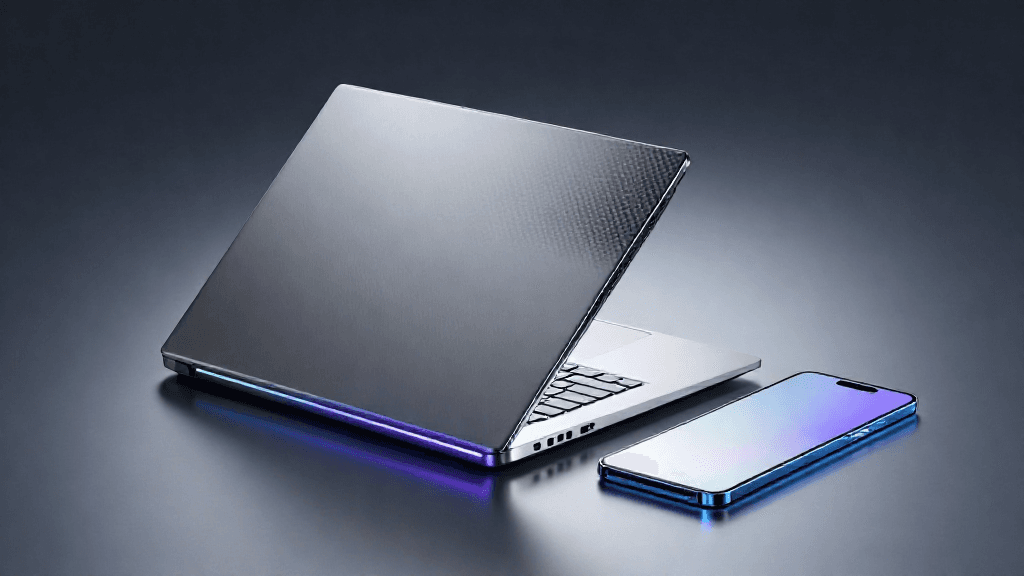
Each of the five partner laptops uses materials such as aluminum, magnesium alloy, and carbon fiber, with touchscreens reaching up to 2.8K OLED resolution, haptic glass trackpads, backlit keyboards, and up to six speakers with Dolby Atmos support. Intel and Qualcomm processor options pair with dedicated NPUs rated above 45 TOPS, and Google says battery life reaches up to 14 hours. An exterior light bar, the Glowbar, returns as what Google calls "a familiar favorite," lighting up at startup, showing battery level, and animating when a user talks to Gemini.
Design differentiates the lineup: Acer is the only convertible model, converting from laptop to tablet; ASUS weighs 2.2 pounds; Dell is described by Google as "bold and flashy"; HP is built to look "as beautiful closed as it is open"; and Lenovo ships a 15-inch display positioned as a "workhorse" option. Google's launch posts do not list individual prices or full specifications for each of the five models beyond the shared $899 starting point.
Phone integration is central to the pitch. Signing in on a Googlebook transfers an Android phone's settings, saved passwords, Wi-Fi networks, and messages, which Google says is backed by end-to-end encryption. Additional features let users resume a phone app on the laptop from the taskbar (Continue On), browse phone files and photos (Files), and stream and interact with phone apps in a desktop window (Cast My Apps).
The Gemini-specific features are the laptops' core differentiator. Magic Pointer lets a user wiggle the cursor to bring Gemini's attention to whatever is on screen — understanding text, images, and context to do things like turn a highlighted training plan into Google Calendar events or check whether a hovered email is spam. It only activates when summoned by that wiggle gesture and can be switched off. Rambler, located next to the Quick Insert key, turns spoken brain-dumps into structured writing with headers, checklists, and action items, and can switch languages mid-sentence. Create My Widget lets users build desktop widgets by describing them in plain language. Gemini Spark, meanwhile, keeps working in the background even with the laptop's lid closed.
For developers, Google Antigravity — its AI agent development platform — ships included, alongside a full Linux terminal capable of running tools like Claude Code or the Antigravity CLI. On security, Google says Googlebook shares ChromeOS's architecture, adds a Titan hardware root of trust and on-device malware detection, and includes what the company calls "a first for the laptop category: a Level 5 security-certified pKVM hypervisor" powering an isolated Linux environment.
Usability Analysis
Every Googlebook purchase includes a software and services bundle: 12 months of Google AI Pro (5TB of cloud storage plus what Google calls "Gemini Advanced tools"), three months of YouTube Premium, three months of Adobe Photoshop, and a complimentary year of GeForce NOW. The devices run a desktop-class version of Chrome with extension support alongside Android apps from the Play Store, and Google specifically calls out Adobe Photoshop, Lightroom, and CapCut, plus offline viewing on Netflix and HBO Max. Google says Googlebook OS will receive feature drops and updates for up to 10 years.
Pros and Cons
Pros:
- Phone integration carries over Android settings, saved passwords, Wi-Fi networks, and messages via end-to-end encryption during sign-in.
- A full Linux terminal ships alongside Google Antigravity, letting developers run tools like Claude Code directly on the hardware.
- Gemini Spark continues running in the background even with the lid closed, according to Google.
- Build materials span aluminum, magnesium alloy, and carbon fiber, with touchscreens up to 2.8K OLED resolution and up to 14 hours of battery life.
- Every purchase bundles 12 months of Google AI Pro, three months of YouTube Premium and Adobe Photoshop, and a year of GeForce NOW.
Cons:
- Outlet analysis from TechCrunch argues the Magic Pointer feature isn't very different from Android's existing Circle to Search tool.
- Individual pricing and specs for the five partner laptops beyond the shared $899 starting point are not published in Google's launch posts.
- TechCrunch notes that Gemini Spark and Gemini Live, two of the bundled Gemini features, don't actually require new hardware to run.
- Launch availability covers seven countries — the U.S., Canada, the U.K., Ireland, France, Germany, and Australia — and Google's posts give no dates for other markets.
Outlook
TechCrunch's read on the launch places it inside a longer-term education strategy: Google has said roughly 50 million Chromebooks are already in schools, and in May the company told TechCrunch that existing Chromebooks would remain supported while many could become eligible to transition to the Googlebook experience later. That framing suggests schools and existing Chromebook fleets may matter to Googlebook's long-term prospects as much as individual buyers weighing an $899 purchase against features TechCrunch compares to Android's Circle to Search or says don't require new hardware. Whether Magic Pointer, Rambler, and Create My Widget prove different enough from existing phone and Chromebook features to drive a hardware upgrade cycle will likely become clearer once independent reviewers test the five partner models against Google's claims.
Conclusion
Googlebook brings Gemini Intelligence to a dedicated laptop category, backed by five partner devices starting at $899, deep Android phone integration, and a 10-year software support commitment. Its strongest features — Magic Pointer, Rambler, and background Gemini Spark processing — still face TechCrunch's assessment that, useful as some are, none is on its own a reason to buy a new device. Buyers already inside the Android and ChromeOS ecosystem, along with developers wanting Linux and Google Antigravity on the same machine, are best positioned to judge whether the pitch justifies new hardware when the devices ship in early October.
Editor's Verdict
Googlebook Pre-Orders Open at $899 for Gemini Laptops is a workable proposition that fills a clear gap, even if it doesn't fundamentally change the landscape.
The strongest case for paying attention: phone integration carries over Android settings, saved passwords, Wi-Fi networks, and messages via end-to-end encryption during sign-in. That alone raises the bar for what readers should expect in this space. Reinforcing that, a full Linux terminal ships alongside Google Antigravity, letting developers run tools like Claude Code directly on the hardware — practical value rather than just headline appeal. The broader signal worth registering is straightforward: pricing starts at $899 across five partner laptops — Acer, ASUS, Dell, HP, and Lenovo — with no per-model prices or specs disclosed. On the other side of the ledger, one constraint is real rather than a marketing footnote: outlet analysis from TechCrunch argues the Magic Pointer feature isn't very different from Android's existing Circle to Search tool. It should factor into any serious decision. Layered on top of that, individual pricing and specs for the five partner laptops beyond the shared $899 starting point are not published in Google's launch posts — which narrows the set of teams for whom this is an obvious yes.
For Android phone owners, schools and IT teams running Chromebook fleets, and developers who want Linux and Google Antigravity on one machine, the smart move is to track its trajectory and revisit once the rough edges are filed down. For everyone else, the safer posture is to monitor coverage and revisit once the use cases that matter to your team are demonstrated in the wild.
Pros
- Phone integration carries over Android settings, saved passwords, Wi-Fi networks, and messages via end-to-end encryption during sign-in.
- A full Linux terminal ships alongside Google Antigravity, letting developers run tools like Claude Code directly on the hardware.
- Gemini Spark continues running in the background even with the lid closed, according to Google.
- Build materials span aluminum, magnesium alloy, and carbon fiber, with touchscreens up to 2.8K OLED resolution and up to 14 hours of battery life.
- Every purchase bundles 12 months of Google AI Pro, three months of YouTube Premium and Adobe Photoshop, and a year of GeForce NOW.
Cons
- Outlet analysis from TechCrunch argues the Magic Pointer feature isn't very different from Android's existing Circle to Search tool.
- Individual pricing and specs for the five partner laptops beyond the shared $899 starting point are not published in Google's launch posts.
- TechCrunch notes that Gemini Spark and Gemini Live, two of the bundled Gemini features, don't actually require new hardware to run.
- Launch availability covers seven countries — the U.S., Canada, the U.K., Ireland, France, Germany, and Australia — and Google's posts give no dates for other markets.
References
Comments0
Key Features
1. Five partner laptops (Acer, ASUS, Dell, HP, Lenovo) starting at $899. 2. Magic Pointer, Rambler, and Create My Widget bring Gemini directly into the desktop. 3. Deep Android phone integration: settings, passwords, files, and app casting. 4. Google Antigravity and a full Linux terminal for developers. 5. Bundled with 12 months of Google AI Pro, YouTube Premium, Adobe Photoshop, and GeForce NOW.
Key Insights
- Pricing starts at $899 across five partner laptops — Acer, ASUS, Dell, HP, and Lenovo — with no per-model prices or specs disclosed.
- Five hardware partners each ship one flagship model, with Acer as the only convertible design in the lineup.
- Magic Pointer activates only when a user wiggles the cursor, letting Gemini act on whatever is on screen, and can be switched off.
- Rambler turns spoken brain-dumps into structured writing — headers, checklists, and action items — and can switch languages mid-sentence.
- A Level 5 security-certified pKVM hypervisor isolates a full Linux environment, which Google describes as a first for the laptop category.
- Google's May 12 preview had already named Acer, ASUS, Dell, HP, and Lenovo as partners for the first Googlebooks, and the September launch delivers one flagship model from each.
- TechCrunch frames the launch as part of a longer-term K-12 strategy, citing Google's own figure of roughly 50 million Chromebooks already in schools.
- Every purchase includes 12 months of Google AI Pro, three months of YouTube Premium and Adobe Photoshop, and a complimentary year of GeForce NOW.
Was this review helpful?
Share
Related AI Reviews

Gemini 4 Argon: Frontier Model Opens to Cyber Defenders
Google announced Gemini 4 Argon on Sept 30, giving trusted cyber defenders first access. Price is $2/$10 per 1M tokens; broad release has no date.

Gemini 'Call for Me' Lets AI Phone Businesses for You
Google's Gemini can now call businesses on your behalf to book or check on things, launching on Pixel 11 for US paid subscribers.

Gemini 3.8 Live and Extended Thinking Split Voice AI in Two
Google splits real-time voice AI into two tiers: Gemini 3.8 Live for scale, Extended Thinking for complex reasoning - both share one price table.

Gemini App Comes to Windows with Alt + Space Overlay
Google's Gemini app is now on Windows, summoned with Alt + Space over your active work - but macOS still holds native features Windows lacks.