
Google's March Pixel Drop Brings Agentic Gemini: AI That Books Rides and Orders Food
Google's March 2026 Pixel Drop introduces agentic Gemini tasks that can autonomously book Uber rides, order from DoorDash, and handle multi-step actions on Pixel 10 devices.
Google's March 2026 Pixel Drop introduces agentic Gemini tasks that can autonomously book Uber rides, order from DoorDash, and handle multi-step actions on Pixel 10 devices.
Gemini Moves From Conversation to Action
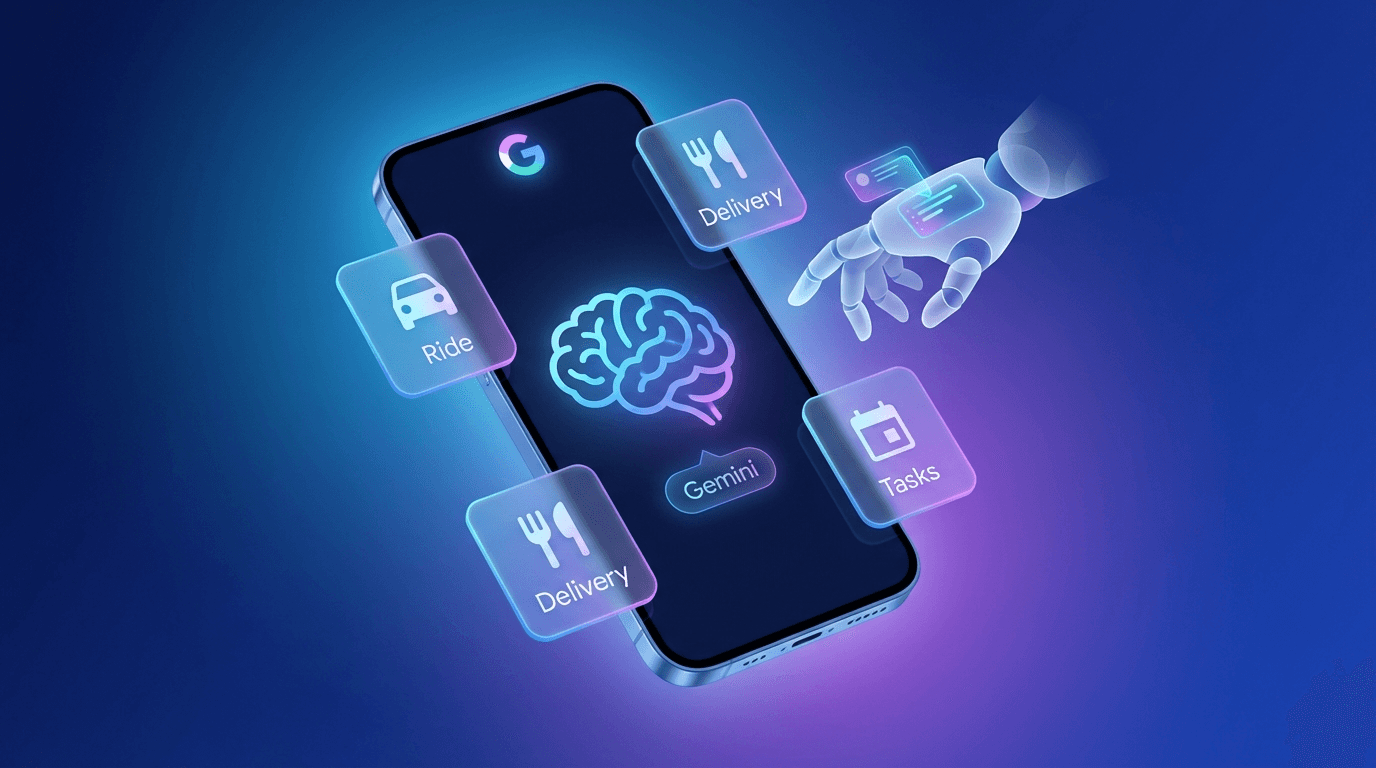
On March 3, 2026, Google rolled out its March Pixel Drop, a quarterly feature update for Pixel devices that this time carries a significant shift in how AI operates on smartphones. The headline feature is agentic Gemini tasks, which allow Google's AI assistant to autonomously perform multi-step actions inside third-party applications. Instead of just answering questions or generating text, Gemini can now book an Uber ride, assemble a DoorDash delivery order, or reorder groceries from Grubhub without the user manually navigating through each app.
This represents Google's first deployment of agentic AI capabilities directly on consumer mobile devices at scale. While agentic AI has been a dominant theme in enterprise software throughout early 2026, Google is now bringing the concept to everyday smartphone interactions where the friction of app-switching and manual task completion is most acutely felt.
How Agentic Gemini Tasks Work
The technical architecture behind agentic Gemini tasks is notable for its approach to balancing automation with security. When a user initiates a task, Gemini launches the target application inside a secure, virtual window on the phone. This virtual environment is isolated from the rest of the device, meaning Gemini cannot access other apps, files, or data outside the sandboxed session.
Processing happens in the cloud rather than on-device. Gemini observes the virtual window, interprets the application's UI, and executes actions by scrolling, tapping, and typing, effectively using the app the same way a human would. Users can open the virtual window at any time to watch Gemini interact with the application in real time, or they can continue using other apps on their phone while Gemini works in the background.
The user flow is straightforward: long-press the power button to invoke Gemini, describe the task in natural language ("order my usual coffee from Grubhub" or "book an Uber to the airport"), and Gemini handles the execution. Before completing any transaction that involves payment, Gemini requires explicit user confirmation.
Supported Apps and Device Requirements
At launch, agentic Gemini tasks support three categories of third-party applications:
| Category | Supported Apps |
|---|---|
| Rideshare | Uber |
| Food Delivery | DoorDash, Grubhub |
| Grocery | Select grocery delivery apps |
Google has indicated that more apps will be added over time, though no specific timeline has been provided.
The agentic capability is currently exclusive to the Pixel 10 series, including the Pixel 10, Pixel 10 Pro, Pixel 10 Pro XL, and Pixel 10 Pro Fold. Samsung's Galaxy S26 lineup is also expected to receive similar Gemini automation features. Older Pixel devices and other Android phones do not have access to agentic tasks in this release.
Circle to Search Gets Multi-Object Recognition
Beyond agentic tasks, the March Pixel Drop enhances Circle to Search with multi-object image recognition. Users can now circle multiple items in an image to search for each individually. The update also adds a virtual try-on option for certain clothing items, allowing users to see how clothes might look on different body types directly from search results.
This upgrade transforms Circle to Search from a single-query visual search into a more comprehensive shopping and discovery tool. When browsing social media or websites, users can identify and search for multiple products in a single image without needing to crop or isolate individual items.
Magic Cue: Context-Aware Suggestions
A new feature called Magic Cue monitors conversations in messaging apps and offers contextual suggestions for when Gemini could help. If a user is discussing dinner plans with friends, Magic Cue may suggest using Gemini to find restaurant options based on the conversation. Gemini then opens a window within the chat with recommendations tailored to the discussion context.
Magic Cue represents a move toward proactive AI assistance, where the system identifies moments where it can add value rather than waiting for explicit invocation. This approach carries both promise and risk: it could reduce the friction of using AI tools, but it also requires careful calibration to avoid becoming intrusive.
Now Playing Standalone App
The Pixel's ambient music identification feature, Now Playing, has been upgraded to a standalone app. Previously accessible only through the lock screen or settings, the new app provides a complete history of identified songs, easier browsing, and direct links to streaming services. While not an AI feature in the generative sense, it leverages on-device machine learning for real-time music recognition.
Strategic Significance
Google's deployment of agentic AI on consumer smartphones is strategically important for several reasons. First, it establishes Gemini as more than a conversational assistant, positioning it as an action-oriented agent that delivers tangible outcomes (a booked ride, a delivered meal) rather than just information.
Second, the virtual window approach creates a scalable framework for integrating with virtually any mobile application without requiring those apps to build custom Gemini integrations. By interacting with apps through their standard UI, Google avoids the slow process of negotiating individual API partnerships.
Third, restricting the feature to Pixel 10 devices creates a hardware differentiation that could influence purchase decisions. In a smartphone market where hardware specifications have largely converged, exclusive AI capabilities represent a meaningful competitive advantage.
Limitations and Concerns
The device exclusivity is the most significant limitation. Restricting agentic tasks to Pixel 10 and Galaxy S26 devices excludes the vast majority of Android users. Google has not indicated when or whether the feature will expand to older or mid-range devices.
The cloud processing requirement means agentic tasks depend on network connectivity and Google's server capacity. In areas with poor connectivity or during service disruptions, the feature becomes unavailable.
Privacy considerations are also relevant. Gemini processes the content of third-party applications in the cloud during task execution. While the sandboxed virtual window limits what Gemini can access, users must trust that their ordering history, payment confirmations, and location data processed during agentic tasks are handled appropriately.
Conclusion
Google's March 2026 Pixel Drop moves the agentic AI conversation from enterprise demos and research papers to consumer smartphones. The ability to tell Gemini to book a ride or order food and have it actually complete the task autonomously is a tangible step forward in AI utility. The virtual window architecture provides a reasonable security model, and the real-time visibility into Gemini's actions gives users confidence in what the agent is doing. For Pixel 10 owners, the agentic features are a meaningful upgrade that delivers on the promise of AI assistants that do things rather than just discuss them. The key question is how quickly Google will expand device compatibility and app support to reach a broader audience.
Editor's Verdict
Google's March Pixel Drop Brings Agentic Gemini: AI That Books Rides and Orders Food earns a solid recommendation within the gemini space.
The strongest case for paying attention is agentic tasks deliver tangible outcomes by autonomously booking rides and ordering food through natural language commands, which raises the bar for what readers should now expect from peers in this space. Reinforcing that, secure virtual window isolates Gemini from the rest of the device, limiting potential data exposure during task execution adds practical value rather than just headline appeal. The broader signal worth registering is straightforward: agentic Gemini tasks mark Google's first deployment of autonomous AI agents on consumer mobile devices, moving beyond conversational assistance to task completion. On the other side of the ledger, device exclusivity to Pixel 10 and Galaxy S26 excludes the vast majority of Android users is a real constraint, not a marketing footnote, and it should factor into any serious decision. Layered on top of that, cloud processing requirement means features are unavailable without reliable network connectivity narrows the set of teams for whom this is an obvious yes.
For Google Cloud and Workspace integrators, multimodal-first teams, and Gemini API adopters, this is a serious evaluation candidate, not just a curiosity to bookmark. For everyone else, the safer posture is to monitor coverage and revisit once the use cases that matter to your team are demonstrated in the wild.
Pros
- Agentic tasks deliver tangible outcomes by autonomously booking rides and ordering food through natural language commands
- Secure virtual window isolates Gemini from the rest of the device, limiting potential data exposure during task execution
- Real-time visibility lets users watch and control Gemini's actions within target applications
- Multi-object Circle to Search enables searching for multiple items in a single image simultaneously
- Magic Cue provides context-aware AI suggestions within messaging conversations
Cons
- Device exclusivity to Pixel 10 and Galaxy S26 excludes the vast majority of Android users
- Cloud processing requirement means features are unavailable without reliable network connectivity
- Limited initial app support restricted to Uber, DoorDash, and Grubhub with no expansion timeline announced
- Privacy implications of cloud-processing third-party app content during agentic task execution
References
Comments0
Key Features
Google's March 2026 Pixel Drop introduces agentic Gemini tasks that autonomously complete multi-step actions in third-party apps including Uber, DoorDash, and Grubhub. The system runs target apps in a secure virtual window with cloud processing, allowing users to watch Gemini interact in real time or continue using their phone. Currently exclusive to Pixel 10 series and Galaxy S26 devices. Additional features include multi-object Circle to Search, Magic Cue contextual suggestions in messaging, and a standalone Now Playing app.
Key Insights
- Agentic Gemini tasks mark Google's first deployment of autonomous AI agents on consumer mobile devices, moving beyond conversational assistance to task completion
- The virtual window architecture allows Gemini to interact with any app's UI without requiring custom API integrations, creating a scalable framework for future app support
- Device exclusivity to Pixel 10 creates hardware differentiation in a market where specifications have largely converged across manufacturers
- Cloud-based processing trades privacy for capability, requiring users to trust Google with data from third-party app interactions
- Magic Cue's proactive suggestions represent a shift from on-demand AI to ambient intelligence that identifies opportunities to help
- Multi-object Circle to Search transforms visual search into a comprehensive shopping tool for social media and web browsing
- Payment confirmation requirements before transactions provide a safety mechanism against unintended purchases
- The limited initial app roster (Uber, DoorDash, Grubhub) targets high-frequency consumer tasks where automation delivers the most visible time savings
Was this review helpful?
Share
Related AI Reviews
Google Play Adds Private Vibe-Coded Apps From AI Studio
Google Play now lets users 18+ in select markets run private personal apps built in Google AI Studio, using only a standard Google account.

Google Playground Launches: Build Games From Text Prompts
Google's experimental Playground lets U.S. adults (18+) build and share games from text prompts. WIRED found it fun but samey.

Gemini Agent: Google Cloud's Universal Work Agent
Google Cloud unveiled the Gemini agent at Gemini at Work 2026: one agent for knowledge work and code, in enterprise private preview per The Verge.

SynthID Detector Opens to Everyone with Partner Support
Google opened SynthID Detector on SynthID.com on Oct 7, checking images, video and audio, with partners including OpenAI, NVIDIA and Kakao.