
Google I/O 2026 Keynote Preview: Gemini Intelligence, Omni Video, and the AI-First Android Era
Google I/O 2026 opens May 19 with confirmed Gemini Intelligence for Android and multiple new Gemini model launches expected, positioning Google's AI as the operating layer across all its platforms.

Google I/O 2026 opens May 19 with confirmed Gemini Intelligence for Android and multiple new Gemini model launches expected, positioning Google's AI as the operating layer across all its platforms.
What to Expect Starting May 19
Google I/O 2026 kicks off on Tuesday, May 19, at 10 a.m. PT at the Shoreline Amphitheatre in Mountain View. This year's two-day developer conference is carrying higher stakes than usual for the Gemini team. With Anthropic's Claude Mythos and OpenAI's GPT-5.5 both shipping ahead of the event, Google arrives at I/O needing to reassert its position in a frontier model race that has moved faster in 2026 than at any prior point.
Several features and products are already confirmed heading into the keynote. Additional model releases and platform announcements are expected based on pre-event disclosures, developer documentation previews, and internal UI strings surfaced by researchers in recent weeks.
Confirmed: Gemini Intelligence for Android
Google has officially announced Gemini Intelligence, a new agentic AI layer for Android, ahead of the main I/O keynote. First revealed at The Android Show on May 12, 2026, Gemini Intelligence is designed to move beyond the traditional assistant model and operate proactively across apps without requiring explicit prompts for each action.
Five features lead the initial rollout:
App Automation — Gemini can now navigate the phone on behalf of the user to complete multi-step tasks. The demonstration use case involved long-pressing a grocery list screenshot and having Gemini build a shopping cart automatically, moving across apps to reach checkout.
Magic Cue — Context-aware AI suggestions that appear based on what the user is looking at or doing on screen, without requiring the user to open the assistant first.
Rambler — A Gboard voice input enhancement powered by Gemini that understands the substance of spoken input, strips filler words and self-corrections, and converts speech into clean, concise text. It supports multiple languages in a single voice session.
Intelligent Autofill — Using connected app data on an opt-in basis, Gemini can complete complex forms automatically, drawing on account information across linked applications.
Create My Widget — Generative UI for Android home screens. Users describe what information they want tracked — "Suggest three high-protein meal prep recipes every week" — and Gemini generates a custom home screen widget that updates dynamically.
Gemini Intelligence will roll out initially on Google Pixel 10 and Samsung Galaxy S26 phones this summer, then expand to Wear OS watches, Android Auto, Android XR glasses, and the new Googlebook laptop later in 2026.
Expected: New Gemini Models
Multiple Gemini model announcements are anticipated for the keynote. Google has not confirmed model names or version numbers ahead of the event, but developer documentation previews and analyst briefings point to a substantive update to the Gemini frontier model.
The most widely cited expectation is the announcement of Gemini 3.5 Pro — an upgrade to the current Gemini 3.1 Pro — with improved coding performance and multi-step reasoning capabilities. Gemini 3.2 Flash and Gemini 3.5 Flash are also expected as lower-latency options optimized for mobile deployment.
Analysts covering the event describe the expected frontier model as landing "roughly at the level of OpenAI's GPT-5.5," representing a meaningful capability improvement over Gemini 3.1 but falling short of Anthropic's Mythos tier. This positions any announcement as competitive parity with GPT-5.5 rather than a new frontier record.
Expected: Gemini Omni Video Model
The most significant potential announcement is Gemini Omni, a unified video generation model that surfaced in early May 2026 when a UI string reading "Powered by Omni" appeared inside the Gemini video tab alongside the codename "Toucan" (Veo 3.1). If confirmed, Gemini Omni would be the first top-tier AI model to unify text, image, and video generation into a single pipeline within a single interface.
Early test renders of Omni output that surfaced online prior to the event showed strong prompt adherence, clean motion quality, and notably capable editing features: removing watermarks, swapping objects within clips, and rewriting scenes via chat instructions. These capabilities go beyond what the current Veo 3.1 model offers.
Gemini Omni would be distributed through tiered Gemini subscription plans, likely mirroring Veo 3.1's model where the highest generation quality is reserved for AI Ultra subscribers.
Confirmed: Googlebook and Other Hardware
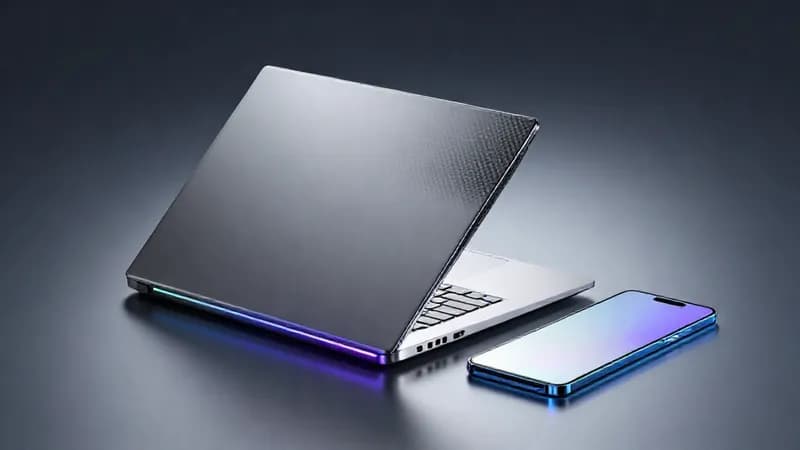
Google's confirmed product slate for I/O 2026 also includes Googlebook, a new premium laptop line positioning Gemini Intelligence as the native intelligence layer for an AI PC. Googlebook devices will be manufactured by Acer, ASUS, and Dell alongside a Google-designed first-party unit, all featuring a signature "Glowbar" LED keyboard indicator and deep Gemini integration.
Android XR glasses are also on the confirmed list — Google's first consumer-facing AR hardware in years, developed with partners including Warby Parker and Gentle Monster, designed to appear as conventional eyewear while delivering Gemini-powered contextual overlays.
Android 17 will receive a developer preview at the event, including new advanced protection features enabled by default on all Android 17 devices.
Usability Analysis
Gemini Intelligence is the most practically significant announcement for existing Android users. The five lead features span a wide range of daily use cases — from grocery shopping automation to voice-to-text cleanup to custom home screen widgets — and are delivered as upgrades to the existing Android experience rather than requiring separate app downloads.
The generative UI capability (Create My Widget) is particularly notable for its interface design implications. If home screen widgets can be described in natural language and generated on demand, it changes how users think about personalizing their devices and could significantly increase Gemini's daily active usage among users who never actively open the assistant app.
For developers, the model announcements will determine whether Google I/O 2026 produces API-level capability upgrades worth adapting to. Gemini 3.5 Flash in particular — if confirmed — would represent a strong option for latency-sensitive applications on mobile where Gemini 3.1 Pro may be overkill.
Pros
- Gemini Intelligence brings genuinely agentic AI to mainstream Android users on Pixel and Galaxy hardware this summer
- Generative UI (Create My Widget) introduces a new paradigm for phone personalization without requiring user-side technical knowledge
- Googlebook signals Google's commitment to AI-native hardware across form factors
- Gemini Omni (if confirmed) would be the most capable unified multimodal generation model available to consumers
- EEA and global users benefit equally from Gemini Intelligence as it ships on-device
Cons
- Initial Gemini Intelligence rollout is limited to Pixel 10 and Galaxy S26; the majority of Android users will wait for broader availability later in 2026
- The new frontier Gemini model is expected to match GPT-5.5 rather than exceed it, meaning Google would still trail Anthropic's Mythos in raw benchmark performance
- Hardware features like Android XR glasses remain preview-stage products with limited availability and no confirmed mass-market pricing
- Gemini Omni remains unconfirmed until the keynote; any shortfall from leaked expectations would be interpreted as a disappointment
Outlook
Google I/O 2026 is less about a single breakout model and more about Google's strategy to make Gemini the invisible operating layer across every product category it touches — phones, laptops, browsers, cars, watches, and glasses. The breadth of the confirmed product slate is unprecedented for a single Google developer event.
The competitive context matters. Anthropic's Code with Claude conference runs simultaneously in London on May 19, and Apple's WWDC 2026 is expected later in June with its own AI announcements. Google is launching into a dense competitive window, and the success of Gemini Intelligence on Android will depend on whether the five lead features perform reliably at launch or arrive as polished beta experiences.
For the AI industry, the more consequential question is whether Gemini Omni materializes. A unified text-image-video pipeline from one of the three largest AI labs would raise the bar for what competitors need to offer in multimodal generation.
Conclusion
Google I/O 2026 is shaping up as a platform strategy event rather than a pure model launch. Gemini Intelligence for Android is already confirmed and represents the most significant integration of AI into the Android operating experience to date. The additional expected announcements — new Gemini model tiers, Gemini Omni video, Googlebook, Android XR — collectively signal that Google is treating Gemini as infrastructure, not a product. For Android users, developers, and anyone tracking the multimodal AI landscape, May 19 is worth watching closely.
Editor's Verdict
Google I/O 2026 Keynote Preview: Gemini Intelligence, Omni Video, and the AI-First Android Era earns a solid recommendation within the gemini space.
The strongest case for paying attention is gemini Intelligence brings agentic AI to mainstream Android with five distinct, practical features, which raises the bar for what readers should now expect from peers in this space. Reinforcing that, generative home screen widgets (Create My Widget) are a compelling new interaction paradigm adds practical value rather than just headline appeal. The broader signal worth registering is straightforward: gemini Intelligence's generative UI widget creation is the most novel feature — enabling home screen personalization through natural language for the first time. On the other side of the ledger, gemini Intelligence hardware rollout limited to two device lines at launch, excluding most Android users until late 2026 is a real constraint, not a marketing footnote, and it should factor into any serious decision. Layered on top of that, expected frontier model is projected to match GPT-5.5 rather than set a new benchmark record narrows the set of teams for whom this is an obvious yes.
For Google Cloud and Workspace integrators, multimodal-first teams, and Gemini API adopters, this is a serious evaluation candidate, not just a curiosity to bookmark. For everyone else, the safer posture is to monitor coverage and revisit once the use cases that matter to your team are demonstrated in the wild.
Pros
- Gemini Intelligence brings agentic AI to mainstream Android with five distinct, practical features
- Generative home screen widgets (Create My Widget) are a compelling new interaction paradigm
- Googlebook expands Gemini's reach to the premium laptop segment alongside phone and wearables
- Gemini Omni (if confirmed) would give Google the most capable multimodal generation pipeline available to consumers
Cons
- Gemini Intelligence hardware rollout limited to two device lines at launch, excluding most Android users until late 2026
- Expected frontier model is projected to match GPT-5.5 rather than set a new benchmark record
- Android XR glasses are preview-stage hardware with no confirmed consumer pricing or mass-market availability
- Gemini Omni remains unconfirmed until the keynote — leaked expectations carry disappointment risk
References
Comments0
Key Features
1. Gemini Intelligence confirmed for Android: app automation, Magic Cue, Rambler voice cleanup, intelligent autofill, and generative home screen widgets 2. New Gemini model tier (Gemini 3.5 Pro/Flash) expected with improved coding and reasoning capabilities 3. Gemini Omni unified video model anticipated: text, image, and video generation in a single pipeline 4. Googlebook AI-native laptop line confirmed with Acer, ASUS, Dell partnerships 5. Android XR glasses confirmed with Warby Parker and Gentle Monster as hardware partners 6. Android 17 developer preview with default-on advanced protection features
Key Insights
- Gemini Intelligence's generative UI widget creation is the most novel feature — enabling home screen personalization through natural language for the first time
- Initial hardware limitation to Pixel 10 and Galaxy S26 will restrict Gemini Intelligence reach until broader Android rollout later in 2026
- The expected frontier model landing at GPT-5.5 parity means Google would still trail Anthropic's Mythos tier, a notable gap given the competitive pressure
- Gemini Omni's potential unification of text, image, and video in one pipeline would be a first among top-tier consumer AI models
- Running simultaneous developer conferences with Anthropic (Code with Claude London, also May 19) highlights how dense the AI competitive calendar has become in 2026
- Google's Googlebook laptop positions Gemini Intelligence as a cross-form-factor OS layer, not just a phone feature
Was this review helpful?
Share
Related AI Reviews

Gemini 4 Argon: Frontier Model Opens to Cyber Defenders
Google announced Gemini 4 Argon on Sept 30, giving trusted cyber defenders first access. Price is $2/$10 per 1M tokens; broad release has no date.

Gemini 'Call for Me' Lets AI Phone Businesses for You
Google's Gemini can now call businesses on your behalf to book or check on things, launching on Pixel 11 for US paid subscribers.
Googlebook Pre-Orders Open at $899 for Gemini Laptops
Google's Googlebook laptops start at $899 with Gemini features like Magic Pointer and Rambler; TechCrunch doubts they justify new hardware.

Gemini 3.8 Live and Extended Thinking Split Voice AI in Two
Google splits real-time voice AI into two tiers: Gemini 3.8 Live for scale, Extended Thinking for complex reasoning - both share one price table.