
Google Gemini's 6-Hour Global Outage: Error 1076, 1099, and What Broke for 400M Users
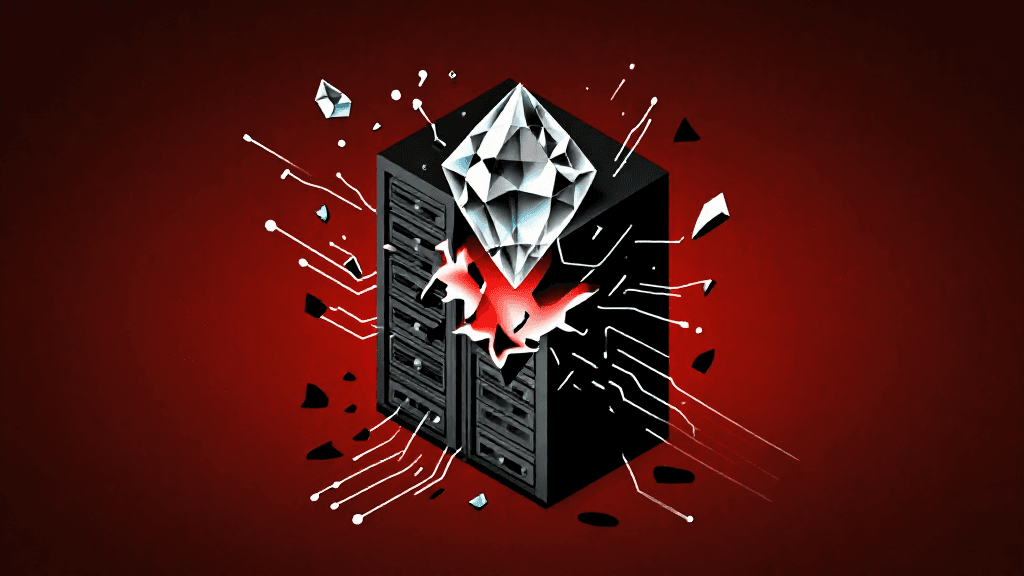
Google Gemini suffered its largest outage on June 10, 2026, disrupting Flash and Pro models for over 6 hours across the US, UK, and Asia with server-side session conflict errors — while Flash Lite remained partially functional.
Google Gemini suffered its largest outage on June 10, 2026, disrupting Flash and Pro models for over 6 hours across the US, UK, and Asia with server-side session conflict errors — while Flash Lite remained partially functional.
Gemini Goes Down: The Biggest Outage in the Platform's History
At 3:26 a.m. PT on Wednesday, June 10, 2026, Google's Gemini AI platform began failing for users across North America, Europe, and Asia. By 6:26 a.m. ET — peak work hours on the US East Coast — over 1,200 reports had accumulated on DownDetector, and users across the web, mobile apps, and Gemini embedded in Chrome were receiving two repeating error codes: error 1076 and error 1099. Neither free nor paid accounts were spared.
The disruption lasted more than six hours before Google declared substantial remediation at approximately 2:30 p.m. PT. Full recovery to normal service was not confirmed until 10:30 a.m. PDT for the majority of users, making this the longest and most geographically broad outage the platform has experienced since its public launch.
The timing was particularly damaging: Gemini had just passed 400 million monthly active users as Google's flagship consumer and enterprise AI product, and the outage stranded students mid-assignment, developers mid-debug, and Workspace businesses that had embedded Gemini into daily workflows.
Feature Overview: What Failed and Why
1. The Two Error Codes Explained
Error 1099: Server-Side Session Conflict
Error 1099, the more prevalent of the two error codes, is classified as a server-side session conflict or context overflow occurring on Google's backend. The error is not caused by the user's device, network, or browser — it originates in Gemini's session management infrastructure. The specific failure mode involves what engineers describe as a "context overflow" in the "Analysis" phase of prompt processing, where the backend exceeds capacity while managing concurrent active sessions.
The technical implication is that Gemini's session handling layer — which maintains state across a multi-turn conversation — failed under load. Each new user session that attempted to resume or initiate analysis-heavy processing triggered the overflow, cascading into refusals across the platform.
Error 1076: Handshake and Connection Timeout
Error 1076 is a different failure mode: a handshake or connection timeout during the initial request phase. When a prompt fails to establish a secure connection to Gemini's backend in time, this code is returned. Notably, users discovered that immediately resubmitting the same prompt after a 1076 error often succeeded — because the connection pathway established by the first (failed) attempt persisted briefly, reducing the handshake latency for the retry.
2. Which Models Were Affected
The outage did not hit all Gemini models equally. Gemini Flash and Gemini Pro were the hardest hit, experiencing near-complete unavailability for extended periods. Gemini Flash Lite, the lightest model in the family, remained partially functional throughout — answering some prompts intermittently even at the outage's peak.
This tiering pattern is analytically significant. The lighter model staying responsive while the heavier serving stack failed suggests the root problem was in specific backend capacity or processing paths associated with larger model inference, not a total platform collapse at the network or authentication layer. The issue appears to have been isolated to the inference infrastructure serving the full Flash and Pro model tiers.
3. Google's Engineering Response
Google's engineering team applied mitigations to reduce the scope of impact during the outage. An official status update confirmed that the majority of users were no longer experiencing impact as of approximately 10:30 a.m. PDT on June 10. Full resolution was confirmed in the early afternoon, with Google stating the root cause investigation was ongoing.
Google did not immediately publish a public post-mortem, which is consistent with its historical practice for major service outages — post-incident reviews typically appear within one to two weeks for Workspace-tier disruptions.
4. Enterprise and Educational Impact
The scale of disruption is directly tied to how deeply Gemini has been embedded in productive workflows. Google Workspace for Education integrations meant students working on AI-assisted assignments lost access mid-session. Enterprise Workspace customers running Gemini-powered summaries, drafts, and data analysis workflows saw automated pipelines fail silently or surface errors to end users.
Developers using the Gemini API for production applications reported cascading failures in services that depend on Gemini for real-time processing. API error rates spiked across the Gemini API and Google AI Studio during the same window, indicating the failure extended beyond the consumer product to the developer platform layer.
Usability Analysis
For enterprises and developers, the June 10 outage surfaces a reliability question that had been largely hypothetical until now: what is the acceptable SLA for an AI model that has become load-bearing infrastructure? Google's consumer products have historically operated at "five nines" (99.999%) uptime. A six-hour outage represents a failure significantly outside that range.
The differential recovery between model tiers — Flash Lite functional, Flash and Pro down — suggests an architectural dependency that could be partially mitigated by tiered fallback design in enterprise deployments. Applications that can automatically route to a lighter model on failure detection would have maintained partial functionality during this event.
For individual users without enterprise fallback options, the outage underscores the risk of single-provider dependence for AI-enabled workflows. The simultaneous availability of Claude (Anthropic), ChatGPT (OpenAI), and Copilot (Microsoft) during the June 10 window meant that most tasks could be completed through alternative platforms — but only for users with active subscriptions to multiple services.
Pros and Cons
Positive dimensions to note:
- Google's engineering team provided timely status updates and applied mitigations within the outage window
- Gemini Flash Lite's continued partial availability demonstrates some architectural resilience at the lighter model tier
- The outage did not affect Google Search AI Mode or other Google AI products built on different serving infrastructure
Negative dimensions:
- Six-plus hours of near-total unavailability for Flash and Pro — unacceptable for enterprise SLA standards
- No explanation of root cause to users during the outage window beyond generic status page updates
- 1,200+ DownDetector reports and global impact across US, UK, and Asia suggests insufficient capacity headroom for peak demand
- The coincidence with Gemini's 400 million MAU milestone highlights the platform's growing load without proportional reliability validation
Outlook
The June 10, 2026 outage will likely accelerate two trends already in motion. First, enterprise customers will push harder for Gemini-specific SLA commitments and contractual uptime guarantees in Workspace Enterprise contracts — a lever Google has historically been reluctant to pull tightly for AI services. Second, the tiered model failure pattern will likely prompt internal architectural reviews around session management and context handling at scale, particularly as Gemini 3.5 Pro (with its 2M-token context window) enters production use and places even higher demands on the session state infrastructure.
For the broader AI industry, the outage is a data point in the ongoing reliability maturation curve of large-scale AI services. As AI moves from experimental to production-critical, the engineering requirements begin to resemble those of legacy financial and telecom infrastructure — where six-sigma reliability is the baseline expectation, not an aspiration.
Conclusion
Google Gemini's June 10, 2026 outage was the platform's most significant reliability event to date: more than six hours of disruption for Flash and Pro models, affecting 400 million monthly active users globally, traced to server-side session conflict and context overflow errors. The incident passed without lasting damage to the service — Gemini was fully restored by early afternoon — but it raises legitimate questions about SLA commitments for enterprises using Gemini as production infrastructure, and about the architectural headroom available as the platform continues to scale.
Editor's Verdict
Google Gemini's 6-Hour Global Outage: Error 1076, 1099, and What Broke for 400M Users is a workable proposition that fills a clear gap, even if it doesn't fundamentally change the landscape.
The strongest case for paying attention is google engineering applied mitigations within the outage window and provided status updates throughout, which raises the bar for what readers should now expect from peers in this space. Reinforcing that, gemini Flash Lite's partial availability demonstrates some architectural isolation between model tiers adds practical value rather than just headline appeal. The broader signal worth registering is straightforward: the tiered failure pattern — Flash Lite functional, Flash and Pro down — points to the failure in specific large-model serving paths rather than a platform-wide collapse. On the other side of the ledger, six-plus hours of near-total unavailability for Flash and Pro — below enterprise SLA standards for production infrastructure is a real constraint, not a marketing footnote, and it should factor into any serious decision. Layered on top of that, no real-time root cause explanation during the outage left users and developers without actionable information narrows the set of teams for whom this is an obvious yes.
For Google Cloud and Workspace integrators, multimodal-first teams, and Gemini API adopters, the smart move is to track its trajectory and revisit once the rough edges are filed down. For everyone else, the safer posture is to monitor coverage and revisit once the use cases that matter to your team are demonstrated in the wild.
Pros
- Google engineering applied mitigations within the outage window and provided status updates throughout
- Gemini Flash Lite's partial availability demonstrates some architectural isolation between model tiers
- Gemini-based features in Search and other separate serving paths were unaffected, showing component-level isolation for some products
Cons
- Six-plus hours of near-total unavailability for Flash and Pro — below enterprise SLA standards for production infrastructure
- No real-time root cause explanation during the outage left users and developers without actionable information
- Error 1099 context overflow suggests session management does not scale gracefully at peak concurrent user loads
- Global scope across US, UK, and Asia simultaneously indicates centralized session handling without sufficient regional fallback
References
Comments0
Key Features
1. 6+ hour outage beginning 3:26 a.m. PT on June 10, 2026 — Gemini Flash and Pro near-unavailable globally 2. Error 1099: server-side session conflict/context overflow on Google's backend during the Analysis processing phase 3. Error 1076: handshake/connection timeout; immediate retries often succeeded due to persistent connection pathways 4. Gemini Flash Lite remained partially functional — lighter model tier showed architectural resilience under load 5. 1,200+ DownDetector reports; affected US, UK, and Asia simultaneously; Gemini API and Google AI Studio also impacted
Key Insights
- The tiered failure pattern — Flash Lite functional, Flash and Pro down — points to the failure in specific large-model serving paths rather than a platform-wide collapse
- At 400 million monthly active users, a 6-hour outage represents Gemini's first significant reliability test as load-bearing enterprise infrastructure
- Error 1099's context overflow root cause suggests the session state management layer has insufficient headroom for concurrent peak demand across millions of users
- Immediate retry success after 1076 errors indicates persistent connection pathways exist briefly post-failure — a useful workaround for developer-side retry logic
- The absence of a real-time technical explanation during the outage window signals that Google's incident communication for AI services lags behind its search and cloud infrastructure standards
- Enterprises without tiered AI fallback design (routing to lighter models on failure) lost full functionality; multi-provider subscriptions proved their value during this event
- Gemini 3.5 Pro's 2M-token context window will place higher session state demands on the same infrastructure layer that failed on June 10
Was this review helpful?
Share
Related AI Reviews
Google Play Adds Private Vibe-Coded Apps From AI Studio
Google Play now lets users 18+ in select markets run private personal apps built in Google AI Studio, using only a standard Google account.

Google Playground Launches: Build Games From Text Prompts
Google's experimental Playground lets U.S. adults (18+) build and share games from text prompts. WIRED found it fun but samey.
Gemini Agent: Google Cloud's Universal Work Agent
Google Cloud unveiled the Gemini agent at Gemini at Work 2026: one agent for knowledge work and code, in enterprise private preview per The Verge.

SynthID Detector Opens to Everyone with Partner Support
Google opened SynthID Detector on SynthID.com on Oct 7, checking images, video and audio, with partners including OpenAI, NVIDIA and Kakao.