
Gemini Robotics 2: Whole-Body Control for Humanoids
Google DeepMind's Gemini Robotics 2 ships three models enabling whole-body humanoid control, five-finger dexterity, and multi-robot teamwork.
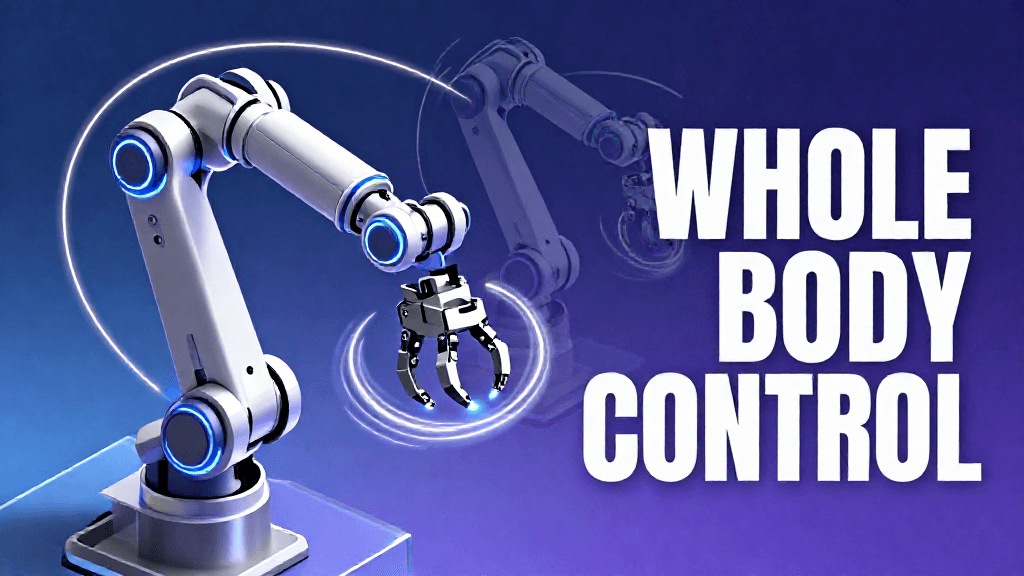
Google DeepMind's Gemini Robotics 2 ships three models enabling whole-body humanoid control, five-finger dexterity, and multi-robot teamwork.
Introduction
Google DeepMind announced Gemini Robotics 2 on July 30, 2026, describing it as the intelligence layer for its next generation of robots. The release moves the company's robotics stack beyond tabletop manipulation, the primary focus of earlier Gemini Robotics releases, into whole-body control, five-finger dexterity, and coordination between multiple robots working on the same task. Rather than a single model, Gemini Robotics 2 ships as three separate models designed to work together: a vision-language-action (VLA) model for physical control, an embodied-reasoning model for high-level planning, and an efficient on-device model for local execution without a network connection.
Feature Overview
Three Models, Three Roles
| Model | Role | Foundation |
|---|---|---|
| Gemini Robotics 2 (VLA) | Converts vision and language into motor control for humanoids and bi-arm robots | Purpose-built VLA |
| Gemini Robotics ER 2 | Embodied-reasoning planning brain; accepts interleaved text, image, video, audio | Built on Gemini 3.5 Flash |
| Gemini Robotics On-Device 2 | Efficient local execution with no network dependency | Built on Gemini Robotics 1.5 and Gemma |
Gemini Robotics ER 2 operates with a 128,000-token context window and can emit up to 64,000 tokens, allowing it to reason over long, multi-modal task histories before issuing instructions to the VLA layer. Gemini Robotics On-Device 2 takes text, images, and robot proprioception (the robot's own sense of its joint positions and movement) as numeric input and outputs robot actions directly as numeric values, without needing a live connection to the cloud.
Whole-Body Control and Cross-Embodiment
DeepMind demonstrated whole-body control on Apptronik's Apollo 2 humanoid, showing multi-step tasks such as placing a watering can into a green bin on a bottom shelf, tasks that require walking, grasping, and precise placement in sequence rather than manipulation from a fixed stance. DeepMind acknowledges in its own materials that the robots "have more to advance in movement speed," an explicit limitation rather than a claim of finished performance.
A notable architectural claim is cross-embodiment generalization: a single Gemini Robotics 2 model checkpoint operates across three distinct hardware configurations, Apollo 2 fitted with SharpaWave hands, Apollo 2 fitted with Inspire hands, and a Franka Duo arm fitted with a Robotiq gripper, without retraining a separate model per robot.
Multi-Robot Collaboration
The release also introduces coordination between different robot types. In a demonstration pairing Apptronik's Apollo 2 with a Franka F3 Duo arm, the two robots communicated through a shared semantic understanding of the task to hand off subtasks to each other, rather than each operating independently on its own portion of a job.
Usability Analysis
DeepMind published granular benchmark numbers alongside the release rather than a single aggregate score, which gives a more concrete picture of where the system is strong and where it isn't.
| Benchmark | Result |
|---|---|
| ER 2 progress classification (task-stage identification from video) | 57.4% accuracy |
| ER 2 moment finding | 91.3% accuracy, 0.96s mean absolute distance |
| Whole-body shelf pickup (Apollo 2 + Inspire hands) | 76.3% success |
| Whole-body table pickup (Apollo 2 + Inspire hands) | 68.4% success |
| Whole-body floor pickup (Apollo 2 + Inspire hands) | 45.7% success |
| Gripper precise insertion (Franka Duo) | 89.6% success |
| Gripper tool kitting (Franka Duo) | 78.9% success |
| Gripper general pick-and-place (Franka Duo) | 74.2% success |
Dexterity remains the system's weakest axis by DeepMind's own characterization, with task-level success rates ranging from 32% on dustpan handling up to 92% on unscrewing a light bulb. That spread illustrates that fine manipulation performance depends heavily on the specific task's geometry and grip requirements, rather than dexterity being uniformly reliable or uniformly weak.
On the reasoning side, DeepMind reports that ER 2 executes roughly 4 times faster than larger competing models while matching their accuracy on moment-finding, attributing part of the speed gain to the Gemini Live API's bidirectional streaming, which removes the "stop-and-think pauses that break multi-step execution" found in earlier designs.
Gemini Robotics On-Device 2 is built for scenarios without reliable connectivity and is designed to adapt to new bi-arm robot embodiments quickly, typically within a few hours using fewer than 200 examples. DeepMind's own test on the previously unseen SO101 platform showed performance rising from 6.7% success with On-Device 1 to 53.3% with On-Device 2, a concrete measure of how much the on-device model's few-shot adaptation improved between generations.
Access
Availability is tiered and, for most developers, limited. Gemini Robotics ER 2 is in public preview through the Gemini API and Google AI Studio under the model string gemini-robotics-er-2-preview, and in private preview on the Gemini Enterprise Agent Platform. The core VLA model is restricted to early-access partners. Gemini Robotics On-Device 2 is limited to participants in Google's Trusted Testers program. Sample code is published in DeepMind's robotics-samples GitHub repository. Hardware partners named alongside the release include Apptronik, Franka, Boston Dynamics (Spot), Dexmate, SO101, and Trossen.
Pros and Cons
Pros
- A single Gemini Robotics 2 checkpoint generalizes across three distinct hardware configurations, reducing the need to retrain a separate model per robot.
- Gemini Robotics ER 2's roughly 4x execution speed and bidirectional streaming remove stop-and-think pauses that previously interrupted multi-step task execution.
- On-Device 2's few-shot adaptation, fewer than 200 examples to reach usable performance on a new embodiment, is measurably better than its predecessor, as shown by the SO101 jump from 6.7% to 53.3%.
- Multi-robot task handoff between different robot types (Apollo 2 and Franka F3 Duo) demonstrates coordination beyond single-robot manipulation.
- DeepMind published granular, task-level benchmark numbers rather than a single marketing score, giving outside evaluators a transparent baseline.
Cons
- Dexterity success rates vary widely by task, from 32% to 92%, and DeepMind itself identifies dexterity as the system's weak axis.
- Whole-body manipulation accuracy drops as the target location gets lower, from 76.3% at shelf height down to 45.7% on the floor, indicating harder lower-workspace tasks are less reliable.
- Access to the core VLA model and On-Device 2 is restricted to early-access partners and Trusted Testers respectively, so most developers can only experiment with the ER 2 preview.
- DeepMind explicitly notes robot movement speed still needs improvement, an acknowledged gap for real-world deployment timelines.
Outlook
Gemini Robotics 2 represents an incremental but concrete step from tabletop-only manipulation toward whole-body, cross-embodiment robot control, with published numbers that make the current gaps, particularly in dexterity and floor-level manipulation, visible rather than obscured. The breadth of named hardware partners, spanning humanoids (Apptronik), industrial arms (Franka), and quadrupeds (Boston Dynamics Spot), suggests Google is positioning the Gemini Robotics line as a general-purpose intelligence layer that multiple robot manufacturers can adopt, rather than software tied to a single hardware platform.
The release also arrived the same week Google DeepMind reassigned staff from its AlphaFold team to Gemini-focused projects and Isomorphic Labs, an internal signal that the company is shifting research resources toward applied, product-facing AI work, including physical AI, alongside its longer-running scientific research efforts.
Conclusion
Gemini Robotics 2's three-model release, spanning a VLA for physical control, an embodied-reasoning planner, and an efficient on-device model, extends Google DeepMind's robotics stack from tabletop tasks into whole-body and multi-robot scenarios, backed by detailed, mixed benchmark results rather than a single success metric. The system is not yet uniformly dexterous or fast, and broad access remains limited to preview and partner programs for now. It is most relevant to robotics researchers and hardware partners already integrated with Google's ecosystem, and less immediately useful to independent developers who cannot yet access the VLA or On-Device 2 models outside of partner and Trusted Tester programs.
Editor's Verdict
Gemini Robotics 2: Whole-Body Control for Humanoids earns a solid recommendation within the gemini space.
The strongest case for paying attention is A single VLA checkpoint generalizes across three distinct hardware configurations, reducing the need to retrain a model per robot, which raises the bar for what readers should now expect from peers in this space. Reinforcing that, ER 2's roughly 4x execution speed and bidirectional streaming remove stop-and-think pauses in multi-step task execution adds practical value rather than just headline appeal. The broader signal worth registering is straightforward: A single Gemini Robotics 2 (VLA) checkpoint generalizes across three distinct hardware setups, Apollo 2 with SharpaWave hands, Apollo 2 with Inspire hands, and Franka Duo with a Robotiq gripper, without per-robot retraining. On the other side of the ledger, dexterity success rates vary widely by task (32% to 92%), and DeepMind itself calls dexterity the system's weak axis is a real constraint, not a marketing footnote, and it should factor into any serious decision. Layered on top of that, whole-body manipulation accuracy falls sharply for lower-workspace tasks, from 76.3% at shelf height to 45.7% on the floor narrows the set of teams for whom this is an obvious yes.
For Google Cloud and Workspace integrators, multimodal-first teams, and Gemini API adopters, this is a serious evaluation candidate, not just a curiosity to bookmark. For everyone else, the safer posture is to monitor coverage and revisit once the use cases that matter to your team are demonstrated in the wild.
Pros
- A single VLA checkpoint generalizes across three distinct hardware configurations, reducing the need to retrain a model per robot.
- ER 2's roughly 4x execution speed and bidirectional streaming remove stop-and-think pauses in multi-step task execution.
- On-Device 2's few-shot adaptation (fewer than 200 examples) meaningfully improved over its predecessor, shown by the SO101 jump from 6.7% to 53.3%.
- Multi-robot task handoff between different robot types demonstrates coordination beyond single-robot manipulation.
- DeepMind published granular, task-level benchmark numbers rather than a single aggregate score, giving a transparent evaluation baseline.
Cons
- Dexterity success rates vary widely by task (32% to 92%), and DeepMind itself calls dexterity the system's weak axis.
- Whole-body manipulation accuracy falls sharply for lower-workspace tasks, from 76.3% at shelf height to 45.7% on the floor.
- Access to the core VLA model and On-Device 2 is restricted to early-access partners and Trusted Testers, limiting most developers to the ER 2 preview only.
- DeepMind explicitly notes robot movement speed still needs to improve, an acknowledged gap for real-world deployment.
References
Comments0
Key Features
1. Three-model release: Gemini Robotics 2 (VLA), Gemini Robotics ER 2 (built on Gemini 3.5 Flash, 128k context window, up to 64k output tokens), Gemini Robotics On-Device 2 (built on Gemini Robotics 1.5 and Gemma) 2. Whole-body control demoed on Apptronik Apollo 2, combining walking, grasping, and precise placement in multi-step tasks 3. Cross-embodiment generalization: one VLA checkpoint operates across Apollo 2 (SharpaWave hands), Apollo 2 (Inspire hands), and Franka Duo (Robotiq gripper) 4. Multi-robot collaboration demoed pairing Apollo 2 with Franka F3 Duo via shared semantic task understanding 5. ER 2 benchmarks: 57.4% progress-classification accuracy, 91.3% moment-finding accuracy at 0.96s mean absolute distance, roughly 4x the execution speed of larger competing models 6. On-Device 2 adapts to new bi-arm embodiments in a few hours with fewer than 200 examples; SO101 platform success rose from 6.7% to 53.3% 7. Availability: ER 2 in public preview (Gemini API/AI Studio, model string gemini-robotics-er-2-preview); VLA and On-Device 2 restricted to early-access partners and Trusted Testers respectively
Key Insights
- A single Gemini Robotics 2 (VLA) checkpoint generalizes across three distinct hardware setups, Apollo 2 with SharpaWave hands, Apollo 2 with Inspire hands, and Franka Duo with a Robotiq gripper, without per-robot retraining.
- Dexterity success rates range from 32% on dustpan handling to 92% on unscrewing a light bulb, and DeepMind identifies dexterity as the system's weakest axis.
- Whole-body manipulation accuracy drops with target height: 76.3% for shelf pickup, 68.4% for table pickup, and 45.7% for floor pickup on Apollo 2 with Inspire hands.
- Gemini Robotics ER 2, built on Gemini 3.5 Flash, runs with a 128,000-token context window and can emit up to 64,000 tokens, and executes roughly 4x faster than larger competing models while matching their moment-finding accuracy.
- Gemini Robotics On-Device 2 adapts to unseen bi-arm embodiments with fewer than 200 examples in a few hours; on the previously unseen SO101 platform, success rose from 6.7% under On-Device 1 to 53.3%.
- Multi-robot collaboration was demonstrated by pairing Apptronik's Apollo 2 with a Franka F3 Duo arm, which coordinated subtask handoffs through shared semantic task understanding.
- Broad access remains limited: only ER 2 is in public preview (Gemini API and AI Studio); the core VLA model is early-access-partner only, and On-Device 2 is limited to Google's Trusted Testers program.
- The release coincided with Google DeepMind reassigning AlphaFold team staff to Gemini-focused projects and Isomorphic Labs, signaling an internal shift toward applied physical AI work.
Was this review helpful?
Share
Related AI Reviews

Gemini App Comes to Windows with Alt + Space Overlay
Google's Gemini app is now on Windows, summoned with Alt + Space over your active work - but macOS still holds native features Windows lacks.

Gemini 3.8 Flash and Cyber: Faster Reasoning, Gated Security
Google's Gemini 3.8 Flash boosts coding and reasoning at 3.7 Flash's price; Gemini 3.8 Flash Cyber hunts vulnerabilities via a gated program.
Gemini Adds Optional Toggle to Remove AI Visible Watermarks
Google now lets users toggle off visible watermarks on Gemini-made media, while invisible SynthID and C2PA metadata remain embedded regardless.
Gemini 3.7 Flash: Google's New Coding, Agent Workhorse
Google's Gemini 3.7 Flash arrives just three weeks after 3.6 Flash, with stronger coding and agentic benchmarks at half its predecessor's price.