
Cohere Tiny Aya: A 3.35B Model That Speaks 70+ Languages Without the Cloud
Cohere launches Tiny Aya, an open-weight family of 3.35B parameter multilingual models with regional variants covering 70+ languages, designed to run on laptops without internet connectivity.
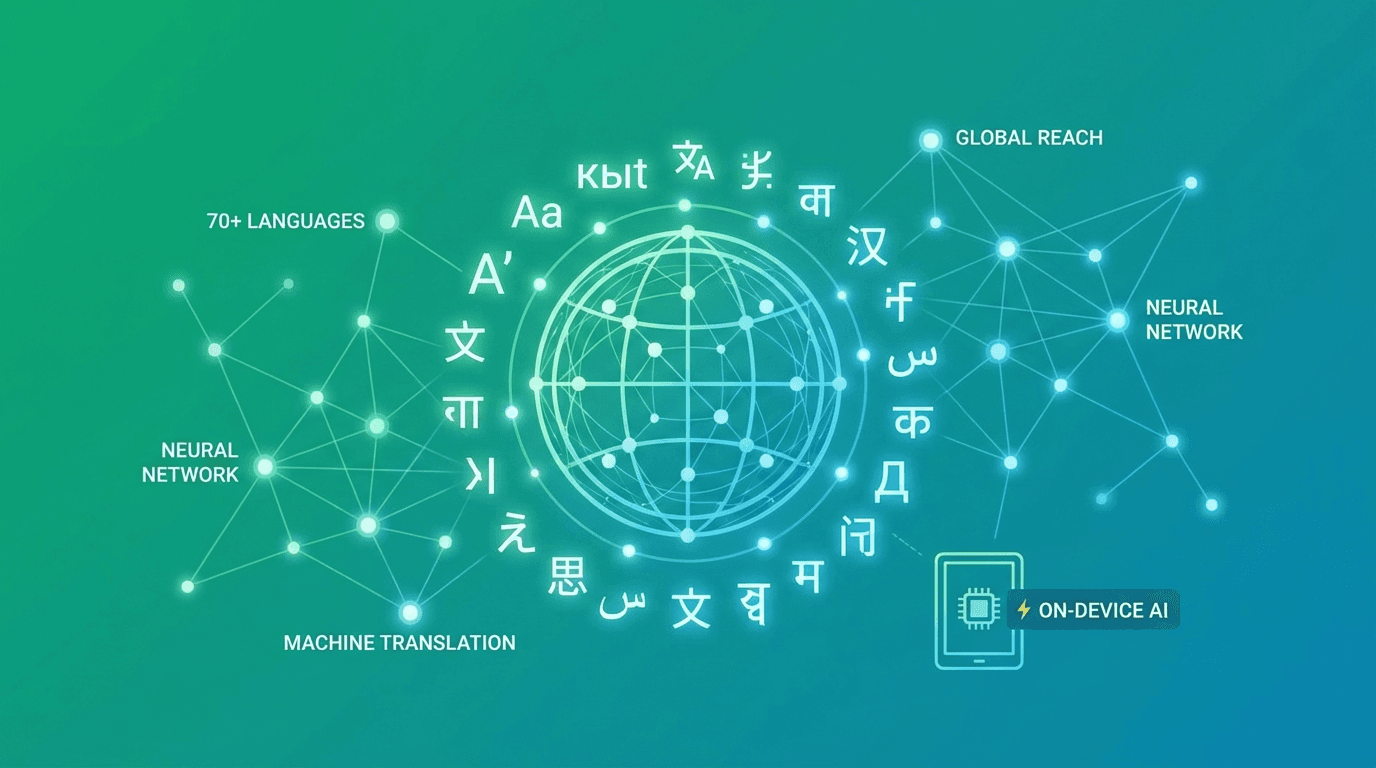
Cohere launches Tiny Aya, an open-weight family of 3.35B parameter multilingual models with regional variants covering 70+ languages, designed to run on laptops without internet connectivity.
Cohere Bets on Small, Multilingual, and Offline
On February 17, 2026, Cohere launched Tiny Aya, a family of open-weight multilingual language models that support over 70 languages and are small enough to run on everyday laptops without internet connectivity. Announced at the India AI Impact Summit in New Delhi, the release represents a fundamentally different approach to the AI arms race: instead of chasing ever-larger parameter counts, Cohere is optimizing for breadth of language coverage and accessibility on resource-constrained devices.
The base model contains 3.35 billion parameters, trained on a single cluster of 64 NVIDIA H100 GPUs. By the standards of frontier AI development, this is a modest investment. The ambition, however, is anything but modest. Tiny Aya is designed to bring capable AI to the billions of people who speak languages that large commercial models barely support, in regions where reliable internet access cannot be assumed.
The Regional Variant Strategy
What distinguishes Tiny Aya from other small language models is its regional variant architecture. Rather than releasing a single one-size-fits-all model, Cohere's research division, Cohere Labs, developed four specialized variants:
| Variant | Focus Region | Key Languages |
|---|---|---|
| TinyAya-Global | Worldwide | Broad multilingual coverage |
| TinyAya-Earth | Africa | African language families |
| TinyAya-Fire | South Asia | Hindi, Bengali, Tamil, Telugu, Punjabi, Urdu, Gujarati, Marathi |
| TinyAya-Water | Asia Pacific & Europe | Regional languages across both continents |
This approach acknowledges a reality that the AI industry has largely ignored: multilingual capability is not just about supporting many languages in a single model. Different regions have different linguistic structures, scripts, and usage patterns. A model optimized for South Asian languages, with their complex morphology and diverse scripts, will perform differently than one tuned for African tonal languages or European inflected languages.
The elemental naming convention, Earth, Fire, and Water, reflects the geographic focus rather than any hierarchy of capability. Each variant is trained with additional data and optimization specific to its target language families.
Technical Specifications
At 3.35 billion parameters, Tiny Aya sits in the sweet spot for on-device deployment. The model is small enough to run on consumer hardware, including laptops with 8GB of RAM, while being large enough to deliver meaningful multilingual performance.
Key technical details:
- Parameters: 3.35 billion (base)
- Training Infrastructure: Single cluster of 64 NVIDIA H100 GPUs
- Language Coverage: 70+ languages across all variants
- Deployment Target: Laptops, mobile devices, and edge computing environments
- Connectivity Requirement: None (fully offline capable)
- License: Open weights, available for commercial use
The models are optimized for low-compute environments, meaning they are designed to run efficiently on hardware without dedicated GPUs. This is critical for the target use cases: a healthcare worker in rural India using a translation tool on a standard laptop, or an educator in sub-Saharan Africa running a language tutor without cloud access.
Why This Matters: The Offline AI Gap
The AI industry has overwhelmingly focused on cloud-based models accessed through APIs. This works well for users in regions with reliable high-speed internet, but it leaves out a significant portion of the global population. According to the International Telecommunication Union, approximately 2.6 billion people remain offline, and many more have intermittent or slow connectivity.
Tiny Aya addresses this gap directly. By running entirely on-device, it eliminates the dependency on cloud infrastructure. This has practical implications beyond connectivity:
- Privacy: Sensitive data never leaves the device
- Latency: No network round-trip means faster responses
- Cost: No API fees or data transfer charges
- Reliability: Works in environments with unreliable power or connectivity
For organizations deploying AI in healthcare, education, government services, or agriculture in developing regions, these properties are not optional features. They are requirements.
Competitive Landscape
Tiny Aya enters a growing field of small, efficient language models. Meta's Llama series includes smaller variants, Mistral has released compact models, and Google's Gemini Nano targets on-device deployment. However, none of these competitors match Tiny Aya's combination of multilingual breadth and regional specialization.
Most small models prioritize English performance with limited multilingual capability. Tiny Aya inverts this priority, making multilingual performance the primary optimization target. The regional variants take this further by allowing users to select a model specifically tuned for their linguistic context.
The closest competitor in terms of multilingual ambition is probably Alibaba's Qwen series, which supports over 200 languages. However, Qwen's multilingual models are significantly larger and require substantially more compute, making them impractical for offline deployment on consumer hardware.
Availability and Ecosystem
Tiny Aya models are available through multiple platforms:
- HuggingFace: Full model weights for download
- Kaggle: Alternative download and experimentation
- Ollama: Local deployment with simplified setup
- Cohere Platform: Hosted inference via API
The Ollama integration is particularly significant. Ollama has become the de facto standard for running language models locally, and Tiny Aya's availability there means any developer comfortable with Ollama can deploy multilingual AI in minutes.
Strategic Context: Cohere's Enterprise Play
Cohere has always positioned itself as an enterprise-focused AI company, competing with OpenAI and Anthropic on business deployments rather than consumer chatbots. Tiny Aya fits this strategy by addressing a specific enterprise need: deploying AI in environments where cloud access is impractical or where data sovereignty requirements mandate on-device processing.
The launch at the India AI Impact Summit is strategically deliberate. India, with its 22 officially recognized languages and hundreds of dialects, is both a massive potential market and a proving ground for multilingual AI. If Tiny Aya can deliver useful performance across Hindi, Bengali, Tamil, Telugu, and other major Indian languages on standard hardware, it validates the approach for similar multilingual markets across Asia, Africa, and beyond.
Limitations and Open Questions
Tiny Aya's 3.35 billion parameters inevitably mean tradeoffs. The model will not match the reasoning depth, factual knowledge, or generation quality of larger models like GPT-5.2 or Claude Opus 4.5. For complex analytical tasks, creative writing, or advanced coding, users will still need larger models with cloud access.
Cohere has not published detailed benchmark comparisons against other small multilingual models, which makes independent evaluation difficult at launch. The company's claim of supporting 70+ languages also needs scrutiny: supporting a language and performing well in that language are different things, and performance across the tail of the language distribution will vary significantly.
Conclusion
Cohere Tiny Aya is a strategically important release that challenges the assumption that bigger models are always better. By focusing on multilingual breadth, regional specialization, and on-device deployment, it addresses a genuine gap in the AI landscape. The 3.35 billion parameter models will not replace frontier models for demanding tasks, but they bring capable AI to contexts and communities that the cloud-first approach has systematically underserved. For organizations working in multilingual, low-connectivity environments, Tiny Aya is the most practical option available today.
Editor's Verdict
Cohere Tiny Aya: A 3.35B Model That Speaks 70+ Languages Without the Cloud earns a solid recommendation within the other llm space.
The strongest case for paying attention is runs on standard laptops without GPU or internet, making AI accessible in low-connectivity regions worldwide, which raises the bar for what readers should now expect from peers in this space. Reinforcing that, regional variants provide specialized optimization that outperforms generic multilingual approaches for target languages adds practical value rather than just headline appeal. The broader signal worth registering is straightforward: tiny Aya's 3.35B parameters support 70+ languages while running on consumer laptops without GPU or internet access. On the other side of the ledger, 3.35B parameters means significant quality tradeoffs compared to larger models on reasoning and complex tasks is a real constraint, not a marketing footnote, and it should factor into any serious decision. Layered on top of that, detailed benchmark comparisons against other small multilingual models were not published at launch narrows the set of teams for whom this is an obvious yes.
For multi-model deployment teams, cost-conscious operators, and developers willing to evaluate beyond the major labs, this is a serious evaluation candidate, not just a curiosity to bookmark. For everyone else, the safer posture is to monitor coverage and revisit once the use cases that matter to your team are demonstrated in the wild.
Pros
- Runs on standard laptops without GPU or internet, making AI accessible in low-connectivity regions worldwide
- Regional variants provide specialized optimization that outperforms generic multilingual approaches for target languages
- Open-weight availability on HuggingFace, Kaggle, and Ollama enables easy local deployment for developers
- Zero API costs and full data privacy make it practical for healthcare, education, and government deployments
- Addresses a genuine market gap: capable multilingual AI for the 2.6 billion people still offline globally
Cons
- 3.35B parameters means significant quality tradeoffs compared to larger models on reasoning and complex tasks
- Detailed benchmark comparisons against other small multilingual models were not published at launch
- Performance will vary significantly across the 70+ supported languages, with less-resourced languages likely weaker
- No vision or multimodal capabilities, limiting use cases compared to newer multimodal small models
References
Comments0
Key Features
Cohere Tiny Aya is a family of open-weight multilingual language models with 3.35 billion parameters, supporting 70+ languages across four regional variants: TinyAya-Global, TinyAya-Earth (Africa), TinyAya-Fire (South Asia), and TinyAya-Water (Asia Pacific and Europe). Trained on 64 NVIDIA H100 GPUs, the models run on standard laptops without internet connectivity and are available on HuggingFace, Kaggle, Ollama, and the Cohere Platform.
Key Insights
- Tiny Aya's 3.35B parameters support 70+ languages while running on consumer laptops without GPU or internet access
- Four regional variants (Global, Earth, Fire, Water) provide specialized optimization for African, South Asian, and Asia-Pacific language families
- The models were trained on a single cluster of 64 NVIDIA H100 GPUs, a modest investment by frontier AI standards
- Ollama integration enables developers to deploy multilingual AI locally in minutes with simplified setup
- Announced at the India AI Impact Summit, targeting India's 22 official languages as a key proving ground
- Open-weight licensing allows commercial use, distinguishing Tiny Aya from many competitor small models
- On-device deployment eliminates API costs, network latency, and data privacy concerns for sensitive applications
- The regional variant strategy addresses linguistic diversity more effectively than single multilingual models
Was this review helpful?
Share
Related AI Reviews

Meta Muse Wonder: 1M-Token Agent Model Arrives via API
Meta released Muse Wonder and Wonder Full on Oct 12: a 1M-context multimodal agent model, with Wonder on the Meta API and Full for Muse Code users.

Mistral Large 4 Preview: 1T MoE, Weights Due in October
Mistral Large 4 enters public preview as a ~1T-parameter multimodal MoE with 1M context. Weights are promised for October; scores are vendor-run.

Reflection Beam: 501B Open-Weight MoE, Weights Due Soon
Reflection previews Beam, a 501B MoE with 23B active parameters. Apache 2.0 weights are promised later this month; benchmarks are unverified.

Meta Muse Gadget SDK: Build Your Own ESP32 and Pi Devices
Meta open-sourced Apache 2.0 ESP32 and Linux SDKs for DIY Muse gadgets, with candid security caveats and a Home Link giveaway of 5,000 units.