
xAI Grok Build 0.1: Terminal-Native Coding Agent Enters Public Beta with Parallel Subagents
xAI released Grok Build 0.1 to public beta on May 28, 2026, a terminal-native coding model with 256K context, parallel subagents, plan mode, and $1/M token pricing to compete with Claude Code.
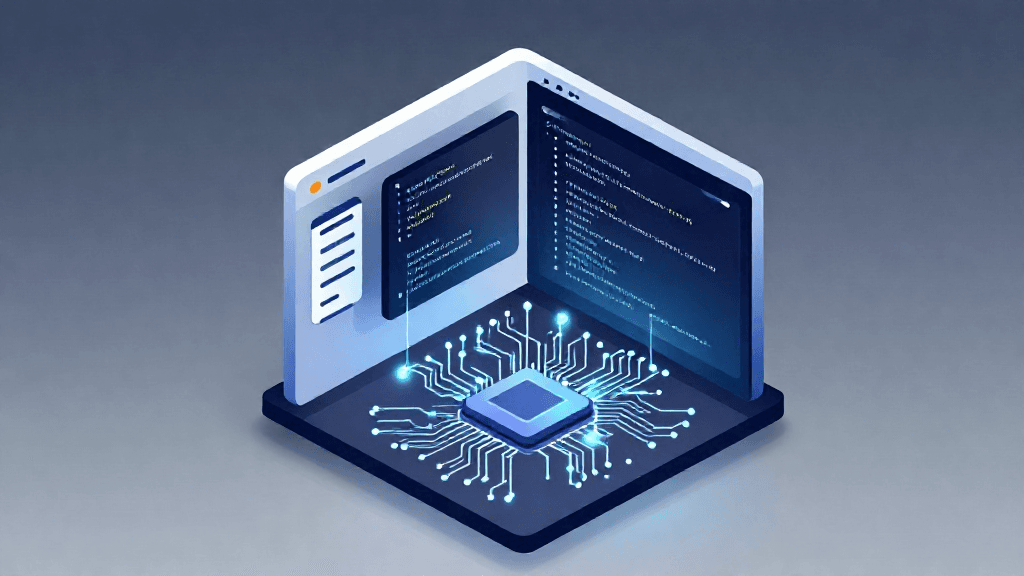
xAI released Grok Build 0.1 to public beta on May 28, 2026, a terminal-native coding model with 256K context, parallel subagents, plan mode, and $1/M token pricing to compete with Claude Code.
xAI Enters the Coding Agent Race
On May 28, 2026, xAI made Grok Build 0.1 available in public beta via the xAI API, opening broader access to a model that had previously been limited to SuperGrok and X Premium Plus subscribers. The release marks xAI's first purpose-built coding model, distinct from its general-purpose Grok 4.x family. Grok Build 0.1 is specifically designed for agentic software engineering workflows — multi-step tasks involving planning, tool use, codebase navigation, and autonomous execution — rather than conversational coding assistance.
The model was published on May 20, 2026, with early CLI access beginning May 25, 2026. The public API beta on May 28 extends availability to developers who want to integrate agentic coding capabilities into their own tools and pipelines.
Feature Overview
Agentic Architecture and Parallel Subagents
Grok Build 0.1 supports up to eight subagents that can work on separate branches of a codebase simultaneously. Each subagent operates in an isolated git worktree, meaning parallel edits do not conflict with or contaminate the main branch. This architecture directly addresses a key bottleneck in agentic coding: sequential task execution is slow when problems can be decomposed into independent workstreams.
Typical subagent delegation patterns include one agent conducting research, another implementing a feature, and a third running tests or review — all concurrently. The coordination layer is handled by the model itself, which plans the decomposition before dispatching subagents.
Plan Mode
Before executing any task flagged as potentially risky, Grok Build drafts a structured plan and presents it for user review. Users can comment on individual steps, request changes, or approve the plan via the /plan command. Changes are shown as clean diffs before any files are modified. This design mirrors Claude Code's permission model and reflects industry learning that autonomous agents need clear human oversight checkpoints for destructive or irreversible operations.
Headless CI Support
Grok Build supports fully non-interactive execution via the -p flag, enabling use in continuous integration pipelines and automated scripts. Output formats include plain text, JSON, and streaming JSON. The --always-approve flag is available for trusted environments where interactive approval is not needed. This headless mode positions Grok Build as a potential component in automated code review, migration, and refactoring pipelines.
Context Window and Input Modalities
Grok Build 0.1 carries a 256,000-token context window. This is sufficient to load and reason about large codebases — xAI notes that analyzing a 10,000-line codebase costs approximately $0.06 at current pricing. The model accepts both text and image inputs, enabling it to reason about diagrams, UI mockups, and error screenshots alongside code.
MCP and Plugin Support
The model is compatible with Model Context Protocol (MCP) servers, plugins, hooks, skills, and AGENTS.md configuration files. This interoperability allows Grok Build to connect to external tools, APIs, and data sources in the same manner as Claude Code and other MCP-compatible agents.
Usability Analysis
Grok Build 0.1's terminal-first design is its most distinctive characteristic relative to established coding agents. While tools like Cursor operate within an IDE sidebar, Grok Build runs as a native shell process. This makes it well-suited for server-side automation, CI/CD integration, and environments where a graphical IDE is impractical.
On the OpenClaw agentic benchmark, Grok Build 0.1 scored 88.9% (ranking sixth of 50 models evaluated), with category strengths in Log Analysis (97.0%), CSV Analysis (96.1%), and Writing tasks (95.8%). On Terminal Bench 2.0, the model achieved 50.6% completion. The SWE-bench Verified score reported for the underlying model (grok-code-fast-1) was 70.8% on xAI's internal harness — approximately 15 to 18 percentage points below Claude Opus 4.7 and GPT-5.5 on the most widely cited agentic coding benchmark.
Pricing is straightforward: $1.00 per million input tokens, $2.00 per million output tokens, and $0.20 per million cached input tokens. The speed is reported at over 100 tokens per second, which is competitive for interactive use cases.
Pros and Cons
Strengths:
- Parallel subagent support with isolated git worktrees enables concurrent multi-stream development without branch conflicts
- Terminal-native distribution with a single curl install makes deployment frictionless in server and CI/CD environments
- Plan mode with user review checkpoints provides meaningful oversight for risky autonomous operations
- Competitive pricing at $1/M input and $2/M output tokens, with cached input at $0.20/M
- MCP and AGENTS.md compatibility ensures interoperability with the existing AI coding agent ecosystem
- 256K context window supports reasoning over substantial codebases
Limitations:
- SWE-bench Verified score of 70.8% lags Claude Opus 4.7 and GPT-5.5 by 15–18 points on the most widely cited agentic coding benchmark
- Still in public beta (0.1 version number), meaning the API surface and behavior may change significantly
- Terminal-first design limits accessibility for developers who prefer IDE-embedded workflows
- No dedicated IDE extension at launch; integration with editors like VS Code requires manual configuration
Outlook
Grok Build 0.1 enters a market that already includes Claude Code, GPT-5.5 with Codex, and several emerging coding agents. Its differentiation rests on three factors: terminal-native distribution for server-side and CI/CD use cases, parallel subagent architecture, and aggressive pricing. The 0.1 version designation signals that xAI views this as an early iteration; the gap to Claude Opus 4.7 on SWE-bench suggests room for significant improvement in model capability.
For organizations building automated code review, refactoring pipelines, or agentic development toolchains, Grok Build's headless mode and MCP compatibility make it worth evaluation even at current benchmark levels. The cost advantage — analyzing a 10,000-line codebase for six cents — lowers the economic barrier for high-frequency automated coding tasks.
xAI's broader trajectory in the coding agent space will depend on how quickly subsequent versions close the benchmark gap while retaining the infrastructure advantages of the terminal-first approach.
Conclusion
Grok Build 0.1 is a credible first entry into the agentic coding model category. The combination of parallel subagents, plan mode oversight, headless CI support, and competitive pricing gives it a defensible niche in server-side and automation-heavy workflows. The benchmark gap relative to top-tier alternatives is real and should inform adoption decisions for performance-critical tasks. Developers looking for a terminal-native, MCP-compatible coding agent with affordable pricing and true parallel execution should evaluate Grok Build 0.1 in public beta. Teams requiring maximum SWE-bench performance should continue to weight Claude Code or GPT-5.5 Codex while monitoring Grok Build's trajectory through subsequent releases.
Editor's Verdict
xAI Grok Build 0.1: Terminal-Native Coding Agent Enters Public Beta with Parallel Subagents earns a solid recommendation within the other llm space.
The strongest case for paying attention is parallel subagent architecture with isolated git worktrees enables genuinely concurrent multi-stream development, which raises the bar for what readers should now expect from peers in this space. Reinforcing that, terminal-native distribution with headless CI support covers server-side and automation use cases underserved by IDE-embedded tools adds practical value rather than just headline appeal. The broader signal worth registering is straightforward: parallel subagent execution in isolated git worktrees directly addresses the speed bottleneck of sequential agentic task processing — a structural limitation of most first-generation coding agents. On the other side of the ledger, SWE-bench Verified score of 70.8% is 15–18 points below Claude Opus 4.7 and GPT-5.5 on the most widely cited agentic coding benchmark is a real constraint, not a marketing footnote, and it should factor into any serious decision. Layered on top of that, public beta (0.1) status means API surface stability is not guaranteed and breaking changes are possible narrows the set of teams for whom this is an obvious yes.
For multi-model deployment teams, cost-conscious operators, and developers willing to evaluate beyond the major labs, this is a serious evaluation candidate, not just a curiosity to bookmark. For everyone else, the safer posture is to monitor coverage and revisit once the use cases that matter to your team are demonstrated in the wild.
Pros
- Parallel subagent architecture with isolated git worktrees enables genuinely concurrent multi-stream development
- Terminal-native distribution with headless CI support covers server-side and automation use cases underserved by IDE-embedded tools
- Competitive pricing ($1/M in, $2/M out, $0.20/M cached) makes high-frequency automated coding tasks economically practical
- MCP and AGENTS.md compatibility maintains full ecosystem interoperability with Claude Code and other agentic tools
- Plan mode with diff preview provides meaningful human oversight checkpoints before irreversible operations
Cons
- SWE-bench Verified score of 70.8% is 15–18 points below Claude Opus 4.7 and GPT-5.5 on the most widely cited agentic coding benchmark
- Public beta (0.1) status means API surface stability is not guaranteed and breaking changes are possible
- Terminal-first design limits accessibility for IDE-embedded workflows without additional configuration
- No native IDE extension at launch; VS Code and JetBrains integration requires manual setup
References
Comments0
Key Features
1. Parallel subagents: up to eight subagents working concurrently on isolated git worktrees, enabling multi-stream development without branch conflicts 2. Plan mode: structured task planning with user review and diff preview before any risky or irreversible file modifications 3. Headless CI support: non-interactive execution via -p flag with plain, JSON, or streaming-JSON output for pipeline integration 4. 256,000-token context window: sufficient to load and reason over large codebases at approximately $0.06 per 10,000-line analysis 5. MCP and AGENTS.md compatibility: interoperability with Model Context Protocol servers, plugins, hooks, and skills for external tool integration
Key Insights
- Parallel subagent execution in isolated git worktrees directly addresses the speed bottleneck of sequential agentic task processing — a structural limitation of most first-generation coding agents
- The terminal-native, single-command install approach targets server-side and CI/CD environments where IDE-embedded tools are impractical
- Headless CI support with streaming-JSON output positions Grok Build as a component in automated code review and migration pipelines, not just interactive development
- The 70.8% SWE-bench Verified score creates a clear 15–18 point benchmark gap versus Claude Opus 4.7 and GPT-5.5, which is the primary performance risk for adoption in code-quality-sensitive applications
- Pricing at $1/M input and $2/M output is aggressive for a coding-specialized model, making high-frequency automated use economically viable
- MCP compatibility ensures Grok Build integrates with the same external tool ecosystem as Claude Code, lowering the switching cost for teams already using MCP-based tooling
- The 0.1 version designation signals early maturity — xAI's willingness to open beta access at this stage reflects a strategy of building developer familiarity before benchmark parity is achieved
Was this review helpful?
Share
Related AI Reviews

Meta Muse Wonder: 1M-Token Agent Model Arrives via API
Meta released Muse Wonder and Wonder Full on Oct 12: a 1M-context multimodal agent model, with Wonder on the Meta API and Full for Muse Code users.

Mistral Large 4 Preview: 1T MoE, Weights Due in October
Mistral Large 4 enters public preview as a ~1T-parameter multimodal MoE with 1M context. Weights are promised for October; scores are vendor-run.

Reflection Beam: 501B Open-Weight MoE, Weights Due Soon
Reflection previews Beam, a 501B MoE with 23B active parameters. Apache 2.0 weights are promised later this month; benchmarks are unverified.
Meta Muse Gadget SDK: Build Your Own ESP32 and Pi Devices
Meta open-sourced Apache 2.0 ESP32 and Linux SDKs for DIY Muse gadgets, with candid security caveats and a Home Link giveaway of 5,000 units.