
Anthropic's $19B TeraWulf Deal: Kentucky AI Data Center
Anthropic signed a 20-year, $19B lease with TeraWulf for a 401MW Kentucky AI data center campus, part of its aggressive compute buildout.
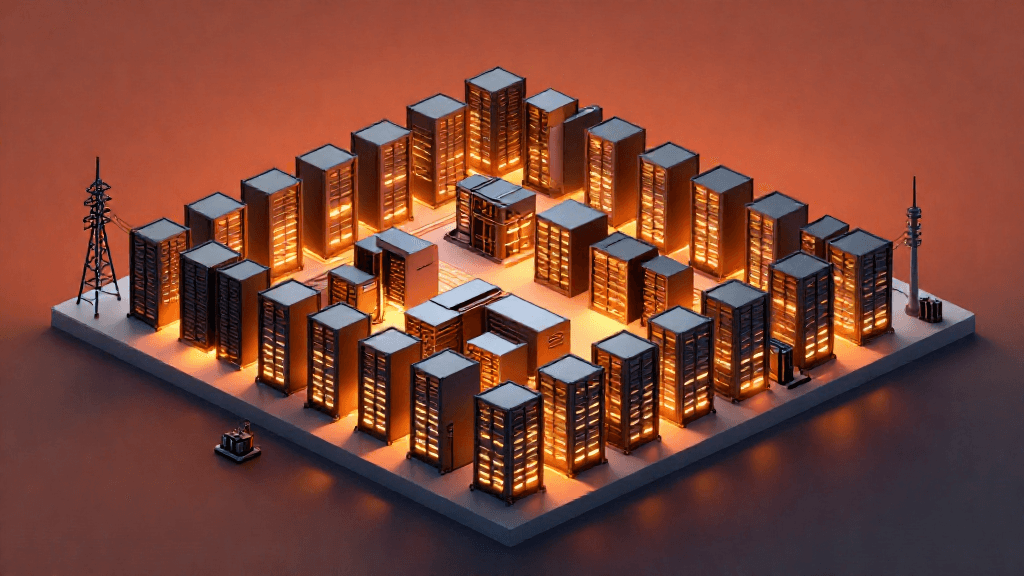
Anthropic signed a 20-year, $19B lease with TeraWulf for a 401MW Kentucky AI data center campus, part of its aggressive compute buildout.
Key Takeaways
Anthropic has signed a 20-year data center lease with TeraWulf, a company that began as a Bitcoin miner and has been repositioning itself as an AI infrastructure provider. The agreement, announced July 6, 2026, is expected to generate roughly $19 billion in contracted revenue for TeraWulf over its term. The lease covers a purpose-built AI campus at TeraWulf's Kentucky site, supporting approximately 401 megawatts of critical IT load, with initial capacity targeted for the second half of 2027 and full capacity by early 2028.
The deal is one of the largest single-site infrastructure commitments disclosed by an AI lab this year, and it arrives as Anthropic continues an aggressive push to lock in long-term compute capacity ahead of what press reports describe as preparations for a possible initial public offering.
The Deal at a Glance
The core terms of the agreement, as reported by SiliconANGLE, DataCenterDynamics, CoinDesk, and US News/AP, are summarized below.
| Term | Detail |
|---|---|
| Counterparty | TeraWulf (former Bitcoin miner, now AI infrastructure host) |
| Lease length | 20 years |
| Contracted value | Approximately $19 billion over the lease term |
| Site | TeraWulf's Kentucky data center campus |
| Capacity | Approximately 401 megawatts of critical IT load |
| TeraWulf capital investment | $3 billion to $4 billion of its own capital |
| Initial capacity online | Second half of 2027 |
| Full capacity | Early 2028 |
The structure is a lease rather than a joint venture or equity investment: Anthropic commits to paying for capacity over two decades, while TeraWulf takes on the responsibility, and much of the financial risk, of building the campus out.
From Bitcoin Rigs to AI Racks
TeraWulf's history as a Bitcoin miner is central to understanding this deal. Cryptocurrency mining operations require large amounts of cheap, reliable power and industrial-scale sites, the same core ingredients needed for AI training and inference infrastructure. As Bitcoin mining economics have become less attractive relative to AI hosting, a number of former miners have repositioned their power-dense real estate and electrical infrastructure toward serving AI compute demand instead.
TeraWulf's Kentucky campus fits this pattern. Rather than continuing to expand mining capacity, the company is converting its site into a dedicated AI data center campus under a long-term contract with one of the leading AI labs. For TeraWulf, the Anthropic lease effectively validates its transition strategy: instead of relying on volatile cryptocurrency markets, the company now has a two-decade revenue stream tied to one of the fastest-growing segments of enterprise technology spending.
Why Anthropic Is Locking Up Power for Two Decades
For Anthropic, the deal reflects a broader industry reality: training and serving frontier AI models is now constrained less by chip availability and more by access to power and physical data center capacity. Securing 401 megawatts under a single, dedicated lease gives Anthropic a predictable, large block of capacity it can plan around for its Claude model family, rather than competing for capacity on shared cloud infrastructure.
The timing is also notable. According to press reports, Anthropic has filed an S-1 in preparation for a possible initial public offering expected around October 2026. This IPO timeline has not been confirmed directly by Anthropic and should be treated as reported, not established fact. If accurate, it would help explain why the company is moving to secure large, multi-year infrastructure commitments now: locking in compute capacity ahead of a public listing can strengthen the growth narrative presented to investors, showing that the company has the physical infrastructure in place to support continued scaling of its models and API business.
Reading the Delivery Timeline
The deal's phased rollout is worth examining on its own. Initial capacity is not expected online until the second half of 2027, more than a year from the July 2026 announcement, with full 401-megawatt capacity not arriving until early 2028. This lag illustrates a point that is easy to miss amid headline lease values: signing a contract for AI infrastructure capacity is not the same as having that capacity available. Substations, cooling systems, and power interconnection work all take time to build, regardless of how much money changes hands upfront.
This also means the deal does not address any near-term compute crunch Anthropic may be experiencing today. It is best understood as a forward-looking capacity reservation rather than an immediate infrastructure upgrade.
Strengths of the Agreement
For Anthropic, the lease provides a large, dedicated block of power and data center capacity secured well in advance, reducing future exposure to compute scarcity as demand for AI training and inference continues to grow. Structuring the deal as a lease, rather than a capital-intensive build-it-yourself project, allows Anthropic to add infrastructure without carrying the construction and financing risk itself; that risk sits with TeraWulf, which is committing $3 billion to $4 billion of its own capital to the buildout.
For TeraWulf, the deal converts an already-owned industrial site into a contracted, 20-year revenue stream worth roughly $19 billion, a dramatic improvement in revenue visibility compared to the boom-and-bust economics of Bitcoin mining. The announcement also functions as a signal to the market that TeraWulf's AI-hosting pivot has secured a marquee customer, which is reflected in the stock's rise following the news, as reported by CoinDesk and US News/AP.
Risks and Open Questions
A 20-year commitment is unusually long for an industry where model architectures, chip generations, and power requirements can shift dramatically within just a few years. Locking in a specific site and capacity level that far out carries the risk that Anthropic's actual infrastructure needs, in terms of location, power density, or hardware compatibility, could diverge from what was planned in 2026.
The deal also depends heavily on execution. TeraWulf still needs to deploy $3 billion to $4 billion of capital and complete construction before Anthropic gets access to the promised capacity, and the first phase is not due online until the second half of 2027. Until then, the $19 billion headline figure represents a contracted commitment rather than delivered infrastructure.
Finally, the proximity of this announcement to reports of Anthropic's IPO preparations raises a fair question about timing: infrastructure deals of this size can serve a dual purpose, both meeting genuine compute needs and reinforcing a growth story ahead of a public offering. Neither purpose is inherently negative, but readers should weigh the deal on its infrastructure merits rather than treating it as confirmation of any specific IPO timeline.
Broader Context
This lease is part of a wider pattern in which AI labs are increasingly turning to power-rich, previously crypto-focused operators for data center capacity, alongside Anthropic's existing compute relationships with major cloud providers. The TeraWulf agreement suggests that as hyperscaler capacity becomes harder to secure quickly, AI companies are willing to work with a more varied set of infrastructure partners, including firms with origins outside traditional cloud computing, provided they can deliver power and site access at scale.
Conclusion
Anthropic's $19 billion, 20-year lease with TeraWulf is a significant, well-documented example of how AI labs are now competing for power and physical infrastructure as much as for chips. The deal gives Anthropic a large, dedicated capacity block in Kentucky and gives TeraWulf a rare two-decade revenue commitment that validates its shift away from Bitcoin mining. The most important caveat is timing: none of the 401 megawatts arrives before the second half of 2027, and full capacity is not expected until early 2028. This is a story about long-term positioning, not immediate capacity relief. It is most relevant to readers tracking AI infrastructure economics, data center investment trends, and Anthropic's broader compute strategy heading into a possible public listing.
Editor's Verdict
Anthropic's $19B TeraWulf Deal: Kentucky AI Data Center earns a solid recommendation within the it news space.
The strongest case for paying attention is secures Anthropic a large, dedicated block of power and data center capacity through the mid-2040s, reducing future exposure to compute scarcity, which raises the bar for what readers should now expect from peers in this space. Reinforcing that, lease structure shifts most construction and financing risk to TeraWulf rather than Anthropic adds practical value rather than just headline appeal. The broader signal worth registering is straightforward: the 20-year term signals Anthropic is treating power and physical infrastructure, not just chip supply, as a long-term strategic asset. On the other side of the ledger, A 20-year commitment is unusually long given how quickly AI hardware and compute needs evolve is a real constraint, not a marketing footnote, and it should factor into any serious decision. Layered on top of that, initial capacity isn't available until the second half of 2027, so the deal does not address any near-term compute needs narrows the set of teams for whom this is an obvious yes.
For AI industry watchers, strategy teams, and decision-makers tracking platform shifts, this is a serious evaluation candidate, not just a curiosity to bookmark. For everyone else, the safer posture is to monitor coverage and revisit once the use cases that matter to your team are demonstrated in the wild.
Pros
- Secures Anthropic a large, dedicated block of power and data center capacity through the mid-2040s, reducing future exposure to compute scarcity
- Lease structure shifts most construction and financing risk to TeraWulf rather than Anthropic
- Gives TeraWulf two decades of contracted revenue visibility, a major shift from volatile Bitcoin-mining economics
- Diversifies Anthropic's infrastructure base beyond its existing cloud compute partners
- Validates the broader trend of crypto-mining sites being repurposed for AI hosting, potentially unlocking more power capacity for the industry
Cons
- A 20-year commitment is unusually long given how quickly AI hardware and compute needs evolve
- Initial capacity isn't available until the second half of 2027, so the deal does not address any near-term compute needs
- TeraWulf must still raise and deploy $3-4 billion in capital and complete construction before Anthropic gains access to the promised capacity
- Timing alongside reported IPO preparations raises questions about whether the deal is partly aimed at bolstering investor narratives ahead of a public listing
References
Comments0
Key Features
1. 20-year lease agreement between Anthropic and TeraWulf, announced July 6, 2026. 2. Approximately $19 billion in contracted revenue for TeraWulf over the lease term. 3. Site: TeraWulf's Kentucky data center campus, purpose-built for AI workloads. 4. Capacity: approximately 401 megawatts of critical IT load. 5. TeraWulf will invest $3 billion to $4 billion of its own capital into the campus buildout. 6. Initial capacity expected online in the second half of 2027; full capacity targeted for early 2028. 7. TeraWulf originated as a Bitcoin/crypto mining company and has been pivoting toward AI infrastructure hosting. 8. Deal reported alongside press coverage of Anthropic's S-1 filing ahead of a possible IPO around October 2026 (unconfirmed by Anthropic).
Key Insights
- The 20-year term signals Anthropic is treating power and physical infrastructure, not just chip supply, as a long-term strategic asset.
- At roughly $19 billion, this is one of the largest disclosed single-site lease commitments made by an AI lab to a data center operator.
- TeraWulf's pivot from Bitcoin mining to AI hosting reflects a broader trend of crypto-mining firms repurposing power-dense sites for AI compute demand.
- The phased rollout, initial capacity in H2 2027 and full capacity in early 2028, shows that power and construction timelines, not chip availability, increasingly gate AI infrastructure expansion.
- TeraWulf's own $3-4 billion capital commitment shifts significant construction and financing risk onto the data center operator rather than Anthropic.
- The announcement coincides with press reports of Anthropic's S-1 filing ahead of a possible IPO around October 2026, tying infrastructure buildout to investor-facing growth narratives.
- A 401-megawatt critical IT load places the Kentucky campus among the larger single-site AI data center commitments disclosed to date.
- TeraWulf's stock rose following the announcement, indicating investor confidence in long-duration AI hosting contracts as a viable business model for former crypto miners.
Was this review helpful?
Share
Related AI Reviews

Google Pauses OSS VRP Product-Bug Rewards Over AI Slop
Google stopped taking product-vulnerability reports in its OSS bug bounty on Oct 1 over invalid AI submissions; supply-chain rewards continue.

Apple Rethinks macOS Full Disk Access as AI Agents Grow
Apple says it will add controls so granting macOS Full Disk Access takes very explicit user action, citing risks from capable AI agents.

Judge Dismisses Chegg, Penske Suits Over Google AI Overviews
Judge Mehta granted Google's motions to dismiss both suits over AI Overviews on Sept 30; the court declined to rule on the state-law claim.

Reddit Ends RSS Feeds Nov 13 and Closes Public API by March
Reddit will stop RSS on Nov 13, 2026 and close public API access by March 2027, citing scraping and abuse. Registered apps can migrate to Devvit.