
Apple WWDC 2026: Siri Rebuilt on Google Gemini, iOS 27 Unveiled
Apple's WWDC 2026 keynote reveals a ground-up Siri rebuild powered by a custom 1.2-trillion-parameter Gemini model, alongside iOS 27's Liquid Glass redesign and a multi-AI provider marketplace.
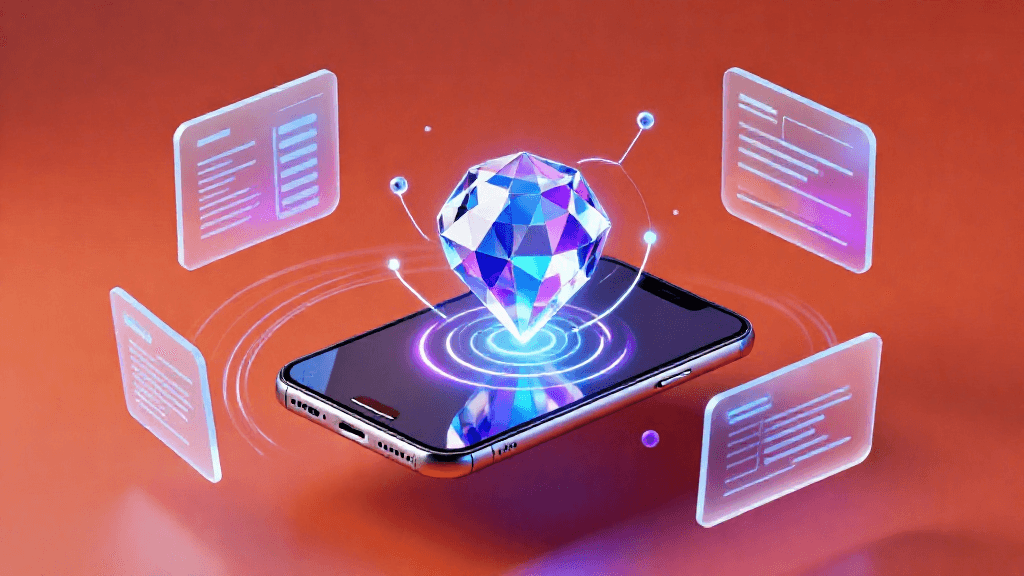
Apple's WWDC 2026 keynote reveals a ground-up Siri rebuild powered by a custom 1.2-trillion-parameter Gemini model, alongside iOS 27's Liquid Glass redesign and a multi-AI provider marketplace.
A Turning Point for Apple Intelligence
On June 8, 2026, Apple opened its Worldwide Developers Conference with what CEO Tim Cook — in his final WWDC keynote before transitioning leadership to John Ternus in September — called "the most significant AI shift in Apple's history." The centerpiece: a rebuilt Siri powered by a custom 1.2-trillion-parameter Google Gemini model, licensed at approximately $1 billion per year as part of a multi-year deal worth up to $5 billion. The announcement marks a decisive turn away from Apple's years-long strategy of building all AI capabilities in-house.
Feature Overview
Rebuilt Siri with Gemini Cloud Intelligence
The overhauled Siri introduces an iMessage-style interface with persistent conversation bubbles and full chat history synced via iCloud. Users can now toggle between the traditional voice-triggered assistant and a chatbot mode capable of handling multi-turn conversations, image uploads, and document attachments. Siri gains on-screen awareness — it can read visible content and execute cross-app actions — alongside access to personal context including emails, messages, photos, and calendar events.
The architecture keeps Apple's 3-billion-parameter on-device model handling privacy-sensitive queries locally, routing only more complex requests to Apple Silicon servers running Gemini inference. Crucially, Apple's contract explicitly prevents Google from using Siri queries to train future Gemini models, and all server-side processing uses stateless, ephemeral compute with no post-query data retention.
Multi-Provider AI Marketplace
A system-wide "Search or Ask" panel, accessible via Dynamic Island swipe, lets users route queries to Siri, ChatGPT, or Google Gemini directly. Apple has reportedly tested Anthropic's Claude as a fourth option, signaling that the company views AI as an open platform layer rather than a locked vertical. This is a significant architectural departure: Apple is effectively turning the iPhone into a model-agnostic AI interface.
iOS 27 and New Platform Features
iOS 27 ships alongside iPadOS 27, macOS 27, watchOS 27, tvOS 27, and visionOS 27. Beyond the Siri rebuild, iOS 27 introduces a system-wide Liquid Glass opacity slider, enhanced autocorrect with contextual word suggestions, three on-device generative photography tools — Extend (generative fill for edges), Enhance (AI auto-adjustment), and Reframe (spatial perspective correction) — and a redesigned AirPods settings menu. The minimum supported device moves to the A14 Bionic chip, dropping iPhone 11 from compatibility. The full public release is scheduled for mid-September 2026.
Privacy Architecture Under the Hood
Personally identifiable information is stripped before content reaches Gemini's inference layer on Apple's Private Cloud Compute infrastructure — Apple Silicon servers with no persistent storage. This system was already in place for earlier Apple Intelligence features, but the Gemini integration extends it to a third-party model for the first time. Independent security researchers will have access to the server software for verification, consistent with Apple's established PCC transparency program.
Usability Analysis
For everyday users, the rebuilt Siri finally delivers what was promised in 2024: genuine cross-app intelligence and context retention across conversations. The chatbot interface lowers the barrier for complex queries, and the multi-model switcher allows power users to choose the best AI for their task without leaving the iPhone ecosystem. Developers gain new on-device APIs for the generative photography tools and deeper Siri intent hooks via the updated App Intents framework. The A14 minimum requirement affects only iPhone 11 owners, making the upgrade path broadly accessible.
Pros and Cons
Advantages:
- Siri finally matches ChatGPT and Claude for conversational depth, powered by a frontier-class model
- Privacy-by-architecture design: Gemini runs on Apple Silicon with strict contractual data protections
- Multi-provider AI marketplace creates genuine choice and competitive pressure
- Generative photography tools run fully on-device, preserving privacy for personal media
- Broad device compatibility: A14 Bionic and newer covers the vast majority of active iPhones
Limitations:
- $1 billion annual licensing fee creates a strategic dependency on Google that could shift future negotiations
- Complex multi-model routing may confuse non-technical users about which AI is handling their data
- The on-device model cap at 3 billion parameters means complex queries still require network connectivity
- iPhone 11 users (released 2019) lose software upgrade eligibility
Outlook
Apple's decision to license Gemini rather than build its own frontier model reflects the enormous capital cost of training at the 1-trillion-parameter scale — a cost that even Apple's $200 billion+ cash reserves would find difficult to justify for a single product line. The multi-provider marketplace is strategically clever: it prevents over-dependence on any single model supplier while giving Apple negotiating leverage. If Anthropic's Claude is added as a fourth provider later in 2026, the iPhone effectively becomes the most powerful aggregation point for AI assistants in consumer tech.
The real test will be whether the rebuilt Siri can execute reliably on complex, multi-step tasks at the scale of hundreds of millions of daily users. Past Siri stumbles have eroded user trust; the Gemini integration buys Apple the model capability it needs, but execution and reliability will determine whether this WWDC marks a genuine turning point or another delayed promise.
Conclusion
WWDC 2026 is Apple's most consequential AI announcement since the original Siri launch in 2011. The Gemini-powered Siri rebuild, combined with iOS 27's multi-model marketplace and on-device generative photography, represents a coherent, privacy-conscious strategy for competing in the post-GPT era. Recommended for anyone evaluating Apple's AI competitiveness and for developers building on the iOS 27 App Intents platform.
Editor's Verdict
Apple WWDC 2026: Siri Rebuilt on Google Gemini, iOS 27 Unveiled earns a solid recommendation within the it news space.
The strongest case for paying attention is siri finally reaches frontier conversational capability via Gemini, closing a multi-year gap with ChatGPT and Claude, which raises the bar for what readers should now expect from peers in this space. Reinforcing that, privacy-first architecture with on-device model, ephemeral cloud compute, and contractual Google data restrictions adds practical value rather than just headline appeal. The broader signal worth registering is straightforward: apple's licensing of Gemini rather than building a frontier model in-house signals that even trillion-dollar companies find 1T+ parameter training economically prohibitive without direct AI monetization. On the other side of the ledger, deep strategic dependency on Google creates potential future leverage risk in licensing renegotiations is a real constraint, not a marketing footnote, and it should factor into any serious decision. Layered on top of that, multi-model routing complexity may create confusing data handling perceptions for privacy-conscious users narrows the set of teams for whom this is an obvious yes.
For AI industry watchers, strategy teams, and decision-makers tracking platform shifts, this is a serious evaluation candidate, not just a curiosity to bookmark. For everyone else, the safer posture is to monitor coverage and revisit once the use cases that matter to your team are demonstrated in the wild.
Pros
- Siri finally reaches frontier conversational capability via Gemini, closing a multi-year gap with ChatGPT and Claude
- Privacy-first architecture with on-device model, ephemeral cloud compute, and contractual Google data restrictions
- Multi-AI provider choice at the OS level creates genuine user agency without leaving Apple's ecosystem
- On-device generative photography tools deliver practical GenAI value without privacy trade-offs
- Broad A14 Bionic compatibility reaches the majority of the active iPhone installed base
Cons
- Deep strategic dependency on Google creates potential future leverage risk in licensing renegotiations
- Multi-model routing complexity may create confusing data handling perceptions for privacy-conscious users
- Cloud connectivity still required for complex Siri queries beyond the 3B on-device model's capacity
- iPhone 11 (2019) users excluded from iOS 27 entirely, accelerating planned obsolescence concerns
References
Comments0
Key Features
1. Siri rebuilt on a custom 1.2-trillion-parameter Gemini model licensed from Google at ~$1 billion/year (up to $5 billion multi-year deal) 2. Multi-provider AI marketplace via Dynamic Island panel: Siri, ChatGPT, Gemini (Claude reportedly in testing) 3. Privacy architecture: Gemini inference runs on Apple Silicon with ephemeral compute; Google contractually barred from training on user queries 4. iOS 27 introduces Liquid Glass UI, three on-device generative photography tools (Extend, Enhance, Reframe), and enhanced autocorrect 5. Minimum device requirement: A14 Bionic chip (iPhone 12 and newer); iPhone 11 dropped from iOS 27 support
Key Insights
- Apple's licensing of Gemini rather than building a frontier model in-house signals that even trillion-dollar companies find 1T+ parameter training economically prohibitive without direct AI monetization
- The multi-provider AI marketplace transforms the iPhone into a model-agnostic platform, a structural shift that could commoditize individual AI providers over time
- Apple's contractual clause preventing Google from training on Siri queries sets a new industry benchmark for third-party AI licensing privacy terms
- The rebuilt Siri's chatbot interface directly competes with standalone ChatGPT and Claude mobile apps by embedding comparable functionality at the OS level
- On-device generative photography (Extend, Enhance, Reframe) running on A14+ chips demonstrates that useful generative AI can be private-by-default without cloud dependency
- WWDC 2026 marks Tim Cook's final keynote as CEO, with leadership transition to John Ternus in September 2026 signaling a new chapter for Apple's strategic direction
- The $5 billion total Gemini deal value dwarfs Apple's reported $425 million annual ChatGPT arrangement from 2024, reflecting escalating AI licensing costs across the industry
Was this review helpful?
Share
Related AI Reviews

Meta Pulls Commercial Terms Clause on Scraping, AI Training
Meta removed a Commercial Terms sentence experts read as letting it scrape publisher sites for AI training. Meta says crawlers are unchanged.
Microsoft Maia 300: 96-Accelerator Rack, 2027 Rollout
Microsoft's Maia 300 inference chip claims up to 7x Maia 200's rack throughput on TSMC N2P chiplets, with production rollout starting in 2027.

Nadella: Treat Frontier AI Models as Insider Risks
Nadella's X essay urges treating frontier models as insider risks: controls outside the model, audit evidence and an emergency brake.

Google Pauses OSS VRP Product-Bug Rewards Over AI Slop
Google stopped taking product-vulnerability reports in its OSS bug bounty on Oct 1 over invalid AI submissions; supply-chain rewards continue.