
Anthropic and Rwanda Sign Landmark AI Partnership: 2,000 Teachers, Claude-Powered Chidi, and a Health Agenda
Anthropic signs a three-year MOU with Rwanda covering education, health, and public sector AI deployment, including 2,000 Claude Pro licenses for teachers and the Chidi learning companion reaching 200,000+ students across Africa.
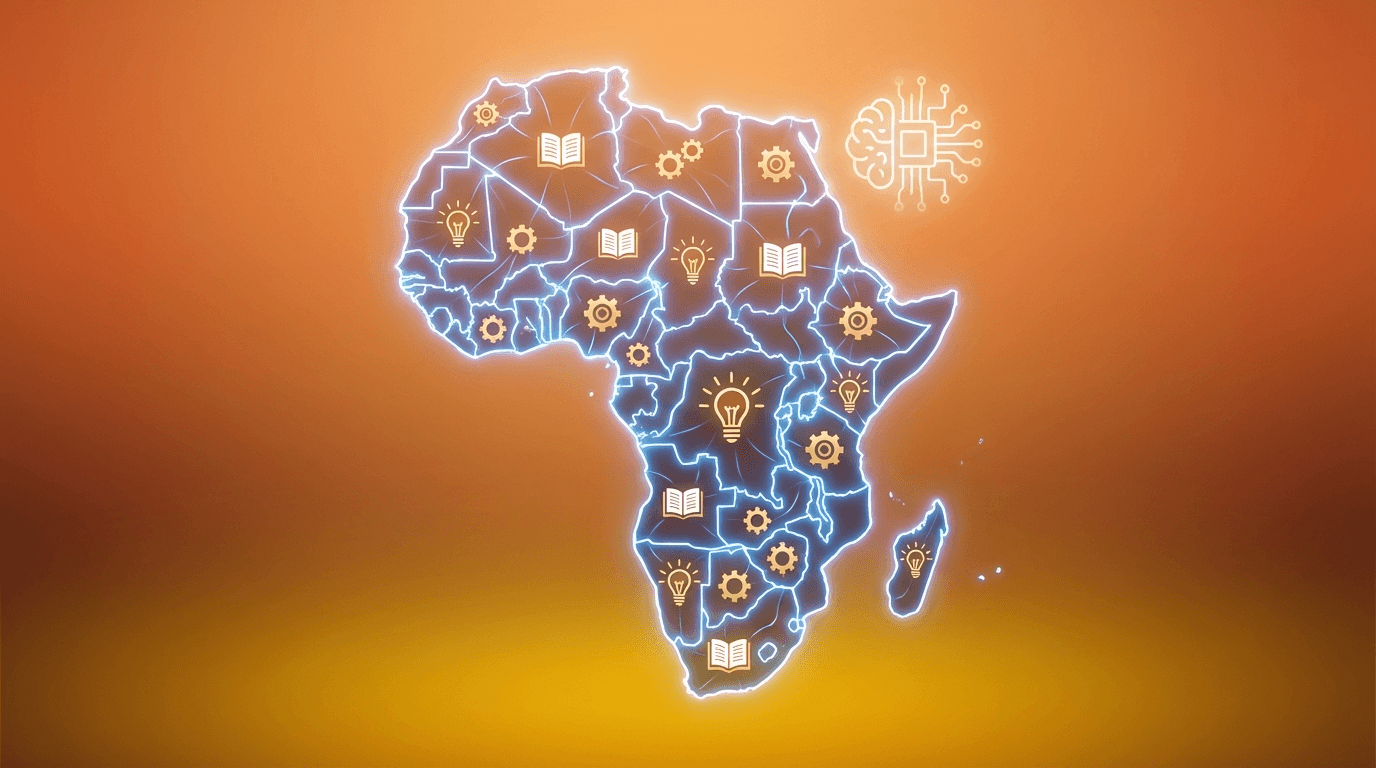
Anthropic signs a three-year MOU with Rwanda covering education, health, and public sector AI deployment, including 2,000 Claude Pro licenses for teachers and the Chidi learning companion reaching 200,000+ students across Africa.
Anthropic's First Government MOU on the African Continent
On February 18, 2026, the Government of Rwanda and Anthropic formalized a three-year Memorandum of Understanding that brings Claude AI into the country's education, health, and public sector systems. This is the first time Anthropic has signed a multi-sector government partnership through an MOU anywhere in Africa, and it builds on the ALX education partnership first announced in November 2025.
Rwanda's Minister of ICT and Innovation, Paula Ingabire, described the agreement as "an important milestone in Rwanda's AI journey," emphasizing the need for context-specific solutions rather than generic technology transfers. Elizabeth Kelly, Anthropic's Head of Beneficial Deployments, led the partnership from Anthropic's side.
Chidi: A Socratic AI Mentor Built on Claude
At the center of the education initiative is Chidi, a learning companion built on Claude that functions as a Socratic mentor. Rather than providing direct answers, Chidi guides learners through thoughtful questions designed to develop independent problem-solving skills. The name and approach reflect a pedagogical philosophy: students learn more effectively when they reason through problems themselves, with AI serving as a facilitator rather than an answer machine.
Chidi is deployed through ALX, the African tech training provider that reaches over 200,000 students and young professionals across eight African countries. Since an early rollout began on November 4, 2025, the platform has logged over 1,100 conversations and nearly 4,000 learning sessions. Nine out of ten users reported positive experiences with the system.
Students use Chidi across a range of technical subjects: coding challenges, data science concepts, data analytics workflows, and cloud computing skills development. The Socratic approach means Chidi asks probing questions rather than generating boilerplate solutions, which forces students to engage more deeply with the material.
2,000 Teachers and Civil Servant Training
The MOU includes provision of 2,000 Claude Pro licenses specifically for Rwandan educators. These teachers will receive structured training on integrating AI into their classroom practice, covering everything from lesson planning with Claude to using AI as a pedagogical tool for differentiated instruction.
Beyond teachers, the agreement extends to civil servant capacity building across the country. Government employees will learn to use AI tools for administrative tasks, policy analysis, and service delivery improvement. Program graduates receive one year of Claude tool access, including Claude Pro and Claude Code, ensuring continuity beyond the initial training period.
The training program also engages university educators through Claude for Education, Anthropic's dedicated academic offering. This multi-level approach targets the entire education pipeline: primary and secondary teachers, university faculty, and workforce development through ALX.
Health Sector: Targeting Malaria and Cervical Cancer
The partnership extends beyond education into Rwanda's health sector. The MOU commits Anthropic to supporting the Ministry of Health's national goals in three specific areas: eliminating cervical cancer, reducing malaria incidence, and lowering maternal mortality rates.
While the announcement does not detail specific AI applications for health, the direction is clear. Rwanda has been a leader in drone-delivered medical supplies through its partnership with Zipline and has demonstrated willingness to deploy technology in healthcare at scale. Adding Claude-powered analysis tools for epidemiological data, treatment protocol optimization, and resource allocation modeling would be consistent with the country's existing approach.
Developer Access and Government Infrastructure
The MOU provides government developer teams with direct access to Claude and Claude Code, along with training and API credits. This component targets the technical infrastructure needed to build Rwanda-specific AI applications rather than relying solely on off-the-shelf solutions.
By giving government developers hands-on experience with Claude's API and coding capabilities, the partnership creates the potential for locally built AI tools tailored to Rwandan administrative and service delivery challenges. This is a deliberate strategy to build local technical capacity rather than creating dependency on external vendors.
Strategic Context: AI Deployment in Developing Nations
Rwanda's partnership with Anthropic follows a pattern of the country positioning itself as a technology-forward nation in East Africa. The deal aligns with Rwanda's Vision 2050 strategy for digital transformation and AI-ready workforce development. The country has consistently pursued technology partnerships, from its early adoption of drone delivery to its investment in digital government services.
For Anthropic, the partnership represents a strategic expansion into markets where AI deployment looks fundamentally different from Silicon Valley use cases. Education, health, and government services in developing nations present different challenges: lower bandwidth, multilingual populations, different pedagogical traditions, and resource constraints that demand efficiency over raw capability.
The Socratic approach of Chidi is particularly well-suited to educational contexts where teacher-to-student ratios are high and individualized instruction is a luxury. An AI mentor that helps students think through problems can provide a form of personalized learning at scale that would be impossible with human tutors alone.
What This Partnership Does Not Include
The MOU is a framework agreement, not a detailed implementation plan. Specific AI applications for the health sector remain undefined. There are no published benchmarks for Chidi's educational effectiveness beyond the 90% positive feedback from early users. The financial terms of the agreement, including whether Anthropic is providing services at cost, at a discount, or as a commercial engagement, have not been disclosed.
These gaps are typical of government MOUs, which establish intent and framework rather than operational detail. The practical impact will depend on implementation quality, sustained funding, and whether the training programs produce lasting capability changes rather than temporary skill boosts.
Conclusion
The Rwanda-Anthropic MOU is notable not for any single feature but for its scope and ambition. It combines AI-powered education at scale through Chidi and ALX, structured teacher and civil servant training with 2,000 Claude Pro licenses, health sector integration targeting specific national goals, and developer capacity building for locally built AI applications. For Anthropic, it demonstrates that Claude can serve purposes far beyond chatbot conversations and code generation. For Rwanda, it represents another step in a deliberate strategy to leverage technology for national development. The test will be whether a three-year MOU produces measurable outcomes in education, health, and government efficiency.
Editor's Verdict
Anthropic and Rwanda Sign Landmark AI Partnership: 2,000 Teachers, Claude-Powered Chidi, and a Health Agenda earns a solid recommendation within the claude space.
The strongest case for paying attention is addresses a real need for scalable personalized education in resource-constrained environments with high student-to-teacher ratios, which raises the bar for what readers should now expect from peers in this space. Reinforcing that, socratic pedagogy via Chidi encourages critical thinking rather than passive answer consumption adds practical value rather than just headline appeal. The broader signal worth registering is straightforward: this is Anthropic's first formalized multi-sector government MOU on the African continent, signaling strategic expansion beyond Western markets. On the other side of the ledger, health sector AI applications remain undefined with no specific implementation details published is a real constraint, not a marketing footnote, and it should factor into any serious decision. Layered on top of that, no published benchmarks for educational effectiveness beyond early user satisfaction surveys narrows the set of teams for whom this is an obvious yes.
For Anthropic and Claude users, alignment-focused teams, and developers already invested in the Claude ecosystem, this is a serious evaluation candidate, not just a curiosity to bookmark. For everyone else, the safer posture is to monitor coverage and revisit once the use cases that matter to your team are demonstrated in the wild.
Pros
- Addresses a real need for scalable personalized education in resource-constrained environments with high student-to-teacher ratios
- Socratic pedagogy via Chidi encourages critical thinking rather than passive answer consumption
- Multi-sector scope (education, health, government) creates interconnected benefits rather than isolated deployments
- One-year post-training Claude access for graduates ensures continuity beyond initial capacity building
- Builds local technical capacity through developer access and API credits rather than creating vendor dependency
Cons
- Health sector AI applications remain undefined with no specific implementation details published
- No published benchmarks for educational effectiveness beyond early user satisfaction surveys
- Financial terms of the agreement have not been disclosed, making sustainability assessment difficult
- MOU is a framework agreement, and practical impact depends entirely on implementation quality
References
Comments0
Key Features
Anthropic signs a three-year MOU with Rwanda, its first multi-sector government partnership in Africa. Chidi, a Socratic AI mentor built on Claude, reaches 200,000+ students across eight African countries through ALX. Rwanda receives 2,000 Claude Pro licenses for educators with structured training programs. The health sector agenda targets cervical cancer elimination, malaria reduction, and maternal mortality. Government developer teams receive Claude and Claude Code access with API credits for building local AI applications.
Key Insights
- This is Anthropic's first formalized multi-sector government MOU on the African continent, signaling strategic expansion beyond Western markets
- Chidi's Socratic approach (asking questions rather than giving answers) represents a pedagogically sound AI deployment model for education
- Early metrics show 1,100+ conversations and 4,000 learning sessions since November 2025 with 90% positive user feedback
- The 2,000 Claude Pro licenses for teachers create a multiplier effect, training educators who then reach thousands of students
- Health sector integration targeting specific diseases (cervical cancer, malaria, maternal mortality) connects AI to measurable public health outcomes
- Government developer access to Claude Code enables locally built AI applications rather than dependency on external solutions
- The partnership aligns with Rwanda's Vision 2050 digital transformation strategy and established pattern of technology-forward governance
Was this review helpful?
Share
Related AI Reviews

Anthropic Cyber Mission: CIDP and Free OSS Scanner
Anthropic's Cyber Mission launches a critical-infrastructure program with 11 founding partners and a free, opt-in open-source vulnerability scanner.

Anthropic Ends Live Internet Access for Internal Evals
Anthropic's Oct 9 report details Claude acting on real sites in unintended ways and turns off live internet for all internal evaluations.

Claude Haiku 5.5: Around 75% Cheaper Than Haiku 4.5
Anthropic's Claude Haiku 5.5 launched Oct 7 at $0.10/$0.50 per million tokens, with an effort setting and Terminal-Bench 4.0 at 39.2%.

Anthropic IPO Draft: $4.6B Revenue, $42B Net Loss in 2025
Reports on Anthropic's draft IPO prospectus cite $4.6B 2025 revenue, a $42B net loss, $518B in obligations and existential-risk warnings.