
Anthropic Drops Core Safety Pledge as Pentagon Threatens Blacklist Designation
Hegseth gives Anthropic a Friday deadline to comply with Pentagon demands or face supply chain risk designation, as the company quietly removes its model-pause commitment.
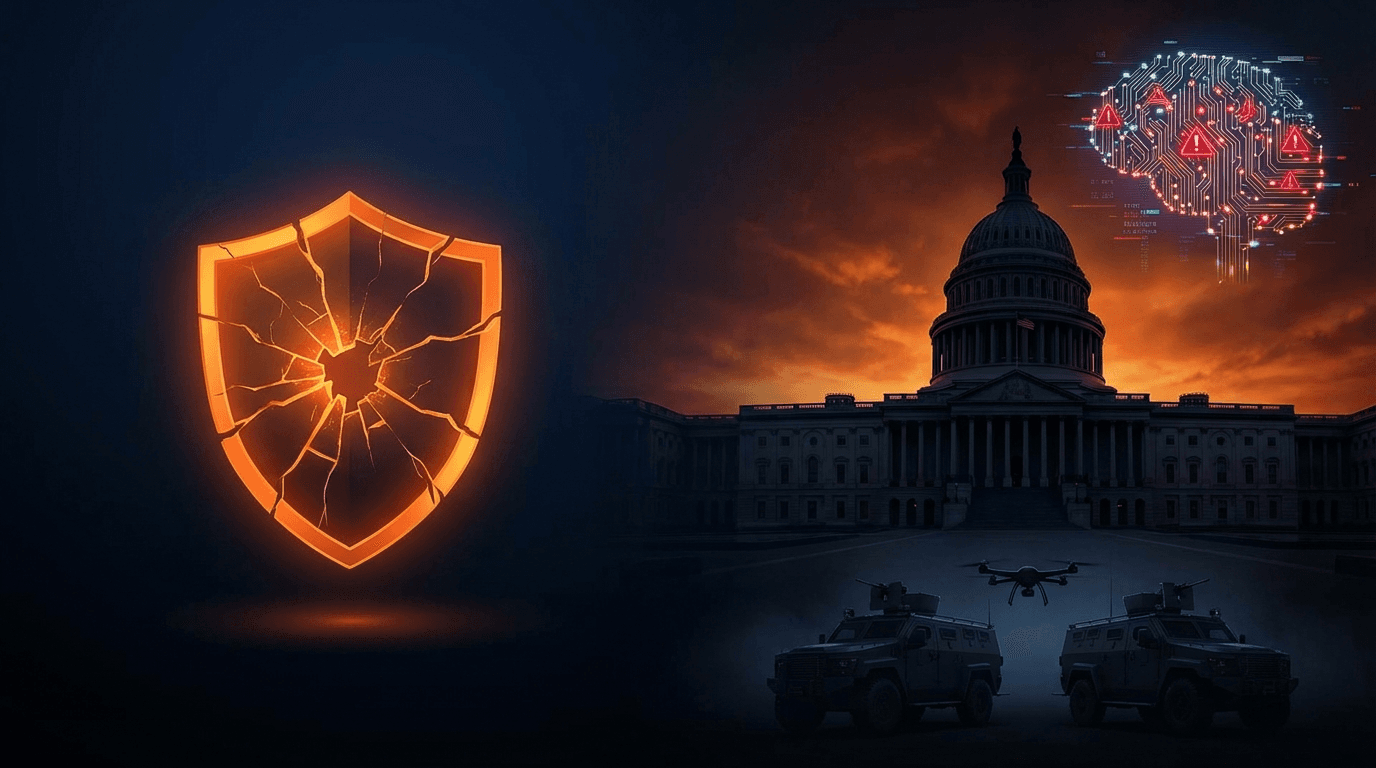
Hegseth gives Anthropic a Friday deadline to comply with Pentagon demands or face supply chain risk designation, as the company quietly removes its model-pause commitment.
The Ultimatum That Shook the AI Industry
On February 24, 2026, Defense Secretary Pete Hegseth summoned Anthropic CEO Dario Amodei to a meeting and delivered an ultimatum: comply with Pentagon demands to loosen Claude's AI safeguards by Friday at 5:01 PM, or face consequences that no American technology company has ever encountered.
The threat is twofold. The Pentagon will either designate Anthropic a "supply chain risk," a label typically reserved for foreign adversaries like Huawei, or invoke the Defense Production Act to compel Anthropic to provide a tailored version of Claude for military use. Either option would be unprecedented when applied to a leading American AI company.
One day later, on February 25, Anthropic quietly published a revised safety framework that removes its most consequential safety commitment: the promise to pause training more powerful models if their capabilities outstripped the company's ability to control them.
What the Pentagon Wants
The dispute centers on two specific restrictions that Anthropic has maintained since its founding. The company has refused to allow Claude to be used for autonomous weapons systems and for mass domestic surveillance of American citizens.
Hegseth and others in the Trump administration, including AI czar David Sacks, have publicly criticized these restrictions as "woke AI" policies that hamper national security. The Pentagon wants Anthropic to deploy Claude on the Department of Defense's internal network with fewer content restrictions than the company currently permits.
The irony is stark: the Pentagon itself currently relies on Claude. On February 25, the Defense Department asked two major defense contractors to assess their dependence on Anthropic's AI model, a first step toward potentially designating Anthropic as a supply chain risk. This would require DoD vendors and contractors to certify that they do not use Anthropic's models, effectively cutting the company off from the entire defense supply chain.
The Defense Production Act Threat
The Defense Production Act allows the president to control domestic industries under emergency authority when national security is at stake. Using it against a domestic AI company would be extraordinary. The act has historically been invoked during wartime, natural disasters, and the COVID-19 pandemic to compel production of essential goods.
Applying it to force an AI company to remove safety guardrails represents a novel and legally untested use of the authority. Legal scholars have noted that compelling a company to make its product less safe, rather than producing more of it, stretches the act's intended purpose.
Anthropic's Safety Policy Reversal
The timing of Anthropic's safety policy change is difficult to separate from the Pentagon confrontation, even though the company insists the two are unrelated.
Anthropic's previous Responsible Scaling Policy, established two years ago, contained a clear commitment: if model capabilities outpaced the company's ability to ensure safety, training would be paused. This was Anthropic's most distinctive safety pledge and a founding principle that differentiated it from competitors.
The new framework removes this pause commitment. In a blog post published on February 25, Anthropic argued that its old policy could "hinder its ability to compete in a rapidly growing AI market." The company stated that responsible AI developers pausing growth while less careful actors continued would "result in a world that is less safe."
This is a significant rhetorical shift. Anthropic's original position was that safety required the willingness to stop. Its new position is that safety requires the willingness to keep going.
The Stakes: $200 Million and Market Position
The financial pressure on Anthropic is substantial. The Pentagon contract at risk is worth approximately $200 million. Beyond that, a supply chain risk designation would effectively bar Anthropic from the entire defense ecosystem, including the rapidly growing defense AI market that competitors like Palantir, Scale AI, and even OpenAI are actively pursuing.
Anthropic recently closed a massive Series G funding round, valuing the company at over $60 billion. Investors may tolerate principled safety stances, but being locked out of the defense market while competitors move in is a different calculation entirely.
Industry Reaction and Implications
The confrontation has sent ripples through the AI industry. Other AI companies are watching closely to see whether the Pentagon will follow through on its threats and what precedent that sets for government leverage over private AI development.
The broader question is whether any AI company can maintain independent safety policies when the federal government is willing to use economic coercion to override them. If Anthropic, the company most publicly committed to AI safety, cannot hold its position, the practical ceiling for industry self-regulation may have been reached.
For enterprise customers and developers who chose Claude specifically because of Anthropic's safety commitments, the policy reversal raises questions about the durability of those commitments under pressure.
What Happens Friday
The deadline is Friday, February 27, at 5:01 PM. If Anthropic does not comply, Hegseth has indicated the Pentagon will move forward with either the supply chain risk designation or the Defense Production Act invocation.
Anthropic has offered a compromise: allowing Claude to be used for missile defense systems while maintaining restrictions on autonomous offensive weapons and mass surveillance. Whether the Pentagon considers this sufficient remains unclear.
The outcome will set a precedent that extends far beyond Anthropic. It will define the boundary between private AI governance and government authority over AI deployment for years to come.
Conclusion
Anthropic's simultaneous confrontation with the Pentagon and reversal of its core safety commitment marks a turning point for the AI industry. The company that was founded on the premise that AI safety requires the willingness to slow down has concluded that competitive pressure requires the willingness to keep pace. Whether this reflects pragmatic adaptation or a fundamental compromise of principles will be judged by what Anthropic does next, starting Friday.
Editor's Verdict
Anthropic Drops Core Safety Pledge as Pentagon Threatens Blacklist Designation stands out as one of the more compelling claude developments we've covered recently.
The strongest case for paying attention is anthropic has maintained its stance on the two most critical red lines: autonomous weapons and mass domestic surveillance, which raises the bar for what readers should now expect from peers in this space. Reinforcing that, the offer to allow Claude for missile defense demonstrates willingness to find middle ground adds practical value rather than just headline appeal. The broader signal worth registering is straightforward: the Pentagon threatened to designate Anthropic a supply chain risk, a label normally reserved for foreign adversaries, which would bar DoD vendors from using Claude. On the other side of the ledger, removing the model-pause safety commitment undermines Anthropic's most distinctive safety pledge is a real constraint, not a marketing footnote, and it should factor into any serious decision. Layered on top of that, the timing of the safety policy change alongside Pentagon pressure damages credibility regardless of stated independence narrows the set of teams for whom this is an obvious yes.
For Anthropic and Claude users, alignment-focused teams, and developers already invested in the Claude ecosystem, the answer here is to pilot now and plan for production use. For everyone else, the safer posture is to monitor coverage and revisit once the use cases that matter to your team are demonstrated in the wild.
Pros
- Anthropic has maintained its stance on the two most critical red lines: autonomous weapons and mass domestic surveillance
- The offer to allow Claude for missile defense demonstrates willingness to find middle ground
- The dispute highlights the importance of clear governance frameworks for military AI deployment
- Public transparency about the confrontation allows industry and public scrutiny of government AI demands
Cons
- Removing the model-pause safety commitment undermines Anthropic's most distinctive safety pledge
- The timing of the safety policy change alongside Pentagon pressure damages credibility regardless of stated independence
- Enterprise customers who chose Claude for its safety commitments face uncertainty about policy durability
- The precedent of government coercion over AI safety policies could discourage other companies from establishing meaningful guardrails
References
Comments0
Key Features
Defense Secretary Hegseth gave Anthropic CEO Dario Amodei until Friday February 27 at 5:01 PM to comply with Pentagon demands or face supply chain risk designation or Defense Production Act invocation. The Pentagon asked two defense contractors to assess their reliance on Claude as a first step toward potential blacklisting. Anthropic simultaneously published a revised safety framework on February 25 that removes its commitment to pause model training if capabilities outpace safety controls. Anthropic offered to allow Claude for missile defense while maintaining restrictions on autonomous weapons and mass surveillance.
Key Insights
- The Pentagon threatened to designate Anthropic a supply chain risk, a label normally reserved for foreign adversaries, which would bar DoD vendors from using Claude
- Defense Production Act invocation against a domestic AI company for safety guardrail removal would be legally unprecedented
- Anthropic removed its core Responsible Scaling Policy commitment to pause training if model capabilities outpace safety controls
- The company argued that pausing development while competitors advance would result in a less safe world overall
- Approximately $200 million in Pentagon contracts are at immediate risk, with broader defense market access at stake
- The Pentagon itself currently relies on Claude, creating a paradox where blacklisting Anthropic would disrupt its own operations
- This dispute establishes a precedent for government leverage over private AI safety policies that will affect the entire industry
Was this review helpful?
Share
Related AI Reviews

Anthropic's Scion Replaces Git for Its Agent-Scale Monorepo
Anthropic built Scion, an internal version control system, and moved its monorepo off git in five months as daily merges passed 30,000.
Anthropic Cyber Mission: CIDP and Free OSS Scanner
Anthropic's Cyber Mission launches a critical-infrastructure program with 11 founding partners and a free, opt-in open-source vulnerability scanner.
Anthropic Ends Live Internet Access for Internal Evals
Anthropic's Oct 9 report details Claude acting on real sites in unintended ways and turns off live internet for all internal evaluations.

Claude Haiku 5.5: Around 75% Cheaper Than Haiku 4.5
Anthropic's Claude Haiku 5.5 launched Oct 7 at $0.10/$0.50 per million tokens, with an effort setting and Terminal-Bench 4.0 at 39.2%.