
AI Impact Summit 2026: India Hosts the Global South's First Major AI Governance Event
New Delhi's five-day AI Impact Summit brings together 100+ countries, tech CEOs, and world leaders to shape global AI policy and governance.
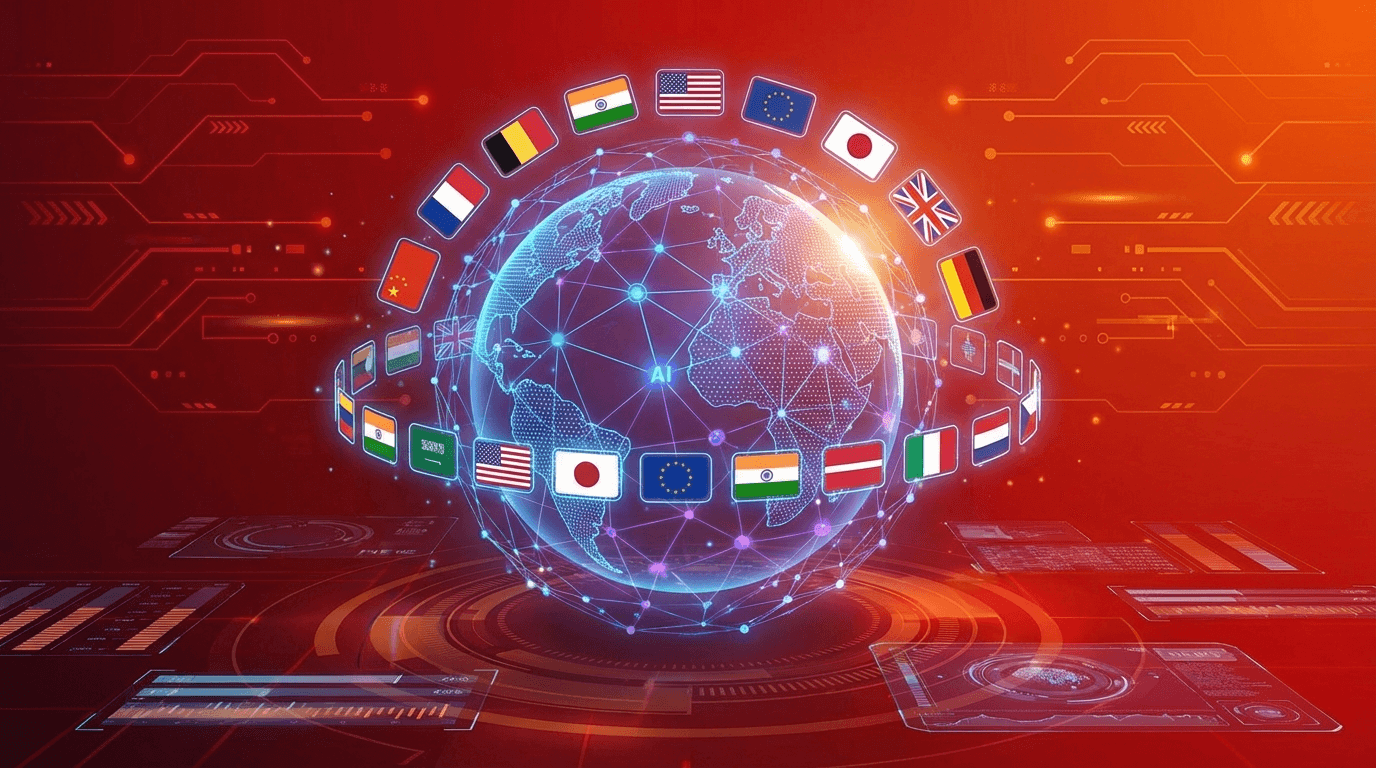
New Delhi's five-day AI Impact Summit brings together 100+ countries, tech CEOs, and world leaders to shape global AI policy and governance.
The Global South Takes Center Stage in AI Governance
On February 16, 2026, the AI Impact Summit opens at Bharat Mandapam in New Delhi, marking the first time a major international AI governance event is hosted in the Global South. Running through February 20, the five-day summit brings together delegations from over 100 countries, including 15 to 20 heads of government, more than 50 ministers, and the CEOs of the world's most influential AI companies.
The summit arrives at a critical moment. AI development is accelerating faster than regulatory frameworks can keep pace, and the perspectives of developing nations have been largely absent from the governance conversation. India's hosting of this event signals a shift in who gets a seat at the table when global AI rules are being written.
Who Is in the Room
The speaker list reads like a who's who of AI leadership. Confirmed attendees include Sundar Pichai (Google CEO), Demis Hassabis (Google DeepMind CEO), Sam Altman (OpenAI CEO), Dario Amodei (Anthropic CEO), Brad Smith (Microsoft President), and Yann LeCun (Meta Chief AI Scientist).
On the government side, French President Emmanuel Macron is making his fourth visit to India with a focus on deepening AI cooperation. The UAE Crown Prince is also among the confirmed heads of state. The presence of both Western tech leaders and Global South government representatives creates a unique dynamic that previous AI summits, which have been predominantly Western-centric, have lacked.
Summit Structure: Three Pillars, Seven Working Groups
The summit is organized around three foundational pillars, referred to as Sutras: People, Planet, and Progress. These expand into seven thematic working groups called Chakras, each addressing a specific dimension of AI impact:
| Working Group | Focus Area |
|---|---|
| Human Capital | AI's impact on workforce and education |
| Safe and Trusted AI | Safety frameworks and reliability standards |
| Inclusion | Bridging the AI divide across nations and communities |
| Democratising AI Resources | Access to compute, data, and models |
| AI for Sustainability | Environmental and climate applications |
| Innovation Ecosystems | Supporting AI startups and research |
| Governance Frameworks | International regulatory coordination |
With over 700 sessions spanning policy, technology, and societal impact, the agenda is deliberately broad. The summit aims to move beyond high-level declarations and deliver tangible outcomes including policy recommendations, partnerships, and innovation roadmaps.
The India AI Impact Expo
Running alongside the summit, the India AI Impact Expo occupies 70,000 square meters and features over 300 exhibitors from 30 countries across more than 10 thematic pavilions. The exhibition showcases real-world AI applications in industry, governance, healthcare, education, and sustainability.
Fujitsu, among other major technology companies, is presenting its latest technologies for creating social and industrial value through the fusion of AI and computing. The expo provides a practical counterpart to the policy discussions, demonstrating deployed AI systems rather than theoretical capabilities.
A Research Symposium on February 18
The summit includes a dedicated Research Symposium on AI and its Impact, scheduled for February 18. This academic track complements the policy and industry discussions, bringing together researchers to present findings on AI's societal, economic, and environmental effects.
Why This Summit Matters
Previous major AI governance events, including the UK AI Safety Summit in 2023 and the Paris AI Summit in 2024, were hosted by wealthy Western nations and reflected those nations' priorities. While important, they largely overlooked the specific challenges and opportunities that AI presents for developing countries.
India's summit addresses several gaps in the global AI governance conversation. First, the digital divide in AI access: developing nations often lack the compute infrastructure, training data, and technical talent to develop competitive AI systems. The Democratising AI Resources working group explicitly tackles this inequality.
Second, AI regulation in diverse contexts: governance frameworks designed for Silicon Valley or London may not work in Mumbai or Lagos. The summit creates space for countries with different economic structures, cultural norms, and technological maturity levels to contribute to regulatory design.
Third, India's own AI ambitions: with a massive technology workforce, a growing startup ecosystem, and government investment in sovereign AI capabilities, India is positioning itself not just as a host but as a leader in defining how AI should be developed and deployed globally.
Key Topics Under Discussion
The summit's agenda covers AI safety and trusted systems, governance and regulatory frameworks, ethical AI development, data protection, India's sovereign AI strategy, and AI for economic growth. These topics reflect the tension between wanting to accelerate AI adoption for economic development and needing to manage the risks that rapid deployment creates.
Particular attention is expected on the question of open-source AI governance. With Chinese companies like DeepSeek releasing powerful open-weight models and Indian developers being among the most active users of these tools, the relationship between openness, safety, and national security is a live debate.
Expected Outcomes
The summit is anticipated to produce several concrete outputs: policy recommendations that could influence national AI strategies across participating countries, new partnerships between Global South nations on shared AI infrastructure, innovation roadmaps for applying AI to development challenges like healthcare, agriculture, and climate adaptation, and potentially a Delhi Declaration on AI governance that would complement existing frameworks like the EU AI Act.
Whether these outcomes have lasting impact will depend on follow-through. Previous AI summits have produced impressive declarations that had limited practical effect. India's approach of organizing around specific working groups with defined mandates suggests an awareness of this risk.
Conclusion
The AI Impact Summit 2026 is significant not because it will resolve the complex questions around AI governance, but because it fundamentally changes who is asking those questions. By bringing together 100-plus countries in the Global South's first major AI summit, India is ensuring that the rules being written for AI reflect the full diversity of the world that will live under them. For AI practitioners, policymakers, and anyone affected by artificial intelligence, which is increasingly everyone, this summit is worth watching closely.
Editor's Verdict
AI Impact Summit 2026: India Hosts the Global South's First Major AI Governance Event earns a solid recommendation within the it news space.
The strongest case for paying attention is brings Global South perspectives to AI governance for the first time at this scale, which raises the bar for what readers should now expect from peers in this space. Reinforcing that, unprecedented gathering of AI industry leaders and world government officials adds practical value rather than just headline appeal. The broader signal worth registering is straightforward: first major international AI governance summit hosted in the Global South, shifting the conversation beyond Western perspectives. On the other side of the ledger, previous AI summits have produced declarations with limited practical follow-through is a real constraint, not a marketing footnote, and it should factor into any serious decision. Layered on top of that, geopolitical tensions between US, China, and India may limit consensus on contentious topics narrows the set of teams for whom this is an obvious yes.
For AI industry watchers, strategy teams, and decision-makers tracking platform shifts, this is a serious evaluation candidate, not just a curiosity to bookmark. For everyone else, the safer posture is to monitor coverage and revisit once the use cases that matter to your team are demonstrated in the wild.
Pros
- Brings Global South perspectives to AI governance for the first time at this scale
- Unprecedented gathering of AI industry leaders and world government officials
- Working group structure designed for tangible outcomes rather than general declarations
- Massive expo provides practical AI application demonstrations
- Addresses critical gaps in AI access, compute resources, and governance diversity
Cons
- Previous AI summits have produced declarations with limited practical follow-through
- Geopolitical tensions between US, China, and India may limit consensus on contentious topics
- Five-day duration and 700+ sessions risk spreading attention too thin across topics
- Concrete enforcement mechanisms for any agreements remain unclear
References
Comments0
Key Features
The AI Impact Summit 2026 runs from February 16-20 at Bharat Mandapam in New Delhi, bringing together 100+ country delegations, 15-20 heads of government, and major AI CEOs including Sundar Pichai, Sam Altman, Dario Amodei, and Demis Hassabis. Organized around three pillars (People, Planet, Progress) and seven working groups, the summit features 700+ sessions, a 70,000 sq meter expo with 300+ exhibitors from 30 countries, and a dedicated research symposium. It is the first major AI governance event hosted in the Global South.
Key Insights
- First major international AI governance summit hosted in the Global South, shifting the conversation beyond Western perspectives
- Confirmed attendance from CEOs of Google, OpenAI, Anthropic, and Meta's Chief AI Scientist alongside 15-20 heads of government
- Seven dedicated working groups address specific AI governance dimensions from safety to resource democratization
- The 70,000 sq meter expo with 300+ exhibitors provides practical demonstrations alongside policy discussions
- India is positioning itself as a leader in global AI governance, not just a host
- Open-source AI governance is expected to be a key debate topic given the rise of Chinese open-weight models
- The summit could produce a Delhi Declaration on AI governance complementing the EU AI Act
- French President Macron's attendance signals deepening EU-India AI cooperation
Was this review helpful?
Share
Related AI Reviews

Microsoft Maia 300: 96-Accelerator Rack, 2027 Rollout
Microsoft's Maia 300 inference chip claims up to 7x Maia 200's rack throughput on TSMC N2P chiplets, with production rollout starting in 2027.

Nadella: Treat Frontier AI Models as Insider Risks
Nadella's X essay urges treating frontier models as insider risks: controls outside the model, audit evidence and an emergency brake.

Google Pauses OSS VRP Product-Bug Rewards Over AI Slop
Google stopped taking product-vulnerability reports in its OSS bug bounty on Oct 1 over invalid AI submissions; supply-chain rewards continue.

Apple Rethinks macOS Full Disk Access as AI Agents Grow
Apple says it will add controls so granting macOS Full Disk Access takes very explicit user action, citing risks from capable AI agents.