
Open Source
Explore the latest AI open-source projects from GitHub and HuggingFace.
Explore the latest AI open-source projects from GitHub and HuggingFace.
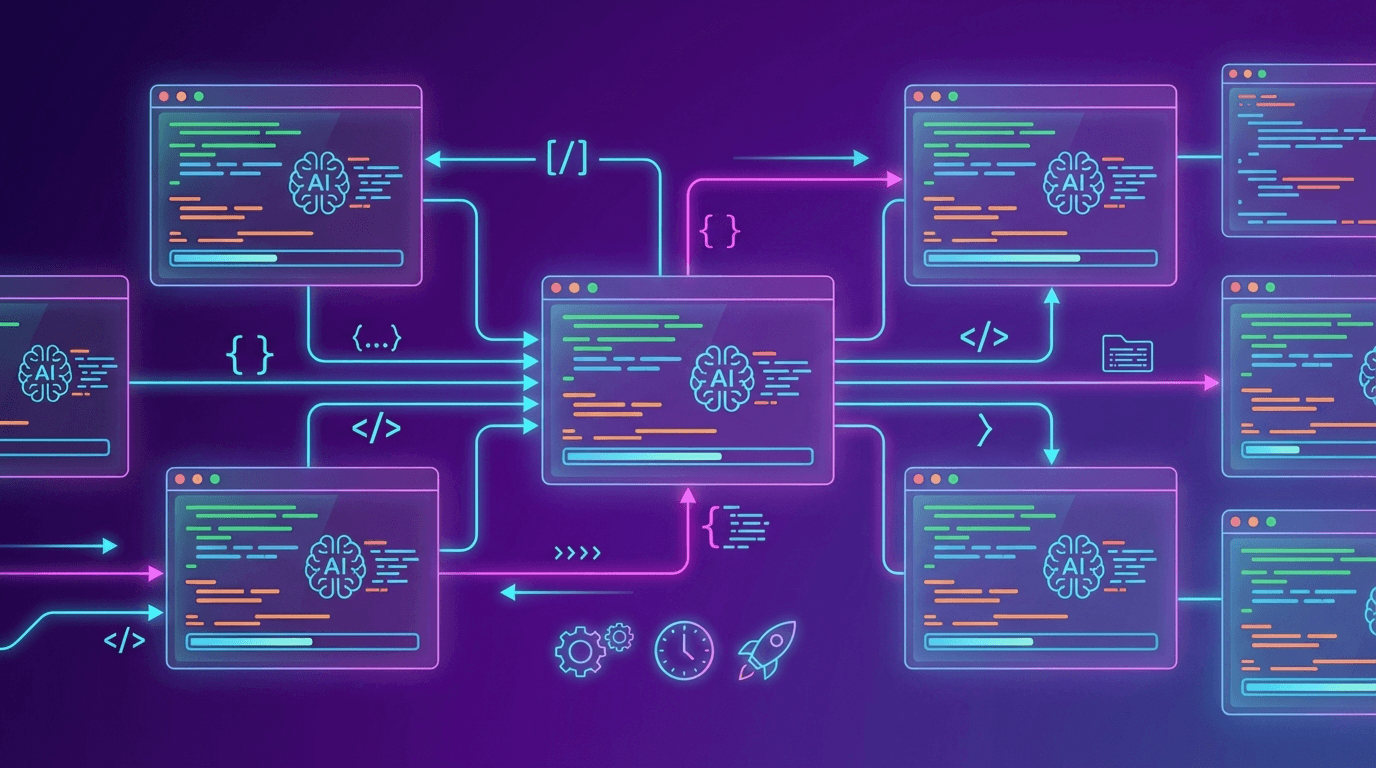
Superset is a desktop IDE designed to orchestrate multiple AI coding agents running simultaneously on a single machine. With 6,000 GitHub stars and 92 releases (the latest being desktop-v1.1.3 on March 8, 2026), the project addresses a growing pain point in the AI-assisted development workflow: managing parallel agent execution without conflicts. Released under the Apache 2.0 license, Superset works with any CLI-based agent including Claude Code, OpenAI Codex CLI, Cursor Agent, Gemini CLI, and GitHub Copilot.
The core innovation is git worktree isolation, where each task gets its own branch and working directory, preventing agents from interfering with each other's changes.
Superset enables running 10 or more coding agents concurrently on a single machine. Each agent operates in its own isolated git worktree, meaning file changes from one task cannot corrupt or conflict with another. The IDE provides real-time status monitoring for all running agents, showing which are active, completed, or waiting for review.
This approach transforms the typical serial AI coding workflow (submit task, wait, review, submit next) into a parallel pipeline where developers can queue up multiple tasks and review results as they complete.
The git worktree system creates a separate branch and working directory for each agent task:
| Component | Purpose |
|---|---|
| Main Branch | Protected production code |
| Task Worktree | Isolated directory per agent task |
| Agent Process | CLI agent running in its worktree |
| Diff Viewer | Review changes before merging |
When an agent completes its task, the developer reviews the diff, makes any needed edits, and merges the changes back to the main branch. This provides a safety layer between AI-generated code and the production codebase.
Superset includes a built-in diff viewer for reviewing and editing agent-generated changes without leaving the application. Workspace presets automate the setup process including dependency installation, environment configuration, and agent initialization. The notification system alerts developers when tasks complete, enabling a workflow where agents run in the background while the developer focuses on other work.
Superset is designed to work with any CLI-based coding agent:
This vendor-neutral approach means developers are not locked into a specific AI provider. Teams can run different agents for different tasks based on their strengths, or compare outputs from multiple agents on the same task.
Superset is built with Electron and React for the desktop application, styled with TailwindCSS, and uses Bun as its runtime. The project uses Turborepo for monorepo management, Vite for building, Biome for linting, Drizzle ORM with Neon for database operations, and tRPC for type-safe API communication between frontend and backend.
Pre-built macOS binaries are available for download. Building from source requires macOS, Bun v1.0+, Git 2.20+, GitHub CLI, and Caddy. The project is primarily targeting macOS at this stage, with Linux and Windows support in development.
Superset solves a real productivity bottleneck in AI-assisted development. The worktree isolation pattern is elegant and builds on proven git functionality rather than inventing new synchronization mechanisms. The vendor-neutral agent support prevents lock-in. Active development with 1,840 commits and 92 releases demonstrates sustained momentum.
Currently, Superset is primarily available for macOS, limiting its accessibility for Windows and Linux developers. Running 10+ agents simultaneously requires significant compute resources (CPU, RAM, network). The Electron-based architecture adds overhead compared to native applications. The project is relatively young, and some advanced features like collaborative multi-user agent orchestration are still in development.