
Open Source
Explore the latest AI open-source projects from GitHub and HuggingFace.
Explore the latest AI open-source projects from GitHub and HuggingFace.
Scientific Agent Skills is an MIT-licensed open-source collection from K-Dense-AI that ships 135 ready-to-use agent skills covering 17+ scientific domains, 100+ research databases, 70+ Python package wrappers, and 30+ analysis and communication tools. The repository has crossed 21,800 GitHub stars with 2,300+ forks and is now the most active library of Agent Skills aimed at scientific research and clinical workflows. Built on the open Agent Skills standard, the library plugs directly into Claude Code, Cursor, and Codex, transforming general-purpose coding agents into domain-aware research assistants for bioinformatics, drug discovery, genomics, materials science, and beyond.
Scientific computing is dominated by sprawling Python ecosystems and discipline-specific databases that even experienced researchers struggle to navigate. RDKit, Scanpy, Biopython, PubChem, UniProt, ChEMBL, and ClinicalTrials.gov each carry their own conventions, authentication quirks, and idiomatic usage patterns. General-purpose coding agents can technically call these tools but routinely produce broken or non-idiomatic code because they lack curated context. Scientific Agent Skills closes that gap with audited, production-quality skill files that encode the right way to query each database and use each package, raising agent reliability on real research tasks from prototype to publishable.
The library covers bioinformatics and genomics, cheminformatics and drug discovery, proteomics and mass spectrometry, clinical research and precision medicine, medical imaging and digital pathology, machine learning, materials science and chemistry, data analysis and visualization, geospatial science and remote sensing, laboratory automation, multi-omics, and scientific communication. Each skill is a self-contained markdown file with a clear purpose, example invocations, and citations to authoritative documentation, so the agent both knows what to do and can show the researcher why.
Included database skills wrap public APIs for PubChem, ChEMBL, UniProt, COSMIC, ClinicalTrials.gov, KEGG, Reactome, Ensembl, NCBI, and dozens more, normalizing query patterns and surfacing rate-limit and authentication guidance. Package skills wrap RDKit, Scanpy, PyTorch Lightning, scikit-learn, Biopython, AlphaFold tooling, and other workhorses with idiomatic examples, dramatically reducing the time to a working analysis script.
Installation uses the cross-platform npx-based skills installer, with a single command adding the entire library to the user's Claude Code or compatible agent: npx skills add K-Dense-AI/scientific-agent-skills. GitHub CLI installation is also supported. Once installed, skills are discovered automatically by the agent based on the task, so a request like analyze this single-cell dataset routes through the appropriate Scanpy and visualization skills without manual selection.
Unlike crowd-sourced prompt libraries, Scientific Agent Skills emphasizes auditable quality. The project is security-scanned with the Cisco AI Defense Skill Scanner, code follows scientific computing best practices, and each skill is reviewed for correctness against the underlying database or package. The result is a library that can be deployed by lab IT teams and research institutions with a credible safety story, not just hobbyist scripts.
The library targets agents that implement the Agent Skills standard, so users on platforms without that integration cannot benefit directly. Some scientific domains are still under-served compared to bioinformatics and cheminformatics, particularly experimental physics and earth sciences, though contributions are open. Several skills wrap APIs that require user-supplied keys, and rate limits on free tiers can constrain large-scale agent workflows. As with any agent-driven scientific work, results still require human validation before they inform real research decisions.
OpenClaw is an open-source, local-first AI gateway with 366K GitHub stars that routes AI responses through WhatsApp, Telegram, Slack, Discord, iMessage, Teams, and 15+ other platforms — zero cloud dependency.
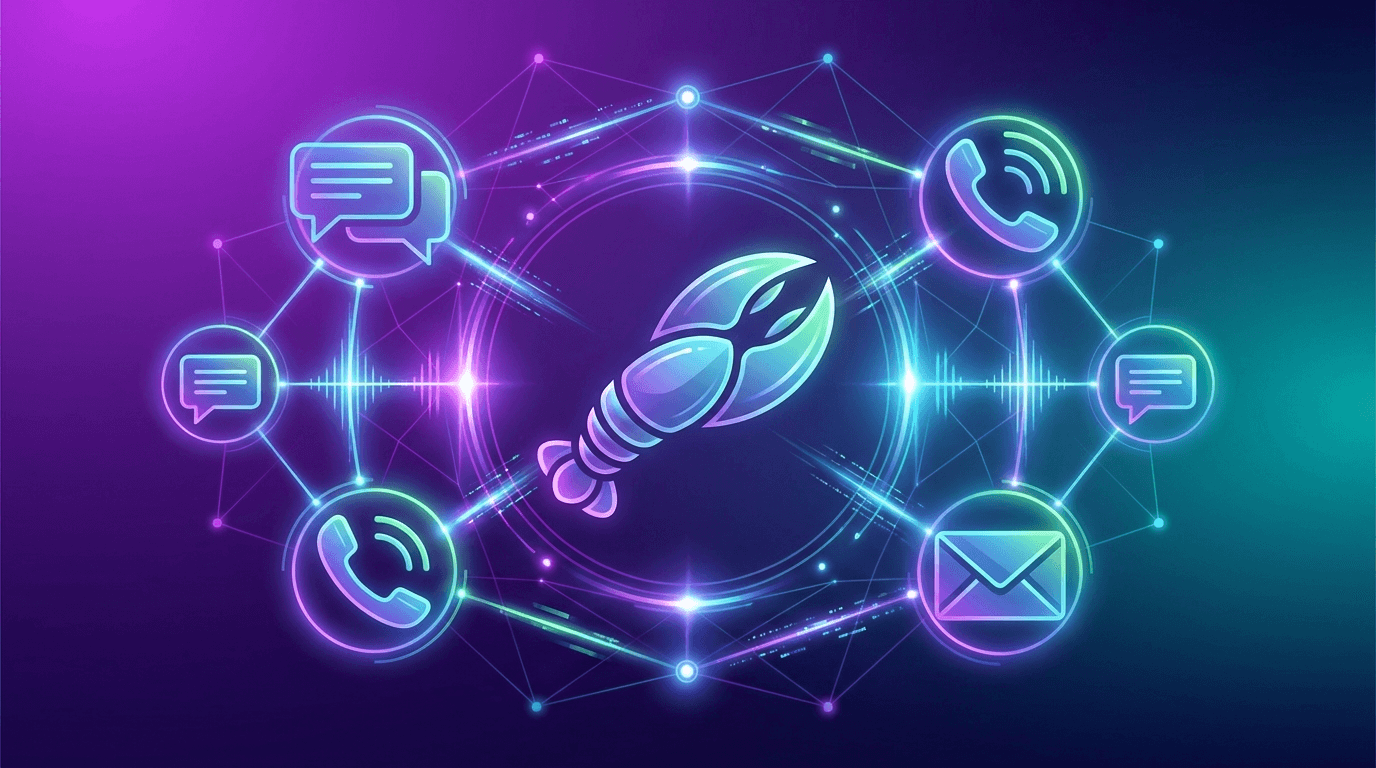
OpenClaw
Open-source personal AI assistant connecting to 13+ messaging platforms with local gateway architecture, voice support, and multi-agent routing.