
Open Source
Explore the latest AI open-source projects from GitHub and HuggingFace.
Explore the latest AI open-source projects from GitHub and HuggingFace.
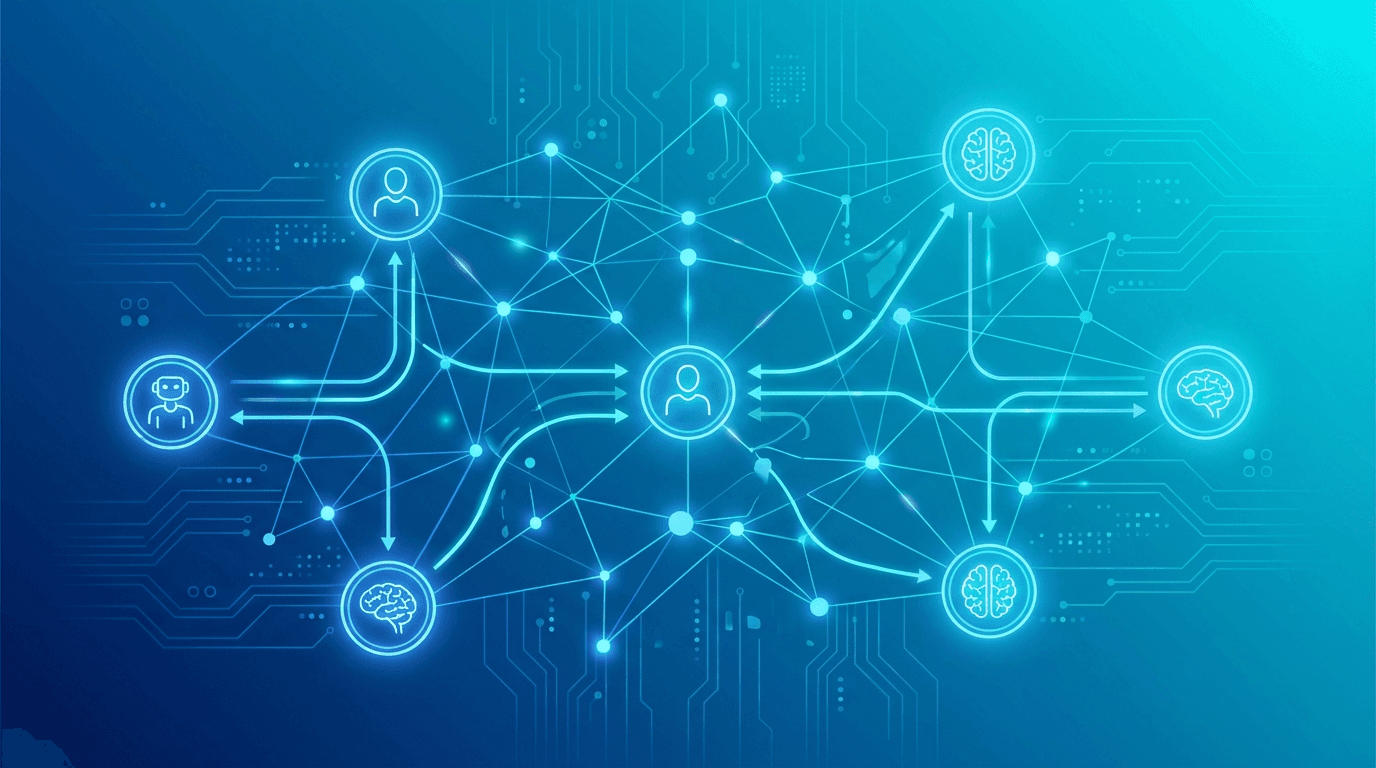
Microsoft Agent Framework is a comprehensive open-source framework for building, orchestrating, and deploying AI agents and multi-agent workflows. It supports both Python and .NET, combining the best of AutoGen and Semantic Kernel into a unified platform.
Microsoft Agent Framework represents the convergence of two influential AI agent projects: AutoGen, which pioneered multi-agent conversation patterns, and Semantic Kernel, which brought enterprise-grade features like session management, telemetry, and robust model support. Rather than maintaining two separate projects, Microsoft merged the teams and codebases into a single, cohesive framework.
This lineage gives Agent Framework a unique advantage. It inherits AutoGen's simple abstractions for defining agent behaviors and multi-agent interaction patterns, while gaining Semantic Kernel's battle-tested middleware system, type safety, and observability features.
The framework's standout capability is its graph-based workflow system. Developers define agents and deterministic functions as nodes, then connect them using data flows. The graph executor handles streaming, checkpointing, and human-in-the-loop intervention points.
This approach enables complex orchestration patterns that go beyond simple sequential chains. Agents can operate in parallel, with conditional branching and aggregation points. Checkpointing means long-running workflows can be paused and resumed, which is critical for enterprise applications where failures must be recoverable.
One of the framework's most practical features is consistent API design across Python and .NET. Both implementations provide the same abstractions, the same agent lifecycle, and the same orchestration patterns. This matters in enterprise environments where Python serves the ML/AI team and .NET serves the application development team.
Installation is straightforward: pip install agent-framework --pre for Python or dotnet add package Microsoft.Agents.AI for .NET.
Agent Framework integrates OpenTelemetry for distributed tracing and monitoring out of the box. Every agent invocation, tool call, and workflow transition generates trace spans and metrics. This observability is essential for debugging multi-agent systems in production, where understanding why an agent made a specific decision requires visibility into the entire execution graph.
The included DevUI provides an interactive developer interface for testing and debugging workflows without writing client code. Developers can visualize agent interactions, inspect message flows, and test different scenarios. This significantly reduces the iteration cycle when designing complex multi-agent systems.
The AF Labs namespace contains experimental packages for emerging capabilities, including reinforcement learning integration. This staging area allows the team to iterate on cutting-edge features without destabilizing the core framework.
With 7.2k stars, 1.2k forks, and 108 active contributors, Agent Framework has a healthy open-source community. The repository has produced 56 releases, with the latest beta (1.0.0b260212) published on February 13, 2026. Development guidance and architectural decision records are documented directly in the repository, providing transparency into design choices.
Agent Framework is currently in beta (pre-1.0), meaning API stability is not guaranteed. The dual-language approach, while powerful, introduces complexity in documentation and community support. Python and .NET versions may not always have feature parity. The framework's enterprise orientation means it has a steeper learning curve than simpler alternatives like LangChain or CrewAI. Graph-based workflow definition requires upfront design effort that may be overkill for straightforward single-agent use cases.
OpenClaw is an open-source, local-first AI gateway with 366K GitHub stars that routes AI responses through WhatsApp, Telegram, Slack, Discord, iMessage, Teams, and 15+ other platforms — zero cloud dependency.
OpenClaw
Open-source personal AI assistant connecting to 13+ messaging platforms with local gateway architecture, voice support, and multi-agent routing.