
Open Source
Explore the latest AI open-source projects from GitHub and HuggingFace.
Explore the latest AI open-source projects from GitHub and HuggingFace.
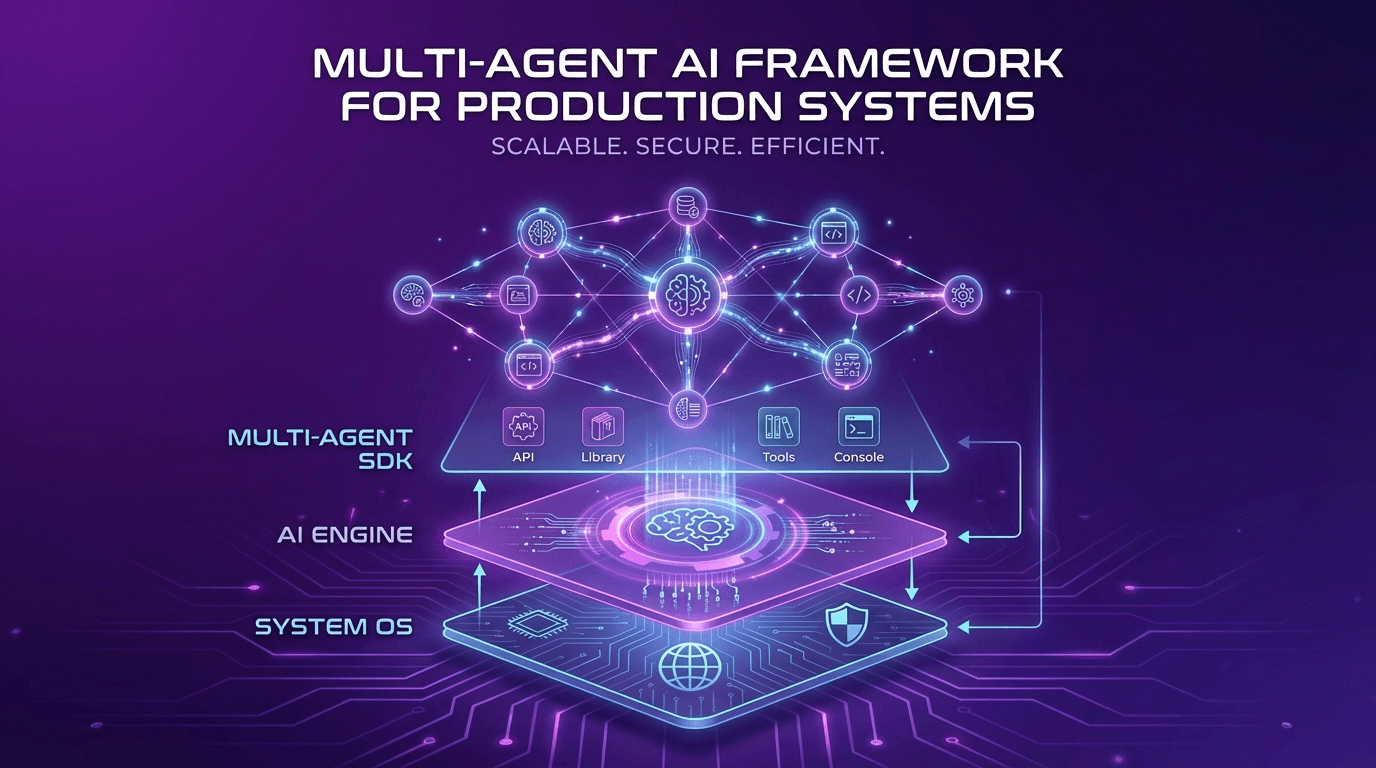
Agno is an open-source agent framework and high-performance runtime for building, running, and managing multi-agent systems at scale. With 38,000+ GitHub stars and 402 contributors, it has become one of the most widely adopted frameworks for production agentic software. Agno is designed for the shift from deterministic request-response architectures to reasoning systems that plan, call tools, remember context, and make decisions.
Agno is structured into three distinct layers. The SDK Layer provides the programming primitives: agents, teams, workflows, memory, knowledge, tools, guardrails, and approval flows. The Engine Layer handles model calls, tool orchestration, structured outputs, and runtime enforcement. The AgentOS Layer delivers streaming APIs, isolation, authentication, approval enforcement, tracing, and a control plane for production operations.
This layered design means developers can start simple with the SDK and gradually adopt more sophisticated features as their agent systems mature.
Agno treats streaming and long-running execution as first-class behaviors rather than afterthoughts. Agents stream reasoning, tool calls, and results in real-time. They can pause mid-execution, wait for human approval, and resume later. This is essential for production agent systems where tasks may take minutes or hours and require human oversight at critical decision points.
Multi-tenant deployments are supported natively with per-user and per-session isolation. Each user's agent sessions, memory, and knowledge are stored separately, enabling shared infrastructure without data leakage between tenants. This addresses a common challenge when scaling agent systems for SaaS applications.
Agno includes built-in guardrails, evaluations, traces, and audit logging. Runtime approval enforcement allows organizations to define governance policies that are enforced during agent execution rather than relying on post-hoc review. Every decision point, tool call, and model response is traceable, providing the auditability required for regulated industries.
Unlike hosted agent platforms, Agno runs entirely in the user's infrastructure. Sessions, memory, knowledge, and traces are stored in the user's own database. There is no vendor-hosted component that retains user data. This self-hosted model provides full control over data residency, compliance, and operational costs.
Agno supports 40+ model providers including Gemini, Claude, GPT, Llama, Mistral, DeepSeek, Groq, Ollama, and vLLM. MCP integration provides additional tool access through the Model Context Protocol ecosystem. The framework is model-agnostic, allowing teams to switch providers or use multiple models within the same agent system.
A production-ready API can be deployed from minimal code. The runtime is stateless and horizontally scalable, supporting background execution across 50+ APIs. The latest release (v2.5.3, February 19, 2026) continues active development with 168 releases and a growing cookbook of practical examples.
OpenClaw is an open-source, local-first AI gateway with 366K GitHub stars that routes AI responses through WhatsApp, Telegram, Slack, Discord, iMessage, Teams, and 15+ other platforms — zero cloud dependency.

OpenClaw
Open-source personal AI assistant connecting to 13+ messaging platforms with local gateway architecture, voice support, and multi-agent routing.