
Open Source
Explore the latest AI open-source projects from GitHub and HuggingFace.
Explore the latest AI open-source projects from GitHub and HuggingFace.
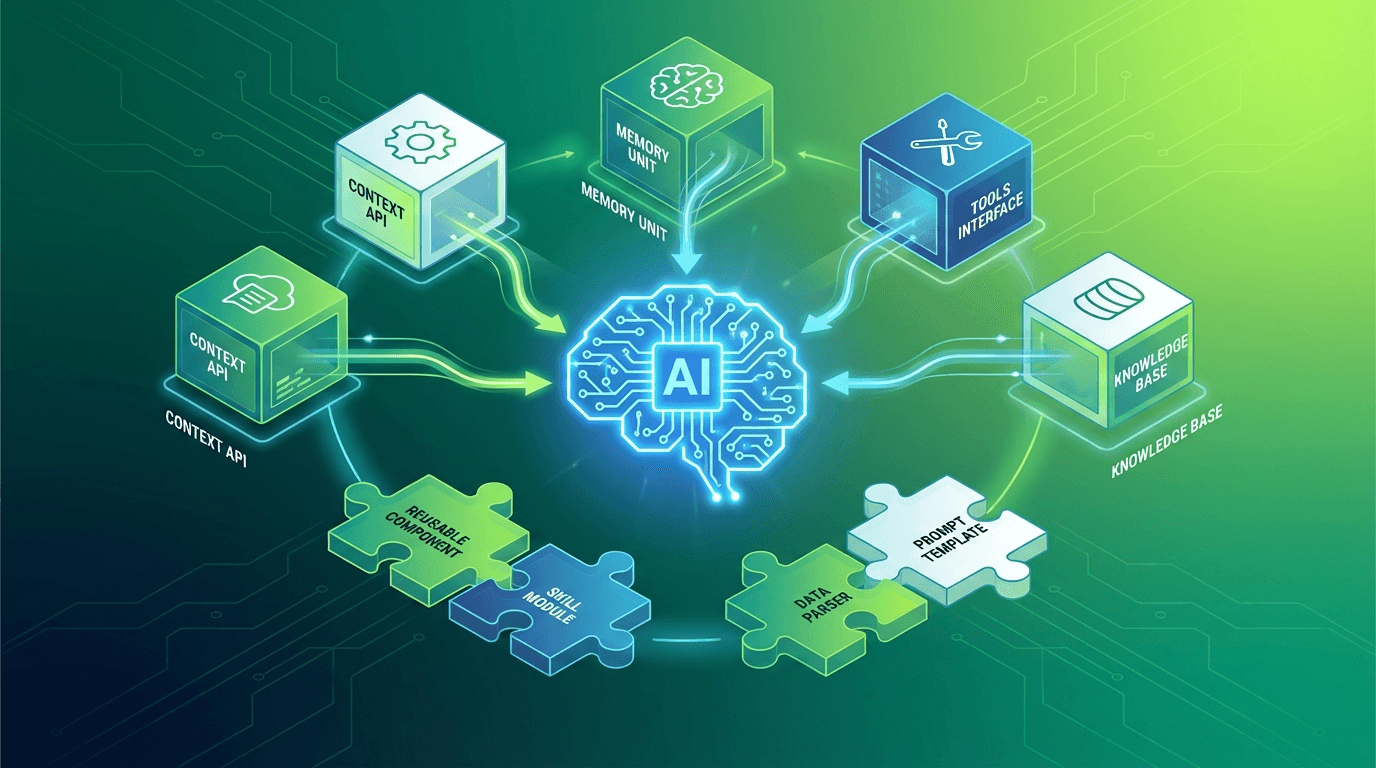
Agent Skills for Context Engineering is an open-source collection of 13+ reusable AI agent skills focused on context engineering, the discipline of optimizing what information enters a language model's limited attention budget. Created by Muratcan Koylan, the project provides foundational, architectural, operational, and cognitive skill modules that work across Claude Code, Cursor, and any agent platform supporting custom instructions. With over 9,000 GitHub stars and citation in peer-reviewed research from Peking University, this repository has become a definitive reference for building production-grade agent systems with effective context management.
As AI agents become more capable, a new bottleneck has emerged: not what the model can do, but what information it has access to when making decisions. Context engineering addresses this by treating the model's context window as a scarce resource that must be carefully managed. Every token of context affects output quality, cost, and latency. Poorly managed context leads to hallucinations, missed instructions, and wasteful token consumption.
The Agent Skills for Context Engineering repository codifies best practices for this emerging discipline into modular, reusable components. Rather than requiring developers to reinvent context management patterns for each project, the skills provide battle-tested architectures that can be adopted incrementally.
The project's core design pattern is progressive disclosure. Skills load in stages to minimize context consumption. Initially, an agent only accesses skill names and one-line descriptions. When a task matches a skill's trigger keywords, the full skill content is loaded into context. This approach means agents can have access to dozens of capabilities without paying the token cost of loading them all simultaneously.
This architecture directly addresses the paradox of agent capability: more tools and instructions improve potential performance but consume context that could be used for actual task content. Progressive disclosure resolves this tension by making skills available on demand rather than always present.
The repository organizes skills into four primary categories. Foundational skills (3 modules) cover context fundamentals, degradation patterns, and compression strategies. These provide the theoretical grounding for understanding how context affects model behavior and what happens when context is mismanaged.
Architectural skills (5 modules) address multi-agent patterns, memory systems, tool design, filesystem context management, and hosted agents with sandboxed VMs. These are the practical building blocks for constructing agent systems that scale beyond single-prompt interactions.
Operational skills (3 modules) focus on context optimization, evaluation frameworks, and LLM-as-Judge techniques for automated quality assessment. Development skills cover project methodology from ideation through deployment. A cognitive module introduces BDI (Belief-Desire-Intention) mental state modeling for deliberative agent reasoning.
A critical design decision is platform agnosticism. The skills work across Claude Code, Cursor, and any agent platform that supports skills or custom instructions. This avoids vendor lock-in and allows teams to adopt the patterns regardless of their preferred development environment. The underlying principles apply universally: context budget management, progressive loading, and structured knowledge organization are relevant to any LLM-powered system.
The repository goes beyond theoretical patterns by including four complete system demonstrations. The Digital Brain Skill is a personal operating system for founders with 6 modules and 4 automation scripts. The X-to-Book System demonstrates a multi-agent content synthesis pipeline. LLM-as-Judge Tools provides a production TypeScript implementation with 19 passing tests. The Book SFT Pipeline shows author-style model training at a cost of just $2 total, achieving 70% human quality scores.
Each demonstration traces its architectural decisions back to specific skill principles, showing how abstract patterns translate into working systems. This combination of theory and practice makes the repository valuable both as a learning resource and as a practical starting point for production projects.
The repository functions as a Claude Code Plugin Marketplace. Users register it via a single command, then browse and install individual plugins. Five bundled plugins aggregate related skills for easier discovery. Skills trigger automatically based on task context keywords, so users do not need to manually activate capabilities. This zero-friction adoption model has contributed to the project's rapid growth.
The work has been cited in peer-reviewed research from Peking University (2026) as foundational for static skill architecture in agentic systems. This academic validation confirms that the patterns documented in the repository represent genuine contributions to the field rather than ad-hoc configurations.
The skills are primarily documented through Claude Code examples, and adaptation to other platforms may require manual translation. Some advanced patterns, such as the BDI mental state modeling, assume familiarity with cognitive science concepts that may not be intuitive for all developers. The repository's rapid growth means documentation occasionally lags behind newly added skills. Skill files are recommended to stay under 500 lines for optimal performance, which can constrain documentation depth for complex patterns.
OpenClaw is an open-source, local-first AI gateway with 366K GitHub stars that routes AI responses through WhatsApp, Telegram, Slack, Discord, iMessage, Teams, and 15+ other platforms — zero cloud dependency.

OpenClaw
Open-source personal AI assistant connecting to 13+ messaging platforms with local gateway architecture, voice support, and multi-agent routing.