
Open Source
Explore the latest AI open-source projects from GitHub and HuggingFace.
Explore the latest AI open-source projects from GitHub and HuggingFace.
Building a capable AI agent is the first challenge. Making it better over time has been the harder, largely unsolved problem. Agent Lightning, an open-source framework released by Microsoft Research, directly addresses this gap. With 16,800+ GitHub stars and active development, it provides a training and optimization layer that sits on top of existing agent frameworks — enabling developers to apply reinforcement learning, prompt optimization, and supervised fine-tuning to agents built with LangChain, OpenAI Agent SDK, AutoGen, CrewAI, or custom implementations — without rewriting the agents themselves.
1. Near-Zero Code Integration
The defining claim of Agent Lightning is its minimally invasive integration model. The framework's documentation describes it as "zero code change (almost)" — in practice, this means wrapping an existing agent with a lightweight LightningAgent decorator and adding a small number of event emission calls. The underlying agent logic, tool definitions, and system prompts remain unchanged. This design principle is important: it means Agent Lightning can be applied to agents already in production, not just new projects, dramatically lowering the barrier to adoption.
2. Framework-Agnostic Architecture
Agent Lightning explicitly supports the most widely used Python agent frameworks: LangChain, OpenAI Agent SDK, AutoGen, CrewAI, and custom agent implementations. The integration layer is abstracted through the LightningStore — a central hub that manages tasks, traces, and training state. Agents emit events through standardized helpers (agl.emit_xxx() calls), and the store handles everything from there. This means a team using LangChain agents can apply the same training infrastructure as a team using CrewAI, without framework migration.
3. Multiple Optimization Algorithms
Agent Lightning is not limited to a single training approach. The framework supports reinforcement learning (RL) as the primary optimization mechanism, but also includes prompt optimization (automatic system prompt improvement based on trajectory feedback) and supervised fine-tuning (SFT) for cases where labeled trajectory data is available. This algorithmic diversity makes it applicable to a wide range of agent improvement scenarios — from fine-grained code generation quality to high-level task completion rate optimization.
4. Selective Agent Targeting in Multi-Agent Systems
For teams operating multi-agent pipelines, Agent Lightning supports selective optimization — applying training to a specific agent within a larger system without affecting the others. This is a critical capability for production multi-agent deployments where some agents are performing well and others are bottlenecks. The framework can isolate the underperforming agent, collect its trajectories, and optimize it independently.
5. Distributed Training Infrastructure
Agent Lightning scales beyond single-machine training. The framework supports distributed GPU training through integration with standard ML infrastructure, enabling large-scale optimization runs. Community projects have demonstrated 128-GPU distributed training runs using Agent Lightning, suggesting the infrastructure is capable of supporting enterprise-scale agent improvement workflows. The LightningStore handles the coordination of training state across distributed workers.
6. LightningStore Architecture
The central architectural component is the LightningStore, which acts as the hub connecting agents, training algorithms, and inference infrastructure. Agents emit structured spans to the store during task execution — recording observations, actions, tool calls, and outcomes. The store applies the configured learning algorithm to these traces and posts refined resources (updated prompts, fine-tuned weights, or optimized tool schemas) back to the inference layer. This creates a continuous improvement loop without requiring agent code changes for each optimization cycle.
Agent Lightning's primary audience is ML engineers and AI platform teams who have existing agent deployments and want to improve agent performance systematically rather than through manual prompt engineering. The Python SDK is clean and well-documented, with example integrations for each supported framework. Docker support and GitHub Actions CI/CD integration reflect production engineering maturity rather than pure research-project polish.
The main learning curve involves understanding the LightningStore architecture and configuring reward functions for the RL training loop — tasks that require ML background beyond basic Python development. Teams without ML engineering expertise may find the supervised fine-tuning mode more accessible, as it requires labeled trajectory data rather than reward function design.
Pros
Cons
Agent Lightning addresses one of the most pressing gaps in the current AI agent ecosystem: the lack of systematic, feedback-driven improvement mechanisms. Most production agents are deployed and then manually tuned through prompt engineering — an expensive, non-scalable process. By providing a training infrastructure that works with existing frameworks, Agent Lightning positions itself as the missing MLOps layer for the agent era. As multi-agent systems become more prevalent in production AI deployments, the demand for targeted per-agent optimization infrastructure will grow significantly.
Agent Lightning is Microsoft's answer to the agent optimization problem: a framework-agnostic training layer that brings reinforcement learning and prompt optimization to any Python AI agent with minimal integration friction. For ML engineering teams operating production agent systems, it represents a meaningful step toward systematic, measurable agent improvement. The near-zero code integration model and multi-framework support make it one of the most practically accessible agent training frameworks in the open-source ecosystem today.
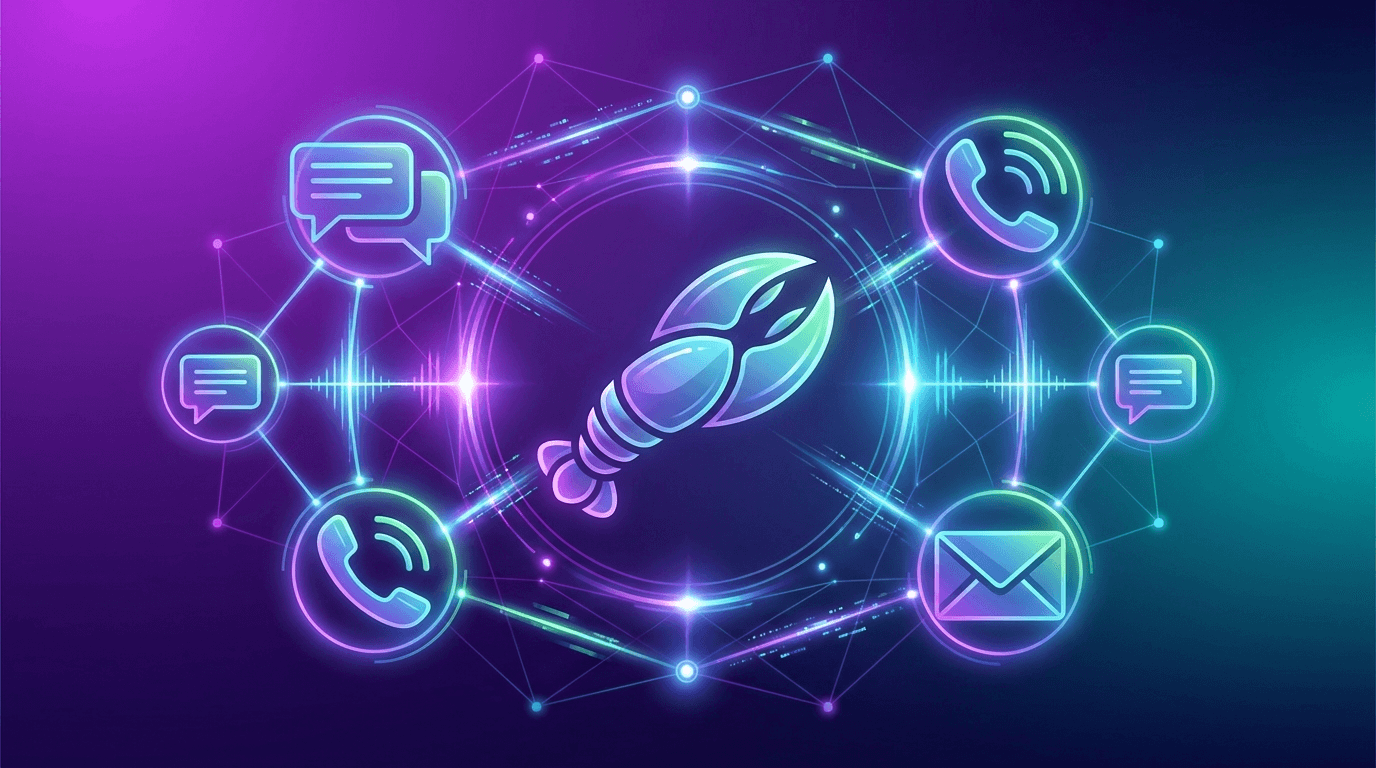
OpenClaw is an open-source, local-first AI gateway with 366K GitHub stars that routes AI responses through WhatsApp, Telegram, Slack, Discord, iMessage, Teams, and 15+ other platforms — zero cloud dependency.
OpenClaw
Open-source personal AI assistant connecting to 13+ messaging platforms with local gateway architecture, voice support, and multi-agent routing.