
WeatherNext 3: Hourly 5km Forecasts From Raw Satellites
Google's WeatherNext 3 runs hourly 5km forecasts trained on live satellite data, but WindBorne disputes its 'first' claim.
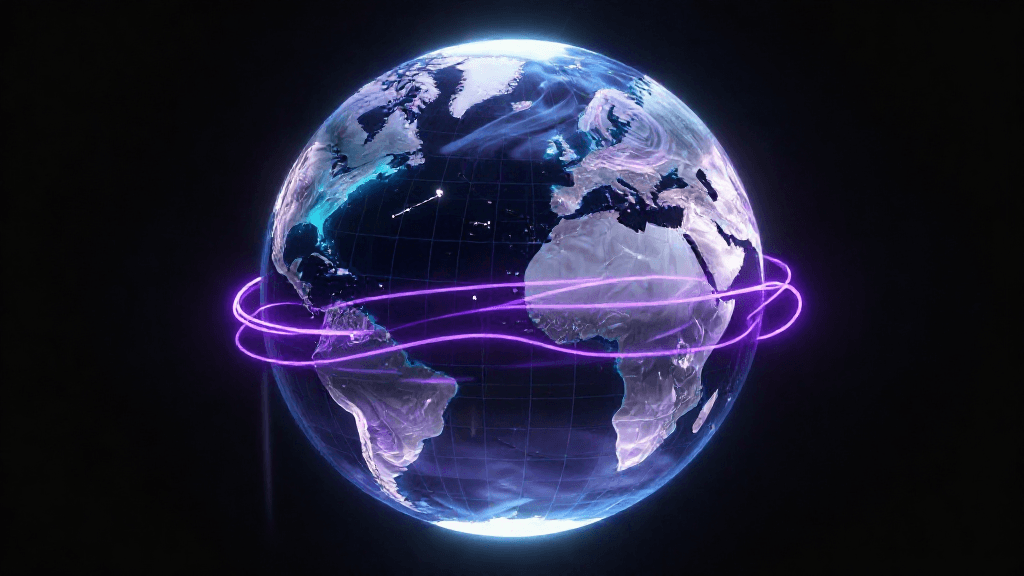
Google's WeatherNext 3 runs hourly 5km forecasts trained on live satellite data, but WindBorne disputes its 'first' claim.
Introduction
On September 3, 2026, Google announced WeatherNext 3, which Google DeepMind and Google Research describe as their most advanced and accurate global weather AI model. The headline change is granularity: where WeatherNext 2 produced forecasts on a 25 km grid in 6-hour increments, WeatherNext 3 produces hourly forecasts and resolves key surface variables such as temperature and moisture at 5 km. Google characterizes the resulting global picture as "roughly five times sharper" than its predecessor.
The more consequential shift is what the model learns from. Most AI weather models, including WeatherNext 2, train on the output of numerical weather prediction (NWP) systems, which carries a roughly six-hour data lag that can bias fast-changing variables like rain and surface temperature. WeatherNext 3 instead ingests a mosaic of live global geostationary satellite data — raw observations — alongside traditional historical analysis. Google says the model starts powering Google Search, the Gemini app, Google Maps, the Google Maps Platform Weather API, and Google Earth Engine as of the announcement date. A technical paper accompanies the release.
Feature Overview
Resolution and cadence. WeatherNext 3 is not uniformly 5 km. The resolution varies by variable class, which matters when evaluating the model for a specific use case.
| Variable class | WeatherNext 3 resolution |
|---|---|
| Key surface variables (temperature, moisture) | 5 km |
| Other surface variables | 10 km |
| Atmospheric variables (e.g. wind speed) | 25 km |
Forecast cadence moves from every 6 hours in WeatherNext 2 to hourly.
Architecture. Google describes WeatherNext 3 as a single, flexible Functional Generative Network (FGN) mesh transformer. The same model ingests live 1-hour geostationary satellite mosaics alongside traditional historical analysis, and outputs three different kinds of prediction: dense gridded fields, discrete cyclone tracks, and station-level sparse coordinates predicted natively. Consolidating gridded, track, and point predictions into one network is the structural difference from pipelines that bolt separate post-processing models onto a gridded forecast. According to TechCrunch, citing Google researchers, the model carries 2.4x more parameters than its predecessor.
Station-level training. Beyond satellite mosaics, WeatherNext 3 trains directly on sparse weather station observation data, so its 5 km global forecasts account for regional topography. Google frames this as most relevant for Latin America, Africa, and Asia-Pacific — regions historically underserved by high-resolution forecasting because running traditional regional models is computationally expensive. Daniel Rothenberg, an atmospheric scientist at Brightband, has described the appeal of running such tasks "as end-to-end as possible," including predicting what a specific airport weather station will measure hourly.
Precipitation. For rain, Google trained on NASA's satellite-based IMERG (Integrated Multi-satellite Retrievals for GPM) and on Google's own global precipitation reanalysis built from satellite radar. On medium-range global forecasts, Google reports Continuous Ranked Probability Score (CRPS) improvements of up to 60% against IMERG, 30% against MRMS, and 10% against rain gauge measurements at early lead times. TechCrunch summarizes the headline figure as rain evaluations being "60% improved over WeatherNext 2." Read carefully, these are three different numbers against three different reference datasets, not a single uniform gain.
Renewable energy variables. WeatherNext 3 forecasts 100-meter wind speeds — roughly turbine hub height — plus high-resolution cloud cover and sun radiation levels for estimating solar output. Ferran Alet, a staff research scientist manager at DeepMind, has connected higher-resolution wind, rain, and cloud forecasts to making renewable energy projects more dependable, and has framed the broader machine learning problem as approximating noisy physics from incomplete information and finite compute.
Usability Analysis
Distribution is unusually wide for a research model. Google says WeatherNext 3 begins powering Google Search, the Gemini app, Google Maps, the Google Maps Platform Weather API, and Google Earth Engine starting the day of the announcement. Samier Merchant, a Google senior staff engineer, described this as "the first time that some of the core variables feed and power a lot of the Google products." For consumers, Google says users planning a day or more ahead will see "up to 50% more accurate precipitation forecasts."
Developers and researchers have three access routes: querying the data in BigQuery, querying it in Earth Engine, or bulk-downloading from Google Cloud Storage, with documentation at developers.google.com/weathernext. That combination — API access for product builders and bulk data for researchers — makes independent evaluation practical rather than theoretical.
On independent evaluation, WeatherNext 3 ranked most accurate on Brightband's Operational WeatherBench live leaderboard, which compares metrics including temperature, windspeed, and humidity. Per TechCrunch, it beat deep-learning models from Google itself, Microsoft, Nvidia, and ECMWF, along with traditional forecasts from the U.S. National Weather Service and ECMWF. A live third-party leaderboard is a meaningfully stronger signal than vendor-reported benchmarks, though leaderboard standings can change as other models update.
Google attaches its own limitation to the release: for official forecasts, severe weather warnings, and public safety advisories, users should refer to their local meteorological agency or national weather service. WeatherNext 3 is positioned as a forecasting model, not a warning system.
Pros and Cons
Pros:
- Hourly cadence and 5 km resolution for key surface variables, against WeatherNext 2's 25 km grid in 6-hour increments
- Ingests live geostationary satellite mosaics, avoiding the roughly six-hour NWP data lag that can bias rain and surface temperature
- Trains on sparse station observations, extending high-resolution forecasting to regions where running traditional regional models is cost-prohibitive
- Ranked most accurate on Brightband's Operational WeatherBench live leaderboard, an independent third-party evaluation
- Data is accessible through BigQuery, Earth Engine, and bulk download from Google Cloud Storage, alongside consumer product integration
Cons:
- Google says WeatherNext 3 is the first AI model to directly incorporate raw observations for a high-resolution global forecast, but the AI weather startup WindBorne says its WeatherMesh 6 has incorporated raw observations from its weather-balloon fleet and other sources since late 2025; asked about this, Google pointed to its forecasts being higher resolution across the globe, and both models still rely on national weather datasets, so true direct data assimilation has not been achieved
- Atmospheric variables such as wind speed remain at 25 km, the same grid as WeatherNext 2 — only some surface variables reach 5 km
- The 60%, 30%, and 10% precipitation figures are Google-reported CRPS gains against three specific baselines at early lead times, not one uniform improvement
- Google directs users to their local meteorological agency for official forecasts, severe weather warnings, and public safety advisories
Outlook
The interesting fault line here is not resolution but data assimilation. Traditional NWP spends enormous compute turning raw observations into a gridded analysis, and AI models have mostly consumed that analysis rather than the observations. WeatherNext 3 and WindBorne's WeatherMesh 6 are both pushing toward the raw end of that pipeline, and by TechCrunch's account neither has closed the gap: both still lean on national weather datasets. Whichever system removes that dependency first would change the economics of forecasting for countries that cannot fund a national NWP center.
The renewable energy angle is the nearer-term commercial story. Hub-height wind and high-resolution solar radiation forecasts are exactly the inputs grid operators and energy traders need, and they are the variables where a 5 km hourly model has the clearest advantage over a 25 km six-hourly one — with the caveat that wind speed itself still sits in the 25 km atmospheric tier.
Conclusion
WeatherNext 3 pairs a real architectural change — one FGN mesh transformer producing gridded fields, cyclone tracks, and native station-level predictions from live satellite mosaics — with genuinely wide distribution across Google's consumer products and cloud data platforms. The independent Brightband leaderboard result gives its accuracy claims outside support that vendor benchmarks usually lack. The tempering details are that resolution gains are uneven across variable classes, the precipitation numbers are baseline-specific, and Google's "first" framing is contested by WindBorne. It is most relevant to atmospheric researchers, energy forecasting teams, and developers building weather-dependent products on Google Cloud.
Editor's Verdict
WeatherNext 3: Hourly 5km Forecasts From Raw Satellites earns a solid recommendation within the research space.
The strongest case for paying attention: hourly cadence and 5 km resolution for key surface variables, against WeatherNext 2's 25 km grid in 6-hour increments. That alone raises the bar for what readers should expect in this space. Reinforcing that, ingests live geostationary satellite mosaics, avoiding the roughly six-hour NWP data lag that can bias rain and surface temperature — practical value rather than just headline appeal. The broader signal worth registering is straightforward: WeatherNext 3 moves from WeatherNext 2's 25 km grid in 6-hour increments to hourly forecasts at 5 km for key surface variables, which Google describes as a global picture roughly five times sharper. On the other side of the ledger, one constraint is real rather than a marketing footnote: Google says WeatherNext 3 is the first AI model to directly incorporate raw observations for a high-resolution global forecast, but WindBorne says its WeatherMesh 6 has done so since late 2025; both models still rely on national weather datasets, so true direct data assimilation has not been achieved. It should factor into any serious decision. Layered on top of that, atmospheric variables such as wind speed remain at 25 km, the same grid as WeatherNext 2 — only some surface variables reach 5 km — which narrows the set of teams for whom this is an obvious yes.
For ML researchers, technical leads, and readers tracking the underlying science behind new capabilities, this is a serious evaluation candidate, not just a curiosity to bookmark. For everyone else, the safer posture is to monitor coverage and revisit once the use cases that matter to your team are demonstrated in the wild.
Pros
- Hourly cadence and 5 km resolution for key surface variables, against WeatherNext 2's 25 km grid in 6-hour increments
- Ingests live geostationary satellite mosaics, avoiding the roughly six-hour NWP data lag that can bias rain and surface temperature
- Trains on sparse station observations, extending high-resolution forecasting to regions where running traditional regional models is cost-prohibitive
- Ranked most accurate on Brightband's Operational WeatherBench live leaderboard, an independent third-party evaluation
- Data is accessible through BigQuery, Earth Engine, and bulk download from Google Cloud Storage, alongside consumer product integration
Cons
- Google says WeatherNext 3 is the first AI model to directly incorporate raw observations for a high-resolution global forecast, but WindBorne says its WeatherMesh 6 has done so since late 2025; both models still rely on national weather datasets, so true direct data assimilation has not been achieved
- Atmospheric variables such as wind speed remain at 25 km, the same grid as WeatherNext 2 — only some surface variables reach 5 km
- The 60%, 30%, and 10% precipitation figures are Google-reported CRPS gains against three specific baselines at early lead times, not one uniform improvement
- Google directs users to their local meteorological agency for official forecasts, severe weather warnings, and public safety advisories
References
Comments0
Key Features
1. Announced September 3, 2026 by Google DeepMind and Google Research as their most advanced and accurate global weather AI model. 2. Produces hourly forecasts at 5 km for key surface variables (temperature, moisture), 10 km for other surface variables, and 25 km for atmospheric variables such as wind speed — versus WeatherNext 2's 25 km grid in 6-hour increments. 3. A single Functional Generative Network (FGN) mesh transformer ingests live 1-hour geostationary satellite mosaics alongside historical analysis, and outputs gridded fields, discrete cyclone tracks, and native station-level sparse coordinates. 4. Trains on raw satellite observations rather than only NWP output, avoiding a roughly six-hour data lag that can bias rain and surface temperature. 5. Precipitation training on NASA's IMERG and Google's satellite-radar precipitation reanalysis yields Google-reported CRPS gains of up to 60% against IMERG, 30% against MRMS, and 10% against rain gauges at early lead times. 6. Forecasts 100-meter wind speeds plus high-resolution cloud cover and sun radiation for renewable energy estimation. 7. Ranked most accurate on Brightband's Operational WeatherBench live leaderboard; available through Google Search, the Gemini app, Google Maps, the Maps Platform Weather API, Earth Engine, BigQuery, and bulk download from Google Cloud Storage.
Key Insights
- WeatherNext 3 moves from WeatherNext 2's 25 km grid in 6-hour increments to hourly forecasts at 5 km for key surface variables, which Google describes as a global picture roughly five times sharper.
- The model trains on live geostationary satellite mosaics rather than only NWP output, avoiding a roughly six-hour data lag that can bias fast-changing variables like rain and surface temperature.
- A single FGN mesh transformer produces dense gridded fields, discrete cyclone tracks, and native station-level sparse predictions, consolidating outputs that are often split across separate post-processing models.
- Training directly on sparse weather station observations lets 5 km forecasts account for regional topography, which Google frames as most valuable for Latin America, Africa, and Asia-Pacific where regional NWP models are cost-prohibitive.
- Google reports precipitation CRPS gains of up to 60% against IMERG, 30% against MRMS, and 10% against rain gauges at early lead times — three baseline-specific numbers rather than one uniform improvement.
- Forecasting 100-meter wind speeds plus high-resolution cloud cover and sun radiation targets renewable energy operators directly, though wind speed still sits in the 25 km atmospheric resolution tier.
- WeatherNext 3 ranked most accurate on Brightband's Operational WeatherBench live leaderboard, an independent evaluation covering temperature, windspeed, and humidity.
- Google's claim to be first at directly incorporating raw observations for a high-resolution global forecast is disputed by WindBorne, and per TechCrunch both systems still rely on national weather datasets, so true direct data assimilation has not been achieved.
Was this review helpful?
Share
Related AI Reviews

Anthropic Employment Report: Junior Tech Hires 27% to 9%
Anthropic's internal study: junior share of technical staff fell 21% to 14% as agent hours reached 6x human hours. Data is company-reported.

Anthropic Tests AI Self-Replication on Cheap IoT Devices
Anthropic's Frontier Red Team says small models may be months from self-replicating on IoT devices, based on its own simplified evaluations.
Harvard Study: AI Coding Agents Shift Bottleneck to Review
Harvard working paper on 718 firms: AI agents raised pull requests 23% and review time 49%, with no significant firm-level output gain.
Goodfire Project Beacon: Probe Monitors for Open Models
Goodfire and Baseten launch Project Beacon, a probe-to-judge cascade for open models, first built for Kimi K3: ~93% recall at 5.5% interruptions.