
Pentagon Officially Labels Anthropic a Supply Chain Risk: An Unprecedented Move
The Department of Defense formally designates Anthropic as a supply chain risk, the first time an American company has received this label, while Claude remains active in Iran operations.
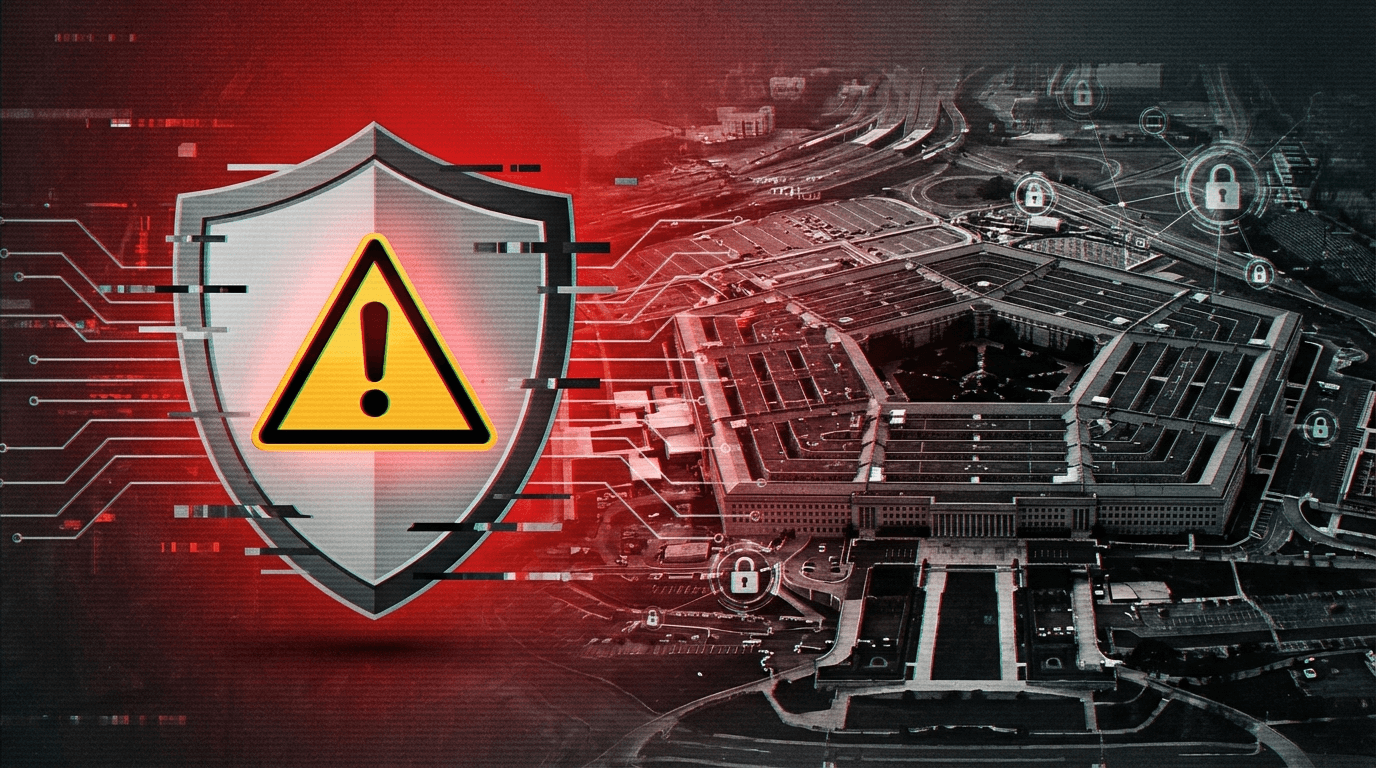
The Department of Defense formally designates Anthropic as a supply chain risk, the first time an American company has received this label, while Claude remains active in Iran operations.
A Designation Without Precedent
On March 5, 2026, the Pentagon formally notified Anthropic PBC that it has determined the company and its products pose a risk to the U.S. defense supply chain. The designation, effective immediately, makes Anthropic the first American company ever to be publicly labeled a supply chain risk by the Department of Defense, a classification that has historically been reserved for foreign adversaries.
The decision escalates a dispute between Anthropic and the Pentagon that has been building for months over the terms under which the company's AI technology can be used in military operations. Defense Secretary Pete Hegseth ordered Pentagon suppliers to purge Anthropic's AI tools from their supply chains, and President Donald Trump directed federal agencies to immediately cease all use of Anthropic's technology, with a six-month phaseout period.
The Core Dispute: Autonomous Weapons and Surveillance
The underlying conflict centers on two specific red lines that Anthropic has refused to cross. The company told the Department of Defense that it supports lawful uses of AI for national security with two exceptions: mass domestic surveillance of Americans and fully autonomous weapons systems.
These restrictions proved unacceptable to the Pentagon. The Department of Defense wanted broader latitude to deploy Claude across military applications without the constraints Anthropic sought to impose. When negotiations broke down, the Pentagon escalated to the supply chain risk designation.
Anthropic's position reflects the company's long-standing emphasis on AI safety and responsible deployment. Founded by former OpenAI researchers Dario and Daniela Amodei, Anthropic has positioned itself as the safety-focused alternative in the AI industry. The Pentagon dispute tests whether that positioning is commercially sustainable when it conflicts with the demands of the largest institutional customer in the world.
The Iran Contradiction
The designation is made more complex by a striking contradiction: even as the Pentagon labels Anthropic a supply chain risk, Claude remains actively deployed in U.S. military operations in Iran. According to reporting from The Washington Post and CNBC, Claude is one of the main tools installed in Palantir's Maven Smart System, which military operators in the Middle East rely on for intelligence analysis and operational planning.
This creates an unusual situation where the same AI system is simultaneously deemed essential for active military operations and a risk to the defense supply chain. The practical implications of removing Claude from systems that are currently in use during an active military campaign remain unclear.
Impact on Defense Contractors
The immediate practical consequence is significant. No contractor, supplier, or partner that does business with the United States military may conduct any commercial activity with Anthropic. Defense vendors and contractors must certify that they do not use Anthropic's models in their work with the Pentagon.
This requirement forces defense technology companies to audit their entire technology stack for any Anthropic dependencies. Companies like Palantir, which have integrated Claude into products used by the military, face particularly difficult decisions about how to comply while maintaining operational capability.
Defense tech companies have already begun responding. According to CNBC, several defense technology firms have started the process of replacing Claude with alternative AI systems, though the transition timeline remains uncertain given the complexity of swapping out AI models in production military systems.
Big Tech and Industry Response
The designation has drawn sharp reactions from across the technology industry. A coalition of major technology companies sent a letter to Secretary Hegseth expressing concern about the precedent being set. The letter argues that designating an American company as a supply chain risk for refusing to remove safety restrictions could chill AI innovation and discourage companies from engaging with defense contracts.
Defense experts who testified before Congress defended Anthropic's position, arguing that the Pentagon's demand for unrestricted AI deployment conflicts with both responsible AI development practices and broader national security interests. The concern is that forcing AI companies to remove safety guardrails creates risks that outweigh the benefits of unrestricted military access.
Anthropic has announced it will challenge the designation in court, according to TechCrunch reporting from March 6. The legal battle will test the boundaries of the Pentagon's authority to designate American companies as supply chain risks and could establish precedent for how AI safety commitments interact with government contracts.
Historical Significance
The supply chain risk designation has traditionally been a tool for addressing threats from foreign entities. Previous applications have targeted companies connected to adversary nations, particularly Chinese telecommunications firms like Huawei and ZTE. Applying this designation to an American AI company, particularly one founded with an explicit mission of AI safety, represents a fundamental shift in how the label is used.
This shift raises questions about the future relationship between AI companies and the U.S. government. If safety commitments can trigger supply chain risk designations, the incentive structure for AI companies considering government contracts changes dramatically. Companies may face a choice between maintaining safety principles and maintaining access to government revenue.
Pros
- Anthropic's refusal to allow mass domestic surveillance and fully autonomous weapons demonstrates that AI companies can maintain ethical red lines under extreme pressure
- The legal challenge will establish important precedent for the relationship between AI safety commitments and government contracts
- Big Tech industry pushback signals broad concern about the precedent, potentially protecting future AI safety standards
- Public transparency about the dispute allows democratic debate about how AI should be used in military contexts
- The contradiction of Claude being used in Iran while being designated a risk highlights the complexity of AI governance
Cons
- The designation disrupts defense contractors who have built systems around Claude, creating operational risk during an active military campaign
- Anthropic faces significant revenue loss from defense-related contracts and government agencies ordered to phase out Claude
- The precedent may discourage AI companies from establishing any safety restrictions when engaging with government contracts
- The six-month federal phaseout period creates uncertainty for government employees and agencies that depend on Claude
Outlook
The Pentagon-Anthropic standoff is shaping up to be a defining moment for the AI industry's relationship with government. The legal challenge Anthropic has announced will likely take months or years to resolve, during which time the designation remains in effect.
The outcome will influence how every major AI company approaches government contracts going forward. If Anthropic prevails in court, it could establish that AI companies have the right to impose safety restrictions on their products even when selling to the government. If the Pentagon's designation is upheld, AI companies may conclude that safety restrictions are incompatible with government contracts.
Meanwhile, the irony of Claude remaining essential to active military operations while being officially designated a supply chain risk underscores the gap between policy declarations and operational reality. The U.S. military's dependence on AI tools that no single American company can replace may ultimately prove to be the strongest argument for why the supply chain risk designation is counterproductive.
Conclusion
The Pentagon's decision to label Anthropic a supply chain risk is unprecedented in both its target and its implications. An American AI company is being penalized not for security vulnerabilities or foreign influence, but for maintaining restrictions against autonomous weapons and mass surveillance. As the legal battle unfolds and defense contractors scramble to comply, the case will define the boundaries of AI safety commitments in an era where governments are the largest and most demanding AI customers. The outcome matters not just for Anthropic, but for every AI company that must decide where to draw its ethical lines.
Editor's Verdict
Pentagon Officially Labels Anthropic a Supply Chain Risk: An Unprecedented Move stands out as one of the more compelling it news developments we've covered recently.
The strongest case for paying attention is anthropic demonstrates that AI companies can maintain ethical red lines against mass surveillance and autonomous weapons under extreme pressure, which raises the bar for what readers should now expect from peers in this space. Reinforcing that, the upcoming legal challenge will establish important precedent for AI safety commitments in government contracts adds practical value rather than just headline appeal. The broader signal worth registering is straightforward: anthropic is the first American company ever publicly designated a supply chain risk by the Pentagon, a label historically reserved for foreign adversaries. On the other side of the ledger, the designation disrupts defense contractors who built systems around Claude during an active military campaign is a real constraint, not a marketing footnote, and it should factor into any serious decision. Layered on top of that, anthropic faces significant revenue loss from defense contracts and federal agencies ordered to phase out Claude narrows the set of teams for whom this is an obvious yes.
For AI industry watchers, strategy teams, and decision-makers tracking platform shifts, the answer here is to pilot now and plan for production use. For everyone else, the safer posture is to monitor coverage and revisit once the use cases that matter to your team are demonstrated in the wild.
Pros
- Anthropic demonstrates that AI companies can maintain ethical red lines against mass surveillance and autonomous weapons under extreme pressure
- The upcoming legal challenge will establish important precedent for AI safety commitments in government contracts
- Big Tech industry pushback signals broad concern about the precedent, potentially protecting AI safety standards industry-wide
- Public transparency about the dispute enables democratic debate on how AI should be used in military contexts
- The contradiction of Claude being used in Iran while designated a risk highlights gaps in AI governance policy
Cons
- The designation disrupts defense contractors who built systems around Claude during an active military campaign
- Anthropic faces significant revenue loss from defense contracts and federal agencies ordered to phase out Claude
- The precedent may discourage AI companies from establishing safety restrictions when pursuing government contracts
- The six-month federal phaseout creates operational uncertainty for government employees and agencies depending on Claude
References
Comments0
Key Features
On March 5, 2026, the Pentagon formally designated Anthropic as a supply chain risk, making it the first American company to receive this label historically reserved for foreign adversaries. The dispute centers on Anthropic's refusal to allow Claude to be used for mass domestic surveillance and fully autonomous weapons. Defense contractors must certify they do not use Anthropic models, while Claude paradoxically remains deployed in U.S. military operations in Iran through Palantir's Maven Smart System. President Trump ordered federal agencies to cease using Anthropic technology with a six-month phaseout. Anthropic plans to challenge the designation in court.
Key Insights
- Anthropic is the first American company ever publicly designated a supply chain risk by the Pentagon, a label historically reserved for foreign adversaries
- The dispute stems from Anthropic's two specific red lines: no mass domestic surveillance and no fully autonomous weapons
- Claude remains actively deployed in U.S. military operations in Iran through Palantir's Maven Smart System despite the designation
- Defense contractors must certify they do not use Anthropic models in any Pentagon-related work, forcing technology stack audits
- President Trump directed all federal agencies to cease Anthropic usage with a six-month phaseout period
- A coalition of Big Tech companies wrote to Secretary Hegseth expressing concern about the precedent being set
- Anthropic plans to challenge the designation in court, which could establish precedent for AI safety commitments in government contracts
- The case tests whether AI companies can maintain ethical restrictions while serving government customers
Was this review helpful?
Share
Related AI Reviews

Meta Pulls Commercial Terms Clause on Scraping, AI Training
Meta removed a Commercial Terms sentence experts read as letting it scrape publisher sites for AI training. Meta says crawlers are unchanged.
Microsoft Maia 300: 96-Accelerator Rack, 2027 Rollout
Microsoft's Maia 300 inference chip claims up to 7x Maia 200's rack throughput on TSMC N2P chiplets, with production rollout starting in 2027.

Nadella: Treat Frontier AI Models as Insider Risks
Nadella's X essay urges treating frontier models as insider risks: controls outside the model, audit evidence and an emergency brake.

Google Pauses OSS VRP Product-Bug Rewards Over AI Slop
Google stopped taking product-vulnerability reports in its OSS bug bounty on Oct 1 over invalid AI submissions; supply-chain rewards continue.