
NVIDIA and Google Cloud Deepen Collaboration to Advance Agentic and Physical AI
NVIDIA and Google Cloud announced expanded collaboration at Cloud Next '26, co-engineering a full-stack AI platform from performance libraries to enterprise cloud services for agentic and physical AI.
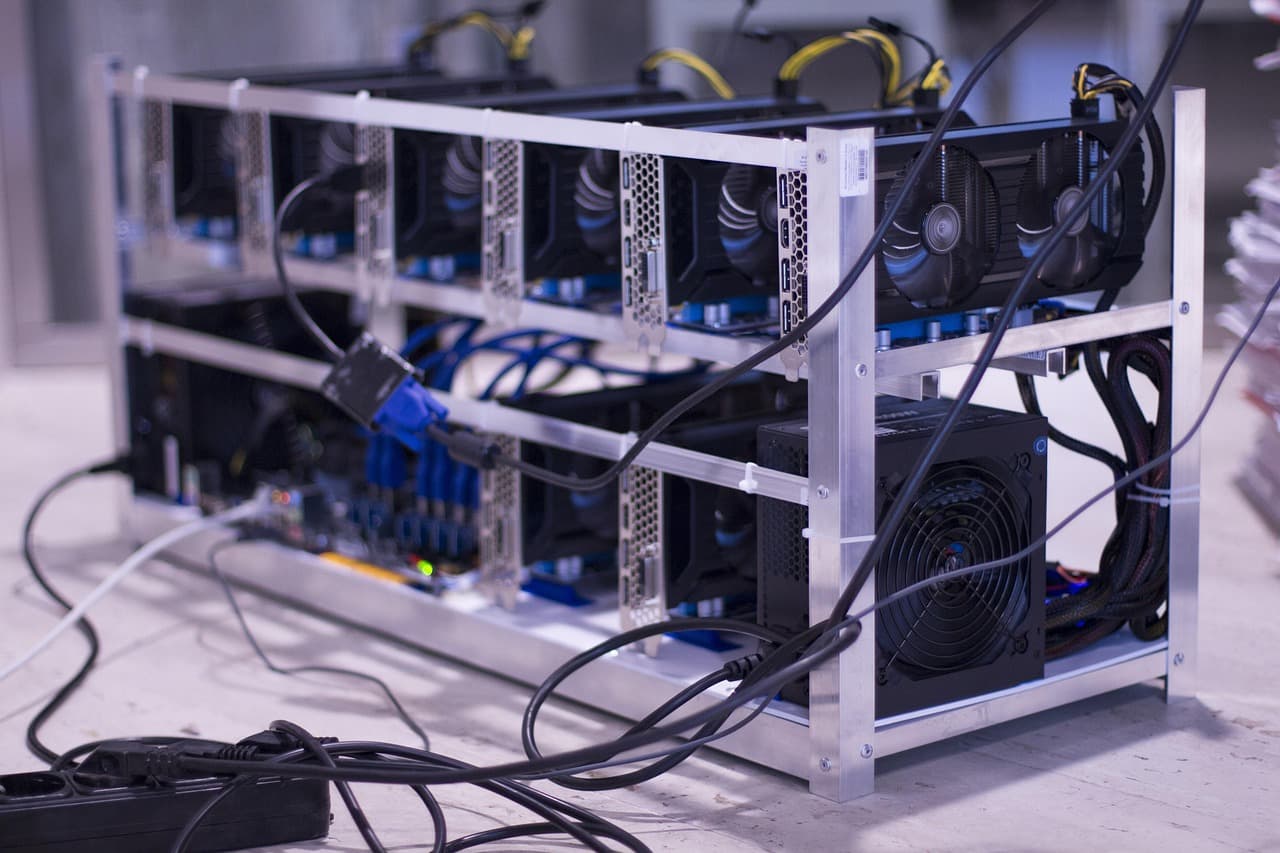
NVIDIA and Google Cloud announced expanded collaboration at Cloud Next '26, co-engineering a full-stack AI platform from performance libraries to enterprise cloud services for agentic and physical AI.
What Was Announced
On April 22, 2026, at Google Cloud Next '26, NVIDIA and Google Cloud announced an expanded collaboration aimed at advancing agentic and physical AI capabilities. The announcement highlights over a decade of partnership between the two companies, culminating in what they describe as a co-engineered full-stack AI platform that spans every technology layer — from performance-optimized libraries and frameworks to enterprise-grade cloud services.
What the Collaboration Covers
The partnership brings together NVIDIA's AI compute leadership — including its GPU architectures, CUDA ecosystem, and AI software frameworks — with Google Cloud's AI infrastructure, Gemini models, and enterprise cloud services.
Full-Stack AI Platform
The co-engineered platform covers multiple technology layers:
- Hardware: Google Cloud will offer A5X bare metal instances powered by NVIDIA Vera Rubin NVL72 GPUs, announced alongside the Cloud Next '26 infrastructure reveals. These instances support up to 80,000 GPUs in a single data centre and 960,000 GPUs across multiple sites.
- Software frameworks: Joint optimization of NVIDIA's CUDA, TensorRT, and NeMo frameworks on Google Cloud's AI Hypercomputer infrastructure.
- Agentic workloads: The collaboration specifically targets long-running agent tasks that require sustained GPU compute — use cases that stress traditional cloud architectures with bursty, unpredictable workloads.
- Physical AI: Joint support for robotics workflows using NVIDIA Isaac and Cosmos technologies on Google Cloud infrastructure, enabling robot training and simulation in the cloud with deployment to edge hardware.
NVIDIA Vera Rubin on Google Cloud
A key concrete deliverable is the upcoming availability of NVIDIA's Vera Rubin NVL72 system on Google Cloud A5X bare metal instances. Vera Rubin represents NVIDIA's next-generation GPU architecture, succeeding Blackwell with further improvements in transformer model training and inference efficiency. Availability is targeted for later in 2026.
Usability Analysis
For enterprise AI teams, this collaboration is primarily significant for what it enables in production: long-running agentic workloads and physical AI development pipelines that require reliable, high-density GPU compute with access to Google Cloud's managed services, Gemini models, and data platform.
The physical AI component is particularly forward-looking. Training humanoid robots and autonomous systems requires large-scale simulation — a compute-intensive process that benefits from cloud bursting. The NVIDIA-Google Cloud pipeline enables teams to train models in the cloud using Cosmos world models and deploy to NVIDIA Jetson or other edge hardware.
Pros and Cons
Pros:
- Access to NVIDIA Vera Rubin NVL72 (next-gen GPU) on Google Cloud by late 2026
- Full-stack collaboration reduces integration friction between NVIDIA hardware and Google Cloud services
- Physical AI / robotics support addresses a growing and underserved enterprise segment
- Agentic workload optimization targets the specific infrastructure challenges of long-running AI agents
- Decade-long partnership provides proven integration depth
Cons:
- NVIDIA Vera Rubin availability on Google Cloud is still targeted for "later in 2026" — not immediately accessible
- Physical AI pipeline maturity is still early — practical robotics deployments at enterprise scale remain complex
- Pricing for next-gen GPU instances at this scale will be substantial
- Customers with multi-cloud strategies may find tight NVIDIA-Google integration creates platform lock-in concerns
Outlook
The NVIDIA-Google Cloud collaboration at Cloud Next '26 is a signal that the two hyperscaler-adjacent partners see the agentic and physical AI era as requiring tighter hardware-software co-design than the previous generation of cloud AI. As AI workloads evolve from batch inference to long-running, stateful agents — and eventually to physical AI systems like robots and autonomous vehicles — the infrastructure requirements change fundamentally.
This partnership positions Google Cloud as a first-class environment for NVIDIA-based AI development, competing directly with Azure (which has its own deep NVIDIA ties) and AWS (which has invested heavily in its own silicon via Trainium and Inferentia).
Conclusion
The NVIDIA-Google Cloud collaboration announcement at Cloud Next '26 signals a joint commitment to the next wave of enterprise AI: agentic systems and physical AI. For teams building complex, long-running agent workflows or physical AI applications, the combined platform — particularly with Vera Rubin availability on the horizon — represents a compelling infrastructure target.
Rating: 4/5 — Strategically significant and technically credible, with the hardware availability timeline being the key caveat.
Editor's Verdict
NVIDIA and Google Cloud Deepen Collaboration to Advance Agentic and Physical AI earns a solid recommendation within the it news space.
The strongest case for paying attention is access to next-gen NVIDIA Vera Rubin NVL72 on Google Cloud by late 2026, which raises the bar for what readers should now expect from peers in this space. Reinforcing that, physical AI / robotics support addresses a growing enterprise AI segment adds practical value rather than just headline appeal. The broader signal worth registering is straightforward: the shift from stateless inference to stateful, long-running agentic workloads requires a fundamentally different cloud infrastructure design — this collaboration directly targets that gap. On the other side of the ledger, vera Rubin availability on Google Cloud is still months away ("later in 2026") is a real constraint, not a marketing footnote, and it should factor into any serious decision. Layered on top of that, physical AI enterprise deployments remain technically complex regardless of cloud support narrows the set of teams for whom this is an obvious yes.
For AI industry watchers, strategy teams, and decision-makers tracking platform shifts, this is a serious evaluation candidate, not just a curiosity to bookmark. For everyone else, the safer posture is to monitor coverage and revisit once the use cases that matter to your team are demonstrated in the wild.
Pros
- Access to next-gen NVIDIA Vera Rubin NVL72 on Google Cloud by late 2026
- Physical AI / robotics support addresses a growing enterprise AI segment
- Full-stack integration reduces deployment complexity for NVIDIA-based workloads on GCP
- Extreme scale (960K GPUs across multiple sites) supports frontier model training
- Decade-long partnership provides deep, proven integration reliability
Cons
- Vera Rubin availability on Google Cloud is still months away ("later in 2026")
- Physical AI enterprise deployments remain technically complex regardless of cloud support
- Deep NVIDIA-GCP integration may create platform lock-in concerns for multi-cloud organizations
- High-density GPU bare metal pricing will limit accessibility for smaller organizations
References
Comments0
Key Features
1. Full-stack co-engineered AI platform spanning hardware, frameworks, and cloud services 2. NVIDIA Vera Rubin NVL72 GPUs coming to Google Cloud A5X bare metal instances (late 2026) 3. Up to 80,000 GPUs per data centre, 960,000 across multiple sites for massive-scale AI 4. Physical AI support: NVIDIA Isaac and Cosmos technologies on Google Cloud for robotics development 5. Optimization for long-running agentic workloads with bursty, unpredictable compute demands 6. Over a decade of partnership providing proven deep integration between NVIDIA and Google Cloud
Key Insights
- The shift from stateless inference to stateful, long-running agentic workloads requires a fundamentally different cloud infrastructure design — this collaboration directly targets that gap
- NVIDIA Vera Rubin NVL72 availability on Google Cloud positions GCP as a competitive first-class NVIDIA platform alongside Azure, which has traditionally had stronger NVIDIA ties
- Physical AI (robotics, autonomous systems) is emerging as the next major enterprise AI vertical, and cloud-to-edge training pipelines are a critical enabler
- Full-stack co-engineering reduces the integration friction that has historically made deploying optimized GPU workloads on cloud infrastructure complex
- The 960,000-GPU multi-site scale announcement reflects the infrastructure requirements of frontier model training and very large agentic deployments
- Tight hyperscaler-GPU vendor partnerships are becoming a structural feature of the AI infrastructure landscape, with each major cloud provider deepening its primary GPU relationship
- Physical AI development — simulation, training, synthetic data generation — is increasingly moving to cloud infrastructure, making this partnership relevant for robotics companies and autonomous vehicle developers
Was this review helpful?
Share
Related AI Reviews

Meta Pulls Commercial Terms Clause on Scraping, AI Training
Meta removed a Commercial Terms sentence experts read as letting it scrape publisher sites for AI training. Meta says crawlers are unchanged.
Microsoft Maia 300: 96-Accelerator Rack, 2027 Rollout
Microsoft's Maia 300 inference chip claims up to 7x Maia 200's rack throughput on TSMC N2P chiplets, with production rollout starting in 2027.

Nadella: Treat Frontier AI Models as Insider Risks
Nadella's X essay urges treating frontier models as insider risks: controls outside the model, audit evidence and an emergency brake.

Google Pauses OSS VRP Product-Bug Rewards Over AI Slop
Google stopped taking product-vulnerability reports in its OSS bug bounty on Oct 1 over invalid AI submissions; supply-chain rewards continue.